Archive for the ‘News Roundup’ Category

Weekly News Roundup (12 July 2015)

Sunday, July 12th, 2015

I guess I should update everyone on my experiment with using the Microsoft Surface Pro 3 as my desktop, laptop and Windows tablet replacement. Simply speaking, it’s fantastic. When the SP3 is in the dock accessory, connected to my monitor with my Logitech wireless KB/m setup (the Logitech MX Master is a thing of beauty, BTW – well for right handed people anyway), it feels exactly likely using a desktop. On the go, when I have the Type Cover on, it can be used just like any laptop (the screen is a bit smaller though, but it is a very lovely screen though) and it’s quite good considering it’s not a “real” keyboard/trackpad, but just a cover accessory attached to a tablet. I don’t use it in pure tablet mode  that much (that is, with the Type Cover removed or folded back), since it’s a too big and heavy to be used in the normal tablety way, although certainly still very usable.

Overall, it’s a great little device and more than capable for most types of work. And I’m really looking forward to Windows 10 as well, which will really make the device shine.

And no, I have not received any financial incentives from Microsoft to encourage me to make these positive statements (although I wouldn’t say no if they decide to send me a goodie or two, *hint* *hint*).

Also, this Star Wars Comic-con video almost made me weep sweet tears of joy! Just wanted to put it out there.

Ah, yes, the news roundup …

Copyright

CloudFlare Error Page

CloudFlare under attack, not by DDoS, but by the RIAA

Once again, the RIAA has been caught, and “reprimanded” (this time by a US District Court) for trying to get everyone else to do its own work and leaving a large mess of collateral damage in its wake.

The RIAA tried to get content delivery network CloudFlare to close down sites that were using domain names similar to the now defunct Grooveshark, the music streaming that the RIAA shut down last year. But instead of identifying infringing sites and notifying CloudFlare, the RIAA filed an injunction to force CloudFlare to close down any site that has the term “grooveshark” as part of its domain name.

This means that sites that are perfectly legal would have to be shut down, just because they had the “offending” keyword as part of their domain name. CloudFlare, who along with other service providers, quickly filed their opposition to the injunction, arguing that freedom of speech rights would be put at risk. CloudFlare even provided a real example of how the RIAA’s actions could have serious and unexpected consequences by pointing to protest site groovesharkcensorship.cf, which was set up specifically to protest the RIAA’s actions. This totally legitimate site that was exercising its free speech rights to criticize the RIAA was shut down due to the RIAA’s injunction, something I’m sure even the RIAA had not intended.

Luckily, the court sided with CloudFlare’s argument and ended the RIAA’s attempt again to make things easy for themselves (and screw the consequences).

It seems to me that the RIAA has started to lose the plot with their lawsuits. They’re not even going after actual infringing sites anymore – any site that even hints at being related or friendly to unauthorised music downloads is now a target. What hasn’t changed is the RIAA’s insistence on assigning responsibility to everyone else, and getting them to do the heavy lifting. It’s something that the District Court didn’t agree with though, saying that the onus is still on the rights-holders to identify infringing sites (after all, they’re the ones best placed to know whether their own properties have been infringed or not).

Concert crowd

Piracy brings fans to my concerts, says David Guetta

All of this misses the point anyway. The point has always been, and should always be about money being lost to piracy, and ways to minimize this. Spraying lawsuits everywhere does not really solve any problems, and the problem in the first place may not be as big as the record companies believe. If you don’t want to take my word for it, then listen to someone who actually works in the music industry, DJ and producer David Guetta. Guetta’s pragmatic views towards piracy are particularly refreshing – while he prefers an “ideal” world where there is no piracy and he gets paid (a lot more) for every download or listen, he also realises that piracy is not a zero sum game. Guetta says that piracy helps him to gain more fans that he otherwise wouldn’t get if these people were successfully barred from downloading illegally, and that these fans will spend money at some stage, whether it’s concerts or merchandise, or even re-buying the songs they’ve downloaded illegally to support the artist.

Of course, the record labels represented by the RIAA may not get some or all of the money that these downloaders will spend at some stage. But that’s because making music available to the listening public is a job that’s no longer worth as much as it once was (getting a song being heard by people, or published as a record, once upon a time, was a tough task – today, we have self publishing, and piracy can do some the promotional work that artists once had to rely on record labels to do). It’s called progress, and this is what the RIAA is trying desperately to fight.

——
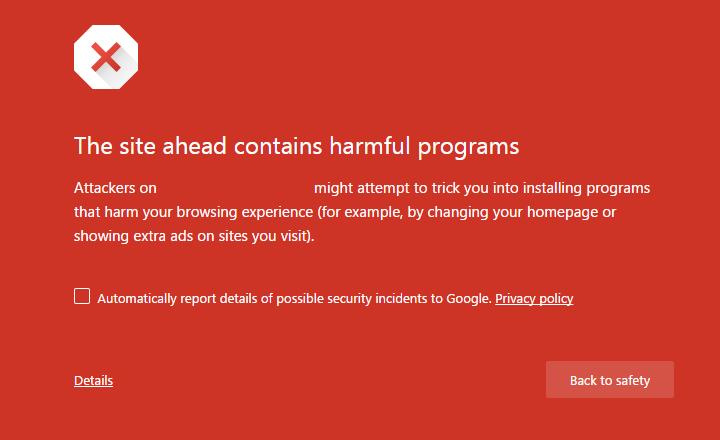
Chrome Harmful Programs warning

Chrome blocks torrent sites, but not for the reason you think

The news that Google’s Chrome browser has started to block pretty much all of the major torrent sites, including KickassTorrents, Torrentz and RARBG. The sites were blocked with a warning that these sites were offering “harmful programs”.

Website owners can normally check Google Webmaster Tools to see why their site was blocked, but the operators of these torrent sites could not find anything listed as being wrong.

So the first thought that many had was that this may be some kind of new anti-piracy measure being rolled out by Google, under coercion from the MPAA and others.

But the actual situation was much more simpler. The problem stems from advertising and sponsored links that these sites had, which may have linked to other sites that were offering the programs Google was warning about (specifically, Potentially Unwanted Programs, or PUPs, such as toolbar installers and other programs and offers bundled with installers). Google has been particularly sensitive in blocking these kind of sites recently, and perhaps a tweak in their algorithm flagged the torrent sites, most of which may have been using the same advertiser or software sponsor. The reason Google Webmaster Tools (GWT) did not show anything at first was because the information in GWT is delayed, something I have personal experience with in relation to false positive DMCA requests that I’ve had to deal with in GWT.

Most of the blocks have been removed now, once the sites in question dealt with the issue and submitted a review in GWT, but perhaps the bigger issue here is how easy it was for Google to block access to so many popular sites at once. It’s something that will give rights-holders bad ideas, and perhaps it also point to the monopolistic position Google now finds themselves in (Google Search and Chrome are the most popular platforms in their respective fields) – too much power concentrated in one company, whether that power was intentionally procured or naturally gathered, is never a good thing.

Gaming

PS4 CUH-1200 APU

A new PS4 model is lighter, uses less power and is quieter too

There’s a new updated PS4 model currently available (only) in Japan, and a teardown has revealed some significant updates with the hardware. An updated processor (still a 28nm chip though), RAM and other chips means power savings, which also means a quieter, slower spinning fan. This greener, quieter PS4 still retains the old form factor, so it’s definitely not the “slim” edition that some are convinced will be released soon (and if anything, this model refresh means it’s now less likely that a slim version will be coming soon, not after Sony has put in the effort to design this new model – the slim version will require a much bigger re-design that what’s found here). Expect this new PS4 model to make it ways to the US and other Western markets soon (before Christmas, I bet).

——

That’s it for this week. I’m going to go back and watch that Star Wars Comic-con video another 10 times. Oh yes. See you soon!
Weekly News Roundup (5 July 2015)

Sunday, July 5th, 2015

Welcome to the second half of 2015. It was a very quiet week news wise, at least on Digital Digest. Part of the reason is that a lot of streaming related news are now being published on my Streambly site, so feel free to follow it (on Facebook, Twitter and Google+) if you want to see more news stories, although of course, I will always include relevant stories from Streambly in this roundup.

So yesterday was the 4th of July, and normally that’s just another Saturday here in Australia, but here at Digital Digest HQ, celebrations were afoot. Yesterday was the 16th birthday of Digital Digest, first launched in 1999 as DVDDigest (clicky here to see what it looked like then). Personally, it’s been a great 16 years designing, creating and taking care of this site, and here’s to another 16 years!

Here’s the news for the week …

Copyright

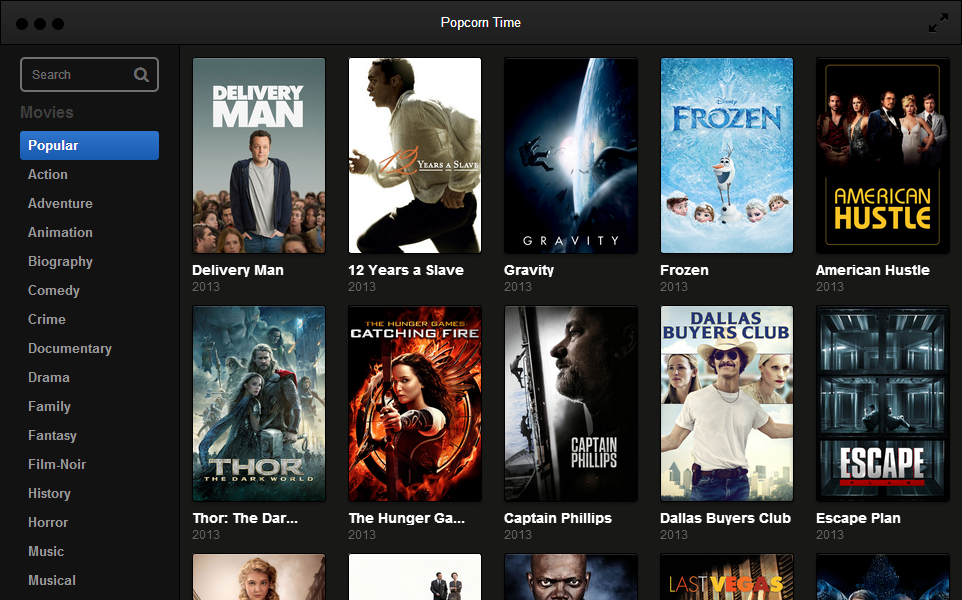
A new piracy epidemic is happening in Norway, and it’s all because of an open source tool, at least according to rights-holder groups in the country. Norway was in the news a while back for having all but eliminated music piracy (thanks to iTunes, Spotify and other legal alternatives that people actually wanted to use), but at the same time, movie and TV piracy has been increasing, particularly streaming related piracy. This has the Rights Alliance Norway, an anti-piracy outfit from the country, blaming open source tool Popcorn Time for making it too easy for users to download and streaming movies. The Rights Alliance Norway is now threatening to sue people who use Popcorn Time, as well as ISPs who do not cooperate with blocking content.

Popcorn Time

Popcorn Time invasion in Norway causing increase in piracy rate, according to rights-holders

It’s quite disappointing to see this kind of reaction in Norway after the clear solution to the piracy problem has already been demonstrated successfully in regards to music piracy. Instead of blaming Napster or LimeWire and suing people who use these tools, iTunes and Spotify and others legal platforms helped to give people, those that weren’t willing to pay and those that were only willing to pay at the right price (and if they got to use the content in the way they wanted), another way to get their content. So the solution to the movie and TV piracy problem is simple – give the people what they want. Netflix is a good start, but it probably has less than 5 percent of the content that people actually want. There has to be a way to allow people to watch the latest TV shows, and movies, without forcing them to spend hundreds of dollars every month – something that people don’t see as good value (or simply can’t afford).

The problem has been identified. Now, we wait for the solution.

High Definition

Even though Netflix clearly doesn’t have close to enough of the sort of content people actually want, they do still have a lot of content. For me, people either pirate because they really want something and can’t afford it, or they’re after something they would never want to pay for, but still want to have a look. Netflix satisfies the latter of these demands, but barely touches the first (Netflix Originals do help).

Netflix Remote

Netflix’s popularity rising in markets outside of the U.S.

But still, being able to give people something random to watch when they’re not looking for anything specific can, and does help to reduce piracy, which is why Netflix is so popular. So popular in fact that by the year’s end, Netflix may have as many as 70 million subscribers worldwide. To put that number into perspective, despite HBO Now being one of the top 10 apps on the Apple App Store, it still only has about one million subscribers – which is actually a pretty decent start, but obviously nowhere near Netflix’s numbers.

Unsurprisingly, most of Netflix’s growth is happening outside of the US, with 9.6 million new subscribers expected by the end of 2015, up 57%. So while most Netflix subscribers are currently located in the U.S. (43.5 million), it’s only a matter of time before that’s no longer true (especially if Netflix’s launch in India, Japan and China are successful).

And it’s not just subscription video streaming that’s big business these days, thanks to Apple Music’s introduction, revenue from subscription music streaming is expected to become one-third of all consumer music spending by 2016 (it’s currently at 16%).

Smartphone Music Headphones

Listening to music on smartphones, and in offline mode, are main reasons people want to subscribe to Apple Music

While what Apple Music offers, compared to Spotify, isn’t all that new or better, but what Apple brings to the table is mainstream acceptance, and a large user base from its iTunes stores, a user base that the company is apparently willing to cannibalize. There will be many users that will switch from purchasing tracks on iTunes to unlimited streaming on Apple Music, which in the short term could actually cost Apple (and the music industry) money. But in the long term, subscription streaming is where music is headed, and it’s the only affordable way for users to get access (legally) to 30 million tracks.

——

So that’s it for this not-so-special birthday edition of the WNR. See you next week!

Weekly News Roundup (28 June 2015)

Sunday, June 28th, 2015

Not a very long WNR today, felt a bit too depressed while writing the two main copyright stories this week to write too much. But you have to admire the lobbying efforts of Hollywood – they have reach as far as Australia, and closer to (their) home, reach that’s powerful enough to cause massive disruption to how domain names work on the Internet. This is not what I’m depressed about though. No, it’s the way how efficient Hollywood can be at getting things done, and the fact that they’re doing all the wrong things, that’s making me feel like a sad panda today.

Still, as they say, the show must go on, and so here’s this week’s news stories.

Copyright

The MPAA is lobbying the Internet’s naming authority on changes that could make it easier for cyber criminals to steal the identity of businesses. It’s all part of the strategy by rights-holder groups to make it harder for domain registrants to protect their identities via domain privacy services. Groups like the MPAA says that this makes it more difficult for them to find information on the people who own domains linked to piracy, and the Internet’s naming authority, ICANN, appears to be buckling under the intense lobbying pressure to do something on this front. ICANN has released a report which proposes to ban domain privacy services for any domains used for commercial reasons.

While this would definitely make it easier for the MPAA to get domain ownership details, assuming the details aren’t faked (although ICANN has a rule that allows registrars to suspend domains if they suspect the details are fake), they can already do so easily via DMCA requests.

But by no longer allowing businesses to use domain privacy tools, digital rights groups and domain registrars say that it could allow cyber criminals to harvest domain data, which could lead to phishing attempts and even identity theft. Namecheap, one of the biggest domain registrars (and one of the good guys, who did a lot in protesting against SOPA), has also expressed concern about these proposed changes and have even mass emailed their own customers to ask them to try and stop these changes.

So once again we have the MPAA and their ilk trying to mess with the Internet, make it worse for everyone, just so they can have it a tiny bit easier time of it in their futile crusade against piracy.

Censorship

Australian government gives in to Hollywood demands for censorship

Speaking of futile, Australia’s parliament has passed controversial changes to copyright law that grants private companies the avenue to seek a nation-wide censorship of websites that they disagree with. Australia now joins a small exclusive club of countries that censors the Internet, all in the futile attempt to stop the piracy problem (without addressing issues such as availability and pricing).

To make matters worse, the language contained in the passed legislation is so vague, that I and many others fear that the law will be abused by private companies to their own end. The language says that website whose “primary” purpose is to “facilitate” piracy will be targeted, but these terms are not defined clearly enough, according to critics. The law could also be interpreted in a way that would be eventually used to target VPN providers.

In other words, the Australian government (with bi-partisan help from the opposition) has just given Hollywood what they want – we’ll see if blocking The Pirate Bay (a block that can be easily bypassed by anyone that cares), which will happen sooner rather than later, will have any effect on piracy without addressing the high pricing and poor legal availability of content in Australia.

High Definition

Dolby Vision

HDR promises to make everything brighter, better – but you need HDR content plus a 4K TV capable of displaying HDR

With 4K TV sets quickly approaching mainstream status, TV manufacturers are already on the look-out for the next best thing. And HDR, or high dynamic range, may be it. For those that don’t know, this essentially increases the difference between the minimum and maximum brightness in a scene, giving it a more dynamic (and therefore, better looking) picture. This involves both an encoding process to encode the movie with HDR information in it, as well as a display technology that produces TVs capable of displaying the increased dynamic range.

HDR capable TVs are still somewhat rare, and content is even rarer, although if you’re an Amazon Prime subscriber, you’re in luck, as they’ve just become the first streaming platform to offer HDR streaming, for free. It’s only limited to Amazon’s original series ‘Mozart in the Jungle’, for now, but you can bet the likes of Netflix won’t be far behind with their own HDR content (especially since the company has already stated the importance of HDR in the past).

Another first, but for another streaming platform. HBO Now is just starting out in the streaming game, but already, HBO’s standalone OTT product may be cutting its exclusive ties with the cable operators. HBO will air the tennis TV movie ‘7 Days in Hell’ on its own HBO Now platform before it airs on its cable channel. It’s become increasingly clear that streaming is fast approaching being a “first air” platform, rather than just showing left-overs from linear TV – it reflects the changing ways people are watching content these days.

——

Well looks like that’s it for another week. Hope you’ve enjoyed this latest edition of the WNR, see you next week!

Weekly News Roundup (21 June 2015)

Sunday, June 21st, 2015

Well E3 came and went, and both Sony and Microsoft had some great announcements, even if some were definitely way overdue (*cough*, DLNA support, *cough*), and even if some took everyone completely by surprise (*cough*, Xbox 360 backwards compatibility, *cough* – I really need to get this cough looked at).

I think I might have just spoiled some of this week’s news stories. Better this than having a key plot development in the Game of Thrones season finale being spoiled mid-episode while I was searching for background info on Meryn Trant on my phone – thanks a lot Variety! Don’t worry, while we talk a lot about Game of Thrones in this WNR, there won’t be any spoilers.

Copyright

Jon Snow

Even Jon Snow knows that Game of Thrones season finale equals new piracy record

WTF? Those familiar with Game of Thrones will also be familiar with this expression, and the season 5 finale was no different. While some of the twists and turns on the show come totally unexpected for the unsuspecting viewer (when it comes to guessing what fate will befall the truly honorable citizens of Westeros, and there aren’t many of those left, we’ve become more and more cynical I think), what was a total non surprise was the fact that a new piracy record has been broken again for the season finale, a record that was last set only a couple of weeks ago by another GoT episode.

But it’s not so much a case of more people downloading, and less people paying – ratings for the show are at a record too – it’s just that the show has become so popular that piracy inevitably goes up (and given the way the season 5 finale ended, expect the season 6 premier to break a couple of more records again).

For HBO, they definitely can do more to convert at least a small group of downloaders into paying customers, first by lowering the price of HBO Now, and by making it possible to watch new episodes via streaming in other parts of the world without having to be tied to a cable service (either by making HBO Now available, or selling the license to local streaming platforms).

But even if they do that, a large portion of the viewing public will still be downloading. Just take a look at the piracy problem with Netflix’s Orange is the New Black, despite Netflix’s ubiquity and low entry point when it comes to pricing, some will still pirate (and that some includes many who already pay for Netflix, but want a way to watch these episodes offline). So piracy will never be eliminated, but HBO can definitely do more to convince those willing to pay, to pay something.

——

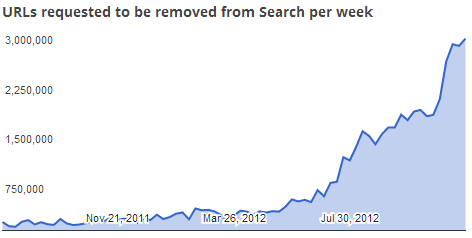
Google DMCA Stats

Google is profiting from piracy, according to the MPAA

Google’s pretty mad these days. At Mississippi State Attorney General Jim Hood and his MPAA backers, mainly. The search giant is finally using some of its massive cash reserves to hire a lawyers or a hundred to punish the MPAA, via Hood, for trying to mess with them (Hood tried to build case against Google, with the MPAA’s help, in a very clumsy attempt to bring back SOPA like legislation on the state level – but the Sony hack revealed all, forcing Google to on the legal offensive).

With Google winning in the courts against Hood, the search giant then started to target the puppetmasters, and when the MPAA refused to hand over internal documents, Google sued them too. The MPAA has just responded to Google’s lawsuit, and they really didn’t hold anything back. The MPAA accuses Google of both helping to facilitate and also profiting from piracy, and says Google’s lawsuit is nothing but a PR campaign.

Interesting, the MPAA argues that Google is trying to make them look bad by making public Hollywood’s anti-piracy strategy. I’m glad the MPAA finally agrees that their anti-piracy strategy is naturally unpopular, and that the truth is all you need to make them look bad!

Gaming

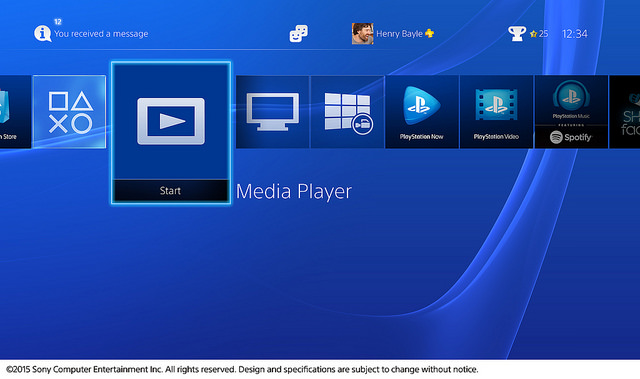
PS4 Media Player

PS4 finally getting a proper media player, with USB, DLNA and MKV support

Both Sony and Microsoft have had a good E3 (as for Nintendo …), but among Sony’s big PS4 announcements, the one that’s most interesting to me and probably to readers here would be the announcement of a new, proper, media player, for the company’s flagship console. Finally, we get back DLNA playback and USB media support, and as a bonus, we also now get native MKV playback too.

Better late than never, I suppose. And I can finally seriously consider replacing my PS3 with the PS4 as my hub of all things entertaining.

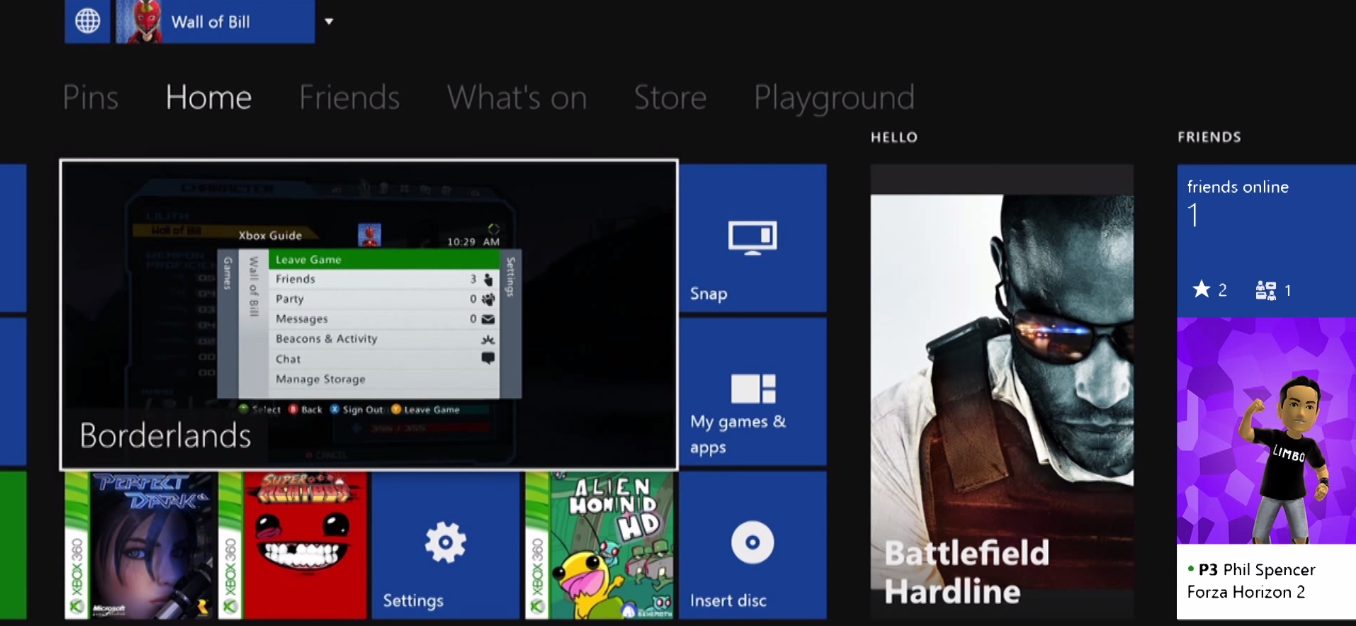
For Microsoft, their big surprise announcement was not something new, but something old. Or rather, backwards compatibility to allow you to play your old Xbox 360 games on the Xbox One. Insert your old Xbox 360 game disc, the 360 emulator will load up and you’ll be able to instantly play one of the 100 titles that are supported currently. Backwards compatibility also works with digital purchases too.

Xbox One's Xbox 360 Backward Compatibility

Xbox One’s Xbox 360 emulator in action

Not just a great bonus for Xbox One owners, it’s also a smart move by Microsoft. They have the data that shows many 360 owners are moving to the PS4 when upgrading to the next gen – by adding BC, it will ensure at least some of these users will more favorably view the Xbox One, even if just as a way to keep on playing their Xbox 360 games without having to buy a new 360.

The move has certainly surprised rivals Sony (and pretty much everyone else), but there are currently no plans to give PS3 backwards compatibility to the PS4 according to the Japanese tech giant. If Xbox 360 backwards compatibility proves to be a winner, sales wise, expect Sony to miraculously unveil their BC plans post haste.

——

Bloody hell, Variety, why did you have to put all the major plot of the finale in your headlines? To be honest, even after I read it, I couldn’t believe it, and I still can’t believe it after I’ve seen it (it seems a lot of people are like me, in denial). If this is all very cryptic, it is, because this is a good website that don’t spoil things for unspecting people. Unlike Variety.

See you next week!

Weekly News Roundup (14 June 2015)

Sunday, June 14th, 2015

Another week gone, and we’re mid way through June, which is mid-way through the year. 2015 has gone by pretty quickly, I have to say, maybe too quick at times. Much like this somewhat shorter than usual WNR, which I’m sure you’ll get through pretty quickly (maybe too quickly) too.

Here it is …

Copyright

EU Flag

The EU wants to remove copyright restrictions, which they say is encouraging piracy

The EU is pressing ahead with its plans reform copyright laws, to make it fairer to consumers and remove many of the restrictions that exist within EU countries. The European Commission VP in charge of this new copyright strategy, dubbed the Digital Single Market, says that current copyright laws allows rights-holders to place restrictions on legal content, restrictions that Andrus Ansip says are driving people to piracy.

Instead of tougher laws that punish downloaders, something that Ansip says is untenable (68% of film viewers in the EU download pirated movies – “to put 68% of people in jail is not really a good idea,” says Ansip), he wants legislation that encourages the spread of legal content, even if it means banning things like geo-blocking within EU countries.

It’s something rights-holders won’t like. While all EU countries use the same currency, the wealth disparity between EU countries means that citizens in one country may be able to afford to pay more for the same content, than citizens in another country. It’s this wealth disparity that Big Content likes to exploit, by making sure they squeeze as much as possible out of each paying customer. In the worst case, an entire platform, like Spotify, could end not not being available in some countries due to these kind of artificial barriers.

So while the EU is clearly moving into the direction that brings better access to content, Big Content is heading in the other direction, still pushing ahead with content blocking to solve the piracy problem. The latest strategy involves getting domain registrars involved in the process, but Big Content is finding that it’s meeting some resistance from ICANN, the non-profit responsible for managing domain names. The ICANN says it refuses to be copyright cops, to police content, simply because it’s responsibilities simply does not extend to content. Pointing domain names to servers is basically what the domain naming system is all about – it should not matter to ICANN at least what the domain name is, and what server it is pointing to. Just because it’s easier to force registrars to do something about piracy (as opposed to going after the owners of the website), doesn’t make it right.

Gaming

Steam logo

Are users abusing Steam’s new refund system?

By finally making refunds available, Steam seems to have finally listened to customers, and it also represents a major step in the right direction in terms of digital consumer rights. However, it appears some users at least have started to abuse the refund system, which promises refunds, no questions asked, within 14 days of purchase as long as you’ve played less than two hours in the game (which describes about 95% of my Steam game library, by the way).

Some indie game developers are reporting refund rates of up to 72%, meaning more than 2 in 3 users bought the game, played it, and then got their money back. While this might indicate some kind of problem with the game, most of the time, the heavily refunded games still receive positive ratings from gamers.

This means that people may be using the refund system to play games without paying, at least for up to two hours (which while probably not enough to finish the game, but might be enough for many users). With Steam not even asking users why they’re seeking a refund, the system does sound like one that’s maybe too biased towards the consumers, something that rarely happens with digital goods.

The problem has become so bad, that some developers are even thinking of adding DRM to their game, something that they would never have considered in the past. And this is a development that benefits nobody, really.

There has to be a middle ground though, one that gives consumers the same rights with digital goods as they have with physical goods, but also ensures that people cannot abuse it as a way to play games without paying.

——

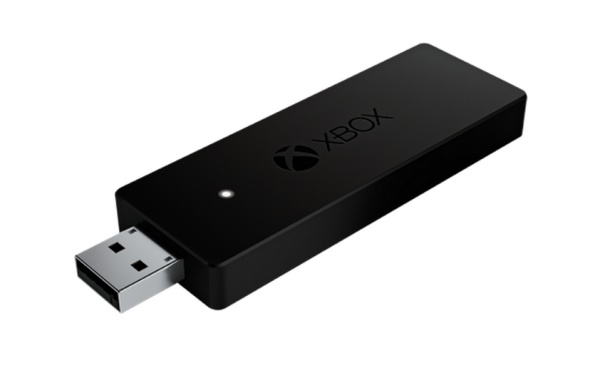
Xbox One PC Adapter

PC Adapter for Xbox One controller finally available, getting ready for Windows 10 game streaming

The NPD report for US video game sales in May has been released, and the PS4 is back on top after temporarily handing over the crown to the Xbox One in April. While Xbox One sales were up on this time last year, it just couldn’t sell enough units to beat the PS4, which but for a few months here and there (admittedly during some important months, such as during the holiday sales period), has been on top pretty much this entire generation.

Things might stay the same in June again though, despite Microsoft releasing a new 1 TB version of the console (and permanently dropping the price of the 512 GB version to $349). What may have a slightly bigger effect on Xbox One sales, eventually, might happen after the release of Windows 10. With built-in game streaming support (with the ability to stream Xbox One games to any Windows 10 device, be it your PC, laptop or Surface tablet), the new operating system from Microsoft will aim to further unify the Windows and Xbox platforms. So the release of a wireless PC adapter for the Xbox One controller comes just at the right time.

——

Alright, that’s that for the week. Have a good one!