Archive for the ‘News Roundup’ Category

Weekly News Roundup (10 April 2016)

Sunday, April 10th, 2016

It’s all copyright all the time for this week’s WNR, and there’s even a bit of “Panama Papers” discussion to jump on that particular bandwagon.

Copyright

WordPress Logo

WordPress is sick of having to deal with bad DMCA requests

We have a trio of copyright related news this week, one quite ridiculous, while the other two seems far too sensible for something copyright related.

So the real question is, should I start with the ridiculous one, or the two more sensible ones? Hmm, I think I’ll go with sensible first, leaving the froth inducing, fist shaking one til the end, to get you all worked up ready for the upcoming week. I know, I can be a real d*ck sometimes.

Once again, it’s up to a tech company to come up with some sensible suggestions for changes to existing copyright law, this time it’s the company behind WordPress, Automattic, suggesting it’s time to introduce penalties for those that submit invalid DMCA takedown requests.

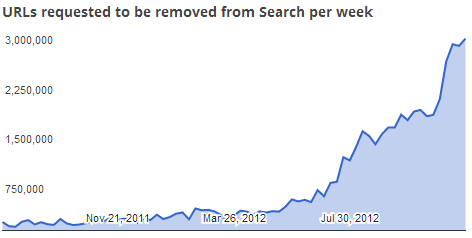
It’s a well known fact that DMCA takedowns are often abused, sometimes intentionally to cause harm to be competitor, but most of the time, because of lazy copyright holders not bothering to check their machine generated submissions more carefully (just last week, there was a story suggesting a third of all DMCA requests sent to Google are “questionable” at best). But right now, there are no penalties for this, while there are plenty at stake if service providers do not act on the requests in time (even if it’s obviously invalid).

This is why Automattic wants statutory damages to be introduced for blatant misuse of takedowns, as well as the use of legal bonds to ensure copyright holders are made accountable for their actions. A very reasonable request that will no doubt be ignored because it’s not biased enough (or biased at all) towards rightsholders.

Over in Europe, common sense appears to be coming back to copyright law as well, with the European Court of Justice’s advocate general making the audacious suggestion that linking isn’t the same as uploading. While the advice is limited to one particular case, it could still have a major impact on how copyright liability is viewed in Europe. The advisory suggests that if a piece of copyrighted content is already publicly available, then linking to it is not the same as “making it available”, because someone else has already done it. This isn’t to say that the linking party isn’t guilty of facilitating the discovery of pirated content, but it’s just not copyright infringement.

Of course, the advisory also makes it clear that the intention and purpose of the site should also be taken into consideration. While sites like The Pirate Bay also merely “link” to pirated content and not host it, the site’s main purpose is clearly tilted towards the copyright infringement side, but a personal blog or a news website who links to copyrighted content would be treated differently, according to the advice.
Ransomware

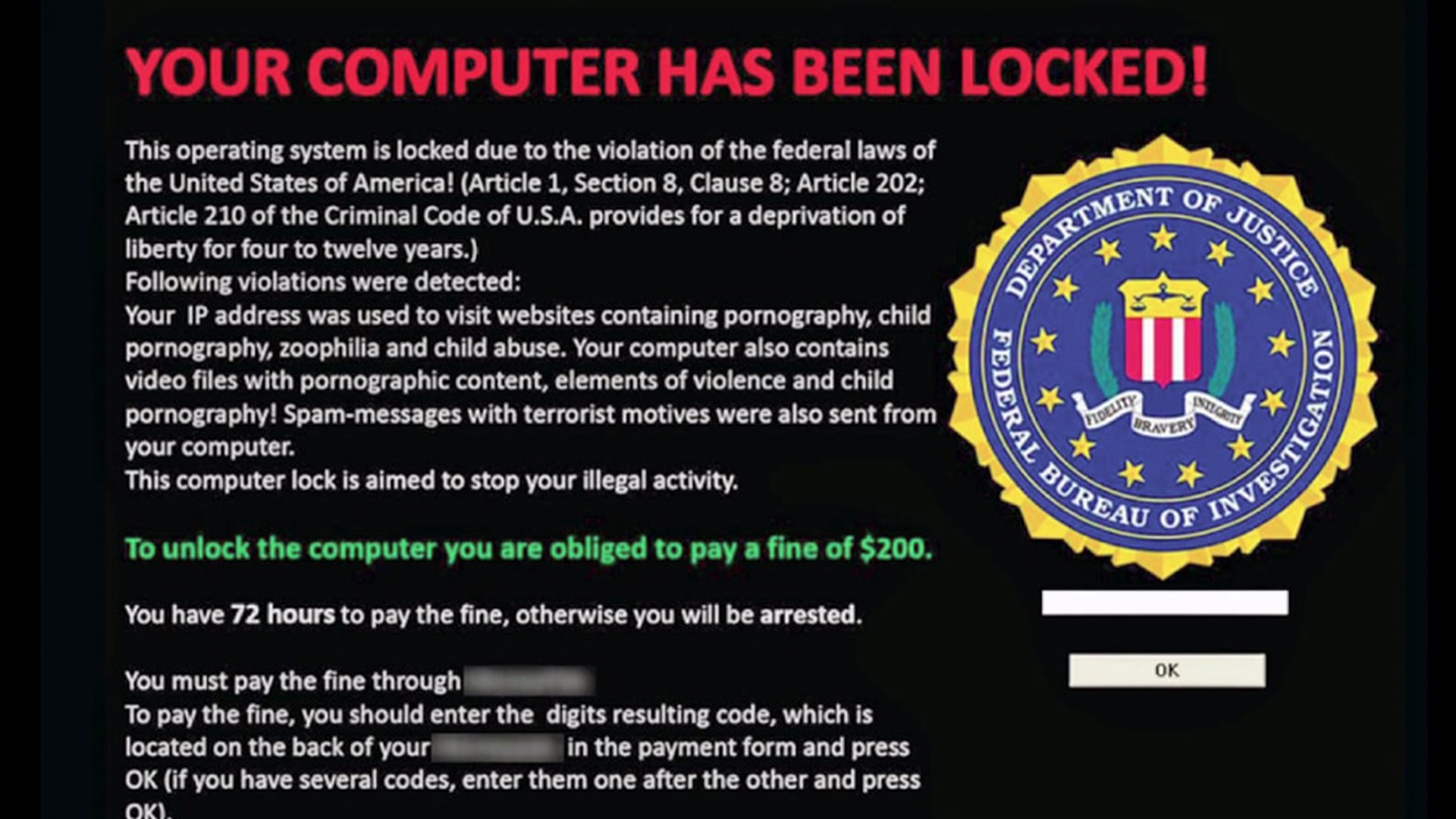
Anti-piracy company wants to employ tactics similar to ones used by ransomware operators

So now onto the ridiculous. Controversial and not-very-profitable-lately anti-piracy monetization firm Rightscorp has a new plan to defeat piracy and make a quick buck – hijack the web browser of suspected pirates! The company wants to work with ISPs to send copyright infringement and “settlement” notices directly to people’s browsers. And if they ignore it like they ignore Rightscorp’s emails and don’t pay up, then Rightscorp wants their web browsers to be locked until the payment clears. So nothing like ransomware, which locks up people’s computers or web browsers to elicit a payment.

The relationship between ISPs and Rightscorp have not been great so far, so it’s hard to see any ISPs jumping on the “let’s make our paying customers really angry” bandwagon, even if Rightscorp may promise revenue sharing (which they’re not). Rightscorp’s big selling point to ISPs? Do this and you’ll reduce your liability, Rightscorp says, but ISPs can already do this if they have a reasonable and enforceable repeat offender policy, leaving browser hijacks to sketchy ransomware operators.

In minor copyright news, the much talked about Panama Papers (click here if you don’t know what it is) has some surprising copyright links too, it appears. The fate of Icelandic Prime Minister Sigmundur Davíð Gunnlaugsson, whose name has appeared in the papers and suggests an attempt by him and his wife to hide assets in offshore accounts, could mean a rather surprising victory for the country’s Pirate Party, which (even before this latest scandal) is actually polling as the most popular political party in Iceland. While Gunnlaugsson has taken temporarily leave (and not resigned as first thought), an autumn election is set to take place, and if the Pirate Party can continue to poll well until then, it could be a very interesting election to say the least.

Also listed in the Panama Papers are two former Megaupload employees. The two used the services of the law firm at the centre of the scandal, Mossack Fonseca, to start an offshore company. According to the two, Dutch programmer Bram Van der Kolk and Slovak designer Julius Bencko, the company was started to work on a project unrelated to Megaupload, but kept hidden because Mega’s Kim Dotcom did not like employees to work on their own projects. But according to Dotcom, the two were actually working on an unauthorised project that used Mega’s source code and would have been in competition with the now defunct file uploading service, which explains why they wanted to keep things secret. Interesting, but not particular important right now given the fate of almost all file uploaders, unauthorised clones or otherwise, since the Mega takedown.

——

That’s it for the week, thanks for reading. I don’t know how you’ll be spending your next week, but I shall be locking myself in a darkened room watching The Force Awakens Blu-ray on an endless loop, with an occasional break to watch the newly released teaser trailer for Rogue One: A Star Wars Story (AT-ATs!). Good times ahead! See you next week.

Weekly News Roundup (3 April 2016)

Sunday, April 3rd, 2016

Hello all! You might have noticed I didn’t really bother posting anything for April Fools. The problem with April Fools articles is that if you make it too obvious, then it’s just silly, but if you make it too believable, then you open yourself up to a defamation lawsuit (especially if your site’s main points of discussions involves the litigation happy peoples of the MPAA, the RIAA and other anti-piracy groups). Plus, the real news that I post these days are absurd enough already, and when it comes to our overly biased copyright law, we are all being made a fool all of the time.

Oh right, the real news, which wasn’t very forthcoming this week …

Copyright

Google DMCA Stats

More DMCA takedowns does not equal less pirated downloads

Two copyright stories, but very much related. With rights groups submission millions upon millions of links for piracy takedown, it was only a matter of time before they realised how futile it all is. The BPI, Britain’s RIAA, was this week’s chosen candidate to speak out against the current copyright regime, saying the whack-a-mole must be modified in their favour.

What they want is “take down, stay down”, something I’ve covered before here and with increasing frequency recently I might add. So instead of rights holder identifying the link that needs to be taken down, they only want to identify the piece of content that they want removed, and then it’s up to Google or whomever to do the actual search and destroy. So the whack-a-mole becomes one where the player simply points at the mole and says “mole bad, destroy mole”, and then Google becomes the one that then plays the endless game of whack-a-mole. So no surprise that Google doesn’t want to do it.

Google also rightly point out that despite all the brouhaha over search engines, only 16% of traffic to piracy sites actually come from major search engines. The rest comes from people typing the piracy site’s URL into their browsers, bypassing search engines completely. Don’t be fooled, rights holders are fully aware that Google has never been the main problem. The focus on Google is really just the thin end of the wedge, because Google is a well known company and a very visible target. Once they can get Google to do their bidding, they may very well turn their sights to ISPs and even browser makers, to force them too to play the game of copyright whack-a-mole.

Browsers

How long before browser makers are asked to block access to piracy sites?

There’s also another very good reason why Google and others should resist the calls for “take down, stay down” – it’s going to be hugely inaccurate. A new study has found that nearly one third of all takedown requests received by Google are “questionable”, but despite this, many are approved and action is taken anyway. This means there are a lot of legitimate sites that have been targeted, or at the very least, the takedown request should never have been made in the first place.

This high rate of false positives occur because rights-holders employ anti-piracy companies to do the hard work, and these companies often just use a bot to crawl the web and find URLs to de-list. The quality and accuracy of these bots can be questionable, since human intervention and verification is rare. And then when they submit these URLs to Google, Google also have their own bots to process these requests, erring on the side of rights-holders and making it the job of the affected site to clear their name in cases of mistaken identity. So with not a human in sight in the whole process, it’s little wonder as to why things can get very inaccurate very quickly. Except with “take down, stay down”, there will be even less verification and more legal pressure on Google and others to take down URLs as quickly and as liberally as possible.

Again, all of this presents a clear strategy from rights-holders to shift the legal responsibility of piracy to other parties, from search engines, to ISPs to eventually browser makers, and even makers of computer software and hardware. This must be resisted because it’s dangerous, and also because it’s not going to work. Those intent on pirating stuff will continue to do so, no matter how much censorship, how many filters and site blocks and lawsuits are used to stop them. And those that can’t afford to buy stuff still won’t, even if it getting pirated stuff because too hard for them. It’s a fool’s errand, which I guess is kind of appropriate given what this week means.

——

And that’s all we have this week. Not a very fun edition, I must admit, but hopefully there will be more of that next week. Until then, have a great one!

Weekly News Roundup (27 March 2016)

Sunday, March 27th, 2016

Can’t believe it’s Easter already, and here I am, absentmindedly thinking it’s still 2015 from time to time.

Quite a bit of news to go through before we probably encounter the Easter/post Easter lull, so let’s get on with it, shall we?

Copyright

Star Wars: The Force Awakens Blu-ray

People will still buy this disc even though a pirated copy is already available, almost two weeks before the official release date

Well, it was unfortunate and probably predictable, as the Blu-ray edition of Star Wars: The Force Awaken, not due on store shelves until another week and a bit, has been ripped and uploaded online illegally. I say it’s predictable because, as one of the biggest movie releases ever (and possibly a record breaker for Blu-ray too), there was just no way this wasn’t going to get leaked early, especially considering how many people will have had access to the retail discs before the embargo date. While the official release date isn’t until April 5th, stores that plan on selling the disc will most likely already have received stock, stock that has been made and packaged long before – all the steps on this production and distribution line will be vulnerable to leaks, and for a release this big, it would have been amazing if there wasn’t a pre-release leak.

With that said, will it really affect sales? Probably not. This is one of the biggest movies ever, and true fans will not be sated until they get their (my) hands on the retail Blu-ray package, the existence of an illegal pirated download is not relevant (we might still download it though) – they (I) would have pre-ordered their copy months in advance anyway, and they won’t be cancelling it for the rip. There might be a few lost sales here and there, but these people were never really that serious about buying the disc anyway, and it’s not going to make a huge dent on the predicted huge sales numbers.

High Definition

The Peanuts Movie Ultra HD Blu-ray

As UHD Blu-ray releases go, The Peanuts Movie wasn’t a popular one

Speaking of Blu-ray sales, the Blu-ray sales stats I published this week contains the first set of numbers for Ultra HD Blu-ray, and there are both good and bad news for the new 4K format.

The Peanuts Movie is one of the first new releases that happens to be released simultaneously on Blu-ray and UHD Blu-ray, and long story short (actually, story isn’t that long anyway), not many UHD copies were sold at all. UHD discs for this movie were only 0.27% of total disc sales (which includes standard Blu-ray and DVD), or just under 0.5% of total Blu-ray sales (in other words, only one UHD copy was sold for every 203 standard Blu-ray copies, or 166 DVD copies).

Okay, perhaps this wasn’t the best movie to show off the UHD format, and according to disc buyers, it was ‘Mad Max: Fury Road’ that was the UHD demo disc of choice. It had a much more respectable UHD sales share of 6.19% (so one UHD copy for every 6 Blu-ray copies sold, or every 8 DVDs).

It’s still early days, but it looks like its going to take some time before UHD Blu-ray becomes a major factor in disc sales.

Gaming

What might help accelerate UHD Blu-ray’s adoption would be if the PS4 was upgraded to support it – and this might actually happen, if you believe the rumours. Apparently, game developers are already being briefed on a new mode of the PS4 that will support 4K gaming (the current PS4 only supports 4K for images and video files), which necessitates the use of a new GPU. If such a major hardware change is to occur, then chances are, Sony might use the opportunity to also upgrade the optical drive in the PS4 to support Ultra HD Blu-ray. It will make the new PS4, dubbed PS4.5 (or PS4K, as I’ve read about it in some quarters), more expensive, but this “premium” PS4 would not be aimed at the budget conscious anyway.

I think it makes good sense for Sony to make this move, and if they do, it would also fill the rather obvious looking gap in Sony’s Blu-ray player line-up – the company does not even have any current plans to release a Ultra HD Blu-ray player at all!

Wii U Boxes

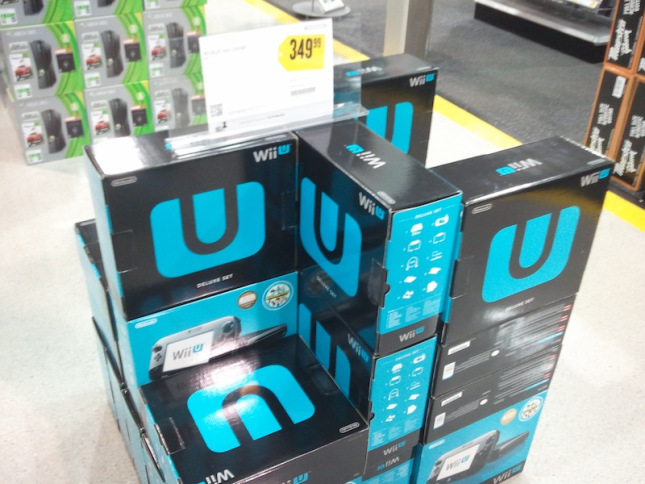
Wii U sales have been bad enough to maybe force Nintendo to bring the NX’s release date forward to 2016

So while Sony (and Microsoft) are all thinking about making their flagship consoles better, Nintendo might be trying to abandon it altogether in 2016. Reports, which was later somewhat weakly refuted by Nintendo, suggests the Japanese company is going to cut their losses and stop production of the Wii U in 2016. The PS4 has sold three times many units globally than the Wii U despite being released a whole year later, and the situation is not going to get any better. But with Nintendo’s next console not coming out until 2017, it’s extremely unlikely the company will end Wii U production before then – not unless they bring up the release date of the NX to 2016.

It’s actually not too difficult to see what went wrong with the Wii U. It wasn’t powerful enough compared to the other current generation consoles, it wasn’t cheap enough either thanks to the price war between Microsoft and Sony. And while it had a good stable of first party games, there were some obvious absentees (Zelda!), and third party support was lacking. It was probably lacking because the Wii U failed to bring anything really innovative to gaming unlike the Wii – the tablet controller is good, but is often underutilised, even by first party games – and third party developers just weren’t excited about what the Wii U brought to gaming (that’s not to say that the PS4 and Xbox One were innovative, they weren’t, but they didn’t have to be because they were superior in almost every other way).

So it’s a bit early to eulogise the Wii U, but let’s just hope Nintendo has learned their lessons and give us something that will either be revolutionarily different and/or powerful enough to make Sony and Microsoft look over their shoulders with nervousness. Plus better launch games (Zelda!)

——

Okay folks, that’s it for this week. Hope you’ve enjoyed this edition of the WNR, Happy Easter, and see you next week.

Weekly News Roundup (20 March 2016)

Sunday, March 20th, 2016

Hello again! I’ll try to keep this one nice and short, despite there being actually quite a bit of news this week. I just had a sneaking suspicion that you’re not in the mood for reading a whole bunch, that and the fact that I’m not in the mood for writing too much either.

Being lazy and not feeling guilty about it has its perks!

Copyright

Australia's Internet Filter

Australian Internet filtering about to start … only if the legal stuff can be sorted out first

We first step onto the continent of Australia, where the powers that be (ie. Hollywood) have finally decided to do something about the Pirate Bay problem. And by doing something, it of course means site blocking. But before the blocking can happen, the rights-holders have to get a court order, and things are not very straight forward for them due to the laws we have here (laws that were only recently changed to allow site blocking). You can read the whole piece for details as to why site blocking is kind of tricky to get started here. But a difficult process is what’s needed, as censorship is not something that should be taken lightly, even when it relates to something as obvious as The Pirate Bay.

From one lawsuit to another, this time from the other side of the world. When the sister company of Warner and Intel and the company responsible for managing the HDCP copy protection system found in HDMI/DP connections sued Chinese HDMI/DP splitter/conversion maker LegendSky, it might have seemed a rather straight forward case. After all, one of LegendSky’s latest devices may have been responsible for the spate of 4K rips that hit the torrent scene last year, from sources that had been protected using the latest and most secure version of HDCP.

HDMI Connector

When is a HDCP stripper not a HDCP stripper?

But it appears LegendSky’s devices doesn’t actually strip the new version of HDCP at all from sources like Netflix 4K streams and Ultra HD Blu-ray. Instead, it converts the new, hard to crack version to an older version that has already been cracked – and the conversion is legal (and used to maintain legacy compatibility).  This, LegendSky says, means DCP’s original lawsuit is flawed and based on the wrong assertions, and that it should be dismissed by the judge immediately. Bold words. Fighting words, which means this straight forward lawsuit has just become anything but straight forward.

Speaking of Netflix rips, the streaming giant has done the unthinkable – it has joined the Google DMCA filing game, submitting 71,861 links for removal. Netflix, using the services of the anti-piracy outfit Vobile, wants streaming and download links to shows like Sense8, House of Cards taken down. This marks a drastic change of direction for Netflix, who, up until now, had maintained a relaxed attitude towards piracy. In fact, CEO Reed Hastings even admitted that piracy sometimes “creates the demand” for the streaming network’s own original programming.

Gaming

Microsoft has just dropped the price of the Xbox One again, this time to $299. The price drop is only temporary, but based on history, it might turn into a permanent one if sales respond in the expected manner. It’s the best weapon in Microsoft’s arsenal in their bitter battle with the PS4, and truth be told, it’s probably the most effective weapon anyway. It will be interesting to see if Sony responds, but given their sales lead and momentum, they probably don’t even need to.

——

So that’s it then for the week. Not too long as promised, but still full of tasty goodness as always, erm, or something. See you next week.

Weekly News Roundup (13 March 2016)

Sunday, March 13th, 2016

Another short one this week, as it has been a pretty boring week in terms of news. I guess this is a kind of birthday present to me, to give me a little breather the week before. So thanks to the MPAA, pirates, the Blu-ray people and game console companies for not making any big splashes – if you can keep it up for another week, that would be much appreciated!

Here’s the news that we did get ….

Copyright

MovieSwap Media Player

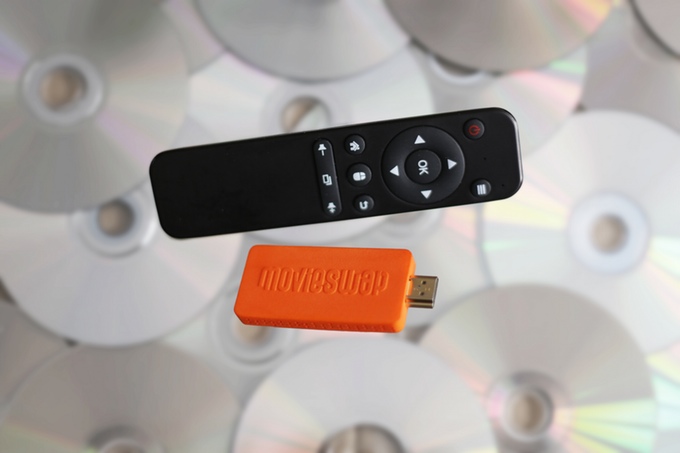
MovieSwap is a Kickstarter that wants to help you rip DVDs and share it with other people … the MPAA are not pleased

A new Kickstarter aims to take DVD lending and swapping to the next level, but unfortunately, it may be a level that’s swarming with MPAA lawyers and an end boss that’s impossible to defeat. MovieSwap wants you to send in your old DVDs, and for every DVD you send in, you’re able to swap it for another DVD send in by another user. Except the physical DVD stays with MovieSwap, and its the ripped, digital version they you’ll be swapping around.

DVDs can only be “lent out” one at a time, just like with a real swap, but being digital, the movie can be watched on a variety of devices.

If you’ve read this blog for some time, you’ll already know why this innovative idea will simply never work. Not because there are technical problem with it (there might be, as it seems there might be an imbalance between the number of available copies of DVDs people want and the DVDs they actually send in), but there definitely seems to be some legal clouds over the idea behind the service. Clouds, or perhaps a category 5 cyclone.

The MPAA won’t like the ripping part, that’s a given. Remember Kaleidescape and when they tried to rip DVDs for use on a local media server (not shared with anyone but the DVD’s owner), and how they got slapped legally for it? And while this replicates the idea of personal lending in the digital space, this kind of replication has never been viewed upon favourably, not by the rightsholders nor by the legal system (see Aereo and their replication of how DVRs work). Then there’s the small problem of the MPAA not getting even a small cut of the profits.

The problem for me is that MovieSwap doesn’t just replicate how DVD swapping works – it improves it by way too much. In real life, I would never be able to swap movies with a total stranger from anywhere in the world (and it might be weeks before I get my DVD back in real life). It’s DVD lending on steroids, and the net effect will be that people will spend less money to watch more movies, with money they would have otherwise given the the MPAA studios going into MovieSwap’s pockets instead via the monthly subscription fee.

It’s easy to see why the MPAA won’t like this, not one bit.

Gaming

PC Build - Innards

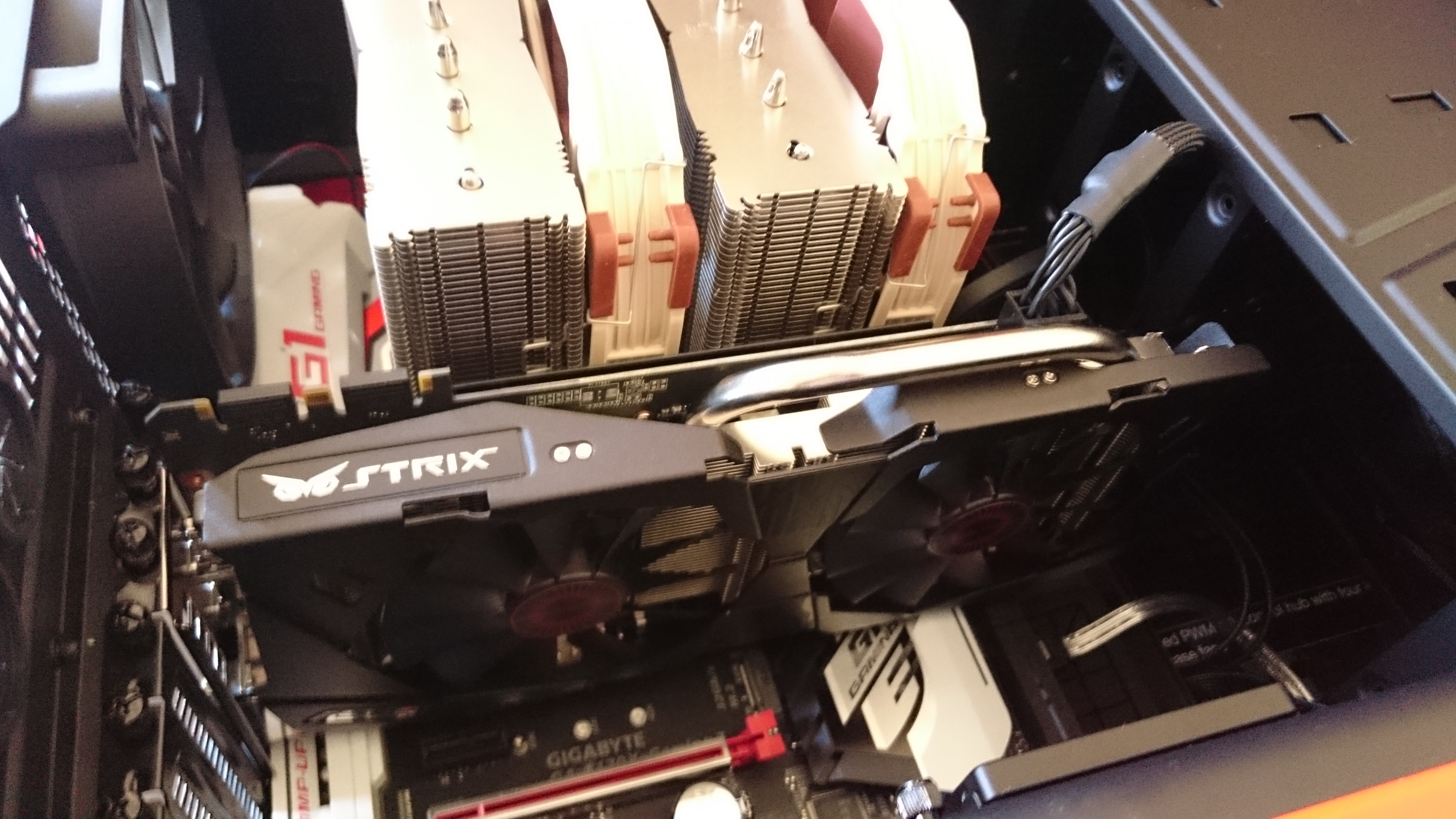
This is not what Phil Spencer meant by upgradeable Xbox Ones

A clarification from Phil Spencer about “upgradeable” Xbox Ones – they won’t be. When Spencer originally talked about upgrading the Xbox One hardware, some assumed it meant making the Xbox One more like PCs, with parts you can buy the upgrade the innards. Or at the very least, making the Xbox One more modular so you can plug in add-on hardware to make it more powerful. I for one always thought he meant just a new SKU with a beefier version of the Xbox One, that was still compatible with all existing Xbox One games, but had better graphics (it’s similar to the idea Sony has for a Super PS4).

Whatever the case is, you won’t be needing a “screwdriver set”, according to Spencer.

As it’s a pretty light news week, I might just update you again on the state of video game sales in the US for Februaryu, in which the PS4 outsold the Xbox One again, just like it did in January, December, November … or until whatever it was the last time I remembered to write about NPD results here (hard to find anything to write about when it’s the same every month). As per usual, Microsoft talked up the fact that sales are way up compared to a year ago, which may mean the gap between the two consoles is closing.

——

So that’s that then. See you next week, when I’ll be a year older but most definitely not wiser!