
Archive for the ‘Movies’ Category

Weekly News Roundup (5 July 2009)

Sunday, July 5th, 2009
Digital Digest is 10 Years Old!

Digital Digest is 10 Years Old!

Digital Digest is 10 years old! The actual birthday was yesterday, and I know it was 4th of July and that’s because I deliberately chose an easy to remember date to make public the very first version of Digital Digest (then known as DVDigest – you can see a screenshot of it here). My original thinking behind Digital Digest was that, as I was very active on newsgroups and forums back then answering people’s questions in regards to DVD playback (mainly focused on the Asus v3400 graphics card), that having a website where I can post all my answers and people can read that would save me time. After 10 years and countless hours of work later, I think my plan might have backfired just a little. Still, it’s been mostly enjoyable and I don’t think I would rather be doing anything else.

Anyway, to celebrate the 10th anniversary, I thought I would set up a competition where you can win some Amazon.com Gift Cards. There are 10 prizes in total (you know, for the 10 years and all), and entry is as simple as giving me your name and email address. No super easy or super hard questions to answer, or secret codes to hunt for on the website. I’ll randomly draw the winners at the end of the month, good luck to all those who enter.

Anyway, onto the news for the week, there’s a bit to cover.

Copyright

Let’s start with the copyright news. The Pirate Bay is still dominating the copyright news this week. There was a big announcement that caused a lot of stir, but it was preceded by some interesting news in regards to a new site that TPB wants to launch.

The new site in question is a YouTube style video sharing site, except there won’t be any copyright filters to contend with. It won’t make big media happy, but YouTube is only YouTube because people share copyright stuff, not in the sense of piracy, but using clips and music in their own videos. If you can really make YouTube 100% copyright compliant, then there won’t be many videos left at all.

The Pirate Bay changes owners: is this the end?

The Pirate Bay changes owners: is this the end?

So good news in that TPB is undeterred by the lawsuits and will continue with their crusade to “free” the Internet of the shackles of excessive copyright control. Then the news broke that The Pirate Bay has been sold to a new company, and that new company wants to focus on legalizing TPB. Confusion reigned, and we still don’t know what’s going on. On one hand, the statements made by the new owners seem to indicate that TPB would go legit, which basically means it’s going to turn into a completely different site, other than the domain name. On the other hand, there were statements made later on that suggested this won’t make much of a difference at all. The backlash was immediate, and not too dissimilar to the one after the Mininova content filter blog post made a couple of months ago. It does seem a bit ungrateful that this tremendously useful resource that people have been using, for free, for so many years and then the minute something changes (and we’re not even sure what the changes mean yet), it becomes torch and pitchfork time. But I guess that’s the nature of the business, in that people expect free stuff and they won’t like it when it’s taken away. Keep a close eye on this story and let’s give the benefit of the doubt to the TPB founders for the time being.

And let’s not forget that the bad guys in all of this is the RIAA, MPAA and all these other copyright groups that refuses to embrace the Internet for what it is, and accept that piracy is part of their business model now, and without it (and without the Internet “hype” effect, they’d be making much less money than they are right now). But it’s yet another victory for the RIAA in their lawsuit against Usenet.com. Well, at least the lawyers are happy, and people who pirate stuff are still pirating stuff, possibly more easily than before. But at least they’re not going after individuals in lawsuits anymore, although the three-strikes rubbish is not that much better. And if more proof was needed that going after individuals doesn’t work, then have a look at a new study by Which? computer magazine in the UK, which managed to easily find 20 users accused of piracy that are apparently innocent. There’s been lots of these kind of falsely accused stories in the past, and because IP addresses are not the best way to track down individuals. IP addresses can be easily faked, and even if they are genuine, it only proves that someone using a particular connection at that time was possibly downloading pirated material, it does not prove that which person did it or whether it was done with permission of the owners of the connection.

But this all assumes that illegal downloads are a bad bad thing, but the reality is that many people have no other alternative than to download, such as downloading TV shows. EngadgetHD looks at the top 10 reasons people download illegal TV shows. From my experience, especially here in Australia, people are almost forced to download because the traditional outlets such as TV stations or DVD are just too slow – some shows are shown years after they were originally broadcast in the US, and some (like The Sopranos) never shown properly at all. And because DVD releases have to be months after TV broadcasts, the shows that are purchased by the TV station but never shown might never make it onto DVD. The situation is a lot better now these days than just a few years ago, and I think online piracy is the reason for this improvement. So piracy is not always a bad thing, if it gives the right people a kick up the butt, for the right reasons. The simplest way to fight against piracy is to make legal alternatives available, that are better and not a total ripoff. Do this, and piracy will slow down. Don’t do it, and people will flock to what’s the best and fastest, which right now is clearly piracy.

High Definition

Let’s move on to HD news now. Oppo has released its new Blu-ray player. It features high-end features such as SACD and DVD-Audio playback, plus the superior video processing for both Blu-ray and DVD upscaling that Oppo is famous for.

Oppo BDP-83: The most fully featured Blu-ray player so far?

Oppo BDP-83: The most fully featured Blu-ray player so far?

Plus, there is the possibility of a region-free firmware (for both Blu-ray and DVD), and it could be the must-have Blu-ray player for the year. Elsewhere, it has all the features most Blu-ray players have, including Profile 2.0 compatibility – there’s not Netflix streaming though. And it’s not that expensive either, not for the amount of features you get. Those with huge DVD collections should really consider getting this player as it will seriously improve the longevity of your DVD collection with the superior upscaling capabilities, while allowing you to sample what Blu-ray can offer. It’s available for under $500 from Amazon right now.

Speaking of Netflix streaming on Blu-ray players, the Examiner looks at whether on demand content is going to replace physical media. I don’t see why both can’t co-exist together, like on the aforementioned Blu-ray player, but certainly on demand content is going to eat into the profit streams of physical media. I think physical media still has a place, for backup, and for those like me that still prefer something solid to represent my movie collection. The situation may be analogous to the one between snail mail  and emails. There was always the talk that email will replace traditional mail, but while the good old letter has suffered, it still has an important place in our new digital world. Just like physical media will have in the world of tomorrow.

Gaming

And finally in gaming, lots of rumours as usual. For the Xbox 360, the latest rumours suggest that the Pro pack is being phased out, and the Elite will become the new “pro”, with a Natal bundle being the new Elite. More rumours of PS3 price cuts, and the rumours regarding the PS3 slim still won’t go away. You can read about all of these rumours here.
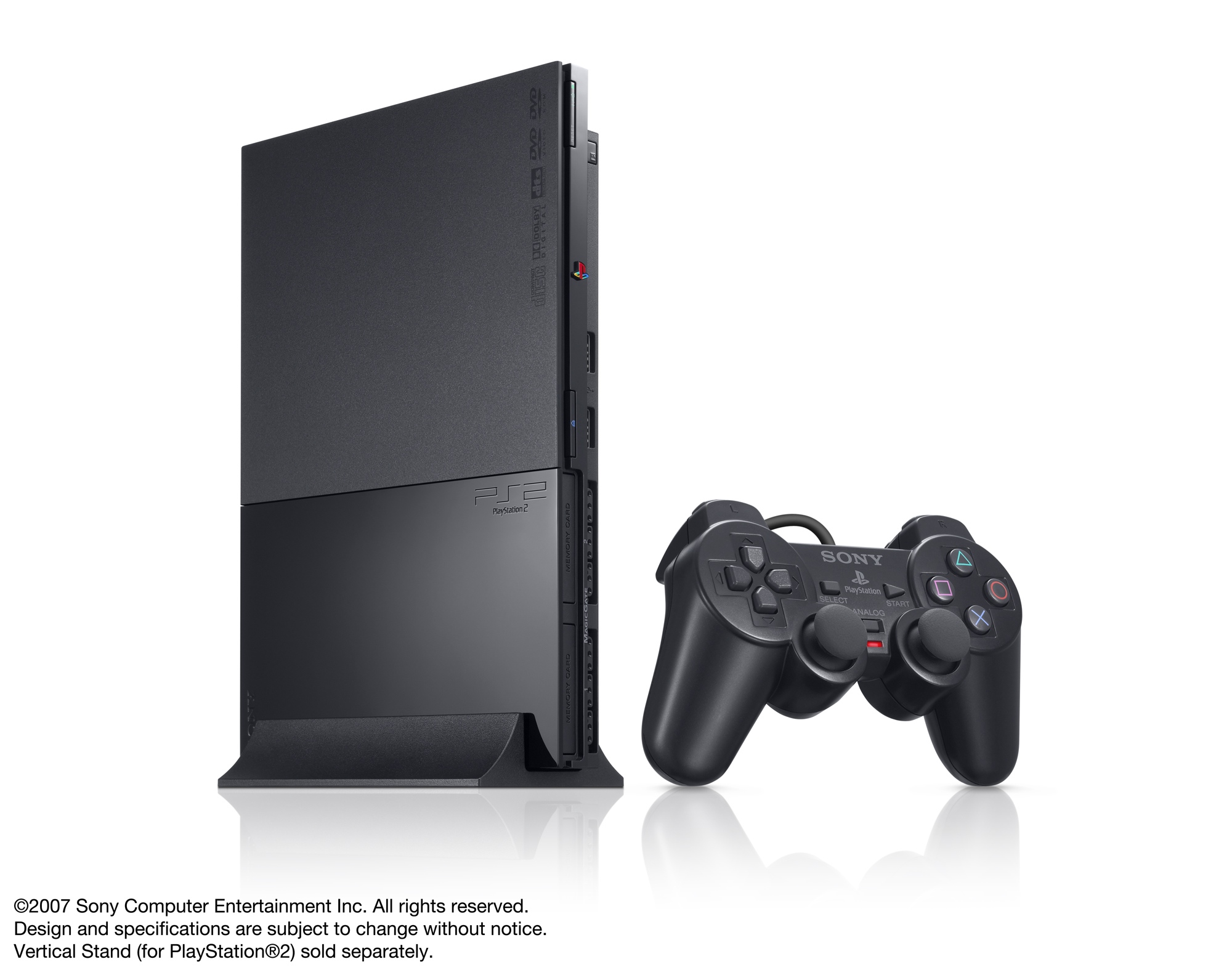
Is PS2 compatibility coming to the PS3? Is this the end for the PS2?

Is PS2 compatibility coming to the PS3? Is this the end for the PS2?

The second rumour is about PS2 compatibility coming back to the PS3, either to all existing consoles, or to the PS3 slim. If Sony plans to phase out the PS2, and it’s about time they did, then this makes perfect sense. With software emulation more of a possibility than when the PS3 first launched (where PS2 compatibility required extra, and expensive, hardware), it won’t add to the cost of the PS3, while Sony can even sell the emulation software in the PS Store. Plus, they can then start selling PS2 games in digital form for PS3 owners, just like on the Xbox 360 or Wii. So this is one rumour that might be true, and if Sony isn’t even considering this option, then somebody should smack them in the back of the head.

And is Project Natal racist? The news broke that people with darker skin tones might have trouble playing Natal due to one person’s experience at the E3 demo. It’s an interesting headline, but I don’t think there’s an issue, because surely darker clothing would affect the accuracy of Natal much more than darker skin. A calibration tool might be what Natal needs, and users might have to calibrate the cameras (due to change in lighting) before usage to ensure accuracy is improved.

So that’s it for the week. Ten years, it’s gone by rather quickly I must say. Even this feature, the Weekly News Roundup, is nearly 2 years old (in September), even though it feels like I only started doing this last month. Or maybe it feels this way because I really don’t know what I’m doing, which is probably true. Anyway, see you next week as I incompetently try to produce another edition of the WNR. See you then.


Weekly News Roundup (28 June 2009)

Sunday, June 28th, 2009

Going to do a very quick WNR this week, as I’m still feeling under the weather. Had to do a bunch of tests at the clinic to see what’s wrong – having things inserted, extracted, and cables plugged in wasn’t a nice experience, but I now know how my DVD player feels. And no, it’s now Swine Flu, although everybody here in Melbourne, Australia seems to have it.

Copyright

In copyright news, more lawsuits, but this time in Ireland, where the record industry representatives are suing two Irish ISPs. It’s heartwarming to know that, despite the bad economy, that at least the lawyers are still finding excellent amounts of work available (at at $765 per hour as well).

Lawsuits, three-strikes, throttling – the industry’s favourite tactics, but not all government agree. The Spanish government’s strong dislike of the three-strikes rule has promoted their music industry to change tactics and abandon the three-strikes system. If only other government were as strong in their beliefs that due process is still something that needs to be protected.

And onto our favourite court case, you must have heard a lot about how The Pirate Bay case has been denied a retrial. This is true, but it is by no means the end of the road for the TPB guys. What happened, and as explained clearly a few weeks ago by Cynthia, our Swedish expert, a higher court has ruled that the judge in the original case was not biased. All this is means is that instead of having the retrial in the original court, the retrial will have to take place in a higher court. There are still a few more couts to go before it is all over. I don’t think we will find out anything definitive in 2009 in any case.

Real says RipGuard and ARccOS are not copy protection systems, and so do no fall under the DMCA

Real says RipGuard and ARccOS are not copy protection systems, and so do no fall under the DMCA

In my second favourite court case, the MPAA has filed new complaints against Real Networks, claiming they lied during the RealDVD trial. It all pertains to patent filings from a couple of years ago in which Real Networks claimed that ARccOS and RipGuard were copy protection systems, even though Real claimed in court they were not. The argument goes that Real thinks neither ArccOS or RipGuard can fully prevent the copying of a disc (only delay the process), and so they are not anti-copying features. The reason why the MPAA may be going after Real on these two additional anti DVD-copying measures, as opposed to CSS, is that Real does have a CSS license and it may be harder to argue that Real has ripped CSS, but in reality, it has left CSS intact in the copied file (and added a few other layers of its own DRM). The verdict is expected soon, but I don’t think Real will win if the argument is already on something as specific as whether ARccOS and RipGuard are copy protection methods – if the argument has been the higher issue of whether studios have the right to prevent usage that does not harm to them, which is the case when people make make digital copies of movies that they own and do not share with anyone else other than those that already have access to the original disc.

The American Society of Composers, Authors and Publishers say that your phone’s ringtone should be considered a public performance and they should receive royalty everything your phone rings. Yeah right.

High Definition

Onto HD news, rumours abound that Toshiba will jump on the Blu-ray bandwagon soon. Is there some truth to this news story, or is this the new “Blu-ray add-on drive coming to the Xbox 360” line of stories that will always pop up from time to time, only to be refuted almost immediately. There does seem to be more truth behind this story as it comes from statements from Toshiba’s President when he was speaking to shareholders. And since Toshiba owns the Cell processor, it would be interesting to see a Toshiba Blu-ray player with high quality DVD upscaling as seen in their HD DVD players, plus ultra-fast response times like the PS3.

The rest of the stories this week were about last week’s story about a poll that showed HD DVD being more popular than Blu-ray, and hardly anybody cares about Blu-ray. There is a reason why I only devoted two sentences to this poll last week, because polls are misleading by themselves, and when you are trying to poll actual ownership stats, rather than relying on hard data, then it’s even less useful. The Blu-ray people’s response is that the poll is unfair because most people think their upscaling DVD player is in fact a HD DVD player, which might be the case, although it’s still the Blu-ray people’s fault for not educating people better on what is real HD and what is upscaled. Start by calling it “Real HD” to differentiate Blu-ray from “Upscaled HD” might be a good marketing idea.

Gaming

And finally in gaming, a new PS3 firmware has been released. Firmware 2.8 doesn’t add anything major, but fixes a few things and improve some others, like a faster XMB, wireless controller auto-assign. Still a lot of people having bricked PS3s after each update, so read up the horror stories on the official PS3 board and see if you are willing to take the risk if your PS3 is already out of warranty.

Okay, the doctors are telling me to take it easy, so that’s what I will do. As if I needed encouragement to be lazy. See you next week, hopefully feeling a little bit better.

Weekly News Roundup (21 June 2009)

Sunday, June 21st, 2009

Sorry for this outrageously late WNR. Had a bit of a health situation that I needed to attend to. It’s a shame, since there’s lots of stuff to go through, so I will have to keep things short. And no, laziness is not the “health situation”. I wrote a mid-week blog about Nvidia’s Ion platform. An Ion is a charged atom, which makes the name so appropriate as that exactly what the platform does – it gives Intel Atom systems a much needed boost in the graphics department, particularly for HD video. It won’t be too long before you will see Blu-ray capable netbooks that can also double as a HTPC, I think.

Copyright

Let’s start with copyright news. The MPAA admits it is losing the PR war, to what they have dubbed the enemy of copyright. There are a few people who don’t like any sort of copyright, but I think the majority of people do respect copyright, it’s just that they don’t like the way that it is being enforced.

Personally, I buy lots of DVDs. All legitimate. I don’t buy music much, mainly because I don’t listen to it much apart from Net radios (also legal). I do buy games, not a lot, but I don’t have a lot of time to play them anymore. But I am one of the people that the MPAA says is an enemy of copyright, simply because I refuse to support their methods. I respect that they want to keep piracy under control, but I don’t respect the way they have gone about things, which has made piracy an even easier choice for those that can’t stand DRM and the sometimes ridiculous prices for digital content that the MPAA members want to charge. I believe the best way to fight piracy is to make it unnecessary, and this means tackling the difficult issue of how to make money in a digital world, and how to make it harder for people to share content they don’t own, but at the same time not seriously affecting their user experience. I think this is all possible, and the music industry has been forced down this road already. It is just a shame that their business is a declining one, even without piracy, and so it makes for a bad example. But even they can turn things around if they price music aggressively, and take advantage of the digital medium’s low cost of distribution, replication. There will be losers in this revolution, as there will always be, but it’s a necessity and fighting against the tide will only make things more difficult. Embrace the change!

It’s unfortunate that the music industry’s changed tactics of pursuing legal avenues to stop piracy is just as clumsy and overreaching as their attempts with DRM. They are lobbying governments and telling them scary scenarios about the end of music and movies, in an effort to scare them into passing laws which have no place in societies based on the rule of law. The so called 3-strikes is so against the nature of the Internet, and justice and civil rights in general, that it’s hard to believe people are taking it seriously, the latest call for it are in the UK. Japan has just tightened their copyright laws as well. Apart from having no due process, the method will also mean a lot of false positives, as the most used identification method, which is based on using the IP address, is in most cases insufficient to identify people a court has ruled. And in the end, all it will do is to force people serious about pirating stuff to get more serious about hiding their activities, which is possible through encrypted VPNs and other technologies.

Jammie Thomas-Rasse: Sharing 24 songs will cost her $1.92 million

Jammie Thomas-Rasse: Sharing 24 songs will cost her $1.92 million

So the only people that will be caught are those that haven’t done much pirating and don’t know how to avoid capture. But these are the people that will be made examples of, much like the single mother that has been successfully sued for $1.92m, to scare people into behaving. But it won’t work, everyone knows it. And to go so overboard with the lawsuit to demand a multi-million dollar settlement will be a PR disaster for copyright groups, because it just reinforces how much out of touch they are with reality. $80,000 per song, for 24 songs, is a ridiculous number. There is no proof of the exact number of people that have been able to obtain songs from Thomas-Rasset, the sacrificial pawn in this game, so the figure is largely for punitive damages. Does sharing 24 songs seem like a $1.92m crime to you? Well it does to groups like the RIAA, and they’re not going to stop – the next on the hit list is AM/FM radio stations, which has just been labeled as “A form of piracy”. Let’s just stop people playing, sharing, listening to all songs – that will surely help save the business, not to mention the money they are paying to lawyers to fight these cases which might have been better used to find alternative strategies to operate in this new digital world.

The US had its digital transition, and for all purposes, it went off pretty smoothly. It is just as well that plans to do this were set in motion many years ago, before the crazies took control of the copyright debate, as otherwise digital TV would be saddled with DRM, most notably the Digital Flag. This would have prevented people recording any TV show that has this flag set, so no TiVo or delayed viewing, just to make sure that if you can’t catch something on TV live, or want to watch it again, you’ll have to fork out bucks to do it. If these crazies had been in control far earlier, the tape recorder, the VCR and even the PC might not have been allowed to exist, and is this really what we want, or what’s good for the industry and economy in general?

High Definition

Onto HD news now. Another report which seem to indicate that while Blu-ray sales are up, DVD sales are down by much more. It’s going to be a while before Blu-ray can gain enough of a market share to really make a difference, but the decline in DVD sales probably has as much to do with the increase in gaming purchases as with anything seriously wrong with the industry it self.

The other piece of news is a poll which showed that Blu-ray standalone uptake is not quite increasing fast enough, and was even outpaced by the dead HD DVD format in the last year. Polls are interesting, but figures for uptake shouldn’t need to rely on polls, as there are real figures to be found.

Gaming

And finally in gaming, Activision’s CEO has joined the chorus of people to call for a PS3 price cut. There is a veiled threat in there about pulling support for the PS3 (and PSP) if action isn’t taken, but I wouldn’t take it all that seriously. Do game publishers want cheap consoles? Yes. Will they pull support for the PlayStation family? No. But hopefully, this will give Sony extra incentive to even just consider a price cut.

That’s it for this week. Short and sweet. Long and boring coming up next week.

Nvidia Ion – HD in a small package

Thursday, June 18th, 2009
HTPC in a tiny tiny box, made possible by Nvidia Ion and the 9400M GPU

HTPC in a tiny tiny box, made possible by Nvidia Ion and the 9400M GPU

You will soon be hearing a lot about Nvidia’s new Ion platform. There will be a whole bunch of hype, superlatives and marketing jargon to go along with it, but if you boil it all down, Nvidia Ion’s main purpose will be to give HD where HD wasn’t possible before.

Intel’s Atom processor has been a huge success in the netbook market. Netbooks are a needed stepping stone between the ever more powerful smartphone, and the laptop. Netbooks are perfect for basic office work, Internet and will give you some multimedia potentials. They usually employ an Intel GMA 950 GPU, which will allow you to do all the basic stuff, but try to do anything more taxing like playing back a 720p H.264 video, and you’ll find it struggling, along with the Atom processor, in trying to deal with it. So while netbooks and other similar mini computers are great for most tasks, today’s multimedia demands mean that they won’t have a place in your home theater as a media player.

Nvidia’s Ion platform seeks to change this notion.

By including a Nvidia GeForce 9400M into the package, as opposed to using the Intel GMA GPU. Apart from being an tiny GPU that fits well into devices normally powered bt the Atom, the 9400M also features Nvidia’s 3rd generation PureVideo HD (or VP3) acceleration engine designed specifically for enhanced HD playback, including full hardware decoding for all the Blu-ray video codecs. The 3rd gen VP3 is only seen on some of the more recent GeForce GPUs, and not even the GTX 2xx range have them (they are still using the 2nd gen., which cannot do full VC-1 hardware decoding, only full H.264 decoding). What this means is that the GPU will handle most of the load for playing back HD movies and this now allows Atom based systems to play back 1080p HD movies.

Good things come in small packages - Ion can make netbooks play Blu-ray

Good things come in small packages - Ion can make netbooks play Blu-ray

This then allows Atom based systems to have a genuine place inside your home theater. The small form factor and lack of heat (and therefore, noise) will be perfect in the home theater, and with 1080p HD H.264 or VC-1 playback, it will handle all of your multimedia needs without having a dedicated PC hooked up to your system. Increase the form factor a bit and add in a Blu-ray drive, and you’ve got yourself a full HTPC system for maybe only half the cost, half the space, and half the noise. And unplug all the cables, and it’s portable too. The 9400M will support Nvidia’s CUDA platform, which means GPU will be able to assist the CPU in many other tasks.

What Ion, and the 9400M, won’t offer you is gaming potential, because in order to reduce the heat output and power requirements to fit into Atom systems, a few corners had to be cut – the 9400M only features 16 stream processors, compared to the 480 you get with Nvidia’s top of the range GPU. 2D graphics won’t be much better than Intel GMA based systems either. But video, and HD video at that, has always been the main draw here.

Intel will fight the Ion platform by introducing new CPUs that can handle 720p video using less power and at less cost than Ion, but 1080p video is where things are heading at the moment and there appears to be a bright future for Ion as long as system builders, like Asus, take full advantage.

Weekly News Roundup (14 June 2009)

Sunday, June 14th, 2009

Time for another Weekly News Roundup, because, funnily enough, it’s been another week since the last one. Since then, the NPD US video games sales figures for May 2009 came out, and as usual, I have posted my analysis. More bad news for the video gaming industry basically, but a slight improvement since April. And there’s yet another hyped up PS3 exclusive (inFAMOUS) that has failed to really grab a huge chunk of sales, adding to the list including LittleBigPlanet and Killzone 2, to name a few. Sure, they do sell in good numbers eventually, but so do a lot of other quite mediocre titles, including ones that aren’t even exclusive and so by common sense should be selling less on one particular console than exclusives. I do wonder how many people are like me and don’t use their PS3 for games, only for Blu-ray or media playback. I’m sure the percentage of this type of users is much higher than on the Xbox 360, while a competent media hub, is no patch on the PS3 (no Blu-ray, noisy …). Anyway, onto the news.

Copyright

In copyright news, a couple of developments this week, mostly in Europe. That’s understandable, due to the attention the Pirate Bay trial has attracted, and what appears to be several European government’s obsession in pleasing their American overlords to pass strong anti-piracy legislation.

The Swedish Pirate Party now has a seat in the EU parliament

The Swedish Pirate Party now has a seat in the EU parliament

First up is good news, which is rare for this section of the WNR. The Pirate Bay may have lost a trial, but it has gained status as a political party by winning a seat in the European parliament. They won 7.1% of the vote in Sweden, which may not sound quite as impressive to people living in countries with two major parties, but considering that the largest  party in Sweden got 24.6%, and that their Prime Minister’s own party only got 18.8%, the Pirate Party’s 7.1% suddenly looks a lot more significant. The traditional third party in many countries is the Green party, and they only got 3.6% more. The Pirate Party is a single issue protest party, and it’s really unheard of for such a party to receive so many votes. But that’s not to say that the one issue they represent is not an important one, or one worth fighting. Far from it. One can only hope The Pirate Party extends their reach to around the world and they can become a political force that will force some positive change for the lobbyist controlled copyright issue.

Meanwhile, the New York Times posted what appeared to be very bad news for The Pirate Bay in terms of their trial, which the headline that states that their appeal has been denied. This was sourced from an article by the Hollywood Reporter. However, both are wrong in this case, according to our forum’s resident Swedish expert, Cynthia (and a couple of other news sources). The Pirate Bay defence had claimed that the judge ruling the case was biased. The court which will see to the appeal has asked for opinions from the original court that ruled the case in regards to this claim, and the original court has denied any evidence of bias and has submitted this. This is where the confusion comes from, perhaps, because no judgement on the appeal has been made yet, and I doubt this is the only avenue of appeal anyway. Thanks again Cynthia for the update, and no thanks to the NY Times for their lack of research on the issue (even if they don’t consider it “important”).

A couple of weeks ago I posted a news item about France passing a new controversial law, dubbed the “three-strikes” law, which aims to cut off Internet usage for people found to be “guilty” of downloading pirated material three times. Of course, there is no court, no appeal of decisions, and the copyright groups can basically silence anyone it wants to without any hint of a fair process. It is no surprise then the country’s constitutional council has declared this law to be, well, un-constitutional because a system where one is assumed to be guilty and the charged needs to prove their innocence is not one that should belong in a Democratic society. The council basically says that the court has to be involved somehow, so people can prove their innocence. The French government are undeterred and plan to go ahead with the now modified law, which will now require “special judges” to rule on each and every case. But the whole point of the three strikes system is so that it doesn’t go through the criminal justice system to save time and money, but the newly modified law won’t achieve this point and one can see the court system being overwhelmed instantly. Maybe then, it will convince the French government to drop it completely.

All this emphasis on downloads seem to suggest that downloading pirated material has led to a collapse in revenue for industries such as the music industry. While the music industry has suffered from lost of revenue, there is no doubt of this (well, maybe a little), perhaps the reason is not piracy at all. The Guardian, spending a little more time doing research than the NY Times, has came up with a very interesting graph in regards to people’s spending habits. And yes, it does show music spending way down compared to just a few years ago. But the overall spending seems to have increased, to almost double of what it was in 1999. And looking at the graph in more details, it’s easy to see why this is the case. DVD sales went up quickly, but has stayed pretty flat since 2003. Music down as mentioned previously, and so is DVD rental. But people’s spendings on gaming quadrupled in the same period. So instead of piracy getting people’s money, it’s actually gaming, taking money away from music and rentals, and to be lesser degree, gaming. In the intro of this week’s WNR I talked about the NPD analysis, and one of the reasons that I have been doing the analysis posts for over a year now is because gaming is huge business and it needs to be made known that, yes, it is taking money away from the other home entertainment industries. But the point is overall spending increased, and this is despite piracy on the rise, so perhaps piracy isn’t a problem at all – it’s how the music and DVD industry, the passive entertainment industry if you will, can compete with the high level of interactivity that’s offered by video games. And while games are more expensive, say 3 times the cost of a DVD movie, but they also offer at least 3 times the entertainment, sometimes hundreds of hours of interactive entertainment, compared to only 2 or 3 hours for a typical movie (and 72 minutes for a CD). Research shows that piracy actually help to promote content, and thus promote purchases, while people who pirate are not the types to have spent money on it even if there was no pirated alternative. But let’s blame it on the pirates anyway, because that’s easy than confronting the harsher reality that music and movies aren’t as fun for the whole family as video games anymore, especially now with family oriented game consoles like the Wii.

High Definition

While this is probably still Copyright news, but I’ll talk about it in the HD section since the Copyright section above was getting a bit long. The big news this week is that the AACS licensing authority, the people behind copy protection on Blu-ray, has revealed the final specifications for the AACS system. There are a couple of controversial items in the announcement, which is not surprising given the whole attitude of the DRM industry.

Say goodbye to the analog video outputs on your Blu-ray player

Say goodbye to the analog video outputs on your Blu-ray player

The big first controversial item is that analog video output is set to be banned from Blu-ray players. That’s right,  after 2014, no Blu-ray player will be allowed to have component, S-Video, SCART or composite video output or they face not getting the AACS license and therefore, will be unable to play all commercial Blu-ray movies. Starting in 2011, analog output will be limited to SD resolutions only, to set the analog sunset in motion. The argument that analog is useless in the world of HDMI and DisplayPort is a perfectly valid one, and that’s reason enough for manufacturers to stop including them in their players. But to place a ban on it due to copyright reasons is just stupid. If people aren’t smart enough to just download pirated movies online, then I don’t think they’re smart enough to hook up their Blu-ray players to their DVD recorders through analog output, and then somehow find a way to by-pass the Macrovision copy protection present on all analog outputs (for DVD and Blu-ray). It’s certainly not easier than downloading. And if this measure is to stop pirates from making copies, then since existing players support analog output, don’t you think that the pirates, if they needed to pirate through analog (which they don’t), would just keep a few old players lying around to bypass this measure completely. And real pirates work at the Blu-ray disc pressing plants, and have access to the masters, which is why they can bring out a pirated version even before the official release, and this doesn’t stop them. The only thing it stops is Macrovision from getting royalties from Blu-ray (which is not a bad thing, really), and it stops people using Blu-ray on older equipment. I don’t think this will really affect that many people, since I don’t think most people will even remember what analog is in 2014, but it’s the principle of the thing, and it just shows how paranoid the content owners are (possibly thanks to scary propaganda from the DRM industry).

The other big news is that Blu-ray Mandatory Copy will begin to rollout next year. What it is, and it’s already present but not in a standardised form, is that it will allow you to make limited copies of your Blu-ray movies through the Blu-ray player itself. The copies can be on Blu-ray, DVD or even for your portable players (although no Apple based players have signed up for this yet). Blu-ray movies with MC will have an extra menu option to make copies. Each Blu-ray disc with this feature will also have an unique serial number, which is used in an online authentication system to record and place limits on your copying activities (as well as to track if the copied content eventually ends up online or not). That’s pretty much what you would expect from such a system. The problem is that current Blu-ray players do not support MC, and so if you want it, you’ll have to buy yet another Blu-ray player (Blu-ray Profile 4.0?). The PS3 may be able to accommodate this through software updates, and your PC may be updated through software as well to conform to MC standards. And despite the phrase “mandatory” in Mandatory Copy, it isn’t mandatory and is purely optional for both movie studios and hardware manufacturers. And Blu-ray movies with MC enabled will cost more. So MC may be dead before it even starts, but it does add value to be able to make portable versions of movies straight from your Blu-ray player, and it might still end up cheaper than the studio’s preferred method of you purchasing the same content many times over in each different format. I’m going to call this positive progress, because at the very least, it acknowledges the need for people to make legal copies of their movies.

Wal-Mart will be offering cheap Blu-ray players for Father’s Day, at $128 each. But take the advice from our forum members and avoid the ultra cheapo players, because they lack many of the features that the slightly more expensive players have, such as Internet connectivity.

Apple’s upcoming Snow Leopard Mac OS X revision will feature GPU assisted acceleration, including H.264 acceleration, but you will need a Mac with at least the Nvidia 9400M GPU, or you’ll miss out. The $99 iPhone should also entice more people to buy it, and it’s a nice little media player even if you don’t need all the other fancier features. And for $99, you can’t really go wrong, especially if you limit Internet usage to your home WiFi network, as opposed to spending too much on data (more of an issue here in Australia and other countries with rip-off data charges). And no, still no Blu-ray on Apple systems. And speaking of data charges, Microsoft’s HD streaming services will require a 8 to 10 Mbps connection for full quality streaming (quality will drop if connection is slower). That’s out of reach of most Australians at the very least, but maybe you lucky folks in the UK, Asia or US may get to enjoy full quality HD streaming. From a technical point of view, 8 Mbps should give you excellent 720p quality video, while 10 Mbps is probably still too low to offer Blu-ray quality 1080p video (you need at least 15 Mbps to even come close). HD video streaming is still very much bottlenecked at the bandwidth level, I’m afraid.

Gaming

And in gaming, Microsoft’s Natal motion gaming system continues the media promotional blitz by appearing on Late Night with Jimmy Fallon (video in link), in a live demo that was played by Fallon. It’s certainly easier to see the potential of Natal, but until I buy it and test it out in my own home, I’m going to remain skeptical.

Can Natal really work, or will it be too inaccurate to be of any use?

Can Natal really work, or will it be too inaccurate to be of any use?

But Engadget and IGN has both had plays with Natal, and they’ve said some pretty impressive things about it, including the fact that it’s surprisingly accurate. The accuracy thing is the one I’m most worried about. And the live demos showed a modified version of Burnout Paradise that works with Natal, which might mean that lots of existing games can be updated to work with it. I’m really looking forward to playing Crackdown by jumping up and down in my living room like a crazy person.

For those that want to make the comparisons between the Wii, PS3 motion controller (PMC) and Natal, I think Natal is something a bit different to what the Wii and PMC offers. The PMC is a basically a super accurate Wii-mote, and add in the PS3’s HD graphics, it could offer the Wii some real competition. Natal, on the other hand, doesn’t even require a controller, which won’t please the hardcore gamers, but might entice even more of those who don’t consider themselves gamers, much like what the Wii has done. Some people just don’t like having to learn how to use a controller, or are unable to, but being able to use your body to do something is natural to all humans and much easier to learn. Plus Natal offers voice and facial recognition as well. But don’t forget that the PS3 has the PS3 has the EyeToy camera thing, which can be adapted to function in a similar way to Natal, so don’t be surprised if Sony offers body motion controls as well.

My WordPress word counter meter tells me I’ve type 2327 words already, so I’m ready to take a break now. More words coming at you next week.