Archive for the ‘Movies’ Category

Weekly News Roundup (22 September 2013)

Sunday, September 22nd, 2013

Work. GTA V. More work. More GTA V.

That’s been pretty much my week so far. Not enough time with GTA V, and far too much work, unfortunately. And having an annoying cold didn’t help either.

It’s a fantastic game, the first really fun GTA game in a long time (after the bland and self-important GTA IV). I can’t recommend it enough, and if you have any inkling of interest in sandbox games, or driving around a real city, or gunning and running over people for no particular reason, then GTA V is the game for you. It’s mad fun, and here’s a gameplay video for the clueless gamers out there.

Oh yes, a WNR to go though. Here we go.

CopyrightWe now know, possibly, why Google decided to release a report on their anti-piracy efforts last week. Instead of the report being a fire across the bows of the copyright lobby, as I originally thought, that particular report now seems like a defensive move in anticipation of the MPAA’s own little report this week, which took center aim at Google for its role in “helping” Internet piracy.

Saucy stats in the report include the 74% of those surveyed that use Google or a search engine like it to discover websites that offers pirated content, even when some were not looking for it in the first place. Or that 58% of perfectly innocent search terms resulting in result pages that contain links to infringing content. And the study even dissects Google’s piracy downranking algorithm and finds that piracy sites are not being affected at all, traffic wise.

Of course it goes without saying that the MPAA were the ones that commissioned the report in the first place, befitting their usual M.O. I will refer you to the story I talked about last week, regarding a truly independent study that found a worrying bias in studies referred to or commissioned directly by rights holder groups.
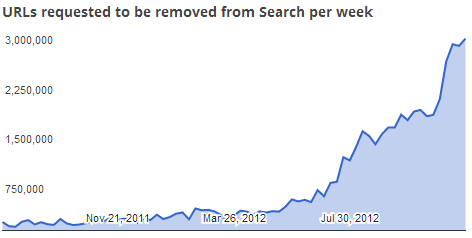
Google DMCA Stats

Google’s anti-piracy efforts not enough, says MPAA as Hollywood’s trade lobby points accusing finger at Google over Internet piracy

Google, being the dominant search engine, was always going to have a role in linking to pirated content. Just like they have a big role in linking to legitimate content too. Would Hollywood be better off with or without Internet search engines, there to help them promote their latest shitty movie? That’s one of the many pertinent question the study doesn’t look at.

People who want to find pirated content, will find it, whether Google is there or not. There are forums, Facebook, Twitter. Hell, even the MPAA has done a pretty neat job at pointing to the best piracy places via their DMCA notices and frequent blog posts. Really, there’s nothing in the report that we didn’t know already.

So it’s hard to tell what publicizing facts which are already widely known will do towards reducing piracy. But the report is not really intended for you and me, or pirates, or even Google. It’s for those that sit on Capitol Hill, those that are funded by the MPAA, the ones needing something to be outraged about to justify their coziness to Hollywood’s cashed up lobbyists.

And then you have Netflix. Not only does Netflix helps to reduce piracy, it also uses piracy stats for its own advantage, according to Netflix’s VP of content acquisition Kelly Merryman. Merryman says that piracy stats are being used to judge a show or movie’s popularity in a particular region, and this then help form the decision whether to license that particular piece of content in the region. Merryman, who was being interviewed by the Netherlands based Tweakers website regarding Netflix’s recent launch in the country, noted that the TV show Prison Break was one of the shows whose licensing was determined by the popularity of the show on piracy networks.

It’s certainly an interesting and common sense approach. Piracy has always been a measure of demand, and unmet demand usually. And so it makes perfect sense for Netflix to tap into piracy stats to determine a show’s popularity. With Netflix less eager to make bulk licensing deals with studios, instead choosing to license specific content on a case-by-case basis, these stats could prove invaluable. At the very least, it’s cheaper than conducting market research.

In a separate interview, Netflix CEO Reed Hastings also confirmed that Netflix is having a big effect on piracy, stating that Canadian piracy related BitTorrent traffic dropped by 50% following the introduction of Netflix into the country. Hastings believes that the ease of use of Netflix is why it is beating piracy, even though pirated content comes at zero cost.

People have always been willing to pay for content, even if it is already available on the Internet for free. How much they’re willing to pay largely depends on the overall user experience, and people’s notions of value. There is no doubt that Netflix, with its $7.99 per month price point, offers both value and a better user experience thanks to the large number of supported devices. And this, not via legislation or DRM, or studies, is how you beat piracy.

High Definition

And the next battleground for Netflix may be in the 4K arena. The company’s CEO is already hinting at the technical aspect of Netflix’s 4K offering. Speaking in an interview conducted in Netherlands, Netflix CEO Reed Hastings said that Netflix’s 4K offering will “only” require a 15 Mbps connection per stream.

DVD vs Blu-ray vs 4K

4K will use more bandwidth than DVD or Blu-ray quality videos, but Netflix thinks 15 Mbps should be enough

Netflix currently uses eyeIOs compression technology to delivery its up-to 1080p videos. Sony’s recently launched Internet based 4K download service, incidentally, also uses the same firm’s platform. 4K movies on Sony’s service are 40 to 60 GB large at the moment, which is actually about 45 to 70 Mbps (but to be fair, Sony’s service is more download than streaming). eyeIO is also believed to be investigating adapting the HEVC codec into their platform in the future, offering possibly even better compression and/or quality.

Of course, 15 Mpbs would seem like the minimum requirement, and for only one stream. Given overhead, multiple streams, and the fact that people in the same household might use the Internet for other things while someone streams 4K content, a steady 30-50 Mbps connection would be ideal. That’s not really achievable on a mass scale right now, but Hastings says that the 4K take-up would be slow enough to allow ISPs enough time to ramp up their infrastructure.

I don’t know though. I think the people who are likely to be interested in 4K, the cinephiles, won’t want compromises on quality. Therefore, they’d want the highest possible quality 4K streams, and 15 Mbps (and Netflix in general) isn’t going to do it. Fiber connections or discs, I think, is where the majority of 4K content will be delivered across.

That’s it for the week. Back to GTA V for me, at least for a while until the work deadlines become a bit more serious. See you next week.

Weekly News Roundup (15 September 2013)

Sunday, September 15th, 2013

How are you on this fine Sunday. Most of this WNR was written ahead of time as I went sand crab catching on Saturday. [INSERT UPDATE ON HOW MANY CRABS WERE CAUGHT OR INSERT SOMETHING FUNNY IF NO CRABS WERE CAUGHT]. It was a very enjoyable, “and very rewarding”/”but not very fruitful” [DELETE AS APPROPRIATE], trip. So a short WNR, but still with a few interesting tidbits to go through. Let’s get started.

CopyrightCommon sense tells us that graduated response, or three-four-or-however-many strikes, hasn’t really worked as a piracy deterrent. Or as a way to promote the purchase of legitimate content. It’s common sense because many countries, like France, New Zealand, Taiwan, South Korea, have had their own regimes for a while now, and there doesn’t seem to be a lot of noise regarding their effectiveness, even from the most biased sources. It is also common sense to us because we’re not idiots.

At the same time, there has been many studies that point out the ineffectiveness of three-strikes. The latest one comes from Australia’s Monash University. A new paper by Dr Rebecca Giblin finds that graduated response has failed in the three key areas that it was designed to have an effect in. Namely, reduced infringement, to promote the purchase of legitimate content, and to promote the creation and distribution of new content. The study found little evidence, if any, that graduated response has had a positive effect in any of these three key areas.

Three Strikes

Three, or however many, strikes doesn’t work to stop piracy, encourage legal purchases, or the creation of new content, a new study finds

It doesn’t reduce infringement because people can simply use another method to download their movies and TV shows, one that is not monitored by three-strikes. It doesn’t promote the purchase of legitimate content because of the previous point, and also because it doesn’t really solve any of the issues that encourages people to pirate (namely price, availability, usability). This is all fairly obvious to anyone who just thinks a little bit about the problem with piracy. In that piracy isn’t a problem of enforcement, it’s an issue of convenience and pricing. And effective enforcement was never really going to be possible anyway, not without a herculean effort that would fail even the most optimistic cost/benefit analysis, and at the same time, shred our privacy rights.

Simply stated, graduated response doesn’t work. It’s a waste of money, and it unnecessarily reduces our right to privacy and due process. But it’s considered a panacea among the pro-copyright lobby, so expect more countries to adopt this in the near future.

The only thing more pointless than graduated response, and more dangerous, may be search engine censorship. And in an effort to hold the fort against the mounting pressure from copyright holders to start messing around with search results, Google has released a report detailing the company’s anti-piracy principles and the successes in fighting the good fight.

Other than the usual self propelled back patting, the report does state quite clearly what methods the search engine giants thinks is most effective in reducing online piracy. It starts with the perfectly reasonable call for better legitimate alternative to piracy, more of your Netflixes and Spotifys, and in a somewhat transparent gesture of self promotion, Google Play and YouTube. The rest of the report simply states Google’s anti-piracy efforts, including the 4 million DMCA takedown requests the company has to deal with every week, as well as efforts in shutting down revenue sources for pirates.

An interesting read, no doubt. But will it placate the copyright lobby and their political servants? Probably not, but it was worth a shot anyway.

High Definition

I mentioned a couple of months ago that the BDA (Blu-ray Disc Association) has been investigating the potential for 4K movies to be distributed via Blu-ray discs. New rumors suggest that a positive announcement from the BDA on this is not too far away. Adding fuel to the fire is this story about a German Blu-ray disc manufacturer announcing a new line of triple-layer 100GB Blu-ray discs, and their press release specifically mentions 4K as one of the intended uses.

Blu-ray Player

Could existing Blu-ray players be made capable of reading 100GB triple-layer discs containing 4K content? Does it even matter, as these players may not be powerful enough to decode 4K content anyway …

100GB should be more than enough for 4K movies, especially if it uses the new H.265/HEVC codec (but even with H.264/AVC, 100GB should be enough). The big question is whether these new discs would be compatible with existing Blu-ray players, perhaps after an obligatory firmware update. However, new players will probably have to be produced to support 4K output and support for H.265/HEVC, and older players may lack the processing grunt to handle the decoding anyway; so having these discs be readable by older Blu-ray players may be somewhat pointless (although being able to downscale Blu-ray 4K content to 1080p would be a very nice feature to have for existing Blu-ray owners, and will no doubt help push Blu-ray 4K sales at a time when 4K TVs are still too expensive).

The other main advantage of backwards compatibility is that with the PS4 and Xbox One both having Blu-ray drives, and both capable of outputting at 4K resolutions, these would instantly become the Blu-ray 4K players of choice in the same way the PS3 was the Blu-ray player of choice back when Blu-ray first launched. Stay tuned to this space.

If any of this is true, it would definitely keep Blu-ray relevant in the 4K era. I know Sony, of all people, are going down the disc-less route in terms of 4K, but discs are still the most efficient way to transmit the large amounts of data required by 4K right now. That will change with the increase penetration of fiber based broadband, but this could take years. And we’ll probably have the bandwidth hogging holographic TV to worry about by then!

Gaming

The August NPD report has been released. The Xbox 360 was once again the most popular home based console for the month of August 2013 for the US market. This is the 32nd time in a row that Microsoft’s console has won the accolade.

GTA V Screenshot

GTA V will be occupying most of my free time over the next couple of weeks, I suspect

However, only 96,000 Xbox 360s were sold, only half of what it was a year ago. This is the first time in a long time that the Xbox 360 has sold less than 100,000 units in a given month, and the fact that it was still the best selling out of the other home based consoles, tells a rather unfortunate story. Still, with only months left before the Xbox One and PS4 are on the market, the low hardware sales are to be expected. GTA V’s release this month will boost hardware sales when the NPD releases its report this time next month though.

Speaking of GTA V, I’ve pre-ordered my copy (despite the fact that the pre-ordering phenomenon is directly incentivizing the video game industry’s many bad habits these days – but I just can’t say no to a GTA game). I doubt I’ll have time to play it until next weekend, so please do not expect a surprisingly wordly edition of the WNR next week. It ain’t gonna happen!

That’s it for the week. I’m off the enjoy a nice dinner that includes crabs/no crabs [DELETE AS APPROPRIATE]. See you next week.

Weekly News Roundup (8 September 2013)

Sunday, September 8th, 2013

So Australia is getting a new government that promises to takes us back to the past by stopping work on our national fiber network, in favor of a FTTN one relying on our badly maintained copper wires. (Up to) 25 Mbps here we come!

Coincidentally, this is the week that Sony launched their 4K download service. With 40GB+ per 4K movie download, even downloading via a 100 Mbps fiber connection will seem like a long wait, although this should theoretically allow for uninterrupted streaming. HEVC, which also features in the news roundup this week, will help to reduce the bandwidth a bit, but 40GB is still probably the benchmark when it comes to the size of a typical 2 hour movie, if you don’t want to sacrifice quality. Of course, our new prime minister says that there’s no need for high speed broadband, not when most people are just using Facebook and Twitter and whatever (seriously, that’s what he said).

Enough politics for now though, we’ve got an WNR to get through.

CopyrightA huge copyright fight over 3D printing is brewing. It’s actually two fights, one that involves the creator of 3D designs and those that want to obtain it without having to pay; the other involved ensuring those designs are in fact original and not ripping off existing designs, say based on objects in popular movies and TV shows. An impending copyright storm inevitably leads to a pre-emptive solution, and no surprise that DRM is being chosen as the answer.

3D Printed Bust

The copyright storm is brewing over 3D printing (Credits: Mirko Tobias Schaefer via Flickr, CC)

Sendshapes is a new service, currently in alpha testing, that aims to solve one or maybe both of these copyright problems by allowing content designers to enforce a one-time printing rule. This act of digital right management is performed using software that only allows designs to be streamed to the host PC for printing, pieces at a time, and with the design completely removed once the printing is done.

While this solves the problem of ensuring designs won’t end up on The Pirate Bay (well, at least until the DRM is cracked), the second and larger problem may be harder to enforce. Sendshapes will need to have a system to ensure all shared designs are fully licensed, or at the very least, ensure safe harbor applies to their service (as, after all, they are a service provider and should not be entirely liable for what their customers end up doing).

But none of this prevents people reverse-engineering the designs of popular physical objects, and then uploading the designs gratis to sites like The Pirate Bay. Yes, self-printing these things may end up costing more than the original mass manufactured version, but there will be plenty of people who will want to do a bit of self-printing. For fun and stuff. Licensed owners of these designs need to take proactive action and offer a legal self-printed alternative, if they want to avoid creating a new piracy problem.

——

If you’re like me and you’re a fan of Homeland, you might have been quite confused when people you know started talking about plot elements in the premier episode of season 3. Confused because the damn episode wasn’t supposed to air until the end of this month. While spoilers are indeed annoying, it surely must have annoyed Showtime more that such an eagerly awaited episode was leaked online almost a month earlier than the air date.

Leaked Homeland Episode Missing Effects

S03E01 of Homeland has been leaked a month before the air date, but the leaked version is missing some special effects

The leaked episode, missing opening credits and some special effects, made its way to the usual BitTorrent places earlier this week and has already been downloaded hundreds of thousands of times. I don’t really want to get into the legal and moral debate of the leak (in that it’s both illegal and probably immoral as well), but it struck me as interesting how popular the download was. Most people who downloaded the episode were well aware of the missing special effects, knowing they were downloading an inferior and incomplete product. But still, they downloaded and downloaded, and downloaded.

So is quality really that important, or is timeliness of availability a much bigger draw? Someone like me who prefers to make the viewing experience as perfect as possible, especially for top quality content like Homeland, the leaked screener or workprint just won’t do (I’m also too lazy to watch both the leaked version, and the official version when it airs here in Australia most likely on a seven day delay). But I also feel tempted, very tempted, to watch the leaked version. So timeliness is probably the biggest draw, and I think a lesson is here to be learnt by those who still insists on release windows and unnecessary delays.

——

Jealous at their French rivals and their American friends having all the fun with their own graduated response systems, the UK’s record industry trade group is apparently working on their own system. The BPI have been in negotiations with UK’s major ISPs for several months now, working on a voluntarily agreement that could see a central database of “piracy offenders” being created to help dish out warnings and disconnections.

Unsurprisingly, ISPs have rejected the BPI’s preferred solutions, calling them “unworkable”, and also citing concerns that customer’s rights are being compromised. It is believed that the BPI is fed up with waiting for action to come via the government’s Digital Economy Act, which was passed into law in 2010, but has yet to actually do anything.

The BPI also doesn’t appear to be concerned about the fact that the graduated response experiment across the Channel has failed. I mean, let’s not let facts get into the way of rhetoric, right?

High Definition

In HD, or rather, Ultra HD news, Sony’s long awaited 4K video download service finally launched this week. Video Unlimited 4K will offer 4K movies to rent for $7.99 per 24 hour viewing window, or to buy from $29.99. Launch titles includes Men in Black I and II, The Da Vinci Code, with Moneyball and Ghostbusters available to buy. Even episodes of Breaking Bad gets the 4K treatment.

Sony 4K TV with 4K Media Player

Sony launches Video Unlimited 4K, with rentals starting from $7.99 per 24 hours, and purchases starting at $29.99

Some interesting stats I’ve gathered from places. A typical 2 hour movie uses around 40GB of storage, which isn’t a lot when you consider the fact that 4K video has 4 times as much data as 1080p videos. Some movies play instantly, suggesting some kind of buffering/pre-caching system. Still, some kind of ultra fast broadband connection would be required to get the best out of system. Something like Google Fiber would be a natural complement to the service. Which brings me back to the point I made in the intro about Australia’s soon to be abandoned fiber network.

On a related note, DivX (yes, they’re still around) has had a major release milestone this week with version 10 of their codec being released. Most interestingly, it includes HEVC support, possibly the first consumer based solution for the relatively new codec. HEVC, also known as H.265, is the natural successor to the ubiquitous H.264 and promises even more efficient encodes. It’s the perfect complement to 4K.

Might be time for me to start playing with HEVC and see what I can do with it. I might even can create some sample 4K videos and make them available to download.

I think that’s it for the week. See you in seven.

Weekly News Roundup (11 August 2013)

Sunday, August 11th, 2013

Welcome to the latest edition of the WNR, filled with the copyright, high def and gaming goodness that you know and love. Nothing much new to update from my end. I ordered a Chromecast a few weeks back from Amazon (to ship it to Australia via one of those relay shippers), but alas, the lack of stock is becoming a bit frustrating. I’ve received numerous notices from Amazon about the shipping date, giving me all sorts of different information, so who know when I’ll get one. Not that it’s of that much use to me in Australia, since the built-in Netflix support appears to used hard-wired DNS settings, which rules out geo-unblocker services until the device can be hacked or an easy workaround found (which I’ll definitely write about on streambly if/when it is found). Anyway, the news.

CopyrightNot this again. I guess the Obama administration has run out of things to do, now that it’s commerce department is again trying to revive one of the most controversial parts of the very controversial SOPA bill – to make unauthorized streaming a felony.

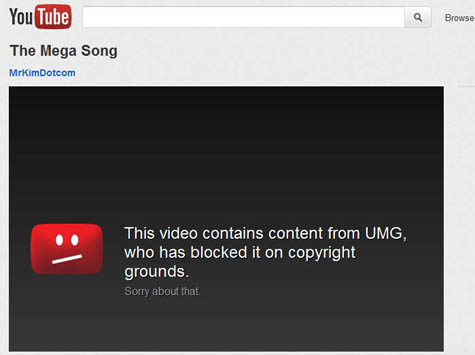
Megaupload's Mega Song was blocked on YouTube by UMG

Getting your video removed by YouTube could be the least of your worries, under new plans that could make the offense a felony

If all of this sounds familiar, then it’s because it is. Check out this WNR from November 2011, in which the same issue was discussed due to an independent piece of legislation urging for the same (which was then rolled up into the mega monstrosity that was SOPA and PIPA). The obsession that the creative industries, via their political lackeys, have with the whole streaming/felony thing comes down to the fact that unauthorized reproduction and distribution of copyrighted works is counted as a felony, whereas public performances (such as streaming) is only counted as a misdemeanor. This is the discrepancy that all these various proposals attempt to address, to uniformize (I’ve been assured that this is an actual word) and to unify the differences . I guess it must be an OCD thing.

While I do agree that many of the people posting soul destroying covers of what was once a great song should indeed be locked up, I’m not sure that copyright infringement should be the main reason for doing so. I will also note that this is the same administration that is defending the unauthorized reproduction, distribution and streaming of every conversation that everyone has ever had (where’s my damn copyright protection?), and that these changes may see YouTubers get harsher sentences than the people who destroyed the global financial system.

Technological solutions to piracy don’t usually work well, but when they are capable of causing collateral damage, they become dangerous. That’s what copyright news website TorrentFreak found out this week when their website was blocked by Sky UK’s court mandated piracy filter using a flaw that can allow virtually any website to be blocked.

Apparently, when an already blocked website, such as TV torrent indexer EZTV, changes their DNS settings to point to another IP address (regardless of whether the IP address actually belongs to the website or not), Sky’s system automatically adds the new IP address to the list of blocked addresses. This means that EZTV could in fact add Google’s IP addresses to their DNS, and Sky’s system will block access to Google for its four million customers.

This is what happens when you replace due process with an automated system, a badly programmed one at that. Even the full legal system with its due process is by no means infallible to unjust outcomes, but one where there is zero accountability and legal recourse was always bound to fail, with or without a serious flaw like this one. Technology can improve efficiency if used correctly, but taking legal short cuts is not making the process more efficient, just more flawed.

High Definition

Blu-ray and digital revenue is helping to offset the decline in DVD sales and rental revenue, according to new data released by the DEG. While packaged media sales declined by an alarming 13% in the second quarter of 2013, compared to the same quarter a year ago, overall revenue remained relatively steady.

Netflix Blu-ray Rentals

Netflix’s streaming business is booming, while its disc rental business is in a steady decline

This is largely due to Blu-ray sales again showing double digit growth, 15% in the first six months of 2013 compared to the first half of 2012; and also digital revenue rising by an impressive 24% in the same period (with electronic sellthroughs up an amazing 50%). Subscription based Internet streaming was a particular highlight within the digital umbrella, with spending up 32.13%.

For Blu-ray, sales of new releases was up 19%, compared to only 8% for catalog/classic releases.

Rental revenue continues to decline, by 5.5% for the first half of 2013. So while Netflix streaming was growing by 30%+, its disc rental business was most likely in a relatively steep decline, as subscription rental revenue for the whole industry declined by 21%.

The same data also showed that 5 million new Blu-ray players were sold in the first half of 2013, bringing the total number households with at least one Blu-ray players in the U.S. to 61 million.

In short, Blu-ray, digital good; DVD, rental bad.

Gaming

The Xbox One received a much needed boost, literally, this week as Microsoft officially revealed that the Xbox One’s GPU speed has been upped from 800MHz to 853MHz. This 6.6% performance boost gets the Xbox One’s performance a little bit closer to the PS4, but the PS4 still looks set to easily be the more powerful machine.

Pure GPU shader throughput on the PS4 is still expected to be nearly 40% greater than that of the Xbox One, even after this latest GPU speed bump. And this is despite the Xbox One being $100 dearer than the PS4 at launch, but most of that is due to the inclusion of Kinect 2.0 with every console.

Xbox One Forza 5

Xbox One’s GPU speed increased to close the gap on the PS4

On paper, this seems to give the PS4 a huge advantage when it comes to the game’s visual quality; but in reality, developers of multi-platform games tend to go with the lowest common denominator, as opposed to doing extra work (which costs extra $$$) on one particular platform to leverage its hardware advantage. But as developers become more accustomed to working on both consoles, they might begin to find less resource consuming ways to get the best out of the PS4, and so expect later stage PS4 games to look better than their Xbox One counterparts. And of course, PS4 exclusives will be able to take advantage much earlier on.

I’m 80% certain at this point that I probably won’t buy an Xbox One, not until it’s a bit cheaper at the very least. At the same time, I’m maybe 80% certain that I will own a PS4 before I own an Xbox One. Microsoft’s DRM snafu; the price difference; and the hardware superiority, the latter two being in favor of the PS4, is what is largely responsible for my stance.

That’s it for the week. Hope you enjoyed it. See you next week.

Weekly News Roundup (4 August 2013)

Sunday, August 4th, 2013

A pretty quiet week this one. Not sure why, not that I mind too much. We can get through this one pretty quick, I think.

High Definition

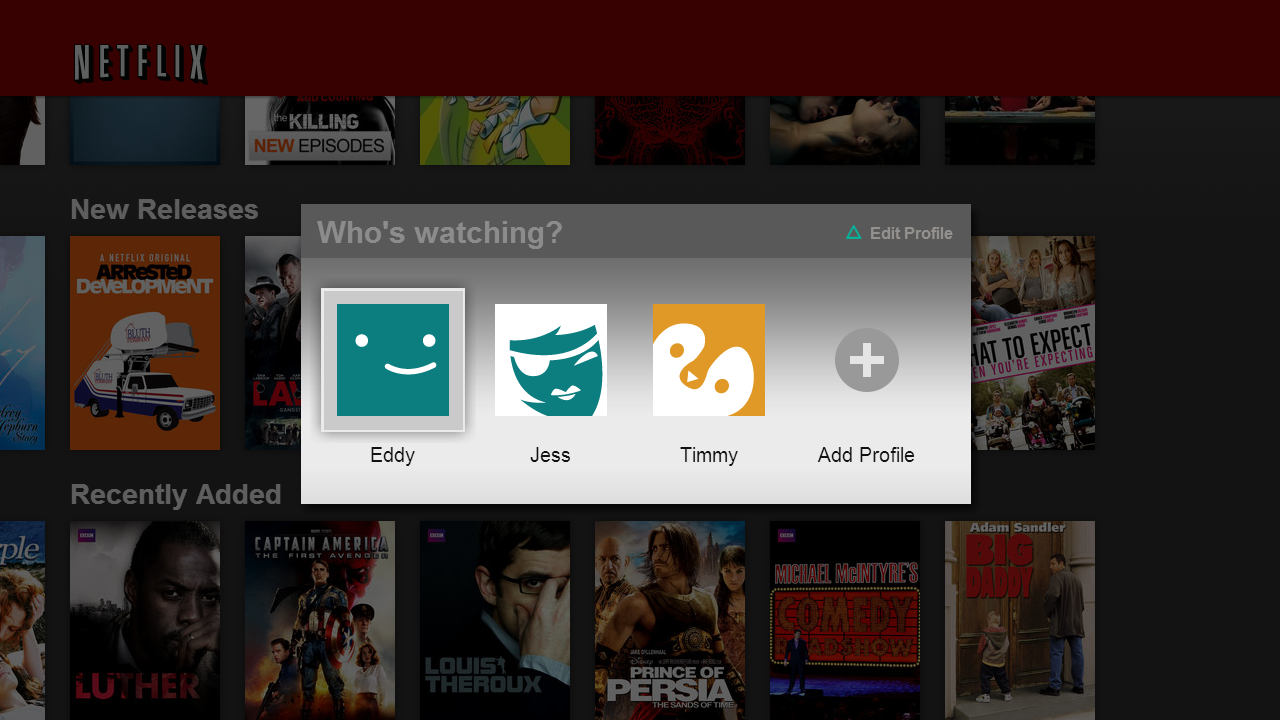
Well it’s about time! Netflix has finally come through with one of the most demanded features – the ability to have individual user accounts. From now on, subscribers will be able to create up to 5 profiles, one for each person that shares the same Netflix account. Each profile will have its own suggestions based on that user’s viewing habits, as well as a separate instant queue and recently watched list. So no more Fireman Sam cartoons in your most excellent instant queue featuring only ultra violent martial arts films.

Netflix Profiles

Netflix profiles is exactly what users have been demanding

You can also connect each profile to your Facebook account, and then the Facebook profile picture will be used to identify the account, but then your friends will all think you’re some kind of weirdo because you’ve managed to watch  72 episodes of Dexter in the span of about 5 days.

As for which apps will support profiles, pretty much all of them will except for the Android and Wii apps (updates for both are coming soon). Although it might take a week or two for the feature to finish rolling out to all the currently supported devices. You can only create profiles on the PS3 app or via the Netflix website at the moment, but the other apps will be able to access any created profiles.

While streaming definitely seems like the way things are headed, the good old optical discs might still have a place if bandwidth hogging applications like 4K become mainstream. And then there’s always the world of archival storage, which might very well be where old storage formats go to die (and where magnetic tape is still king, at least for high capacity storage). So this is why Sony and Panasonic announced this week that they’re joining forces again to develop the next generation optical disc for the long-term storage market, a disc that will hold 300GB of data.

Both companies made it very clear that the format is only intended for the archival storage market, possibly a deliberate effort to not make Blu-ray seem obsolete. But if 4K does take off, and the Internet as a delivery platform can’t do the job even with more advanced codecs, then I wouldn’t bet against this so far unnamed format stepping in and carrying the load, all 300GB of it.

Gaming

I’m feeling a bit sorry for Nintendo at the moment. The Wii U is a pretty nice console with a good dose of innovation, but a poor games line-up (always a killer when it comes to a new console), and now intense competition from the yet unreleased PS4 and Xbox One means it’s going to be a major uphill struggle for Nintendo’s flagship console. I knew Wii U sales weren’t that good, but without readily available NPD data, all I could do was to guess how bad they really were. But while it’s easy to hide sales data from journalists and bloggers, the financial reporting world is a bit harder to fool, and Nintendo has had to come clean with its Wii U sales figures. Only 160,000 units sold in three month, worldwide, is more than just bad though. As a comparison, the nearly 8 year-old Xbox 360 managed to sell 140,000 units in June alone, and that was only just US sales.

Wii U

Only Zelda (and Mario) can save the Wii U now

Nintendo blames the poor results on the lack of first-party titles, the likes of Mario, Zelda, Donkey Kong and Pikmin, all of which have new Wii U version arriving during the next quarter or two. The problem is that both the PS4 and Xbox One will be launching right in the middle of this release schedule, and I’m not sure even a Mario and Zelda game can save the Wii U at this point. Even if it does, it doesn’t really solve any problems for Nintendo, whose Wii console suffered because it relied too much on first-party releases. The whole point of Nintendo going “hardcore” with the updated Wii U hardware was to get new kinds of gamers on board, along with third-party developers that are good at reaching this particular demographic. But without hardware sales, developers won’t dare to invest in Wii U development. And the longer this goes on, the more outdated and limited the Wii U hardware will be, and you can bet developers will be even less keen to focus on what is essentially last-gen tech.

A huge price cut seems to be the only way to save the Wii U at the moment, to position itself as the budget console against, not the PS4 and Xbox One, but the PS3 and Xbox 360 (which is still very hard, as both of these platforms have a huge library of games that the Wii U does not).

Is the Wii U this generation’s Dreamcast? No idea, but let’s hope Nintendo can ride out the storm better than Sega couldn’t.

And believe it or not, that’s it for the week. Hoping for more next week. Until then, have a great one!