Archive for the ‘High Definition (Blu-ray/HD DVD/4K)’ Category

Weekly News Roundup (31 May 2015)

Sunday, May 31st, 2015

How many pieces of obsolete tech sits in your home right now? I’ll list some of mine: portable MP3 player, digital camera, pocket video camera (all replaced by my phone), standalone scanner, VCR, Wii … all of which are working just fine, but sit idle, gathering dust. Hmm, that does sound a bit sad, like something out of Toy Story – so maybe I’ll dust off that Wii and have a go at Wii Sports tennis again!

Here’s the news for the week …

Copyright

The Pirate Bay 'Hydra'

The Pirate Bay’s “Hydra” strategy – cut off one domain, another one springs up

The Pirate Bay is getting ready for an epic battle over its domain name, as a Swedish court has ordered the site’s .SE domain name to be seized. To battle the imminent seizure, TPB has opted for quantity over quality, and has started rotating between 6 new domains (.LA, .VG, .AM, .MN, .GS and .GD), a strategy dubbed “Hydra”, after the mythical creature, not the antagonist as seen in the Marvel Cinematic Universe.

But the new strategy has gotten off to a shaky start, but one that was probably expected. Less than a week into the new experiment, one of the domains, .GS (that’s South Georgia and the South Sandwich Islands – yep, I had to look it up on Wikipedia myself too) has already been suspended. It’s no time to panic yet because, according to The Pirate Bay, this is what this experiment is all about. By testing just which registrars are responsive, and non responsive to pressure from rights-holders, TPB is using the trial-and-error approach to find a relatively more permanent home.

And with plenty of top-level domain names left to use, expect the domain switching to go on for quite a while!

While the .GS domain was suspended in what seems to be record quick time, the truth is that not all registrars are responding as quickly as hoped for by rights-holder groups like the MPAA and RIAA. These groups, under the umbrella of the Coalition for Online Accountability (COA), wants more pressure to be put on registrars, and deputize yet another group of people into the policing of online copyright infringement.

Another group, those that offer domain privacy services, are also being made responsible for “hiding” the contact details of website owners, the latest attempt by rights-holders to jeopardize an entire industry just to make things a little bit easier for themselves.

In other words, there are now even more people to blame and to be held responsible for online piracy – everyone except the people that consistently put out sub-par products at inflated prices, delivered via antiquated platforms that fail to satisfy consumer needs!

High Definition

Big DVD Collection

DVDs are on the way out, and Blu-ray may not be too far behind

Speaking of antiquated platforms, VCRs. Did you know that there are more homes in Australia with VCRs than there are with Blu-ray players? While this does kind of make Australia seem like some kind of backwards place, but I can assure you that Blu-ray players are just as common (and cheap) as they are anywhere else. But while I have lost count the number of Blu-ray capable devices at home, I’m sure that I have at least one working VCR “somewhere”. It might be in the garage, or in a closet, or somewhere else gathering dust, but it’s there. Along with my Wii, an old CRT TV, a digital camera or two, a camcorder and all the other obsolete devices that most people will still have, somewhere, in their home.

I’m sure if the makers, sellers and supporters of these devices want to find something or someone to blame, I’m sure they can find something to someone, and piracy is probably one of the candidates. But all of this is just part of how things work, the natural decline of one technology, only to be replaced by something better, but perhaps one that’s not always more profitable. So why should it be any different for the movie, music and gaming industries – Netflix and Spotify may be less profitable, but they are superior platforms to what existed before, even though they may not lead to more profit (at least in the short term). And piracy is in there somewhere – whether you like it or not, it is a competing force, one that needs to be addressed with market solutions, not legal ones.

With discs, even Blu-ray, appearing to be on the way out, Sony has found a new use for these – Facebook. I’ve actually talked about this before here I think, about how Facebook invented a way to use arrays of Blu-ray discs to manage their huge backups. Well, I guess it makes sense that the company that developed this technology has just been absorbed by Sony, the founding father of the format. It will give the format a new lease of life, just like how Betamax (coincidentally another Sony format) was turned into Betacam, a professional-use format that went on to become a great success.

Replacing discs will be digital, streaming or downloads. On the streaming front, it’s hard to go past the dominance of Netflix, whose share of the peak web traffic has gone up yet again. Netflix now accounts for almost 37% of North American peak web traffic (from fixed networks), up from 34.89% just six months ago.

Netflix is gonna totally bork our broken, patched up of a copper network in Australia, isn’t it? Sigh …

——

That’s it for the week, hope you enjoyed this edition. See you next week.
Weekly News Roundup (17 May 2015)

Sunday, May 17th, 2015

A nicely rounded WNR this week, with a little bit of everything included, from copyright stuff, to gaming, to 4K Blu-ray. Also a shout out to our new contributor Nick Harris (here he is on Twitter) – Nick will be helping me write a couple of news stories on Digital Digest and Streambly. Welcome to the team Nick!

I’m still looking for more contributors to help me find and write news stories. If you like the topics covered by this WNR and have an interest in writing (no experience needed), please contact me (use the admin/Sean email address).

Alright, the news stuff.

Copyright

HBO Now Devices

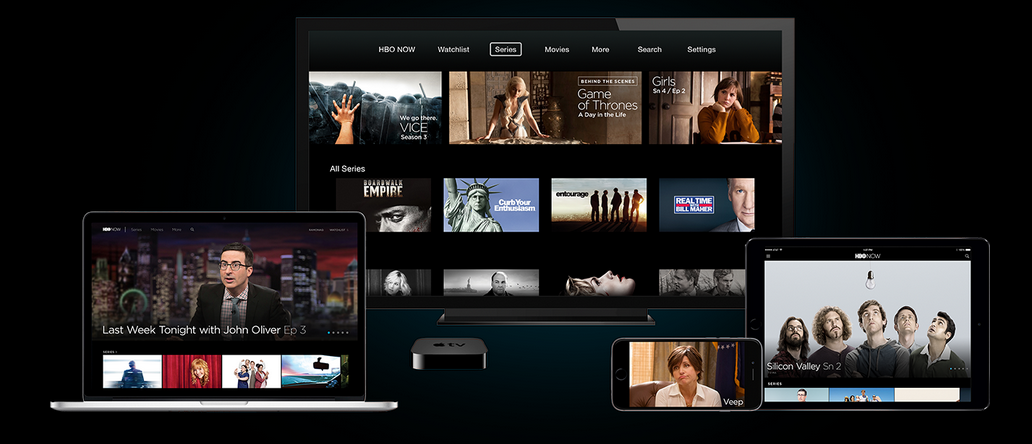
HBO Now – not quite good enough, or cheap enough, for many

While the first four episodes of the new Game of Thrones season has thus far avoided the unwanted distinction of breaking new piracy records, episode five, the first one that wasn’t leaked before the season even began, unfortunately could not escape the inevitable.

While most of the blame will go to the no good thieving pirates, especially now that HBO has given in and made available their standalone HBO Now product, HBO themselves are not without blame for this ongoing piracy crisis. The HBO Now app, based on ratings and reviews on the Apple App Store, is far from perfect and HBO’s poor track record with streaming goes back to even before HBO Now was launched. Those that used HBO Go, the company’s cable-account tied streaming service, will be familiar with the usual Game of Thrones rush, where HBO’s infrastructures fails to handle the demand of thousands of users all trying to stream the latest episode. On this front at least, HBO’s product falls short when compared to competitors like Netflix and Amazon.

And then there’s the price of HBO Now – $15 per month is very decent compared to the previous cable-tied arrangement, but it’s not when compared to the likes of Netflix. Considering that almost all users are there just to watch Game of Thrones, $15 a month for mainly just one show doesn’t sound like the greatest value.

So if HBO is serious about fighting piracy, then there are many other things they can do before playing the blame game.

Not living in a part of the world that HBO considers worthy of their presence, I’m not quite sure if their PC player uses HTML5. If they do already, or if they will eventually move in that direction (most likely), then the news that Firefox 38 now supports HTML5 DRM will be bittersweet news for subscribers of HBO Now that uses Firefox. This is because the latest version of Firefox has finally and reluctantly added Encrypted Media Extension (EME) support, which enables HTML5 playback of protected content from providers like Netflix, but also now means the open source browser now includes closed source DRM,

I say reluctantly because there’s a lot of complications involved with adding closed source “black box” code into an open source project like Firefox, even outside of licensing issues. Security, for example, is harder to verify if nobody can check the code for unintended bugs or intended spying. Firefox, for their part, has made a big effort to calm users of these fears, by providing a sandboxed environment for the EME, and also providing an EME-free version of Firefox for those that are concerned-bordering-on-paranoid (users can also disable or uninstall EME support in the standard version).

But without adding EME support, it would leave Firefox lacking in the compliance department when it comes to HTML5 support, not to mention eventually failing to support popular apps like Netflix. And that was a direction that even one of the major supporters of open source, Mozilla, wasn’t willing to make.

High Definition

Ultra HD Blu-ray Logo

Ultra HD Blu-ray specs are done, complete with new logo

Ultra HD Blu-ray discs and players this week moves a step closer to (commercial) reality, with the Blu-ray Disc Association announcing that the specifications are now completed. There weren’t any surprises in the finalized specs, so it’s mostly just confirmation of things we already know. Things like 66GB dual layer and 100GB triple layer discs capable of supporting resolutions up to 3840×2160 at 60fps. There’s also goodies for those looking to update their TV sets to one of those fancy ones that supports things like 10-bit color and High Dynamic Range, as UHD Blu-ray will support these too.

On the audio front, support for one or both of Dolby Atmos and DTS:X “object-based sound formats” will be there too, as is a new version of UltraViolet that allows one disc purchase to unlock playback and streaming on a wide variety of digital-only devices – something to keep discs relevant in the age of digital.

And oh, there’s also a new logo.

I have to say that there’s something I don’t really like about the marketing for Ultra HD Blu-ray. I can’t help but feel that people are being led to believe UHD Blu-ray is just a small upgrade on the Blu-ray format, much like how Blu-ray 3D was promoted. But looking at it, UHD Blu-ray has a new disc format (that’s not compatible on older players) with new video and audio codecs, and will require a new TV to take full advantage of the improvements. The changes here are just as big as when DVDs made way for Blu-ray!

But it just doesn’t feel big enough of an update, and maybe that’s intentional. Nobody really wants a brand new disc format to contend with, not when everything is digital-only these days, and I think the BDA knows this. The emphasis here has been on continuity, on how UHD Blu-ray players will still play all your current Blu-ray discs, and that things haven’t changed all that much (even though they have, in major ways). And it’s also why the familiar Blu-ray logo is still part of the new logo, even though no existing Blu-ray player will be able to do anything with these new UHD discs.

Gaming

Xbox One Forza 5

A win for the Xbox One finally

I didn’t see that one coming. The Xbox One has managed to beat the PS4 in April US sales, the first time the Microsoft flagship console has managed to beat Sony’s juggernaut outside of the holiday sales period. The Xbox One’s permanent price cut and good value bundles seems to be turning the tide, although it’s not easy to say whether this is the beginning of a new trend, or just a temporary blip for the PS4.

Microsoft was expectedly happy with the result, citing that Xbox One sales were 63% up compared to the same month last year.

Overall hardware sales are still down, about 4% compared to this time last year, largely due to Xbox 360 and PS3 sales dropping off a cliff.

On the games front, the PS4 did manage to beat the Xbox One, with several of the top selling titles, including Mortal Kombat X, all selling better on the PS4. The two major FPS titles in the top 10, the latest incarnations of Battlefield and Call of Duty, both did better on the Xbox One than on the PS4 though.

——

And here we are at the end of another WNR. Hope you enjoyed this issue. See you next week!

Weekly News Roundup (3 May 2015)

Sunday, May 3rd, 2015

All of this week’s WNR, and most of this week’s news stories, were written on my new Surface Pro 3. It’s proving to be more than an adequate desktop and laptop replacement (with the tablet mode the least used of the three available modes, for me). All of the teething problems have more to do with the switch to Windows 8.1 (coming from Windows 7), than the actual SP3 hardware. And with the SSD (vs RAID 1 HDDs), faster CPU (i7-4650U vs Core 2 Duo E8600) and more RAM (8GB vs 4GB), it’s also a lot faster too (not to mention super quiet). I’ll keep you all update if I run into any serious issues with the transition.

Onto the news …

Copyright

WhereToWatch.com

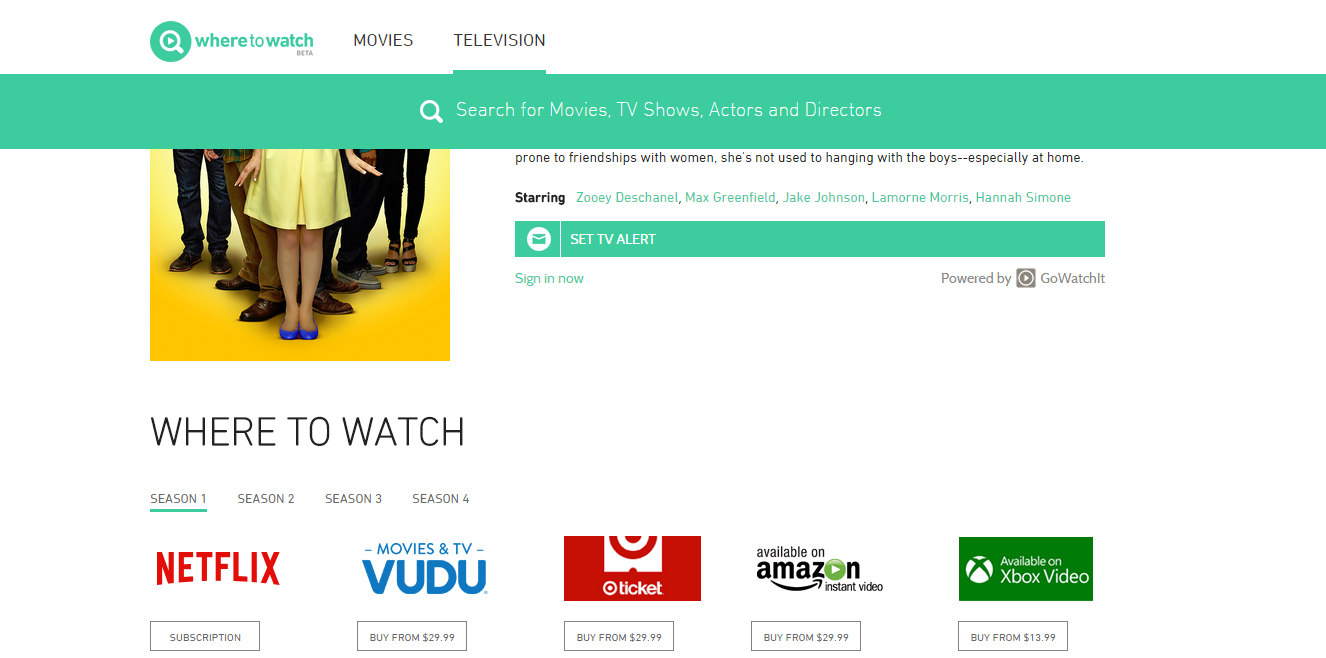
The only worthwhile thing the MPAA has produced has now been blocked for usage by anyone outside of the U.S.

File it under the “yep, this will help make things better” category, the MPAA’s much publicized website that helps you find legal content (because obviously people only pirate because they don’t know about Netflix and iTunes) has now been blocked from being used by anyone outside of the United States.

WhereToWatch.com now displays a familiar “This content is not available in your region” message if you happen to not live in a part of the world that Hollywood and major rightsholders don’t feel is important enough (ie. anywhere outside of the U.S.). Those that can remember reading about the WhereToWatch.com story last year in the WNR will remember that, in a rare moment, I actually praised the MPAA for providing something that’s actually useful for once. It took them a while, but the MPAA eventually went back to form, and in an not-at-all ironic move (that was sarcasm, btw), has managed to highlight just why many people pirate.

By locking up the content people want, and forcing them to get it via a method that lines rightsholders pockets, as opposed to serving consumer needs, it’s no wonder people choose to go down the piracy route. Not only is piracy free, it’s also often easier and more timely than the Hollywood approved ways to watch. The other alternative is to use geo-dodging services, VPNs and smart DNS solutions, to access U.S. services – and WhereToWatch.com was an useful tool to help you find where things were available. The MPAA has now locked up the site, and although users can use geo-dodging services to gain access back the site, leaked emails from Sony shows the MPAA is also going after VPN and smart DNS providers (see last week’s WNR for more information).

Speaking of the leak, Sony is apparently going after any website that is reporting on the contents of the leaked emails. Sony says the leaked emails is considered stolen data, and “respectable” media outlets shouldn’t cross this moral border. This hasn’t stopped quite respectable media outlets from reporting on the emails, like the New York Times’ Eric Lipton, who just won a Pulitzer for his report on the influence of lobbyists, a report that used information obtained from the leaked emails. And of course, less than respectable media outlets such as this one has no problem reporting on it, and ignoring Sony’s toothless threats.


Censorship

Australian government set to give Hollywood the right to censor anti-copyright speech. Photo Credit: IsaacMao @ Flickr, CC

The leaked emails also revealed that much of the pressure to change Australia’s copyright laws are coming via Hollywood. Unfortunately, out super unpopular conservative pro big business government only has one agenda, and that’s to give Hollywood exactly what they want. So no surprises that the proposed changes as part of the Copyright Amendment (Online Infringement) Bill 2015, could go as far as outlaw the right to even say things or have opinions that Hollywood does not approve of.

The current language in the bill allows rightsholders to petition the court to block websites owned or operated by anyone who “demonstrates a disregard for copyright generally”. It essentially places a ban on any online speech that put outs an alternative view on copyright, a view that Hollywood and the MPAA does not approve of.

Of course, it won’t actually get to that point. No court in Australia will grant any such block merely based on expressed anti-copyright views, but what could happen is that sites that discuss ripping or geo-dodging or provides instructions and help on anything that Hollywood deems to “facilitate the infringement of copyright” could be blocked. And with no clear definition on what “facilitate the infringement of copyright” means, anything from VPNs to file hosting companies can get censored here in Australia. The language in the bill is so vague (and I definitely think that it’s intentional) that blocked sites are simply referred to as “online location”, which could either mean the blocking of a single webpage, a website, or the blocking of an entire server serving thousands of unrelated sites just because of one “bad” site on the server.

A wide ranging coalition of tech firms, like Google, and consumer rights groups, like Australia’s CHOICE and the EFF, have all criticized the bill in its current form. Google, in their submission, said that the whole premise of these changes relies upon the proven failed concept of content blocking, which not only has questionable efficacy, but could also have unintended consequences such as the blocking of legitimate content.

High Definition

Samsung Curved UHD TV

4K Ultra HD TVs starting to grab some market share

4K TVs are beginning to get into people’s homes, with 11% of LCD TV shipments in March belonging to Ultra HD TV sets. I wandered around the shops the other day, and it definitely looks like 4K TVs are no longer the product you only see at trade shows or in rich people’s homes. There are quite a lot of “affordable” 4K TVs at the moment, perhaps not all capable of delivering the best 4K quality, but it’s certainly more accessible to the average consumer than 4K content at the moment (despite Netflix’s best efforts). Ultra HD Blu-ray players and movies coming out later this year, so the relative content drought (and the expected double, triple … nonuple, or whatever the count is, dipping begins) should be over soon.

Gaming

More bad news for the Wii U. Whereas the last Call of Duty: Black Ops game, Black Ops II, debuted on the Wii U, the next one, imaginatively titled Black Ops III, will not be coming to the platform at all. To add insult to injury, Treyarch studio specifically dissed the Wii U as not being a current generation console, when giving out their reason for the decision to skip releasing on the console.

——

Hope you enjoyed/found interesting/were terrified of the implications from this week’s news stories. More for you next week, so until then …

Weekly News Roundup (19 April 2015)

Sunday, April 19th, 2015

My main workhorse computer (more and more just a glorified web browser these days, considering how ever app has moved online, and how little gaming I do these days) is starting to show signs of strain, and so it’s time to get something new. The matter is made more complicated by the fact that I also need a new laptop. So I thought, why not combine these two requirements, add in the (more want than) need for a new Windows tablet, and get the Surface Pro 3, plus the dock, and use that as my desktop replacement. It’s not going to play any serious games (games consoles are a much more economical choice for it these days, or a dedicated gaming PC for those that have the time and money to devote to such a beast and its time consuming ways), but it will be more than enough for work, and work can be taken away by me in both tablet form, or laptop form with the optional (but really should be standard) Type Cover accessory. Some light gaming may also be included.

I opted for the i7/256GB/8GB RAM model, since this is a business purchase and end of financial year, tax deductions blah blah blah – but most will find the i5/128GB/4GB RAM model more than adequate.

I may live to regret my decision, especially given the high cost of the SP3, but it’s hard to justify spending money on a gaming PC when my current 6 year old PC can still do a semi-decent job at medium quality levels, and when I haven’t played a PC game in about 6 months. And an Ultrabook or Macbook Pro with the same portability as the SP3 won’t cost much less, and does not transform into a tablet.

A gaming PC might still be on the table, but it will probably be one that I will build from scratch, part by part, just for the fun of it.

Time will tell if I’ve made the right decision.

Oh yeah, news stuff.

Copyright

Game of Thrones: Season 4

Game of Thrones continues where we left off last season … still sh*t load of piracy!

Dragons, nudity, death of a beloved character. These are things synonymous with HBO’s Game of Thrones. Piracy, record, smashed – these are also words associated with the hit TV show. And the season 5 premier is no different. Well actually, it is different, and it is a lot worse!

The good news is that the piracy record wasn’t broken this time, but that was only because the first four episodes of the show was leaked prior to the show’s debut, catching HBO and pirates alike off-guard. As downloaders slowly trickled into the swarms, it soon became a downloading frenzy, but the spread out nature of the downloads meant that, technically, no records were broken (and I’m sure if the download totals over a week from after the pre-release leaks were released was ever calculated, I’m sure records will have been broken).

So it’s bad to worse for HBO, which to their credit, tried really hard this time to reduce the incentive to pirate by making new episodes available worldwide simultaneously, and by launching the standalone streaming product HBO Now. The pre-release leak is particularly worrying, and it should prompt HBO to tighten up security for screener copies being sent to reviewers (unique visual and digital watermarks for each copy might be something HBO needs to consider).

One thing they could do is to make HBO Now available outside of the U.S. For example, in Australia, where users have tried to sign up using VPN/smart DNS services, but are now apparently being banned. This will be difficult not just in Australia but all around the world due to HBO’s deals with local pay TV operators, many of whom have locked up HBO programming in exclusive deals, in order to protect their premium pricing model. Piracy is the inevitable result.

Ironically, it’s this kind of piracy that is causing Netflix to drop their prices. Apparently, Netflix sets pricing for their international subscriptions based on that country’s piracy rate – the more pirated downloads, the cheaper their service will be. Netflix says that this is because they’ve positioned their service as a competitor to piracy, and as a result, they cannot ignore the reality of piracy. Or at the very least, they don’t treat piracy as something that can be easily eradicated and devote all their resources to combat piracy based on this false believe.

It’s this false believe that’s the driving force behind the urgency to change copyright laws in Australia to deal with the piracy scourge. Change that apparently is headed not by the local film industry, but by Hollywood lobbyists, many of whom have never set foot in Australia. According to the latest leaked Sony documents published by Wikileaks, much of the US based effort is being channeled via local Village Roadshow co-chairman Graham Burke. Local film studio Village Roadshow is infamously known as the company that compared movie downloads to “terrorism or paedophilia”, and believes in the possibility of “total eradication” of piracy as the end-goal.

Good luck with that!

High Definition

The Simpsons Season 17 Blu-ray

Do discs still have a place in our homes? Fox says no!

Changes are-a-coming for The Simpsons, and it could be the end of an era. No, Fox isn’t cancelling the iconic animated show, but they are cancelling the DVD and Blu-ray releases for it. Bad luck for collectors, who should have season 1-17, and season 20, on disc, but will no longer be able to continue adding to their collection.

Both Fox and Al Jean, the Simpsons’ showrunner, blames the “collapse of DVD market and rise of downloads” for the decision, with Jean also apologising to fans outside of North America for the digital option, such as Fox’s streaming service FX Now, being not available in most places.

Regular followers of our Blu-ray/DVD sales report will already know that DVD sales have been declining steadily for years, while Blu-ray sales have also started to stall recently. Most of the business is going to the digital side of things, from iTunes, to Hulu Plus to FX Now (all places where you can watch The Simpsons), so Fox’s decision is understandable, even if, once more, overseas fans lose out.

Gaming

Fox’s move may be signalling the end of discs, Nintendo may also be signalling the end of the Wii U. With the delay of Zelda that I mentioned here a couple of issues ago, the announcement of the Wii U’s successor, the Nintendo NX, barely 2 years into the console’s lifespan, and with the number of announced titles shrinking all the time, Nintendo may have finally decided that the Wii U isn’t going to cut it anymore in the face of stern competition from the PS4 and the Xbox One.

So the new Zelda game could very well end up having the same fate as the last Zelda game, Twilight Princess, which was originally meant for the GameCube, only to be delayed so that it could be simultaneously released on the Wii as well.

Wii U

The end is nigh for the Wii U? Maybe not, but Nintendo knows it doesn’t have long left …

And let’s hope Nintendo don’t mess up the NX the same way they “messed up” the Wii U. While the Wii U was by no means a complete failure, the fact that it wasn’t a huge improvement on the last gen, and clearly behind the current gen, arrived at a relatively high price with few third-party game support, and with Nintendo failing to properly demonstrate how gaming on the Wii U would be better and more fun (even though, albeit subjectively speaking, it should be). Release a console that’s more powerful than the PS4/Xbox One, had all the “family fun” stuff that Nintendo is famous for, add in a sprinkle of first-party must-haves close to release (Mario, Mario Kart, Zelda …), and then ensure there are plenty of third-party exclusive worth mentioning, and Nintendo may be onto another winner. And from the perspective of someone who writes this particular blog and its main topics of discussions, maybe ensuring the Wii U is also a competent media player would also be a good idea(Blu-ray preferred, but should at least support all the streaming apps, plus local/network based media playback/streaming).

——

The March NPD results do not reveal any surprises at all. The PS4 once again beat the Xbox One for first place, with the Wii U in a distant third (probably). It’s probably not even worth mentioning the NPD results every month anymore, unless something strange happens, like the Xbox One finally managing to beat the PS4 (might happen, but Microsoft will need bigger price cuts and better exclusives to make it a consistent thing, as opposed to just during holiday discounting).

——

It’s unlikely that, by this time next week, I’ll be writing the WNR on my new SP3. Unlikely because it will take a while to get everything installed, set up and transferred in time. Ah, the simultaneous joy and pain of a new PC setup. See you next week.

Weekly News Roundup (12 April 2015)

Sunday, April 12th, 2015
Reddited

Getting “Reddited” is both awesome and terrifying

A funny thing happened on Friday. There I was updating the site with the latest software downloads, I suddenly notice the site is all slow. I check the server stats, and find that traffic throughput is way up, so much that the server was finding it difficult to cope. My first thought was that the server might be under some kind DDoS attack, since the traffic rise was so sudden, but upon closer inspection, almost all of the traffic was going to this outdated news article. A fancy type of DDoS attack, I thought, linking to such an old news article to try and take down the whole site. But an even closer look at the referrals, and it soon became clear what was happening: a Reddit Hug!

Apparently, that old article about that confusing artwork for the Girl with the Dragon Tattoo DVD made it to Reddit’s TIL (Today I Learned), and for a while, it was the second most popular article on the front page of Reddit.

So Today I Learned that getting linked to on the front page of Reddit is very much like a DDoS attack.

Here’s the news for this week …

Copyright

Piracy isn’t always a bad things, especially in developing countries. A new study by the African Governance and Development Institute has found that software piracy can lead to increased literacy and the spread of knowledge.

This seems fairly common sense to me. Poorer communities are possibly the most in need of access to technology and information, and the least capable of paying for the software needed to get that access. The fact that communities that have no resources to pay for software have to break copyright law in order to access the tools that they can use to better their situation, kind of points to what is wrong with the copyright regime in general. Users that can’t pay cannot cost rights holders anything when they use their product or content without authorisation, and if there’s no financial loss, then I don’t even know if this should be considered piracy.

But had these communities respected copyright law, then the real cost is that they could be missing out on a lot of the things we take for granted, like access to the Internet, educational eBooks, and other essential resources.

High Definition

Amazon’s streaming platform, Prime Instant Video, has seriously improved their offering recently, and even bagged an award or two for their original programming. However, it’s still very much lagging behind Netflix when it comes to bagging new subscribers, and the experts at Strategy Analytics say they may know why. While Netflix charges their subscription on a monthly basis, Amazon requires users to lock into an annual contract, even if the total price for Amazon’s Prime subscription, which also includes two-day free shipping and free Kindle book lending, is actually lower.

Amazon Prime Instant Videos

Amazon Prime is still finding it hard to compete with Netflix

While this may explain the lower sign up numbers, Netflix’s superior content library (especially originals), is still a big draw. Strategy Analytics found that even for those who have forked out the cash for Amazon Prime, most are actually spending more time watching Netflix than Prime Instant.

For me though, the problem for Amazon also comes down to support for the service on devices. Netflix simply works on more devices, and works better too. The install process for the Prime Instant Video app, at least on many Android tablets, is simply not good enough (requiring the install of the Amazon Appstore app first, and then the Prime Instant Video app, which then, at least on my Asus tablet, simply launches a browser window to the Amazon website). Just read the comments on the Amazon page for the app, and it’s easy to see where and how Amazon can make improvements.

Unblock-Us

Netflix *can* ban users who use VPNs and geo-unblockers, but they probably *won’t*

One things Netflix definitely shouldn’t do is to start banning VPN users, which Netflix’s terms and conditions allows them to do. The clause was added into Netflix’s T&Cs about a year ago, and was only noticed recently (thus once again providing that nobody read those things). Most analysts don’t believe Netflix will actually start banning their paying customers, no matter where they are, but that the clause may be there simply to appease rights holders. But with countries like Australia and Canada updating their copyright laws to copy existing laws in the US, the use of VPN and geo-unblockers to bypass geographical restrictions may, if the rights holders get their wish, become illegal as well.

So once again, we have rights holders trying to use technical measures to get what they want and force users to use content in an “approved” way. And when these technical measures inevitably fail, the pressure is then put on legislators to make unapproved usage illegal. Of course, there’s not much that can be done in terms of enforcement, which then leads to rights holder thinking up all sorts of crazy schemes (three-strikes, censorship), all in a bid to not give people what they want.

Whether it’s release windows, or DVD region locking, or geo-restrictions – the fact is that many people around the world are paying more for less, leads them to feel they aren’t being treated fairly. This patent unfairness is what helps people justify their actions, dismissing moral and legal concerns in the process. So the real solution is the make things fairer, even if it means a cheaper Netflix (translating to lower licensing fees for rights holders) for regions that don’t get as much content.

——

While the next-gen codec wars have been won by H.265/HEVC, Google still hasn’t completely given up, having recently ditched Flash and going forwards with its HTML5/VP9 setup for YouTube. Since then, YouTube says that over 25 billion hours of VP9 content has been viewed on the video sharing site, with the amount of 4K videos being uploaded to the size also growing by three-fold. The most striking conclusion for me, based on these figures, is that people have way too much time on their hands!

——

Speaking of too much time, I think I’ve already wasted too much of your time this week. Thanks for reading, and see you next week!