The February NPD analysis has been posted. The analysis looks at video games sales stats in the US based on figures released by the NPD. The big surprise for February was that the Xbox 360 actually managed to beat both the Wii and the PS3, something that I don’t remember happening before. Both Nintendo and Sony blamed stock shortages though. I keep on expecting Xbox 360 sales to disappoint, but good game releases seems to come along just at the right time for the console to give it a much needed bump. For all the talk of the PS3’s strong year on year growth, it’s worth noting (again) that it’s a bit like comparing apples to oranges, due to the price cut and Slim and everything. Or more precisely, it’s like comparing apples with rotten oranges, thanks to the PS3’s dismal sales figures for most of 2008 and 2009. To further illustrate this point, for the month of February, the Xbox 360 enjoyed a massive 66% increase in sales between 2008 and 2010, to the PS3’s 28% bump (and the Wii’s 6% drop). Basically, the PS3 is now enjoying figures that it should have been enjoying this time last year. With some hit games coming to the PS3 in March, Sony will hope this will be yet another important milestone for the console, much like the price cut/Slim back in September last year.
Anyway, there’s a few news items to go through today and it also happens to be my birthday as well, so yeah!

Let’s get started with some copyright news. The Ubisoft DRM controversy keeps on going this week with a couple of related news stories as well. With Assassin’s Creed II released, the Ubisoft DRM servers came under some serious test, and unfortunately it failed.
Ubisoft blamed a DDoS attack for the server downtime, which caused paying gamers to not be able to play the games that they paid for, while those pirating it weren’t affected. Ubisoft still says that the only complete version of the games are the legitimate ones, since some files or content can only be accessed through Ubisoft’s servers. I think it’s safe to say that the games hasn’t been completely cracked, but it might also be safe to say that it will be sooner or later. But that’s all beside the point. The point is paying customers weren’t able to play the games because of a situation that Ubisoft hadn’t anticipated (the server attack), and there will be plenty of situations that Ubisoft hasn’t and won’t be able to anticipate. Is this really fair to gamers? Following the Ubisoft controversy, a lot of other game companies have come out with their opinions on the matter. Futuremark, the makers of 3D Mark and the upcoming game Shattered Horizon, says DRM that “gets in the way” is only going to harm the game companies because “it’s not like there is a shortage of other games demanding my attention”. How many gamers have decided to buy some other game because they don’t want the hassle associated with playing Silent Hunter 5 or Assassin’s Creed II (and for the latter, they can still get the console version if they really want to play it).

Steam's popularity shows that there are still some kinds of DRM people might accept
Valve’s Gabe Newell, the guy behind the Half-Life series, and also the successful Steam platform (which has just been made available for the Mac, finally) also says something similar. While accepting an award at the Game Developer’s Choice Awards, Newell believes game companies should adopt a ”what have I done for my customers today?’ attitude. Basically, Newell thinks DRM is a negative that takes something away from games, and if you do that, then you better also give them something extra to make up for it, which is what the Steam platform attempts to do. But if one goes overboard with DRM, as Ubisoft appears to have done, then it’s going to take a lot of positives (more than just online save games) to be able to justify something like this. The Steam platform does have DRM as well, but it seems to offer enough for paying customers to accept the limitations. The often discounted games might also help gamers ignore the inconvenience of needing the Steam client and having to be online before playing a game.
There’s a real battle in the UK over the future of the Internet, with the music industry being represented by the BPI who wants three-strikes, ISP monitoring and all that good stuff. The ISPs, and pretty much everyone else, don’t want it. In a new tactic, the BPI is trying to entice ISPs to get on board by luring them with the possibility of huge amounts of extra revenue from working with the music industry and selling legal music. I don’t see any problem with this, except why do we need three-strikes to make this a possibility, since this is something the music industry should have been working on ages on (and perhaps if they did, piracy wouldn’t be such a big problem now). ISPs are not impressed and one spokesman questioned the ‘value of such insight from an industry which has failed to acknowledge the impact of new technology on its own business models’. Touché. The music industry has been slow to adapt to the new digital and Internet revolution, there’s no greater evidence than the fact that the most popular online music store is being owned and operated by a computer company, Apple, and not one of the big music labels. But a new study also shows that even with the dominance of iTunes, there’s still a significant number of people that don’t know where to buy music online legally. While most know of Amazon or iTunes, 20% didn’t know any online stores. This isn’t to say that the cause for piracy is due to people now knowing where to buy music, because people who pirate will always pirate, and people who buy will find a way to do it. But it does highlight that the music industry has plenty left to do before it can declare that they’ve done all they could and that it’s time for the government in intervene with harsh legislation. The music industry was quick to try and discredit the new study, by saying their own study shows that 96% of Internet users were aware of either Amazon or iTunes.

Hadopi, the French agency overseeing three-strikes, only regulates P2P networks for three-strikes
But does three-strike actually work to one, deter pirates, and two, increase revenue? The French have had three-strikes for a while now, and the results are not promising. Piracy is actually up three percent compared to before three-strikes was introduced. While noting that the habits of downloaders have changed, less people now use P2P and more use HTTP or streaming sources to get their pirated content (these sources are not covered by three-strikes), the overall number of cases of piracy has actually increased. It’s also worth noting that secure P2P means that it’s hard to track just exactly what is being downloaded and by whom, and so the figures could be higher depending on how the study was conducted. In any case, it definitely shows that three-strikes is not the cure all solution that the music and movie industries thinks it is. The same study also found that 50% of people who pirate stuff also buys stuff online, and of course if all of these people are kicked off the Internet by three-strikes, then that’s going to mean a direct revenue drop for the music/movie industry, not to mention other online based industries. The reality is that many users see purchasing and illegal downloads as two possible ways to get what they want, and it’s up to the music/movie industry to convince them that one way is better than the other. Instead, they’re trying to punish these users for choosing the wrong option, and all that does is to close off both possible ways to get content. Pricing and convenience will win this war, not bannings.
And then there’s also the theory that even illegal downloads help sales eventually. The number of people who have been introduced to new music, new artists, new TV shows, new games, through pirated content at first and then leading them to buy more stuff, cannot be underestimated. Pirated content offers “try before you buy” and sometimes that’s the only way to get new customers. Then there’s also the Internet hype effect, and the more people that talk about the content (and logic says that the more pirated the content is, the more users there are that have experienced it, and therefore, the more discussions there will be about it), the more hype it generates and that can help sales. Of course, bad content might get found out faster, and I sometimes wonder if that’s what really the studios and labels are worried about, that bad content are being “filtered” out too quickly and they may actually be forced to produce good content consistently in the future. For the movie studios, the last few years has been bad ones in terms of piracy, but the MPAA was happy to note this week that global box office receipts have jumped a massive 30% since 2005, and 2009’s global earning was just shy of the 30 billion dollar mark, a new record for the industry. So is piracy really hurting the industry at all? We know that increases in box office receipts may have more to do with 3D screenings that are becoming standard for big releases, and that if piracy affects anything it will be home video sales. Home video sales have dropped, although with Blu-ray revenue increasing, studios are relatively confident in this area. But I just don’t believe the Internet has had no effect on box office receipts, since it has had an effect (both positive and negative) on everything else in our lives.

Let’s move onto Blu-ray and HD news. Manufacturers are rolling out their 3D TVs and Blu-ray players in droves, but the cost of getting 3D for your home may just be too high for some, if not all.

3DTV is going to cost a lot, as you'll need a new TV, new Blu-ray player and new 3D glasses
For one, you’ll need a new TV. One thing that has been confirmed is that 3D capable TVs will carry a premium over standard ones, up to 50% more expensive for Sony Bravias for example. And then you have the need to upgrade your Blu-ray player to one that is capable of 3D, although you can skip this requirement if you have the PS3 (another reason to recommend the PS3 as the Blu-ray player of choice). But if you can’t skip it, at least 3D capable Blu-ray players should not carry a huge premium over standard ones (although you might need to buy a new HDMI cable as well). Then you will have to get glasses. Most of the systems use active shutter glasses, which means expensive glasses that cost upwards of $150 per pair. Some of the 3D TVs will come with a few sets (for 50% more, you’d expect them to come with at least 4 pairs), but if you want the whole family to enjoy a 3D nights in, then be prepared to pay for it. And then lastly, you’ll need to get 3D movies to feed your 3D system, which has now cost you several thousand dollars probably. This may mean that you’ll need to double dip and buy new versions of recent movies that have been released on Blu-ray as 2D versions only. And knowing studios, they’ll release a 2D version of the movie first on Blu-ray, and then hope for the double dip with a 3D version later on, which is exactly what Fox is planning with Avatar. And with plans to re-release classics like Star Wars on 3D again, be prepared to buy some of your movie collections again (again (again)) if you want to watch it in 3D.
Moving onto online content. The war between HTML5 and Flash is intensifying. A benchmark review was attempted recently to find performance differences between HTML5 and Flash, but it appears to have failed because compatibility meant that it was almost impossible to compare apples and apples. The problem is that the latest beta of Flash has GPU assisted decoding, but not on all platforms, and then you have HTML5, in which some browsers will support H.264 content, while others like Firefox won’t. It would be nice if a proper standard like HTML5 can supersede the need to install third party plugins like Flash, to allow all browsers to play interactive and video content out of the box, but if HTML5 doesn’t set a standard for whether H.264 support is mandatory or not, then it’s next to useless and I’d rather have Flash, which promises universal support (even if some won’t have GPU assist enabled). My opinion is that HTML5 must make H.264 mandatory. I know there are licensing issues with H.264, and more needs to be done in this area to ensure free and open source browser makers can continue to do their excellent work, but H.264 has industry support and that’s crucial in terms of performance and compatibility. It would be nice of Ogg Theora or another open source format become widely adopted, but it just hasn’t happened and it’s unlikely to do so unfortunately. Perhaps if someone like Nvidia added Theora acceleration support to their GPUs, then the situation might change.
Speaking of Nvidia, they’ve not had a good time in the graphics card market recently, with ATI/AMD dominating with the Radeon HD range in both the price and performance criteria. Then there was the whole failing GPUs in Macbook disaster a year and half ago. Now it seems Nvidia’s new driver is killing GPUs. Those that have upgraded to 196.75 need to perform a downgrade immediately, or face the possibility of having their GPU, or even mothergboards, fried due to overheating. Nvidia has since removed the offending version from download, and has urged users to downgrade as their soonest convenience.

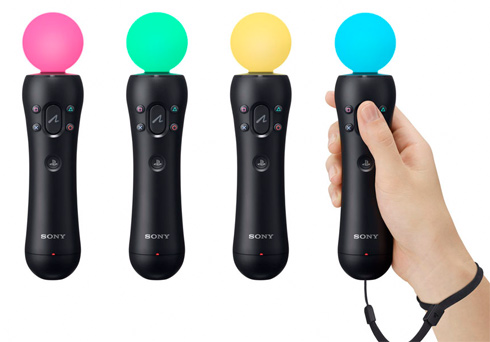
And finally in gaming, with Sony officially naming their Wii like motion controller, the PS3 Dildo Move has been in the news this week. Will it kill the Wii? What about Natal? And why does it look like a dildo?
The answer to all these questions might be a simple “wait and see” (except the last one, since the answer to that is it’s a combination of the need for the strobe light to interact with the PS3 Eye Toy and some unfortunate design decisions). It’s easy to see why it can kill the Wii, with the PS3 superior 3D graphics and more accurate controller bringing us what we think the Wii 2 will be like. It’s also easy to see why it will fail, since failure is exactly how you would describe the efforts of third party game developers when it comes to taking advantage of the Wii. Can Sony make fun games like Nintendo seems to be able to do in their sleep?

The PS3 controller now has an official name, the PS3 Move
For the Natal question, again, it’s far too early to say anything about it. For one, we don’t know what kind of games will benefit from Natal, and we still don’t even know if the whole concept works, due to issues with lag and whatnot. Obviously, the controller-less Natal seems a far bigger leap than the PS3 Move, but bigger leaps can succeed like the Wii or fail like the proverbial Virtual Boy. If it does work (that is, if the lag issue can be resolved), then it would be easier to market than the PS3 Move, which for the average Joe, seems too much like the Wii (even though it’s not). Some have suggested the lag is around 0.1 seconds on average, but others have likened it to what the original Wii remote was like when people play tested it, which I guess worked out just fine for Nintendo. I think for Natal to succeed, it needs integration with the traditional controller. Instead of making games that require you to use the Wii-mote, or the Move all the time, Natal’s camera system and the ability to map your body movements, plus facial and voice recognition should allow you to hold the good old Xbox 360 controller and then use body/limb movements, and voice controls, to enhance the normal gaming experience. Think taking penalties during football/soccer games. Throwing grenades in a FPS. Navigating the Xbox 360 interface like your garden variety Tom Cruise. Giving competitors the finger in a racing game, etc. The possibilities are endless!
But if I had to use the Wii-mote or the Move or Natal to play traditional games that already work perfectly fine with a controller, then I’m not really interested in that, since if it works, it works and there’s no need to reinvent the wheel.
That’s it from me this week. Off to enjoy what’s left of my birthday today. See you next week when I’ll be older but definitely not wiser.


 Home
Home