Archive for the ‘Xbox 360, Xbox One’ Category

Weekly News Roundup (16 February 2014)

Sunday, February 16th, 2014

Welcome to the WNR. Hope Valentine’s Day was a nice one for you couples out there, and for you singles out there, I hope at the very least it was a decent Friday.

Let’s get started.

Copyright

Despite RapidShare’s appeasement policy towards rights holders, the file hosting site has been re-added back to the “notorious pirates” list by the USTR (United States Trade Representative). The new updated list also includes software firms Aiseesoft and SlySoft, two companies that both sell DVD and Blu-ray ripping software.

RapidSharre logo

RapidSharre no longer a friend of Hollywood and the music industry, despite its draconian anti-piracy measures

It appears sucking up the rights holders did not work as well as RapidShare had hoped. Neither the implementation of quite draconian anti-piracy methods, nor its infamous manifesto helped to prevent rights holders from dobbing in the file hosting website to the USTR for inclusion in this year’s list. You can’t win, really. So you probably shouldn’t try to.

The other new inclusions are interesting too. Despite their products being around for what seemed like a decade already, and with many other companies producing similar software, both Aiseesoft and SlySoft gets special treatment this time around by the USTR. Now I don’t have much personal love for Aiseesoft, having seen either their representatives, their marketing agency or just really really fanatical customers spamming my forum for ages (forcing me to implement a filter to automatically change all references in forum posts from ‘Aiseesoft’ to ‘Aispamforums’). But it’s just one of many, possibly hundreds of companies that are churning out software with the same functionalities, so why pick them out, I have no idea. The SlySoft listing is perhaps a little bit easier to understand, given the company’s higher profile.

Nobody likes being blacklisted, but it probably doesn’t mean much for these companies in the long run.

——

Well that didn’t take long. A week ago, in this news article on yet more viewing restrictions for Game of Thrones in Australia, I wrote “Given these new restrictions, it’s very likely that the piracy rate for the new season (of Game of Thrones) will be even higher, which may prompt the new conservative government of Australia to take action.”

Three Strikes

Three strikes and domain blocking may be coming to Australia

And just a few days later, Australia’s Attorney-General George Brandis has issued the clearest call yet for three-strikes and website censorship to be part of new copyright reforms aimed to modernising existing copyright laws.

This is despite mountains of evidence that graduated response does nothing to curb infringement activities, as well as a recent Dutch court ruling that found website censorship is disproportionate and ineffective – all of which conveniently ignored by the copyright lobby or dismissed as bias.

And none of it addresses the real cause of piracy, which is a problem with access. If users are not getting the choices they want, at the prices they want, then rightly or wrongly, they will seek alternatives. This may be grey imports or circumventing geo-blocking to access the likes of Netflix or Hulu Plus. Or it may be mean piracy. And until these problems are addressed, no technical or legal measure will do a damn thing to curb the piracy problem.

Gaming

A major development in US video games sales with the release of the January NPD results showing the PS4 having a big lead over the Xbox One, despite the former’s stock constraints.

While none of the consoles really sold in great number, not compared to December anyway, the PS4’s 271,000 (based on a pretty solid estimation) put the Xbox One’s 141,000 in the shade. Had PS4s been more widely available in stores, the gap would have been even greater.

Xbox One Forza 5

Xbox One struggling in sales already? Price tag probably main reason for gamers choosing the PS4.

To illustrate how poor the Xbox One numbers were for January, the first January since launch, we can compare it to previously generation consoles. For the PS3 and Xbox 360, their first Januarys meant between 240K and 250K in sales. The Wii U only managed 57K during its first January.

Multiplatform games also sold better on the PS4 than on the Xbox One, with the exception of CoD: Ghosts.

With the PS4 beating the Xbox One comfortably in other markets, and with the Japanese market expected to be dominated by the PS4, North America remains the only major marketplace where the Xbox One has a realistic chance of beating the PS4. On these figures, these chances seem less and less realistic.

Worryingly for Microsoft, it appears the PS3 outsold the Xbox 360 in January as well. In fact, even the Wii U may have done better (although still most likely below 50K).

While it’s far too early to eulogize the Xbox One, there are some pretty clear reasons as to why the Xbox One is not doing as well as it should. The extra $100 Microsoft expects gamers to pay for the largely useless included Kinect 2.0 is the main factor, as is the console’s perceived hardware disadvantages (which are not really showing up dramatically in games, but nevertheless is a factor for buyers).


It’s almost the same mistake Sony made with the PS3, having been released at a higher price with a feature (Blu-ray) not many people needed at the time. This time, Sony listened to gamers and gave them a console that did all the important things right, and it appears the company is reaping the rewards. Microsoft, on the other hand, tried to force excessive DRM onto users, then backtracked, but still ends up with a console that doesn’t do anything particularly better than the cheaper PS4. Only a price cut, and one that has to occur this year before the PS4’s lead grows by too much, can turn things around, in my opinion.

That’s it for the week. See you again in seven.

Weekly News Roundup (9 February 2014)

Sunday, February 9th, 2014

Welcome to another edition of the WNR. It’s been an annoying week so far for me. First with my ADSL modem dying on me, which took a while, and a lot of crawling on the floor and pulling out cables, to diagnose. This backed me up in terms of work, so I’ve been playing catch up ever since, during a week which was particularly busy as well. And then there was the Arsenal match last night … urgh.

Still not a great news week, but here’s some stuff that may be interesting.

Copyright

Game of Thrones piracy is about to get really ugly here in Australia, thanks to a new HBO deal with our (one and only) cable provider, which will now prohibit iTunes and other digital providers from making available new episodes of season 4 until the season is over.

Game of Thrones - The Oatmeal

This Oatmeal comic is appropriate again, thanks to more HBO led efforts to prevent people from watching their shows – click through to read the full comic

Not only will it cost cable subscribers at least $USD 67 per month to access the channel that includes new episodes of GoT, the lack of access to HBO Go means non set-top-box viewers will have to rely on the cable provider’s mobile app to watch these new episodes, made worse by an exclusive deal between the cable provider and Samsung which prevents the app from running on non Samsung Android devices.

It’s almost as if they don’t want us to watch the show.

With Australia already the top country when it comes to GoT piracy (and not just a percentage of the population thing, but raw numbers, which sees Australians top US and UK downloaders in the piracy charts), this is the exact kind of bone-headed move that will ensure Australia retain the piracy thrones for season 4 too.

——

Should domain registrars be made liable for the content being stored on registered domains? A court in Germany seems to think so, as the ever expanding liability circle is once again expanded to help the entertainment industry find better (and by better, I mean easier) targets to legally threaten.

According to the ‘about’ page of the domain registrar that I regularly use, Namecheap, they have over 2 million registered domains from 500,000 clients. And if the Germany ruling were applied to Namecheap, this would be a hell of a lot of liability for a company that has no legal right or even technical ability to access and monitor the contents stored on these 2 million domains.

It’s easy for the record or movie industry to go after registrars and web hosts, because they’re usually visible companies that can be easily sued and harassed, legally. And this is why considerable effort has been made to expand the list of just who is liable for content published on the website, from the actual owner/publisher of the website, to the web host, to search engines, and now all the way to the registrar. It’s only a matter of time before even browser makers are made liable, as you could easily argue they have the ability to block access to obviously illegal websites, and so they should. Heck, why not sue modem/router makers too, for that’s where the illegal data flows through to your computer. Although not my old modem, obviously, since it’s now broke.

Gaming

It’s North versus South. Korea that is. Proving that the Wii is still being played at least somewhere in the world, official North Korea photos shows that the country has finally entered the video game age (even though they’re still a generation behind). And they even have a Wii Balance Board!

Not to be outdone, South Korea has managed to one up their northern neighbors by utilizing Kinect to protect the DMZ between north and south. A Kinect based system is being used to help their infrared detection grid tell the difference between animals and humans in the DMZ, which is now one of the world’s best wildlife sanctuaries due to the lack of a human presence in the area. South Korea is already thinking about an upgrade to the Xbox One’s Kinect 2.0 for even more accurate detection. Will the North respond by buying a PS4? Only time will tell …

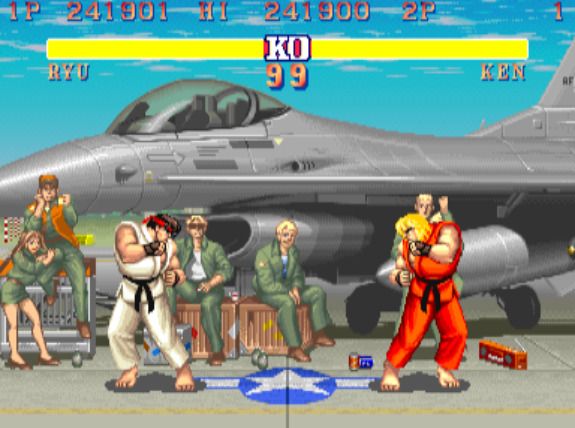
Super Street Fighter II

The game that occupied too much of my time in my pimple and angst ridden nerdy teenage years

As a side and totally unrelated note, I spent a lot of time this week reading this piece on the history of Street Fighter II, time that I probably should have spent working or at the very least, sleeping. As someone who spent more than $100 (a lot more in today’s money) back when buying a copy of Super Street Fighter II for my SNES, as well as playing not only the arcade versions, but also bootleg versions on bootleg NES/Famicom systems, the article brought back a lot of good memories. If there’s one game that I would still like to play on SNES, it would be this one. If I’m allowed two, it would be a hard choice between Super Mario World, Super Mario Kart and Contra III. The first time I figured out how to beat Vega in single player mode (figuring it out all by myself by the way, since the Internet hadn’t been invented yet), was a true moment of joy in my fairly joyless nerdy teenage years.

And as a followup to last week’s story about the Blu-ray-less $399 Xbox One, Microsoft has issued a response, of sorts, to the rumor. Aaron Greenberg, Chief of Staff for Devices and Studios Group at Microsoft tweeted the response “No, you cannot believe everything you read on the internet,” when asked directly on the rumors of the cheaper Xbox One. So a less than concrete denial, but I would still be very skeptical at Microsoft moving forwards with this plan.

I think that’s enough waffle for this week. Same time, same place, next week.

Weekly News Roundup (2 February 2014)

Sunday, February 2nd, 2014

A pretty quiet week, the first week of the Year of the Horse. My Chinese horoscopes says work is going to be pretty light for the first half of the year, but I hope this isn’t due to a lack of news, because scrounging around for news is much harder work than having lots and just writing about it.

For what it’s worth, here’s the news.

Copyright

Hadopi Logo

Hadopi has been pretty useless, says new study

A new study confirms that Hadopi, the French three-strikes laws, has been a total waste of time and money. The study found that Hadopi had little or no effect on the downloading habits of French Internet users, even those that had received a warning under the system. Most simply migrated to another method of downloading that did not fall under the monitoring of Hadopi, and while some lessened the intensity of their downloading, these changes were “insignificant” according to the survey data.

Those in favor of a legal solution to the piracy problem has, in the past, pointed to some data that showed decreases in P2P piracy and also an increase in digital revenue. The migration to other un-monitored services may explain the P2P piracy stats, and digital revenue has been rising for the music industry around the world, even in countries without tough legal measures (I think I even remember reading an article where it showed French growth in digital revenue had lagged that of other countries with less legal sanctions).

In the end, it’s services like iTunes, Spotify and Netflix, and helping people to find out about these legal alternatives that end up providing positive results for the entertainment industry, something the study also concludes.

High Definition

Here’s an interesting story I read during the week. Not important enough to write it up as news, but apparently Facebook has data that is stored and retrieved from a 10,000 Blu-ray disc array. It’s for data that is rarely accessed, also known as “cold storage”, and so things like response time and speed isn’t a huge factor. It saves Facebook money and it’s also a greener solution than powering the equivalent number of hard-drives.

I can see this type of storage being used for other data-rich websites, where some of the data is rarely accessed. My irony meter would explode though if Netflix start using this method – just think of it, Netflix streaming movies from Blu-ray discs!

Gaming

While one unlikely industry is taking an interest in Blu-ray discs, another one that has always relied on discs is thinking of giving it up. Not giving up on the idea of getting rid of discs, Microsoft may be testing a new budget version of the Xbox One that does not include a Blu-ray drive. Instead, gamers would have to get their games via digital downloads, cutting out retailers in the process.

White Xbox One

You might be able to buy one of these white Xbox Ones sometime this year without paying $11,000 for it

Of course, this is just a rumor. Even if Microsoft is testing the concept, there’s no way to know whether they will actually be brave enough to go ahead with the plan.

Regardless, the rumor has already been called “one of the dumbest ideas in history” by one analyst, although I guess it all depends on how cheap the drive-less Xbox One is going to be. At $399, the same price as the PS4, it won’t be competitive. And if the price drops too low, then people will wonder why the “normal” Xbox One, simply with a Blu-ray drive added to the mix, would cost so much more. I also think this flies in the face of Microsoft’s main “all-in-one” strategy – you can’t have an “all-in-one” media device that won’t play Blu-ray movies, can you?

More believable are the rumors of a white Xbox One, and one with a 1TB drive, both coming just in time for this year’s holiday shopping period. The 1TB Xbox One, in particular, is a much needed add-on considering the size of games these days.

And that’s all I could find this week. It’s not much, but it’ll have to do for now. Wishing you a happy, healthy and prosperous Year of the Horse. See you next week.

Weekly News Roundup (26 January 2014)

Sunday, January 26th, 2014

I’m nearly through with my annual The Wire re-up, so I haven’t been watching much Netflix recently (as my bandwidth usage graphs will attest to). If you haven’t watched the show, I highly recommend it (just don’t give up until you’ve finished the first season, but I suspect you’ll be hooked around episode 6 or so, or it’s not the show for you). I don’t want to be one of those people that annoy others by evangelizing The Wire, but the show is so good that you feel others are missing out (and most that have been told about it have been “converted”, after the obligatory “nothing happens” statement after watching the first couple of episodes).

Oh yes, the WNR. Here we go.

Copyright

For those lucky enough to get a pair of Google Glasses, here’s a tip: don’t wear them to the cinema unless you want to get interrogated by Homeland Security. What started out like one of those Internet tales that eventually gets disproved on Snopes has been confirmed to be totally true (by the theater chain, the MPAA and ICE), a story in which an Ohio man (and his wife) were pulled midway out of a viewing session, detained and questioned for more than an hour on the suspicion that his (turned off) Google Glasses were being used to record the movie.

This is despite the man explaining from the offset that the device had been turned off, and gave permission (or rather, pleaded) with the federal agent to check the contents on the Google Glass device and confirm that nothing had been recorded. The ICE Homeland Security agent was apparently asked to intervene in the matter by a MPAA rep present that day to monitor the screening of the popular (and popular piracy target) ‘Jack Ryan: Shadow Recruit’.

Google Glass

Wearers beware: Don’t wear your Google Glasses to the movie cinema

Instead, the man was interrogated for an hour and asked who he worked for, and funnily (although probably not to the man at the time), whether Google was employing him to record the movie. I know the MPAA (and by extension, ICE Homeland Security) has no love for Google , but this was a bit of a stretch.

For his troubles, the man and his wife were offered two free movie tickets by the MPAA rep by the MPAA rep so the couple could finally finish watching Shadow Recruit. Amazingly, The MPAA rep’s name was Bob Hope, a distant relative of the more famous Bob Hope (again, just to reiterate, this story is true). When the frustrated cinema patron, who only wanted an genuine apology instead of an explanation as to why he was targeted (due to the movie’s popularity, and the theater’s recent problems with piracy), did not seem placated by the two free tickets, two more free tickets were offered. The man was now infuriated.

You can read the entire description of the ordeal on The Gadgeteer website, where the story was first published. Scroll down to read the updates too, which includes confirmations from ICE Homeland Security of the incident.

Incidentally, a cam’d copy of Shadow Recruit made its way onto the usual places roughly around the same time. Presumably one now recorded on a Google Glass device. So the record for Shadow Recruit goes Pirates 1, MPAA 0, Poor Google Glass Guy (and his wife) -999.

High Definition

The BDA, that’s the Blu-ray Disc Association, has approved plans to expand the Blu-ray specifications to include support for 4K UltaHD content. A task force consisting of 17 members, including Technicolor, Dolby, Fox, Disney and Sony, has been asked to come up with the final specifications for Blu-ray 4K. The changes could include more than just a larger capacity disc and a new video codec, and other improvements such as support for higher framerates could be introduced (finally allowing The Hobbit films to be shown in HFR 3D at home).

One of the proposed changes could see the introduction of 10, 12 and 16-bit deep color encodings. One company working on this claims to have developed an algorithm that allows for deep color encodings without an increase in bandwidth, and the finished output would also be backwards compatible. Studios would need to update their encoding technology, and Blu-ray players will also need to be updated to take advantage, but with the 4K specifications meaning changes are coming anyway, it might be a case of killing two birds with the same stone.

Netflix

Netflix within 6 months of breaking 50 million user barrier

A disc based approach to 4K is still the best way to go for now, in my opinion. That’s not to say that streaming based 4K, which was a highlight of CES, doesn’t have its place. It’s certainly where Netflix thinks subscriber growth will come from in the future, although they seem to be doing quite alright even without 4K. A new shareholder report revealed Netflix’s total subscriber figure rose by 10% in the last three months of 2013 alone, with the company now having 44 million subscribers. I would gather the attention that original programming has garnered, via award nominations and wins, has contributed heavily to the growth figures. Despite the high cost of production of these shows, the investment appears to be well worth it, with net profit for the company up dramatically as well during the last quarter.

Netflix also commented on the recent Net Neutrality ruling. Netflix probably has the most to lose from the ruling, and the company is calling on ISPs to act responsibility. Netflix says ISPs should adopt a voluntary code of conduct on the matter, although they also believe that no ISP is stupid enough (in my words, not theirs) to do anything too “draconian” (their words, not mine). If ISPs start to get too “aggressive”, Netflix still wants the government to intervene via new regulations. You can read the shareholder report here.

Shameless plug time: Click here to sign up to Netflix, get a month long free trial and help me make a few bucks!

Gaming

As promised last week, we take a slightly more detailed look at the NPD results for December in this week’s WNR, now that more numbers have been made available. As mentioned in the last issue, the Xbox One was the best selling non-portable console for the month (the best selling console being the DS, which sold over a million units). The PS4 was not that far behind though.

Xbox One Forza 5

The Xbox One was the most popular console in the US for December

With 908,000 units sold compared to the PS4’s 860,000, the Xbox One did well to follow up on November’s 909,000 units sold – that’s 1.8 million in about five or six weeks of sales, which is not bad at all. Globally, the PS4 still has a comfortable sales lead though.

If we count the Wii U as a next-gen console, then its 480,000 units sold means it is in a distant third place against the the two powerhouses from Microsoft and Sony. 480,000 is still the Wii U’s best month ever, but Nintendo would have expected more sales, particularly with the company’s consoles having a history of being a popular gift idea in holidays past.

Data provided by Microsoft also showed that the Xbox 360 sold 643,000 units, far ahead of the PS3’s 299,000. The PS3’s low number can be explained by the smaller difference in pricing between it and Sony’s next-gen offering compared to the Microsoft offerings (the Xbox 360 was available for cheaper than the PS3, and competes with Microsoft’s own Xbox One, which is $100 more expensive than the PS4). It seems PS4 sales may be cannibalizing PS3 sales in a more dramatic way than the Xbox One is doing to the Xbox 360.

Regardless, sales of both of the older consoles seems to have more than halved compared to just a year ago, which is making game publishers worried about the continued viability of both platforms, according to analyst Michael Pachter. This is why Wedbush Securities’s Pachter believes a price cut could be coming for both the Xbox 360 and PS3 in February, a move pushed through by publishers concerned that holidays 2014 could be one where the Xbox 360 and PS3 are no longer relevant.

The good news, Pachter says, is that both Microsoft and Sony can afford a price cut due to the ever decreasing cost of manufacturing.

I think a price cut could be a good thing, but I don’t know if publishers are so concerned as to start “threatening” Sony and Microsoft for a price cut. There are already a hundred something million PS3s and Xbox 360s being owned by people right now, and I don’t see how adding a couple of extra million via a price cut will help the situation all that much. Besides, if people are abandoning their PS3/360 for a PS4/XB1, then that’s a good thing isn’t it? PS4/XB1 games will be more expensive, and so publishers should be able to make more money (assuming production costs are similar).

Surprisingly, here in Australia, prices have already started dropping (I say surprisingly because we seem to overpay for everything here). The lowest Xbox 360 price I’ve seen is $USD 130, $USD 165 for the PS3. So there’s definitely room for US pricing to drop.

And while there’s plenty of room left to write, I think I’ll end the WNR right here for this week. Have a great one, and talk to you again soon.

Weekly News Roundup (19 January 2014)

Sunday, January 19th, 2014

Welcome back. In this edition of the WNR, we talk about everything from Ellen, to the Dreamcast, and THE VERY FATE OF THE WEB ITSELF. Hope this issue is as interesting to read for you as it was to write for me.

Starting in 3, 2, 1 …

Copyright

Screencap of The Secret Life of Walter Mitty, with "Ellen DeGeneres" watermark

Screencap of The Secret Life of Walter Mitty, with “Ellen DeGeneres” watermark

A screener copy of the Ben Stiller movie The Secret Life of Walter Mitty that has been leaked onto file sharing network apparently carries a watermark that identifies the original owner as talk show host Ellen DeGeneres. The show’s producers have vowed to track down whomever is responsible, possibly a staffer, intern or even a janitor who is also a BitTorrent fanatic. They also maintain they may not be the source of the leak, which seems unlikely based on the evidence so far.

It’s not surprising that screeners get leaked. In fact, it’s more surprising when screeners don’t end up on file sharing networks. It is a bit rare for the owner of the screener to be identified as a celebrity though.

So does this point to the secret life of Ellen DeGeneres as a notorious BitTorrent pirate? Probably not. Or if she is, then she’s not a very good at covering her tracks!

——

Hollywood: Stop DRM in HTML5

MPAA joins W3C. Hollyweb, here we come!

It’s not quite letting the fox guard the hen house, but it isn’t that much better either. The MPAA, Hollywood’s lobby group, is now a member of the W3C, the organisation responsible for setting web standards. This comes after the W3C approved steps to add DRM to the HTML5 standards, a move that keeps the web relevant in the age of video streaming, but at the expense of open source goodness and interoperability.

The members that make up the MPAA have not hidden their slight disdain towards the openness of the web, and they would love it if it was locked down, closed down and made all proprietary, so that things like piracy can be better controlled. The W3C’s poor decision last year on EMEs already means that Hollywood can slap DRM into every HTML5 web video they can get their hands on, and do it in a proprietary way that means these videos may simply not work in open source browsers like Firefox. The fracturing of the web as we know it may be a possible consequence, but will Hollywood really cares if the web breaks down? They’ll probably be too busy celebrating.

Just how much influence the MPAA will have within the W3C is debatable, so while it’s not quite letting the fox guard the hen house, it’s still kind of like letting the fox’s lobby group having a say in how the hen house is constructed and protected. Which doesn’t sound like the best idea ever.

It’s not been the best week ever for the Internet as a whole, and arguably the biggest blow of the week came when The U.S. Court of Appeals for the District of Columbia effectively killed off Net Neutrality by siding with Verizon and gutting the FCC’s attempt to regulate for an open Internet.

Short gist of it is that ISPs can now force companies like Netflix and YouTube to pay them in order to ensure the smooth delivery of traffic to end users, due to the heavy load these sites place on their network. If they refuse to pay, ISPs can now degrade connection speeds to these services, possibly to the point of making these services unusable. And if said ISPs have their own competing video streaming offerings, then that may just lend them an extra reason to be extra harsh on the likes of Netflix and Amazon.

The court’s argument is that market forces would prevent ISPs from shooting themselves in the foot like this, not when consumers can go and find another ISP that hasn’t throttled Netflix/YouTube services. Of course, this depends on users actually having a choice in the first place, many do not, and for these choices to actually differ in their self-foot-shooting policies (I mean it’s not likely that big businesses with a common interest would collude or anything like that, right?).

Are the major ISPs short-sighted enough to actually engage in this kind of anti-competitive behavior, even if they now seem to have the power and permission to do so? I almost kind of wish they would in a “go ahead, make my day” kind of way, and force Google to expand their Google Fiber rollout and become a truly nationwide ISP. Netflix too. Let’s see how Verizon will like that.

Gaming

When developers talk about next-gen gaming these days, it’s all about the Xbox One and PS4. The Wii U is not so much forgotten, as it is ignored. And a developer who helped to make one of the earliest third-party Wii U games explains why third-party developers are abandoning the Wii U, and it’s not just because of its low sales numbers.

Sega Dreamcast

The poor sales figures means people are comparing the Wii U to the Sega Dreamcast

I’ll leave you to read my summary of the problems with developing for the Wii U in this article, and if you have time, you should also read the full article here. Suffice to say, Nintendo went out to design a console that was small, quiet and not power hungry, and unfortunately, they succeeded. I say unfortunately because these weren’t the things gamers were looking for, and the market segment that Nintendo wanted to sell to, moms who “wouldn’t mind having it in the living room”, seems to be a very limited segment. And that’s before the difficulty developers found with developing for the Wii U, and the difficulty Nintendo found moving from a SD to HD gaming environment, and also in developing their own Live/PSN alternative.

Nintendo just didn’t have the experience to do it right the first time, but even if they did get it right, it was still just playing catch-up. Maybe the Wii U will give Nintendo the experience, to allow them to make the mistakes they have to make, to allow them to do it right for their next console. It’s a difficult learning curve for Nintendo, but an unavoidable one. Whether they can afford to have a relative “failure” like the Wii U, remains to be seen.

Note that I wrote most of this stuff about the Wii U before the December NPD results were released. The Xbox One outsold the PS4 in December, in the US at least, although we already know that worldwide the PS4 is ahead. Supply constraints were an issue, particularly for the PS4, so take these numbers with a grain of salt. The Xbox One was the best selling non-portable console for the month.

From what little information Nintendo released about the Wii U, we know that December was the Wii U’s best month, thanks largely to the new Mario game. Leaked numbers put the Wii U sales figure at 481,000, which sounds reasonable (considering the Xbox 360 only managed 643,000 and the PS3 only 299,000). However, the Xbox One sold 908,000, so comparing next-gen to next-gen, the Wii U is still far far behind.

Plus, looking at historical trends, the Wii U is actually doing less well at this stage of its life cycle than the GameCube. In fact, it’s trending fairly similarly to the ill-fated Sega Dreamcast (although the DC’s demise had to do with other factors, not just poor sales, so no need to panic … yet).

I’m still waiting on a few other figures to trickle in before discussion the Wii U’s fate, plus the PS4/XB1 comparison, in more detail in the next WNR.

So until then, I bid adieu. Have a great week and see you again in seven days.