Archive for the ‘Gaming’ Category

Weekly News Roundup (10 November 2013)

Sunday, November 10th, 2013

Another short one for you this week. This one is kind of my fault though. As you know, I’m the arbiter of what gets written up here, and that’s mostly based on personal interest (I believe this is what they refer to as journalism), and I just wasn’t really in a mood to be interested in much of anything this whole week. I think watching The Perks of Being a Wallflower and Never Let Me Go back to back may have been a real detriment to my mood for the whole week, especially given the order I watched them in.

Okay, enough word padding, here we go.

Copyright

What is that idiom again? Something about people who live in glass houses. Or to be precise, people who are part of a global online copyright crusade and how they should really make sure their own copyright house is in order before pointing fingers at everyone else. The fact that the websites of the RIAA and the BPI, the music industry’s two main copyright lobbyists, both appeared to have been guilty of a case of copyright abuse isn’t really the point, as the fault was minor at best (and it’s common enough). No, the point is that if you’re going to be so rigid and strict in your interpretation of copyright law, like the RIAA and BPI have done so many times in the past, then you better make sure you’re not living in that glass house.

I think copyright is a fluid thing. It exist for some pretty good reasons, but it definitely should not be interpreted in a fundamentalist manner. There are lots of examples of copyright abuse that is perfectly reasonable, and if anything, should be encouraged by the copyright holder, or at the very least, a blind eyed turned to it. For example, using copyrighted music in a YouTube video, for example, is copyright abuse by the standards of the law. And the rights holders have the right to take action. But if the video would ever only be viewed a couple of hundred times, does it really matter? Or if it is a funny take on an unrelated subject (which would then fail to make it protected under parody exemptions, as the parody’s subject matter has to be related to the copyrighted material), one which would never hurt the original’s chance at making money, who is actually being wronged there? Another example. A piece of music that never achieved popularity becomes part of an Internet meme, should you then go on a massive DMCA crackdown campaign, which is of course your right. As I said, copyright is fluid.

So if we can forgive the RIAA and BPI for their copyright trespasses, perhaps they can show a little bit more flexibility and compassion the next time their rights are infringed. That’s all we’re asking.

High Definition

This deal is getting worse all the time! Last week, it was the Sony bombshell that the PS4 won’t play audio CDs and MP3s, and won’t support DLNA. This week, Microsoft has confirmed that the Xbox One won’t play Blu-ray 3D films.

That in itself is not as big of a loss as say the lack of MP3 and in particular DLNA support. But it begs the question: why? There are tons of el-cheapo Blu-ray players that support 3D these days, is it really that much more costly for Microsoft to include 3D playback?
Blu-ray 3D Logo

The Xbox One can play Blu-ray films, but not 3D ones

The answer is probably a yes. Licensing and royalty payments means that, even at a couple of bucks for each Xbox One sold, it will still end up amounting to millions of dollars in the long run. If the demand is there, Microsoft might add support via a patch. If not, they can either ignore it or sell it as an add-on pack in the future.

Both consoles will be fighting to win the upcoming console war, and profitability (which affects pricing) will be key to victory.

While the PS4 and Xbox One are deciding which previous generation formats they will and won’t play, Netflix is going ahead with the next-gen. Seven 4K clips, each around 8 minutes, are already available for streaming on Netflix. The description of these clips say they’re an “example of 4K”, with each clip being at different framerates (24, 59.94, 29.97 …). One would supposedly need a 4K capable Netflix player (and a 4K TV) in order to play these clips at their stated resolutions.

DVD vs Blu-ray vs 4K

Netflix will have to weave a bit of bandwidth magic in order to make 4K work under current broadband limitations

So it looks like Netflix are serious about getting into 4K, something their CEO hinted at a couple of months ago. The testing done now will determine the likely bandwidth requirements, which will have to balance the need to provide a high quality 4K picture, along with a low enough bitrate to allow a greater number of households access to 4K.

It’s all very exciting (at least for video nerds like myself), but the overall feeling I have is that all these new exciting things are being held back by the current state of the Internet. Even as it is, web video services like Netflix and YouTube would be a lot more usable if they were coupled with an ultra speed broadband connection, one that can only be consistently offered by fiber-to-the-home connections at the moment (so speeds in excess of 100 Mbps, with 25 Mbps or higher upload speeds). That Netflix has to make sacrifices to quality for 4K, or even 1080p, proves that the Internet is just not fast enough (on average) at the moment.

That’s it for the week. I promise I’ll try to be less disinterested next week, which should ultimately mean more news stories. Until then, have a nice one.


Weekly News Roundup (3 November 2013)

Sunday, November 3rd, 2013

Welcome to another edition of the WNR. Can’t believe it’s November already, still haven’t even gotten used to writing 2013 on dates yet. A final reminder for our Australian readers of my other site Streambly’s Chromecast competition – entry closes 6th of November.

Let’s go!

Copyright

Let the whack-a-mole games begin. And may the odds be ever against the MPAA’s favor. Or something like that. A week after the original isoHunt was downed, a site claiming to be the new isoHunt has been launched, and another group called ArchiveTeam has also revealed that they managed to save 240 GB worth of isoHunt data before it was taken down.

Cynics may decry the opportunistic launch of isoHunt.to, which other than a similar design to the original isoHunt, has very little in common with the original (and is definitely not associated with anyone who used to work on the site). The even more cynical have said that this new site may even be a trap, a honeypot, to catch unsuspecting uploaders and downloaders.

I don’t know who is correct, but it does show how pointless lawsuits and shutdowns are, when it’s so easy to just start a new torrent site. Instead of one isoHunt to deal with, the MPAA may find themselves dealing with hundreds of clones, all started by people that now know it’s smarter to remain anonymous –  a Balkanization of torrent sites that will lead to an un-winnable game of whack-a-mole for rights holders.

The MPAA’s legal and political maneuvering might make sense in the corporate world in which they exist, the truth is that on the Internet, it’s the individual that has the power. Individuals can start a new torrent site and remain anonymous (or out of the reach of the law). Individuals can also seek other ways to upload and download copyrighted content. And even the MPAA and their members’ vast resources will not be enough to go after and take down everyone.

High Definition

Fresh from a positive set of third quarter earnings results, Netflix wasted no time in lining up their next line of attack: cinemas. Netflix’s content guy Ted Sarandos used his keynote address at the Film Independent Forum to attack theater owners for stifling innovation, something that he says could eventually kill movies as we know it.

Netflix

Netflix aiming to disrupt the cinema business by launching original movies that will be available at a theater near you, and via Netflix, at the same time

Pressure from theater owners put paid to plans by studios to try simultaneous VOD releases for movies that are still on their theatrical run, as a way to fight against film piracy. Sarandos says you cannot prevent people from getting movies the way they want it (legally), and not have serious consequences, including the death of theaters and movies.

Netflix already have plans for the release of an original movie on 2014, to be made available on Netflix on the same day as its theatrical release, and Sarandos wants Hollywood’s biggest movies to join in the experiment.

Theater owners are not convinced. To be precise, they’re incensed that Netflix would even suggest it, and says that Netflix are the ones that will kill movies (after having already killed DVDs, according to them).

Sarandos’s plans are good for consumers, by giving them more choice, and obviously good for Netflix. It’s not so good for cinema owners, but it probably won’t kill them either, as the cinematic experience cannot really be replicated. If the market has to respond to what users want, then less business for theater owners, and more for online services may just be the new reality. Someone wins, and someone else will inevitably lose.

But before Netflix start thinking about competing with a movie’s theatrical run, how about just making sure the big movies are all available on Netflix within a reasonable timeframe of their Blu-ray/DVD debut? It’s far too random at the moment.

——

Mozilla Logo

Mozilla happy Cisco decided to pay up and make H.264 royalty free

Just when Mozilla was ready the throw in the towel in their brave but ultimately futile war against proprietary video codecs, specifically H.264, networking giant Cisco comes out of nowhere to provide a third option. Cisco has announced they will absorb licensing costs for their open source implementation of H.264, allowing open source developers like Mozilla to bake in native H.264 support without endangering their own licensing terms.

So while H.264 remains encumbered with royalty fees, Cisco will pay all these fees for anyone using their open source implementation. And thus ends the incredibly tedious HTML5 codec wars, in which HTML5’s default choice of video codecs became a serious point of contention, with the industry preferring H.264, and the open source community unwilling to accept the closed off and commercial nature of the codec. Cisco’s intervention now makes everyone happy.

And if you need to know why Cisco, a company you usually associate with the Internet’s backbone, would intervene is a debate about online video, then all you need to do is to read Cisco’s white paper on network usage forecasts. It’s their predictions that the growth in bandwidth consumption will be largely driven by video applications, and more bandwidth means more Cisco equipment everywhere. So it’s easy to see why the company is willing to spend a small part of their vast fortunes to smooth out any speedbumps for the future of online video transmission.

Gaming

A sprinkling of gaming stories this week. We start with the Wii being discontinued in Europe and Japan. It’s been a good run for the Wii. Probably the first console since the original Nintendo Entertainment System to be so successful at capturing the attention of so called non gamers, and one that in all likelihood will outsell the original PlayStation console when it is finally discontinued in the US. I somehow ended up with two of these things, a white one and a black one, neither of which I’ve played with for the better part of two years. But I might just do that next week, dust off the old Wii Sports (still probably the best game on the console) and give Wii tennis a whack or two.

Out with the old, and in with the new, we have a couple of PS4 related stories too. With Sony still supporting the PS3 for a little while longer, the possibility of cross-platform multiplayer between the PS3 and PS4 version of the same game may be possible, according to Sony.

PS4 with controller and PS Eye

No audio CD support, no MP3 playback, and no DLNA client support – the PS4’s media capabilities are much worse than the PS3’s

Other interesting facts revealed in the reveal-all FAQ document include the fact that the PS4 will be quieter in general than the already pretty quiet PS3, with a stepless speed fan system to eliminate the “jet engine” effect. The PS4 will also be featuring a faster and better browser than the PS3, which in all honesty, isn’t a hard thing to do.

Slightly more interesting for me is the revelation that Netflix will be one of the launch apps available on the PS4, and just like on the PS3, you don’t need a PS Plus subscription in order to use it.

Not so nice is the fact that the PS4 won’t support audio CDs (I guess that’s not a huge problem), nor MP3s (that is a huge problem). It seems the only music that Sony wants you to listen to on the PS4 will have to come via their Music Unlimited subscription service. Alright, I’ll just use PS3 Media Server or TVersity to stream stuff to the PS4 via DLNA, you might be thinking. Unfortunately, the PS4 does not support DLNA either, which is strange considering this is one of most useful non gaming features of the PS3.

With Microsoft focusing on media integration, the PS4 can ill afford to start removing features that were standard on the PS3. They’ve gotten a lot of goodwill over their DRM stance, but not having DLNA support seems crazy considering almost every other Sony device has it.

But if this upcoming generation of console gaming has taught us anything already, is that making a fuss actually brings results. There is already enough of a public backlash for Sony’s President of Worldwide Studios, Shuhei Yoshida, to suggest that these missing media features (specifically, MP3 playback and DLNA support) will be up for “future consideration” by the PS4 dev team, so let’s keep it up!

Alrighty then, that’s that for the week. See you in seven.

Weekly News Roundup (27 October 2013)

Sunday, October 27th, 2013

If there’s one theme running through this week’s WNR, it’s that I’m doing my best to stretch the definition of “interesting” and “news”, trying to find something, anything, to write about.  A non statement from Vince Gilligan, a dry report to the government and an earnings report (yes, a freaking earnings report), and a story about an upcoming Blu-ray player being region locked like most other Blu-ray players, makes up the bulk of this week’s news shenanigans.

Let’s get on with it for f-sakes.

Copyright

The demise of isoHunt, confirmed this week when the website shut down for good, was one of the things that the MPAA was gloating about in its submission the Office of the USTR (US Trade Representatives) detailing Hollywood’s view on “notorious pirates”.

There’s nothing particularly interesting about the MPAA’s latest annual update (a story I might otherwise have skipped, if not for the lack of anything else interesting to write about), other than the removal of isoHunt, but a lot of the regulars this time now appear to have new domain names too (The Pirate Bay, moving to .sx, and KickassTorrents movie to .to). A visible response to the increasing use of domain seizures as part of a new global anti-piracy strategy. Despite the domain name changes, these sites are still popular, still “notorious” according to the MPAA, so nothing much has really changed. That’s because these sites are so popular, that people are willing to accommodate and adapt to new domain name, in a way they wouldn’t for most other websites. These sites have become brands (ironically, thanks to free promotion from the likes of the MPAA’s notorious pirates list), and once this happens, the actual domain name matters less.

—–

Breaking Bad creator Vince Gilligan has waded into the piracy debate by acknowledging that piracy has helped the show become as popular it is, but at the same time also warned that it is taking money out of the pockets of people working on the show. There is a growing trend even among industry types to acknowledge that, at the very least, it is simply a reflection and measure of the popularity of something. But very few are keen to admit to the positive effects of piracy.

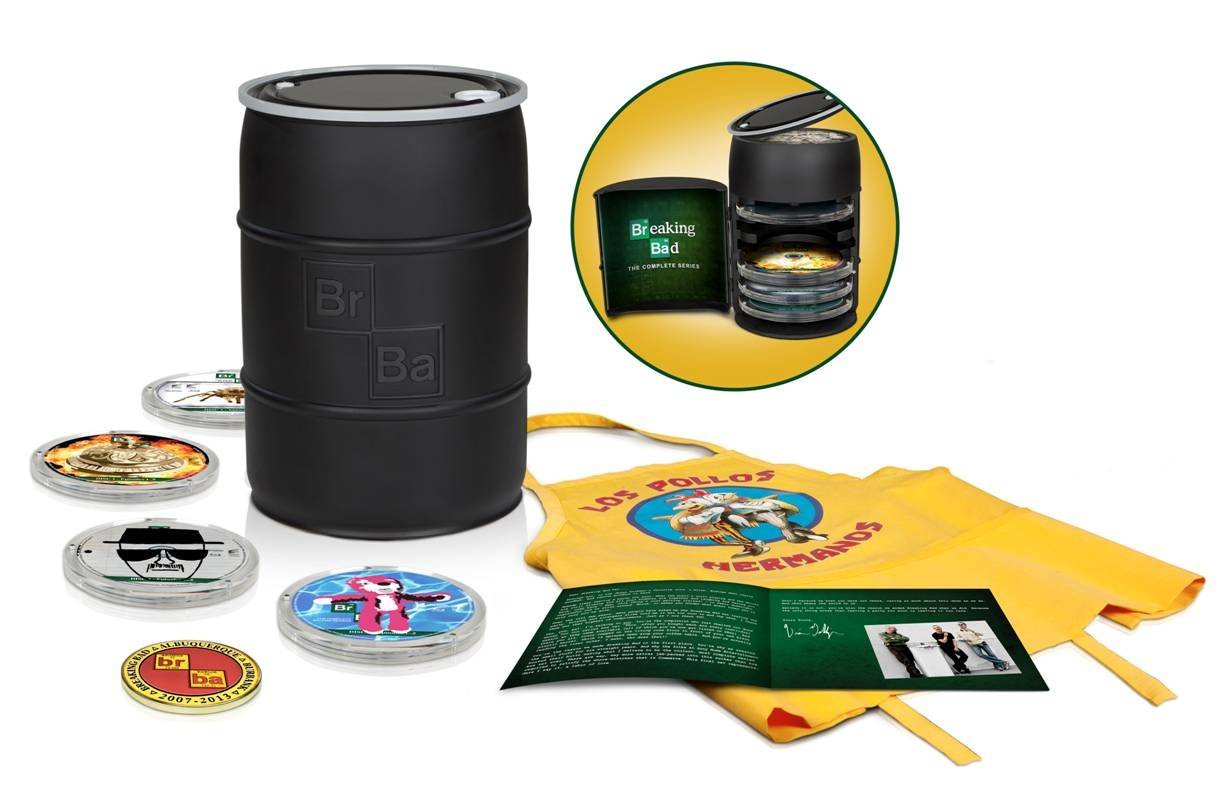
Breaking Bad Blu-ray Boxset

Does piracy take money out of the pocket of the people behind Breaking Bad? You can help put it back by buying this awesome Blu-ray box set

It may be that Breaking Bad is pirated a lot because it is popular, but according to Gilligan, BB is popular, in a small part, because it is pirated a lot. Gilligan attributes this to “brand awareness”.

Gilligan also says that had all those pirated downloads been legal, it would have meant more money for the people who worked on the show, including himself. Maybe this is true in a perfect world where a chemistry teacher with cancer doesn’t have to become a drug lord to pay for his medical expenses and to provide for his family, but piracy does not always equal lost sale. It’s like saying if all the people who had already purchased the BB Blu-ray boxset went out and bought another copy, or two, or twenty-seven, then that would also mean more money to the wonderful people behind BB (and they would deserve it). To use another analogy, only because I’m severely sleep deprived at the moment, if I set up a street stall giving away free coffee to morning commuters, I can’t then go back and say that, had I not given it away for free, all of those people who had grabbed a cup would have paid for it. On the other hand, some will have, because coffee is something they want (and need). Just how many would pay, and how many still won’t, is at the heart of the debate.

This debate is pointless though, as we all know it’s impossible to get rid of piracy. Instead, the question should be “how do we make piracy irrelevant”, and there are ways to do this.

High Definition

Netflix is doing alright for it self. The company has just announced that it has now more than 40 million subscribers, adding nearly 11 million new members in the last year. The international market for Netflix has become more important in the past year, with nearly a quarter of all subscribers now belonging to international markets.

Unfortunately, these international markets are still not yet profitable, despite more than a $100 million increase in revenue. Overall profit remains low at $32 million from a high revenue figure of more than $1.1 billion, but content acquisition costs are unlikely to drop any time soon.

Also likely to increase will be expenses for original content, with Netflix set to double their investment in 2014 (although still only 10% of their total content expenditure). The cost may be high, but Netflix seems to be getting good value from their investment, with Emmy awards to offer proof of the success of the strategy, and increased membership numbers too.

The company’s recent link-up with UK cable TV operator Virgin Media was also noted in the letter to shareholders. Netflix and cable TV operators are rivals normally (with Netflix winning quite handsomely at the moment), but this link-up could be a sign of the future. If you can’t beat them, join them, may be something cable operators (many of which also provide Internet services) will have to accept in the future.

Gaming

PS4 DualShock 4 Controller

PS4 DualShock 4 controller can be used on the PS3 (sort of)

Straddling the barrier between HD and gaming news is this quickie about the PS4’s Blu-ray player being region locked. Just like the PS3’s Blu-ray player, and every other Blu-ray player Sony has made. Slow news week or what? Next week’s breaking news: Xbox One Blu-ray player also region locked.

In other earth shattering news, the PS4’s DualShock 4 controller can be used with the PS3, but not all games. Granted, this one is slightly more interesting than the news above, and in the absence of PS3 backwards compatibility, at least something is sort of backwards (or is that forwards) compatible with the PS4. But you can’t play GTA V with the DS4 for some reason.

I think that’s all I have the energy for today. From lack of sleep and boredom, mostly. Will pray to the News Gods for something, anything, more interesting next week. Until then …

Weekly News Roundup (20 October 2013)

Sunday, October 20th, 2013

I spent most of the week alternating between viewing Ken Burns’s The War, Saving Private Ryan, Band of Brothers and The Pacific. It all started with The War, and escalated very quickly from there. Some of my dreams this week were in black and white.

On to the news!

Copyright

IsoHunt Logo

isoHunt to close within 7 days, as settlement deal means the torrent search engine will have to pay the MPAA $110m in damages

isoHunt is no more. The site, and its beleaguered owner finally threw in the towel this week and agreed to a $110m settlement deal with the MPAA, which will see the 10 year old site shut down within the next 7 days.

The big settlement figure will bankrupt both isoHunt and Fung, and so it’s unlikely the MPAA will receive much of the $110m, if any at all. But the MPAA is not here to make money – the big number is simply there to scare others into submission, although I don’t think the likes of TPB or KAT will be quaking in their boots at the result.

All it will do is drive site operators underground, and push sites to relocate to countries where the MPAA won’t have an easy time filing and winning lawsuits. You can’t sue anyone if you can’t find them, or even know who they are!

——

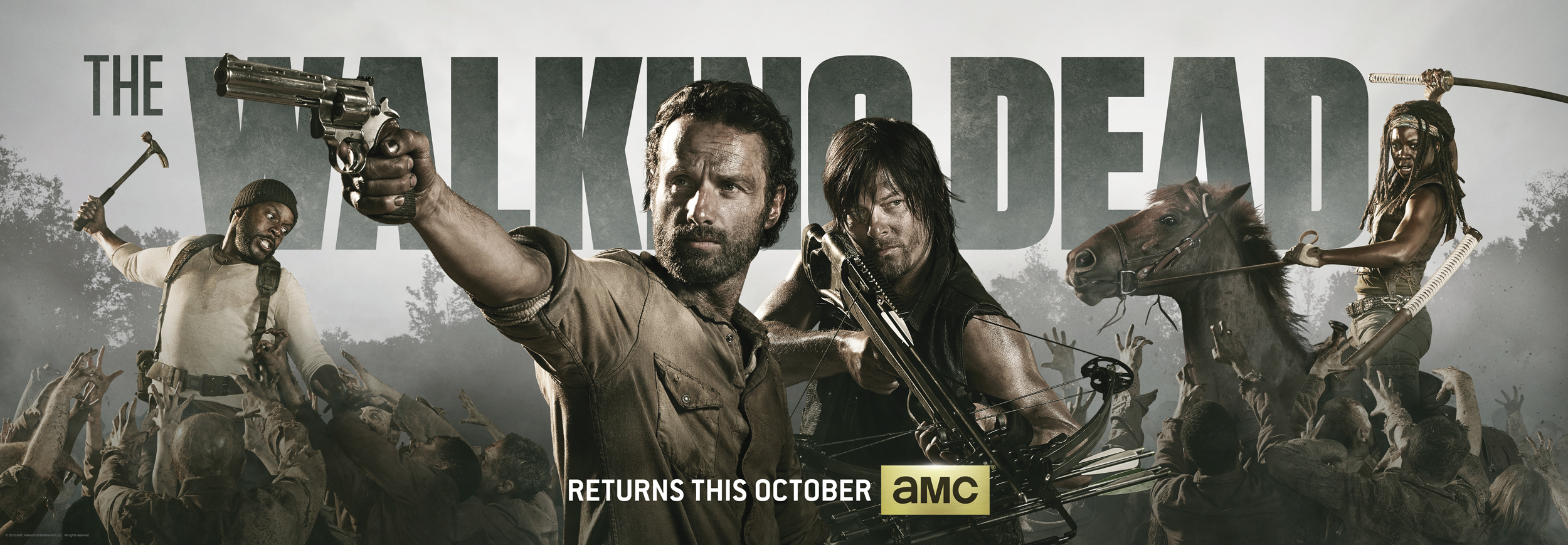
A sign that distributors are finally getting the message. 20th Fox, the international distributors of the hit zombie TV series The Walking Dead, this week announced a plan to reduce the international airing delay for the new season 4 episodes of the show to a single day or less, in a bid to reduce piracy. The commendable plan, however, has not been the shot in the head needed to kill the piracy problem, as the new season of The Walking Dead broke new piracy records for the show on torrent networks.

The Walking Dead Season 4

Killing piracy is much harder than killing zombies on TWD

Most interestingly, the premier episode of season 4 had been made available for free streaming for US viewers, legally, on AMC’s website. Despite this, 15.5% of downloaders came from the US, the most popular country for downloaders. This in itself is not unusual. When the new season of Arrested Development was aired exclusively on Netflix earlier in the year, many paying subscribers also chose torrent download as their viewing options of choice. And it was revealed recently that in Australia, pay TV subscribers that had paid access to new episodes of Game of Thrones still went out of their way to download the pirated version, all in an effort to bypass the 2 hour airing delay. Less Australians chose to download The Walking Dead in Australia, as a percentage of total downloaders, compared to Game of Thrones – new TWD episodes air 90 minutes after the US broadcast in Australia.

So what does this all mean? For one, it shows users are pretty specific about their viewing habits, and many simple prefer the convenience of piracy (the platform agnostic nature of it), even when a less convenient, but free and legal option is available. And while it’s commendable that airing delays are being seen as a cause to piracy, any delay, even a 2 hour one, may still be pushing viewers towards piracy. And of course pricing is an issue, as many people simply cannot afford the $45 needed here in Australia per month to subscribe to our sole cable provider, Foxtel, and access new episodes of The Walking Dead. Nor do they want to get tied up to cable or satellite subscription, which isn’t even available in all areas of the country. Even Foxtel’s recently launched Internet streaming plan (Foxtel Play) is limited in that, while it gives you access to the channel that airs The Walking Dead, the Foxtel Play app only works on the Xbox 360, PCs and Samsung Smart TVs (effectively ruling out the most popular entertainment devices here in Australia, the PS3 and iPad).

No airing delays, maximum platform compatibility, and more reasonable pricing. That’s what’s needed to beat TV piracy. It won’t kill piracy, it will always exist, but it can be made irrelevant, a manageable threat like the zombies on The Walking Dead (may no longer be true for season 4).

To beat film piracy requires largely the same approach. The issue of platform compatibility, of allowing the film to be rented or bought on the platform of choice for consumers, is as important as making sure the price is reasonable. And despite the film industry blaming pretty much everyone else for the piracy problem, the industry itself is not without blame. That’s what a new website, piracydata.org, plans to highlight.

piracydata.org takes the most pirated films data from TorrentFreak and then does an online search to find legal alternatives for these films, and unsurprisingly found that very few of them are available digitally. Most are available to buy legally from places like iTunes, but try to rent it digitally or stream it on Netflix, and you’ll be out of luck.

There is an issue with the methodology used by piracydata.org though, in that the most pirated films are almost always new releases, and it is unrealistic to expect these films to be available on legal streaming options like Netflix. But I was surprised at how few films were available for digital rental, and how many are still unavailable to buy outright. So much for the MPAA blaming Google for displaying piracy results for film searches – what exactly is Google supposed to do when there are no legal options available?

For the films that are available to buy digitally, their pricing makes them entirely unattractive. For example, the most pirated film currently is Pacific Rim. The Blu-ray combo edition, which includes an UltraViolet digital copy of the film, plus the Blu-ray and DVD versions, is only $3 more than the iTunes version at current prices. This either makes the Blu-ray combo edition extremely good value (not really, considering Blu-rays have always been around this price), or the digital edition a total rip-off. And they wonder why people download torrents!

Gaming

Sony has done it! After 32 month of Xbox 360 domination, the PS3 finally became last month’s best selling home based console. The September NPD data, which looks at video game hardware and game sales in the US, might as well have been renamed the September GTA. GTA V represented 50% of all dollars being spent on gaming for the entire month, and it was the catalyst behind the PS3 win. The PS3’s win comes largely off the back of the PS3 GTA V bundle – an equivalent bundle was not available for Microsoft’s console.

PS3 GTA V Bundle

The 500GB PS3 GTA V Bundle helped the PS3 become September’s best selling console

The Xbox 360’s loss is possibly just a one-off, with normal service likely resuming once GTA V sales dies down (when they run out of people who don’t have the game to sell the game to). 1.6 million Xbox 360s have been sold so far this year, with the holiday period yet to come. But if early pre-order reports are to be believed, the PS4 will win the first few month of the next-gen console wars at the very least, thanks to its $100 lower price tag.

There was also good news for Nintendo, with Wii U sales jumping by 200% (or 3 times as many) compared to August thanks to a price cut and a limited edition The Legend of Zelda: The Wind Waker HD bundle. Three times as many console sales probably still saw the Wii U selling fewer units than the Xbox 360.

I haven’t played GTA V all last week. Just haven’t found the time to do it, and was dispirited after trying GTA Online, only to be killed and have money stolen because I could not move my character for some reason. My character is one of the thousands of characters in the game based on Jesse Pinkman from Breaking Bad (well, a really ugly version of him anyway), so (slight BB spoiler ahead) a depression induced catatonic state and being liberal with your hard-earned money is probably not that unrealistic for a Pinkman based character.

That reminds me, I have to make a Walter White character, which, given the right clothing and facial hair choices, should be easier to create.

See you next week.

Weekly News Roundup (29 September 2013)

Sunday, September 29th, 2013

Welcome to another edition of the WNR. I’m still well immersed in the world of GTA V and Los Santos this week, and haven’t been so enamored with a game since the early days of Skyrim (before killing giants got boring). To those that criticize people like me for not embracing reality, and instead choosing to hide in the fantastic world of GTA V – well, if I could steal a blimp, skydive from it as I watch it crash and burn into a well populated area in the real world without danger or a lengthy prison sentence, then I would have done it already. GTA V is not about reality. It’s about hijacking someone’s car, running over them, and then getting out of the car to steal the money they just dropped.

Oh yes, the boring reality of “real” news. Oh well, let’s get started.

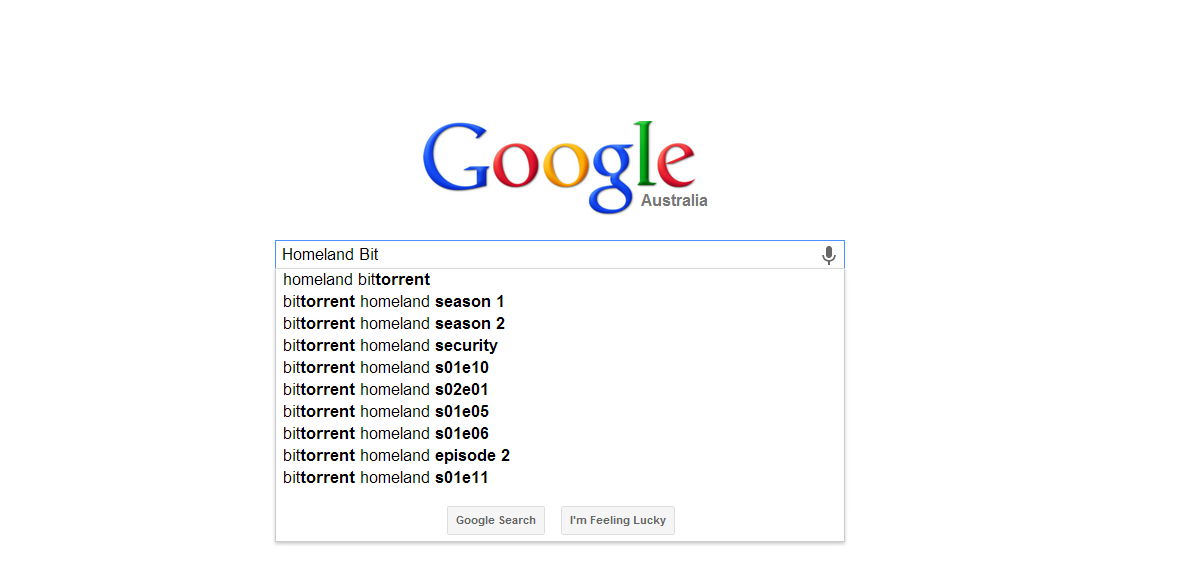
CopyrightGoogle must have been feeling generous this week when it removed the term “BitTorrent” from the list of blacklisted auto-complete keywords. Or maybe BitTorrent Inc’s recent PR campaign has had the intended effect in illustrating the fact that BitTorrent is in fact the legal name of a company that does completely legitimate business. Even Google, with its slew of lawyers, might have had a hard time arguing why the name of a well known company was being blacklisted, on purpose, in court.

Google Auto-complete BitTorrent

BitTorrent is no longer a dirty piracy word, according to Google

Of course, how most people use the term is very different to how BitTorrent Inc want people to use it, and allowing BitTorrent to grace the selection choices of auto-complete opens the door slightly again to piracy related search phrases. Type “Homeland bit” into Google, and you can see for yourself just what kind of suggested search terms Google is once again providing (most of these terms lead to pirated content, it has to be said).

The MPAA and their ilk will probably paint this as Google brazenly encouraging piracy. But I feel it is a bit of a stretch to suggest that people searching for “Homeland bit” would have otherwise not finished typing the “torrent” part of the search term had it not been for Google’s auto-complete suggestion. Or that not offering the suggestion somehow leads to less piracy.

High Definition

Should HBO offer an online-only subscription plan à la Netflix? Ask almost anyone on the Internet, and they will say yes. Ask anyone with a bit of authority at HBO, and they’ll tell you they’re not interested. At a Goldman Sachs conference this week, it was potential HBO competitor Netflix that made the suggestion again that HBO should look towards online if it wants to grow its customer base.

If HBO were to take Netflix’s suggestion on board, then viewers would be the obvious winners. It means many will no longer need to keep an expensive cable subscription just to watch Game of Thrones, and it will also have a hugely positive effect on piracy by offering people the opportunity to view HBO’s hit shows in the medium of their choice, possibly at a lower cost.

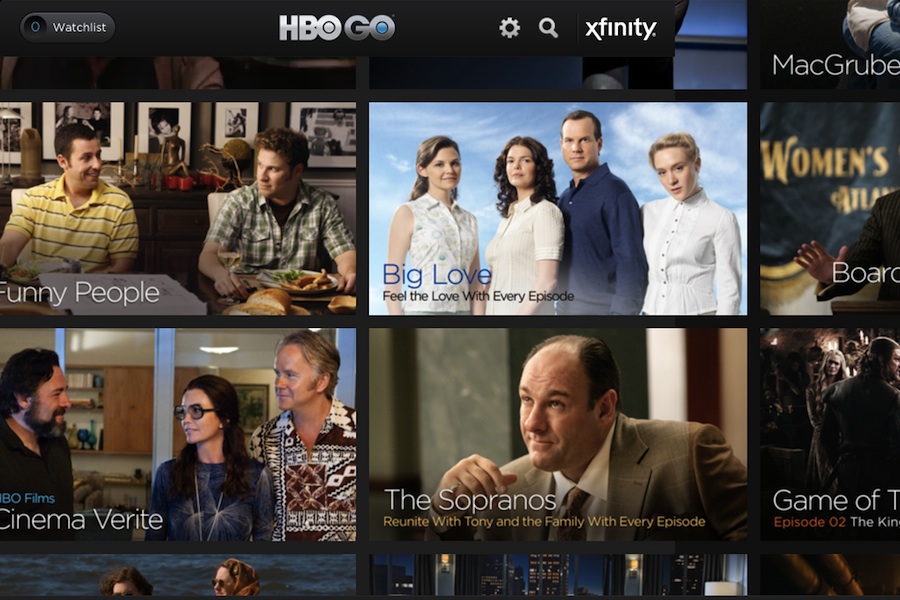
HBO Go

A standalone HBO Go subscription plan might bring in more customers for HBO, says Netflix

The obvious losers would be the cable networks, who are increasingly dependent on premium networks like HBO to keep them in business. And this is perhaps why Netflix wants HBO to compete in the same space as themselves, which at first doesn’t seem to be in Netflix’s own interests. If it happens, Netflix can then become the new basic cable to HBO’s premium online offerings, and both companies, while operating on the same medium, would not then be natural competitors.

In further Netflix news, the company announced this week that all US subscribers will now have access to Super HD and 3D content. Previously, Super HD and 3D content were only available with selected participating ISPs, those that had signed up to Netflix’s Open Connect Network (which is free for ISPs to join). Comcast, for example, did not support Super HD even though many smaller ISPs did. Now, all users will have access to Netflix’s best quality streams, regardless of their ISP. Although those using ISPs not on Open Connect may experience slow downs during peak usage times, something that Open Connect was designed to prevent.

In my experience, Netflix’s Super HD, while not quite Blu-ray quality, is definitely superior to their standard 1080p streams. At a distance of about 10 feet, staring at a 60″ TV, it can be hard at times to tell the difference between Netflix Super HD and Blu-ray. Netflix’s 1080p uses 5 Mbps, compared to Super HD’s 7 Mbps, and 3D’s 12 Mbps.

Obviously, you’ll also need a device capable of supporting Super HD streams. This should mean almost all devices capable of Netflix 1080p output, which covers most of the popular devices. The notable exception being the Xbox 360, which only supports 720p Netflix streams.

Gaming

Having started a new website about streaming recently (not so subtle plug, I know), I’ve been keeping an eye on all things streaming. But not just Netflix, but also game streaming. With both next-gen consoles promising game streaming of some kind, and has been the trend for this generation of the console war, Sony was the first to fill us in with juicy details of what their service could offer. And it also (sort of) solves another problem for potential PS4 owners – PS3 compatibility!

Gaikai

PS3 games can be played on the PS4 via the Gaikai cloud gaming service

Sony announced this week at the Tokyo Game Show that PS3 games will be playable on the PS4, but only via the Gaikai cloud game streaming platform. The same set of supported PS3 titles can also be streamed on the PS3 (it does makes sense if you think about it a bit more) and even the Vita. The game will be rendered on Gaikai’s servers and beamed to your PS4 as a video stream, and will be perfectly playable as long as your connection has low latency.

For this to become a true backwards compatible solution, Sony will have to think up a way to allow previously purchased PS3 games to be playable on Gaikai, on the PS4, without the need to fork over any more cash. One possible technical solution could be as simple as inserting your PS3 game disc into the PS4, which will be used purely for authentication purposes. But the hurdle for this to happen isn’t a technical one, but one of will on Sony’s part. If Sony finds the kindness in their heart to allow this to happen, that is to allow previously purchased PS3 games to be played on Gaikai for free, then this is the kind of thing that would tip the upcoming console war crushingly in Sony’s favor.

I think that’s it for the week. Back to GTA V for me. Hurray for escapism!