Archive for the ‘Nintendo Wii, Wii U, Switch’ Category

Weekly News Roundup (8 December 2013)

Sunday, December 8th, 2013

Another short one this week. I hope you’ll be understanding, what with the holidays so close, it just doesn’t feel right to do a lot of work. I suspect this feeling will last well into the new year.

On with the WNR.

Copyright

So another one down the drain. As you will probably have heard by now, Hotfile is dead. Which makes this the MPAA’s second big anti-piracy victory in as many months, after the closure of isoHunt back in October. And this one didn’t even need a trial.

Hotfile

Hotfile is no more, as MPAA scores another major victory

Hotfile and their lawyers decided that the best course of action was to settle the case a week before the trial was set to start, with the file host agreeing to pay $80 million in damages. Under the deal, the site itself could still operate if they implemented a copyright filtering system. Failing that, the would have to close down. I guess those responsible for Hotfile found the latter to be easier than the former, and Hotfile has been closed permanently.

So that’s one less place where pirated downloads can be gotten, which leaves only several hundred other places that offer the exact same feature and downloads. Another pointless victory in the war against piracy.

Speaking of pointless, DRM. But far from being pointless, it appears DRM did have a use for music sales – it made sure there were less of them!

A new working paper has gone through the figures, done the maths and found that the removal of DRM actually helped to increase digital music sales by 10%. While popular music sales weren’t affected much, “long tail” sales of less well known albums increased by about 30%. The researcher who wrote the report, Laurina Zhang, theorizes that by removing DRM and making it easier to share music, this helped lesser known works to be discovered. This also explains why the top sellers, which are already heavily publicized, didn’t benefit as much from DRM removal.

If I interpret this correctly, then it means that while the removal of DRM was the catalyst, it was sharing (and mostly unauthorized sharing I might add) that actually helped to boost sales. Hmm, something to think about.

And for all the problems with Spotify’s revenue model, perhaps it too has a hand in helping music sales (and other related revenue). Now that would make an interesting study, to see what effect Spotify has on music sales.

Gaming

While we wait the conclusion of the epic South Park PS4 vs Xbox One trilogy, the first trickle of Black Friday video game sales data has come out, and it appears that the more expensive Xbox One is winning, at least at Walmart and Target. According to data released by analytics firm InfoScout, the best selling non-portable console at two of the largest retail chains in the U.S. was the most expensive one, the Xbox One. It accounted for 31% of all sales, just ahead of Microsoft’s other console, the Xbox 360, which came in at 30%.

Xbox One Controller

Xbox One wins Black Friday, at least at Walmart and Target

The PS4 and PS3 both came in at 15% each, half as many as their Xbox equivalents. The Xbox 360 was always going to beat the PS3, but the lower PS4 numbers may be due to stock issues.

As for the Wiis, the lesser said the better, at least according to the InfoScout data. The Wii, previously the king of Black Fridays, only managed to be 1% of all sales, while the Wii U wasn’t much better at 6%.

Of course, with both Microsoft and Sony’s consoles being new probably meant that the Black Friday data was slightly unfair to the Wii U. The overall holiday sales will be much more even, and the next holiday’s data would be even more conclusive, given that Nintendo’s big games (your Marios, with or without Karts, Donkey Kongs and Zeldas) would have all been released by then.

And that was pretty much it for the week, I know, not much. And the situation probably won’t improve in the next couple of weeks as others join me in taking their feet off the gas pedal, and dream of sleep-ins, holidays and new toys to place with.

See you next week.

Weekly News Roundup (17 November 2013)

Sunday, November 17th, 2013

A slightly longer one for you this week. Last week’s short one was kind of my fault, but this week’s longer one has little to do with me, and more to do with, um, things actually happening.

Let’s get started.

Copyright

You’ve got to get them young! The RIAA and MPAA obviously agree, because they’re backing a plan to start teaching their pro-copyright propaganda to kids still trying to master the tricky art of finger painting.

A new curriculum that teaches kids the awesomeness of copyright, and the evilness of piracy, has been proposed by the Center for Copyright Information (which is backed by Big Content, as well as America’s top ISPs). The lesson plans, which start at the kindergarten level and all the way through elementary school, teaches the importance of “protecting copyright”, and covers such fun topics as “Copyright Matters” and “It’s Great to Create”.

Immediately after the plans were made public, everyone with a bit of common sense came out and suggested that this probably wasn’t the best idea. Or even a very good one. The EFF worries about some of the bias that may be present in the lesson plans, such as equating downloading TV shows to copying off someone else’s homework. Teachers, via the California Teachers Association, worry about fitting in corporate sponsored messages into a curriculum that barely has enough room for the basics, like English (so you can read the lawsuit that the RIAA may file against you) and maths (so you can work out how many millions you owe the MPAA for downloading Spongebob episodes).

My biggest concern is that the MPAA/RIAA’s curriculum may be just too confusing for elementary school kids. I mean how do you explain to kids why artists, the “creators” that the curriculum so lauds, get such a small percentage of earnings compared to the middlemen that make up the members of the MPAA/RIAA. Especially in such a technologically advanced age where creators can sell directly to consumers? It just doesn’t make any sense!

Netflix

Netflix and YouTube dominate US prime time downloading

It seems every time the MPAA comes up with some new ridiculous way to fight piracy, we also have, at the same time, a story that shows you how to beat piracy by simply providing people with a better product. For this week, and for a while now, that better product is Netflix. Nearly 32% of downloads during peak usage times in North America now belongs single-handedly to Netflix, and when combined with YouTube, they account for more than half of all download traffic.

Now I know people have their gripes with the service. And I do too. Not enough new content; too many missing classics; streaming quality/speed issues – to name a few. Yes, we have original content now (and some really good stuff too), and there’s the occasional blockbuster that makes its way on there after a lengthy delay (Skyfall, just last week, for example), but having almost destroyed the brick & mortar video renting business with its disc-by-mail service, Netflix streaming has managed to destroy whatever was left of that business. Instead of going to a video store and renting some old crap, you can watch the same old crap, and more older and crapper stuff, in the comfort of your own home without having to spend any extra money.

It’s great for me, the procrastinator, because instead of spending an hour at the local Blockbuster and being unable to decide what to rent, I can now spend an even longer time clicking through Netflix’s library, still unable to decide. But I can do it all now while sitting down and and stuffing my face full of trans fat, so it’s a lot better than going to Blockbuster (the only exception being their excellent caramel popcorn).

Hoping that it goes the way of Blockbuster, but unfortunately not happening quickly enough, is gaming DRM. And the CEO of anti-DRM developer CD Projekt Red, the people behind the DRM free game store GOG.com and The Witcher series, explains why this is the case.

Apparently, the gaming industry knows full well that DRM does work, but still persists with it because it is seen as doing something. Anything. And they need to be seen doing something in front of bosses, investors and shareholders, most of whom don’t have a clue (or chooses not to have one). But that’s okay, the only loser in the whole thing are gamers and paying customers. You know, the unimportant people. It’s this kind of deluded, and lazy thinking that has mired the industry in an unending war against pirates, one that they’re losing pretty badly and where the collateral damage extends to anyone who tries to play the game.

Just to reiterate, DRM doesn’t do what it is supposed to do (stop piracy), but instead, it actually hurts paying customers and make them want to buy your games less. And “well, what else are we supposed to do” is not an acceptable answer when faced with the question of piracy. And there are plenty of things you can do to make the legal experience much better than the illegal one – just look at GOG.com or Steam, for example.


High Definition

New Netflix UI

The new Netflix UI for TV connected devices looks good and works well

Just a quick follow-up to last week’s story about the Xbox One not supporting Blu-ray 3D at launch – the PS4 won’t play 3D films either, as it turns out. Both Microsoft and Sony are coming out with the “not at launch” caveat, which probably means that support will be added at a later time. Perhaps free, but perhaps at a small cost. Not too many tears will be shed from me for the loss of 3D, even if it’s kind of crappy to lose features when going from the current gen to the next gen.

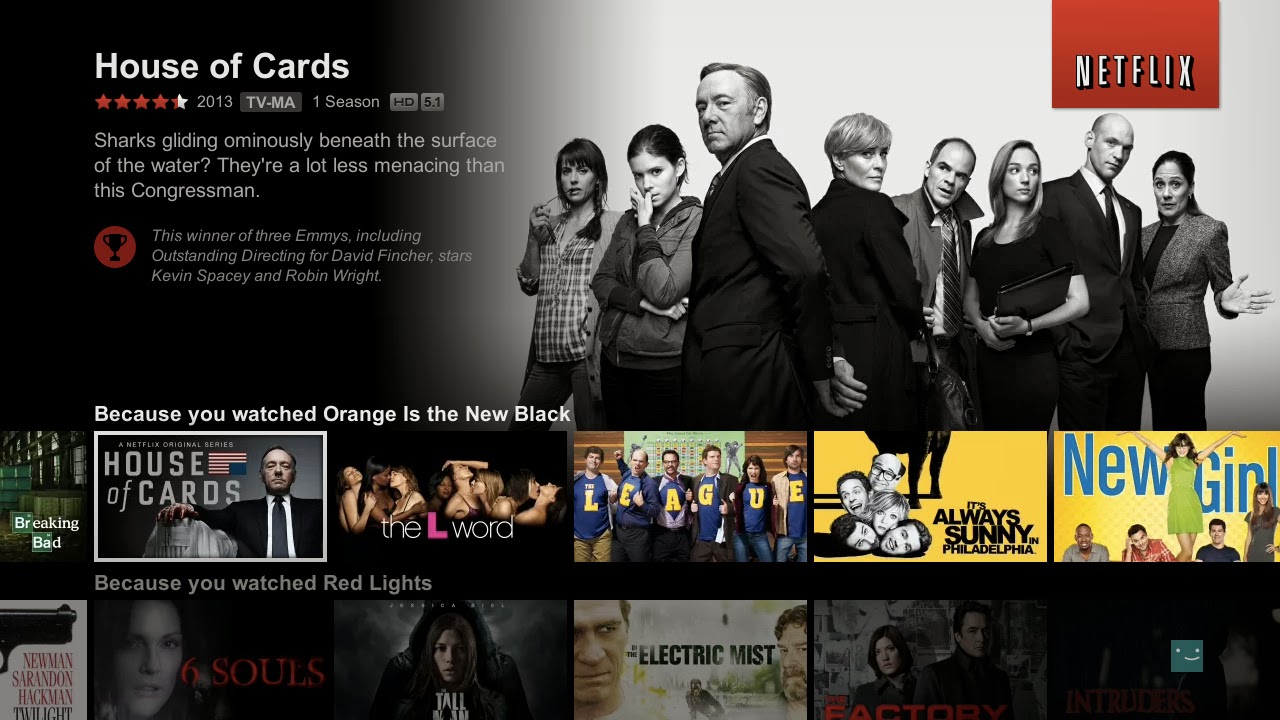
Another quick digital video related update, this time for Netflix, who has rolled out a major UI change for all of its TV connected devices. I’ve been using it for the last couple of days, and it’s very usable, and I like the more detailed descriptions about why certain streams have been recommended for me or why I should watch them. With that said, I would still like the option of being able to select language/subtitles before the film starts (right now, you have to do it when the film is playing). And showing a screenshot of the current scene for resuming titles would be helpful. I’ve also noticed there are some issues with saving the last played spot, especially if I turn off my PS3 too quickly.

Gaming

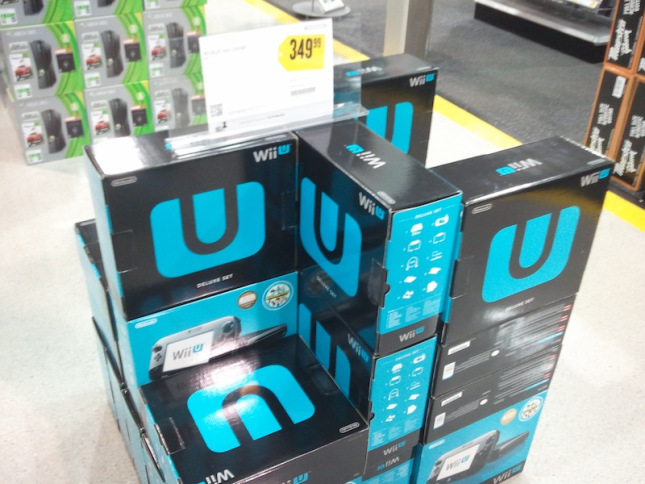
The Wii U is still stuck in the sales doldrums, but instead of being pleased with the contrasting fortunes of their PS3 and PS4 consoles, Sony says it’s actually in their interest for the Wii U to start selling well. Sony Worldwide Studios Prez Shuhei Yoshida expressed these sentiments in a recent interview with IGN, in which he also suggested part of the problem with the Wii U was the inconsistent messaging that Nintendo was trying to send out.

In particular, Yoshida found Nintendo’s “core gamers” strategy a bit odd, as in his opinion, the Wii U should have been marketed like the original Wii, as a “safe” family friendly console. But you can see why Nintendo had to change strategies with the Wii U. While the Wii can be considered a success, its later years were marked by a steady decline in sales, thanks to the ever competitive “casual gamers” market, and the lack of A-list third party releases on the platform. You can’t blame Nintendo for wanting to get a piece of the Call of Duty pie, and this cannot be possible if they stayed true to their family-only strategy.

Wii U Boxes

Sony wants the Wii U to sell well, and says Nintendo should concentrate on their family-friendly strength instead of going after “core gamers”

What they failed to do, in my opinion, was to understand how “core gamers” think. “Slightly better than last-gen” is not good enough to sate the appetites of core gamers hungry for next-gen graphics. It was also hard for Nintendo to shake their “video gaming for kids” image to appeal to core gamers. In the end, Nintendo wanted a console that combined mobile/tablet gaming with their core gaming strength (their first party titles, and the family friend reputation), and marry that with zombies and grenades. Perhaps it was just asking too much from a single console, and you end up with a machine that’s neither this nor that. And it didn’t help that Nintendo failed to demonstrate the full potential of their touchscreen GamePad, either for casual gaming or for the hardcore audience.

And all of this brings us to October’s NPD results, for US video game sales. The Wii U, unsurprisingly, was the poorest selling home based console out of the current crop, with the Xbox 360 regaining top spot after the PS3 ended its 32-month winning streak last week (thanks to GTA V). The Xbox 360 sold 166,000 units, but we don’t have figures for the PS3 and Wii U (other than the PS3 outselling the Wii U). The Wii U has only managed to sell 300,000 units in the last quarter, worldwide, and that’s actually a much better result than the previous quarter, in which only 160,000 units were sold.

With the PS4 now released, and the Xbox One coming next week, we’ll start seeing those number (or something vague about them) this time next month, which is kind of exciting. A new console generation and all that.

And on that note, we come to the end of this WNR. See you in a week’s time.

Weekly News Roundup (3 November 2013)

Sunday, November 3rd, 2013

Welcome to another edition of the WNR. Can’t believe it’s November already, still haven’t even gotten used to writing 2013 on dates yet. A final reminder for our Australian readers of my other site Streambly’s Chromecast competition – entry closes 6th of November.

Let’s go!

Copyright

Let the whack-a-mole games begin. And may the odds be ever against the MPAA’s favor. Or something like that. A week after the original isoHunt was downed, a site claiming to be the new isoHunt has been launched, and another group called ArchiveTeam has also revealed that they managed to save 240 GB worth of isoHunt data before it was taken down.

Cynics may decry the opportunistic launch of isoHunt.to, which other than a similar design to the original isoHunt, has very little in common with the original (and is definitely not associated with anyone who used to work on the site). The even more cynical have said that this new site may even be a trap, a honeypot, to catch unsuspecting uploaders and downloaders.

I don’t know who is correct, but it does show how pointless lawsuits and shutdowns are, when it’s so easy to just start a new torrent site. Instead of one isoHunt to deal with, the MPAA may find themselves dealing with hundreds of clones, all started by people that now know it’s smarter to remain anonymous –  a Balkanization of torrent sites that will lead to an un-winnable game of whack-a-mole for rights holders.

The MPAA’s legal and political maneuvering might make sense in the corporate world in which they exist, the truth is that on the Internet, it’s the individual that has the power. Individuals can start a new torrent site and remain anonymous (or out of the reach of the law). Individuals can also seek other ways to upload and download copyrighted content. And even the MPAA and their members’ vast resources will not be enough to go after and take down everyone.

High Definition

Fresh from a positive set of third quarter earnings results, Netflix wasted no time in lining up their next line of attack: cinemas. Netflix’s content guy Ted Sarandos used his keynote address at the Film Independent Forum to attack theater owners for stifling innovation, something that he says could eventually kill movies as we know it.

Netflix

Netflix aiming to disrupt the cinema business by launching original movies that will be available at a theater near you, and via Netflix, at the same time

Pressure from theater owners put paid to plans by studios to try simultaneous VOD releases for movies that are still on their theatrical run, as a way to fight against film piracy. Sarandos says you cannot prevent people from getting movies the way they want it (legally), and not have serious consequences, including the death of theaters and movies.

Netflix already have plans for the release of an original movie on 2014, to be made available on Netflix on the same day as its theatrical release, and Sarandos wants Hollywood’s biggest movies to join in the experiment.

Theater owners are not convinced. To be precise, they’re incensed that Netflix would even suggest it, and says that Netflix are the ones that will kill movies (after having already killed DVDs, according to them).

Sarandos’s plans are good for consumers, by giving them more choice, and obviously good for Netflix. It’s not so good for cinema owners, but it probably won’t kill them either, as the cinematic experience cannot really be replicated. If the market has to respond to what users want, then less business for theater owners, and more for online services may just be the new reality. Someone wins, and someone else will inevitably lose.

But before Netflix start thinking about competing with a movie’s theatrical run, how about just making sure the big movies are all available on Netflix within a reasonable timeframe of their Blu-ray/DVD debut? It’s far too random at the moment.

——

Mozilla Logo

Mozilla happy Cisco decided to pay up and make H.264 royalty free

Just when Mozilla was ready the throw in the towel in their brave but ultimately futile war against proprietary video codecs, specifically H.264, networking giant Cisco comes out of nowhere to provide a third option. Cisco has announced they will absorb licensing costs for their open source implementation of H.264, allowing open source developers like Mozilla to bake in native H.264 support without endangering their own licensing terms.

So while H.264 remains encumbered with royalty fees, Cisco will pay all these fees for anyone using their open source implementation. And thus ends the incredibly tedious HTML5 codec wars, in which HTML5’s default choice of video codecs became a serious point of contention, with the industry preferring H.264, and the open source community unwilling to accept the closed off and commercial nature of the codec. Cisco’s intervention now makes everyone happy.

And if you need to know why Cisco, a company you usually associate with the Internet’s backbone, would intervene is a debate about online video, then all you need to do is to read Cisco’s white paper on network usage forecasts. It’s their predictions that the growth in bandwidth consumption will be largely driven by video applications, and more bandwidth means more Cisco equipment everywhere. So it’s easy to see why the company is willing to spend a small part of their vast fortunes to smooth out any speedbumps for the future of online video transmission.

Gaming

A sprinkling of gaming stories this week. We start with the Wii being discontinued in Europe and Japan. It’s been a good run for the Wii. Probably the first console since the original Nintendo Entertainment System to be so successful at capturing the attention of so called non gamers, and one that in all likelihood will outsell the original PlayStation console when it is finally discontinued in the US. I somehow ended up with two of these things, a white one and a black one, neither of which I’ve played with for the better part of two years. But I might just do that next week, dust off the old Wii Sports (still probably the best game on the console) and give Wii tennis a whack or two.

Out with the old, and in with the new, we have a couple of PS4 related stories too. With Sony still supporting the PS3 for a little while longer, the possibility of cross-platform multiplayer between the PS3 and PS4 version of the same game may be possible, according to Sony.

PS4 with controller and PS Eye

No audio CD support, no MP3 playback, and no DLNA client support – the PS4’s media capabilities are much worse than the PS3’s

Other interesting facts revealed in the reveal-all FAQ document include the fact that the PS4 will be quieter in general than the already pretty quiet PS3, with a stepless speed fan system to eliminate the “jet engine” effect. The PS4 will also be featuring a faster and better browser than the PS3, which in all honesty, isn’t a hard thing to do.

Slightly more interesting for me is the revelation that Netflix will be one of the launch apps available on the PS4, and just like on the PS3, you don’t need a PS Plus subscription in order to use it.

Not so nice is the fact that the PS4 won’t support audio CDs (I guess that’s not a huge problem), nor MP3s (that is a huge problem). It seems the only music that Sony wants you to listen to on the PS4 will have to come via their Music Unlimited subscription service. Alright, I’ll just use PS3 Media Server or TVersity to stream stuff to the PS4 via DLNA, you might be thinking. Unfortunately, the PS4 does not support DLNA either, which is strange considering this is one of most useful non gaming features of the PS3.

With Microsoft focusing on media integration, the PS4 can ill afford to start removing features that were standard on the PS3. They’ve gotten a lot of goodwill over their DRM stance, but not having DLNA support seems crazy considering almost every other Sony device has it.

But if this upcoming generation of console gaming has taught us anything already, is that making a fuss actually brings results. There is already enough of a public backlash for Sony’s President of Worldwide Studios, Shuhei Yoshida, to suggest that these missing media features (specifically, MP3 playback and DLNA support) will be up for “future consideration” by the PS4 dev team, so let’s keep it up!

Alrighty then, that’s that for the week. See you in seven.

Weekly News Roundup (20 October 2013)

Sunday, October 20th, 2013

I spent most of the week alternating between viewing Ken Burns’s The War, Saving Private Ryan, Band of Brothers and The Pacific. It all started with The War, and escalated very quickly from there. Some of my dreams this week were in black and white.

On to the news!

Copyright

IsoHunt Logo

isoHunt to close within 7 days, as settlement deal means the torrent search engine will have to pay the MPAA $110m in damages

isoHunt is no more. The site, and its beleaguered owner finally threw in the towel this week and agreed to a $110m settlement deal with the MPAA, which will see the 10 year old site shut down within the next 7 days.

The big settlement figure will bankrupt both isoHunt and Fung, and so it’s unlikely the MPAA will receive much of the $110m, if any at all. But the MPAA is not here to make money – the big number is simply there to scare others into submission, although I don’t think the likes of TPB or KAT will be quaking in their boots at the result.

All it will do is drive site operators underground, and push sites to relocate to countries where the MPAA won’t have an easy time filing and winning lawsuits. You can’t sue anyone if you can’t find them, or even know who they are!

——

A sign that distributors are finally getting the message. 20th Fox, the international distributors of the hit zombie TV series The Walking Dead, this week announced a plan to reduce the international airing delay for the new season 4 episodes of the show to a single day or less, in a bid to reduce piracy. The commendable plan, however, has not been the shot in the head needed to kill the piracy problem, as the new season of The Walking Dead broke new piracy records for the show on torrent networks.

The Walking Dead Season 4

Killing piracy is much harder than killing zombies on TWD

Most interestingly, the premier episode of season 4 had been made available for free streaming for US viewers, legally, on AMC’s website. Despite this, 15.5% of downloaders came from the US, the most popular country for downloaders. This in itself is not unusual. When the new season of Arrested Development was aired exclusively on Netflix earlier in the year, many paying subscribers also chose torrent download as their viewing options of choice. And it was revealed recently that in Australia, pay TV subscribers that had paid access to new episodes of Game of Thrones still went out of their way to download the pirated version, all in an effort to bypass the 2 hour airing delay. Less Australians chose to download The Walking Dead in Australia, as a percentage of total downloaders, compared to Game of Thrones – new TWD episodes air 90 minutes after the US broadcast in Australia.

So what does this all mean? For one, it shows users are pretty specific about their viewing habits, and many simple prefer the convenience of piracy (the platform agnostic nature of it), even when a less convenient, but free and legal option is available. And while it’s commendable that airing delays are being seen as a cause to piracy, any delay, even a 2 hour one, may still be pushing viewers towards piracy. And of course pricing is an issue, as many people simply cannot afford the $45 needed here in Australia per month to subscribe to our sole cable provider, Foxtel, and access new episodes of The Walking Dead. Nor do they want to get tied up to cable or satellite subscription, which isn’t even available in all areas of the country. Even Foxtel’s recently launched Internet streaming plan (Foxtel Play) is limited in that, while it gives you access to the channel that airs The Walking Dead, the Foxtel Play app only works on the Xbox 360, PCs and Samsung Smart TVs (effectively ruling out the most popular entertainment devices here in Australia, the PS3 and iPad).

No airing delays, maximum platform compatibility, and more reasonable pricing. That’s what’s needed to beat TV piracy. It won’t kill piracy, it will always exist, but it can be made irrelevant, a manageable threat like the zombies on The Walking Dead (may no longer be true for season 4).

To beat film piracy requires largely the same approach. The issue of platform compatibility, of allowing the film to be rented or bought on the platform of choice for consumers, is as important as making sure the price is reasonable. And despite the film industry blaming pretty much everyone else for the piracy problem, the industry itself is not without blame. That’s what a new website, piracydata.org, plans to highlight.

piracydata.org takes the most pirated films data from TorrentFreak and then does an online search to find legal alternatives for these films, and unsurprisingly found that very few of them are available digitally. Most are available to buy legally from places like iTunes, but try to rent it digitally or stream it on Netflix, and you’ll be out of luck.

There is an issue with the methodology used by piracydata.org though, in that the most pirated films are almost always new releases, and it is unrealistic to expect these films to be available on legal streaming options like Netflix. But I was surprised at how few films were available for digital rental, and how many are still unavailable to buy outright. So much for the MPAA blaming Google for displaying piracy results for film searches – what exactly is Google supposed to do when there are no legal options available?

For the films that are available to buy digitally, their pricing makes them entirely unattractive. For example, the most pirated film currently is Pacific Rim. The Blu-ray combo edition, which includes an UltraViolet digital copy of the film, plus the Blu-ray and DVD versions, is only $3 more than the iTunes version at current prices. This either makes the Blu-ray combo edition extremely good value (not really, considering Blu-rays have always been around this price), or the digital edition a total rip-off. And they wonder why people download torrents!

Gaming

Sony has done it! After 32 month of Xbox 360 domination, the PS3 finally became last month’s best selling home based console. The September NPD data, which looks at video game hardware and game sales in the US, might as well have been renamed the September GTA. GTA V represented 50% of all dollars being spent on gaming for the entire month, and it was the catalyst behind the PS3 win. The PS3’s win comes largely off the back of the PS3 GTA V bundle – an equivalent bundle was not available for Microsoft’s console.

PS3 GTA V Bundle

The 500GB PS3 GTA V Bundle helped the PS3 become September’s best selling console

The Xbox 360’s loss is possibly just a one-off, with normal service likely resuming once GTA V sales dies down (when they run out of people who don’t have the game to sell the game to). 1.6 million Xbox 360s have been sold so far this year, with the holiday period yet to come. But if early pre-order reports are to be believed, the PS4 will win the first few month of the next-gen console wars at the very least, thanks to its $100 lower price tag.

There was also good news for Nintendo, with Wii U sales jumping by 200% (or 3 times as many) compared to August thanks to a price cut and a limited edition The Legend of Zelda: The Wind Waker HD bundle. Three times as many console sales probably still saw the Wii U selling fewer units than the Xbox 360.

I haven’t played GTA V all last week. Just haven’t found the time to do it, and was dispirited after trying GTA Online, only to be killed and have money stolen because I could not move my character for some reason. My character is one of the thousands of characters in the game based on Jesse Pinkman from Breaking Bad (well, a really ugly version of him anyway), so (slight BB spoiler ahead) a depression induced catatonic state and being liberal with your hard-earned money is probably not that unrealistic for a Pinkman based character.

That reminds me, I have to make a Walter White character, which, given the right clothing and facial hair choices, should be easier to create.

See you next week.

Weekly News Roundup (15 September 2013)

Sunday, September 15th, 2013

How are you on this fine Sunday. Most of this WNR was written ahead of time as I went sand crab catching on Saturday. [INSERT UPDATE ON HOW MANY CRABS WERE CAUGHT OR INSERT SOMETHING FUNNY IF NO CRABS WERE CAUGHT]. It was a very enjoyable, “and very rewarding”/”but not very fruitful” [DELETE AS APPROPRIATE], trip. So a short WNR, but still with a few interesting tidbits to go through. Let’s get started.

CopyrightCommon sense tells us that graduated response, or three-four-or-however-many strikes, hasn’t really worked as a piracy deterrent. Or as a way to promote the purchase of legitimate content. It’s common sense because many countries, like France, New Zealand, Taiwan, South Korea, have had their own regimes for a while now, and there doesn’t seem to be a lot of noise regarding their effectiveness, even from the most biased sources. It is also common sense to us because we’re not idiots.

At the same time, there has been many studies that point out the ineffectiveness of three-strikes. The latest one comes from Australia’s Monash University. A new paper by Dr Rebecca Giblin finds that graduated response has failed in the three key areas that it was designed to have an effect in. Namely, reduced infringement, to promote the purchase of legitimate content, and to promote the creation and distribution of new content. The study found little evidence, if any, that graduated response has had a positive effect in any of these three key areas.

Three Strikes

Three, or however many, strikes doesn’t work to stop piracy, encourage legal purchases, or the creation of new content, a new study finds

It doesn’t reduce infringement because people can simply use another method to download their movies and TV shows, one that is not monitored by three-strikes. It doesn’t promote the purchase of legitimate content because of the previous point, and also because it doesn’t really solve any of the issues that encourages people to pirate (namely price, availability, usability). This is all fairly obvious to anyone who just thinks a little bit about the problem with piracy. In that piracy isn’t a problem of enforcement, it’s an issue of convenience and pricing. And effective enforcement was never really going to be possible anyway, not without a herculean effort that would fail even the most optimistic cost/benefit analysis, and at the same time, shred our privacy rights.

Simply stated, graduated response doesn’t work. It’s a waste of money, and it unnecessarily reduces our right to privacy and due process. But it’s considered a panacea among the pro-copyright lobby, so expect more countries to adopt this in the near future.

The only thing more pointless than graduated response, and more dangerous, may be search engine censorship. And in an effort to hold the fort against the mounting pressure from copyright holders to start messing around with search results, Google has released a report detailing the company’s anti-piracy principles and the successes in fighting the good fight.

Other than the usual self propelled back patting, the report does state quite clearly what methods the search engine giants thinks is most effective in reducing online piracy. It starts with the perfectly reasonable call for better legitimate alternative to piracy, more of your Netflixes and Spotifys, and in a somewhat transparent gesture of self promotion, Google Play and YouTube. The rest of the report simply states Google’s anti-piracy efforts, including the 4 million DMCA takedown requests the company has to deal with every week, as well as efforts in shutting down revenue sources for pirates.

An interesting read, no doubt. But will it placate the copyright lobby and their political servants? Probably not, but it was worth a shot anyway.

High Definition

I mentioned a couple of months ago that the BDA (Blu-ray Disc Association) has been investigating the potential for 4K movies to be distributed via Blu-ray discs. New rumors suggest that a positive announcement from the BDA on this is not too far away. Adding fuel to the fire is this story about a German Blu-ray disc manufacturer announcing a new line of triple-layer 100GB Blu-ray discs, and their press release specifically mentions 4K as one of the intended uses.

Blu-ray Player

Could existing Blu-ray players be made capable of reading 100GB triple-layer discs containing 4K content? Does it even matter, as these players may not be powerful enough to decode 4K content anyway …

100GB should be more than enough for 4K movies, especially if it uses the new H.265/HEVC codec (but even with H.264/AVC, 100GB should be enough). The big question is whether these new discs would be compatible with existing Blu-ray players, perhaps after an obligatory firmware update. However, new players will probably have to be produced to support 4K output and support for H.265/HEVC, and older players may lack the processing grunt to handle the decoding anyway; so having these discs be readable by older Blu-ray players may be somewhat pointless (although being able to downscale Blu-ray 4K content to 1080p would be a very nice feature to have for existing Blu-ray owners, and will no doubt help push Blu-ray 4K sales at a time when 4K TVs are still too expensive).

The other main advantage of backwards compatibility is that with the PS4 and Xbox One both having Blu-ray drives, and both capable of outputting at 4K resolutions, these would instantly become the Blu-ray 4K players of choice in the same way the PS3 was the Blu-ray player of choice back when Blu-ray first launched. Stay tuned to this space.

If any of this is true, it would definitely keep Blu-ray relevant in the 4K era. I know Sony, of all people, are going down the disc-less route in terms of 4K, but discs are still the most efficient way to transmit the large amounts of data required by 4K right now. That will change with the increase penetration of fiber based broadband, but this could take years. And we’ll probably have the bandwidth hogging holographic TV to worry about by then!

Gaming

The August NPD report has been released. The Xbox 360 was once again the most popular home based console for the month of August 2013 for the US market. This is the 32nd time in a row that Microsoft’s console has won the accolade.

GTA V Screenshot

GTA V will be occupying most of my free time over the next couple of weeks, I suspect

However, only 96,000 Xbox 360s were sold, only half of what it was a year ago. This is the first time in a long time that the Xbox 360 has sold less than 100,000 units in a given month, and the fact that it was still the best selling out of the other home based consoles, tells a rather unfortunate story. Still, with only months left before the Xbox One and PS4 are on the market, the low hardware sales are to be expected. GTA V’s release this month will boost hardware sales when the NPD releases its report this time next month though.

Speaking of GTA V, I’ve pre-ordered my copy (despite the fact that the pre-ordering phenomenon is directly incentivizing the video game industry’s many bad habits these days – but I just can’t say no to a GTA game). I doubt I’ll have time to play it until next weekend, so please do not expect a surprisingly wordly edition of the WNR next week. It ain’t gonna happen!

That’s it for the week. I’m off the enjoy a nice dinner that includes crabs/no crabs [DELETE AS APPROPRIATE]. See you next week.