Archive for the ‘Electronics’ Category

Weekly News Roundup (17 May 2009)

Sunday, May 17th, 2009

It was a long time coming, but I finally managed to write the latest edition in the “If I were to buy a new computer today” series. With Windows 7 around the corner, Intel’s Core i7 and AMD’s Phenom II processors being released, it was a good time to update the series. The poor economic conditions have been factored in as well, so I’ve managed to “assemble” a system that’s cheaper than the last one, while still offering excellent all around performance and features. In my opinion, anyway. People say PC’s are dead, especially when it comes to PC gaming, but I hold the view that there are certain games that are best played on PCs, and until consoles actually become PCs by allowing gamers to use keyboard/mouse controls, there will always be a place for PC gaming.

Copyright

Lots to go through this week so let’s start with the copyright news. In Australia, the copyright case against the ISP iiNet continues. There is sort of good news for iiNet, in that part of the lawsuit against them have been dropped. They are no longer being accused of being the main copyright infringer, rather, they are now only being accused of providing copyrighted material. This was most likely because the Judge in the case asked for evidence of this, and the AFACT (Australia’s very own MPAA , the group suing iiNet) could not provide it.

Meanwhile, the more well known case against The Pirate Bay gets closer to a retrial. There was also evidence that the Judge in that case was not only guilty of a conflict of interest, because he was part of a pro-copyright panel, that he is also biased because he was involved in a scandal relating to the police search of an ISP that wasn’t entirely based on solid evidence. Looks like the other side got a very very friendly Judge in this case. The other big case at the moment is of course the MPAA vs RealNetworks trial. RealNetworks has hit back by filing anti-trust charges against the MPAA, calling it a “price-fixing cartel”. Whatever you feel about RealNetworks’ products (and I’m a huge anti-fan of them), and even what you feel about the software on trial (RealDVD creates more DRM than it removes), you do want the MPAA to lose this one, because it will then open up DVD and even Blu-ray to so many other uses, such as being able to store copies of the movies on NAS to stream to your media device without having to insert the disc all the time.

Good news and bad news in Europe/UK this week. UK ISPs have refused to become copyright cops to police their users’ usage. This is all good, except if the government passes laws to force them to do it, then they have no other choice. Which is what is happening across the Channel in France. The French has passed their “Net Piracy” bill which will people having their Internet connections disconnected if they are “caught” download illegal content three times. It’s a shame to see such a draconian measure being passed in what has traditionally been a very liberal country. I don’t know the details, but I can’t see there being a fair way for people to appeal this decision, since I doubt the court system has the capacity to absorb the hundreds of thousands of cases that will spring up each year. And if the court system is not involved, then are users simply guilty because two corporations (the ISP and content owners) say they are? And having an Internet connection these days is just as important as any other utility such as water or gas for many people, and do you really want your supply to be controlled by multi-national corporations with no chance of appeals?

Better movie, more hype, but less ticket sales because it wasn't pirated

Better movie, more hype, but less ticket sales because it wasn't pirated?

The industry will talk about the threat of piracy, how in the current economic climate it is even more important to crack down (it’s funny how they take advantage of serious issues to cram in their own agendas, such as using an anti child pornography bill to get their anti-piracy stuff through). But does Internet piracy really affect sales, or can the extra (and free) promotion actually help? Last week I mentioned the movie Wolverine, how it was leaked online months before the premier, but still managed to do very well at the box office. This week, we have that other summer sci-fi blockbuster that’s received way more (traditional) hype, Star Trek, and appears to be the better movie. And it was also not leaked online. This makes for an interesting comparison between the two movies – a better and more hyped up one that’s not leaked, and another that was leaked. And guess which movie sold more tickets? Yep, you guessed right, Wolvering beat Star Trek at the box office based on opening weekend numbers, despite (or is that because of) the online leak. So does piracy actually help to promote a movie? The Internet certainly helps to promote movies, and the more piracy, the more Internet hype, and who knows.

Nintendo has also recently released their updated DS handheld, the DSi. Part of the new set of “features” is a firmware update service that has been specifically designed to root out piracy. Unfortunately, it won’t work. The companies that make flashcarts that allows copied games to be played are one step ahead (or technically just one small step behind) by releasing their own “fixed” firmware – one for each new firmware released by Nintendo. This way, users can have the latest Nintendo firmware, but still (within a short period of time) play their copied games. So that’s another DRM problem solved. Which is no wonder that game developers are finally rallying against DRM, because they simply do not work. If they work, then perhaps you can argue for their necessity. But they don’t work, so they cost money, make things more difficult for legitimate users, and maybe even encourage anti DMCA behaviour for those sick and tired of having to insert their game disc or carts every time they want to play something, even just for a few minutes.

High Definition

That was a long copyright section. Next up is high definition news. One needs to be careful when digesting the stories about Blu-ray sales skyrocketing. As Betanews says, Blu-ray sales *are* skyrocketing, but only if you lower the sky. This article talks about hardware, and the stats make interesting reading because the 72% increase in the number of players sold has only resulted in a 14% increase in dollar sales. This suggest that the average Blu-ray player sold today is 34% cheaper than what it was a year ago. This makes perfect sense because hardware prices have dropped as expected, and cheaper products equals more sales. But is a 72% increase enough? Especially considering the low starting point in the first place.

Now, I’ve been keeping track of Blu-ray movie sales figures through Nielsen VideoScan stats, and have been posting analysis of them for over a year now in this forum thread. This means, for the first time, we can actually compare this year and last year’s stats for the same week. This isn’t actually a good way to compare figures, since movie sales are largely related to the titles being released, rather than what week it was. However, if you do an average, then you will be able to get a fair picture of what’s going on with movies as well. It is pretty clear that Blu-ray movies sales have nearly doubled (possibly close to a 72% increase as well), although again the low starting point makes this sound better than it is (if I sold one Blu-ray movie last year, and I sold 5 of them this year, then the 400% increase isn’t as impressive as it sounds). It’s not good enough to replace the lost sales of DVDs, that’s for sure, but again the question is whether it is good enough for the Blu-ray format? I really don’t know the answer. I think if we fast forward another year and we see the same level of increase, then you will probably be able to say that Blu-ray has made it. Right now, it’s too soon I think to declare a winner.

Zulu on Blu-ray: Amazing restoration effort

Zulu on Blu-ray: Amazing restoration effort

But assuming you are one of the additional 72% that purchased a Blu-ray player this year, what movies do you get to show off your system? Engadget HD asks this question of its readers. Personally, I think sections of Planet Earth are absolutely amazing and exactly the type of stuff I picture when I dreamt about going HD some years ago. Other people will have their own list, some concentrating on sound rather than picture, or on interactivity. But I also prefer older movies that have been properly restored on Blu-ray, and you get to see them at the best they’ve ever been shown. Zulu is one such example, where the transfer is simply amazing for a movie of this age. These can often surprise and amaze people more so than say Iron Man, because people expect Iron Man to look great on HD, not so much an older movie that they’ve gotten used to on TV or even DVD with their poor transfers. Certainly, Blu-ray has given studios an excuse to spend a lot of money restoring old movies. Whether the money was worth it commercially or not, remains to be seen.

Gaming

And finally in gaming, the April NDP figures are out and I will analyse them early next week. The numbers look bad across the borad, except for the Nintendo DSi. All the other consoles have dropped in sales, both compared to the last month and also compared to a year ago, with only the cheapest console, the Xbox 360, dropping the least. The PS3 was outsold by the PS2, which has recently received a price drop (hint to Sony?).

There are rumours of a new PS3 build being released, and could Sony be perhaps lowering prices through this new SKU by cutting some corners here and there in the new build? The current models apparently costs 10% more than what the retail price. This is not that surprising, although I thought it would have been much higher than 10% to explain Sony’s stubbornness on price cutting. Another way for them to cut prices without cutting prices would be to put more Sony produced games in game bundles with the console, if you include 5 free games by redemption or something but with the pack remaining at the same price point, then it works out to be good value, especially if there’s a list of games you can choose to redeem. Blu-ray did this at the beginning, and it helped to make the expensive players more attractive, but only at a small cost to the manufacturer.

That’s the news that was for the week. Have a nice weekend, or whatever is left of it depending on your time zone. See you next week.


Weekly News Roundup (26 April 2009)

Sunday, April 26th, 2009

Welcome to yet another WNR. I hope you’ve had a nice week. It’s getting colder now here in Melbourne, and I’m starting to see the downside of having a new Core 2 Duo – it just doesn’t generate enough heat as compared to my old computer. I published the March 2009 NPD video game sales analysis earlier in the week. It’s the first time in a long time that sales have declined, all except for the cheap Xbox 360, so the economy will affect the gaming industry, despite previous months showing otherwise.

Copyright

First up is copyright news. The fallout from The Pirate Bay verdict is still being felt this week, as protesters turned up in Sweden to protest the decision. As reported last week, the fight is far from over (in fact, it’s just barely begun), so it could be years before we know the fate of TPB. IFPI, the organisation suing TPB, has had its own website under attack by supporters of TPB as well.

Protesting The Pirate Bay Verdict

Protesting The Pirate Bay Verdict

Still, even if TPB was taken down, it does not mean the end of piracy. TorrentSpy, Suprnova were all once as big as TPB, but both were taken down and torrent downloads did not cease (in fact, Suprnova was taken over by the TPB and re-launched). The only way to stop torrents is to offer a legal alternative, and it’s as simple as that. The copyright side of things apart, another problem with torrents is the amount of bandwidth it saps from networks. ISPs can deal with this by either banning of throttling P2P traffic, but this has a very negative effect on customer satisfaction. So the alternative is to optimize P2P traffic, by prioritising local based exchanges, and some ISPs are doing this to both save money and improve P2P speeds. Of course, this puts ISPs at greater risk of prosecution, not just from private companies like the MPAA, but also from governments. The German government, for example, has gotten German ISPs to agree to web filtering, which they will say it’s for inappropriate sites, but can also be used against sites like TPB. As you may know, Australia is currently debating this sort of thing and our system could be the envy of authoritarian regimes worldwide, as well as organisations like the MPAA. 

The other big legal news is the official start of the MPAA vs RealDVD trial. With these types of cases, a lot really depends on the Judge, because if you get a tech savvy one that can understand the arguments put forward, then Real Networks may have a chance. If not, then the scare tactics of the MPAA will work in court very well.

Last week, I reported that the BBC is adding DRM. This week, the BBC has started broadcasting propaganda for the MPAA. Next week, the BBC commission a weekly hourly program called “The MPAA: All Hail Our New Masters”. 

While this could possibly be put into the gaming section, I’ll put it here. Sony says that piracy is hurting PSP game sales. And by “piracy”, they are of course referring to the Nintendo DS. Aren’t they? Or perhaps the ease in which the Nintendo DS can be used to play pirated games, and the half-hearted effort from Nintendo to stop the act, is really hurting the PSP, which is harder to mod to make it play homebrew or pirated games. The fact that the DS is more fun than the PSP may also contribute, as PSP sales continue to drop year-on-year as our NPD analysis shows. 

High Definition

In HD news, the big news of the week is Warner Bros.’s launch of their new red2blu.com website. What this website allows you to do is to upgrade your HD DVD collection to Blu-ray, at minimal cost. 

red2blu.com - Exchange your HD DVDs for Blu-ray's

red2blu.com - Exchange your HD DVDs for Blu-ray's

How it works is that you can upgrade up to 25 HD DVD titles (per household) for $4.95 each, with $6.95 charged for shipping for the entire (up to 25 disc) order. Considering that most people paid peanuts for HD DVDs, this adds up to fantastic savings, especially when you consider that people with the HD DVD versions were able to enjoy the movies in HD for a year now, and still end up paying less than the people who went straight to Blu-ray. I guess my series of HD DVD Fire Sales blog posts wasn’t a waste of time after all. I can only hope that something similar will happen in Australia (unlikely, since HD DVD did not sell that much here), because I managed to pick up lots of discs for around $3-5 each. 

For those who managed to buy cheap HD DVD players before or just after the downfall and want to upgrade them as well, then cheap Blu-ray players are coming as well, according to Samsung: Sub $100 Blu-ray players will be here soon. With Samsung’s latest players, I can definitely see the trend of merging Profile 2.0 (BD-Live) Blu-ray players with online video delivery (OVD) services, such as Netflix, so instead of getting the ultra cheap players, it may be wise to wait a bit see what develops in this area. OVD is growing at an extremely fast rate, thanks to deals with gaming and consumer electronic firms that adds integration into hardware devices like the Xbox 360 or Blu-ray players. Amazon is getting into the game as well, now with HD video service added to support Roku, TiVo and other compatible devices. Watch this space.

Plasma TVs are becoming rarer and rarer, now that Pioneer has pulled out of the game and that their beautiful Kuro range will be discontinued soon. But Panasonic is still sticking with the format, and for good reason: Plasma still wins on quality, if not so much on price or energy efficiency. Panasonic’s new THX certified plasma range looks like the perfect way to replace the Kuro. I was all ready to go LCD after reading reviews of the the latest Samsung series, but it looks like I may have to reconsider. 

Gaming

And finally in gaming, inside sources are suggesting a possible Sony PSP and PS3 price cut in June. I’ll believe it when I see it in writing on Sony.com. Sony is still rather bullish about the future of the PS3, and from their recent statements, it doesn’t sound like a price cut will be coming anytime soon. But people do want a price cut, as our recent poll shows.

Sony says that the Xbox 360 owns the office, the PS3 owns the living room, and that the Wii owns the closet. I don’t know what owning the office means, but owning the closet means that they think the Wii is not used as much as the PS3, with most gathering dust in the closet. Considering how the Wii continues to outsell the PS3, people must have big empty closets to fill these days. And offices appears to be fun places to be as well, well for those that still have jobs anyway.

That’s all I have for this week. Really, I’m not lying. You can check my pockets if you want to, I have nothing to hide. Well, not much anyway. See you next week.

Weekly News Roundup (19 April 2009)

Sunday, April 19th, 2009

After last week’s WNR non starter, there’s definitely more news this week. And big news as well, as you will read later on. I posted something that looked very much like an advertorial for Amazon. But no, I was sadly not paid to write that piece, and while I do earn affiliate credits, you’ll find no such link in that particular blog post. What I posted is what I really feel, due to a recent incident involving a slightly damaged item, and I think it’s very hard these days to find a company that values the customer experience more so than the bottom line. 

Copyright

Let’s start with the copyright news. The big news of the week, and you will most likely have heard about it already, is of course Macrovision’s purchase of metadata firm Muze. Not the big story you were expecting huh? I guess I’m just a little hesitant to get to what is essential pretty bad news for everyone (we’ll come back to the Macrovision story later on).

The Pirate Bay: found guilty, but not the end of the story

The Pirate Bay: found guilty, but not the end of the story

In mid-week, the news was that a verdict was due on Friday for the The Pirate Bay trial. Everyone eagerly awaited this news for the next few days, but when it hit, and although you can’t say it’s a huge surprise, it was still somewhat of a shock. The guys of The Pirate Bay were found guilty, each sentenced to a year in prison and fined $3.6 million. Was there ever a chance of another decision? But even so, the severity of the judgement meant that it was like a MPAA wet dream. But all is not lost. Cynthia, our forum’s Swedish expert, explains just what will happen next in the Swedish justice system:

The first instance in the Swedish trial system is based on one Judge + 3 political elected “ordinary” people. The next step is to go to the higher court and that one is 3 judges + 2 political elected “ordinary people”. Most certainly this case will also end up in the highest court and in that one is at least 9 judges. 

So the final verdict will take some years to come and during that time it looks as it will be business as usual from TPB.

So this is by no means a final verdict. In fact, even has the TPB guys won, the decision would still have been appealed all the way to the highest court and it might be years before we finally know what the outcome could be. For now, TPB remains as it is, still offering thousands of torrents and a huge user base that is slowly moving towards anonymous file sharing, which will become impossible to track. So round one goes to the MPAA (or the Swedish equivalent/puppet organisation), but this one could still go either way.

Going back to the Macrovision story. It appears they’ve purchase Muze, which collects and makes available meta data (or descriptive data) for media such as DVDs. What this means is that Macrovision could incorporate this into DVD players, and it would open up a new revenue stream for the company by putting in ads when you play DVDs that will recommend other movies based on what you’re watching. Privacy issues aside, this could become even more annoying than Macrovision analogue protection. 

The MPAA’s use of hacking to retrieve information to sue the likes of TorrentSpy and TPB could come back to haunt them. Apparently, they used the services of a hacker to steal confidential information from these sites to use in their court case, and this illegal act could be used as a way to appeal the verdict, at least in the TorrentSpy’s case. Data theft is an even more serious problem than content theft on the Internet, and it just goes to show how low the MPAA may go to achieve their ultimate victory of stopping the well known torrent sites (of course, it won’t stop new torrent sites to be set up, many of which are already waiting in the wings in case the big ones fall).

And in news that suggests DRM is still alive and well in the video arena, BBC’s UK HDTV broadcast will now employ DRM because this was the only way to allow Blu-ray recorders into the market. There will be tons of restrictions on what you can and cannot record, and how you can use the recorded content, which makes the whole thing all so useless to most users that they will probably go back to DVD recording (another victory for DRM over Blu-ray!). DRM is harmful not only to the sanity of the consumer, but it appears it is also harmful to entire industries. If Blu-ray recorders fail to sell because of these restrictions, then that will hurt the Blu-ray format, and also hurt the very same content owners that want to place these restrictions. Very short sighted thinking that will lead them to their doom if they do not change ways, like the music industry has had to do at the cost of wasting millions of dollars on useless DRM and lost of business.

High Definition

Onto high-def news, another form of DRM is region protection. DVD region protection proved to be the single most useless “feature” of the DVD format. And even the movie studios themselves eventually saw region control as fairly useless, as more and more movies are now released simultaneously around the world.

Momitsu BDP-899: Region-free Blu-ray out of the box

Momitsu BDP-899: Region-free Blu-ray out of the box

So it was no surprise that region control went from mandatory to optional on the Blu-ray format, and completely removed from the HD DVD specs. Unfortunately, for some studios, “optional” was not in their vocabulary. And I’m mainly talking about Fox here. All Blu-ray movies from Warner (not including subsidiaries, some of which still employ region locking), Universal and Paramount are now region-free. Most Sony releases are region-free as well, with only certain new releases being locked. Disney is similar as well, except more of their titles are locked. The situation, you can say, has become even more confusing, because if you randomly buy some movies from the store, half of them might play overseas, while the other might not.

The good news is that the first factory produced region-free Blu-ray player is soon to be available (not really though, because there had been players manufactured for certain countries that were region-free). Momitsu may not be a brand that everyone’s heard of, but it is a brand I’m familiar with as this was the brand of my first DVD upscaling player. Even then, they were pushing the boundaries by producing a DVD upscaler that could upscale over component and unprotected DVI output. It was also DVD region-free, of course. Their new region-free Blu-ray players seems to have all the features that you would want, plus of course the ability to play *any* Blu-ray movie you buy anywhere. For now at least, before the studios update their code perhaps to lock out Momitsu players. But hopefully, this will be a catalyst for more companies to start releasing region-free Blu-ray movies, which should be much less of a deal than region-free DVD players as it affects less movies.

Gaming

And finally, we get to Gaming news. The March NPD figures are out and it was a particularly bad month for the video gaming industry, at least in terms of hardware numbers. There were unexpected drops for almost all the game consoles, and perhaps it’s a sign that the economy is finally catching up with the gaming industry, which looked recession proof for the last 6 months. However, Microsoft’s Xbox 360 still managed to record a year-on-year growth, and as it is the cheapest console now available, perhaps that’s not too surprising. The full analysis will be coming early next week right here, of course. The PlayStation brand is still struggling, although it is doing well in Japan, but that’s what you get if you don’t give users a price cut. Sony will tout their superior attach rate for selected multi-platform hit titles, but overall attach rate still goes to the 360, and these “selected multi-platform hit titles” are still too rare to make any point. 

And with this news, Microsoft have confidently proclaimed that they have won the console war. Well, second place anyway. I don’t know if this is perhaps a bit too early, but they’ve certainly made great strides compared to the last generation where the superior Xbox was beaten by the cheaper PS2 which was released earlier. Sounds familiar?

Microsoft's RRoD and E74 errors gets more publicity, but the PS3's firmware bricking problem is serious and real

Microsoft's RRoD and E74 errors gets more publicity, but the PS3's firmware bricking problem is serious and real

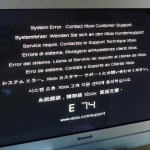
But it’s not all good news for Microsoft (although you can argue it is good news for Xbox 360 owners), in that they have finally admitted that the other 360 hardware error, the E74 error, is part of the RRoD problem and will now be covered by the extended warranty. While you can’t argue with the fact that the 360 just isn’t a very well designed console, but at least Microsoft’s response to the problem, albeit a bit late on all fronts, is encouraging. Now if only Sony come clean on their firmware update “no disc drive” problem (and now, there are new problems involving fast spinning fans and then shutdown, to do with the latest 2.70 firmware)  that you will see thousands of posts on the official PS board with not a single official response. And the other fanboy comments that say “your stupid and you don’t no how to use your PS3” whenever someone posts a serious question about this problem is quite annoying. Yes, most of the posters of these problems are first time posters because like many people, myself included, I only signed up the PS3 board after I had a problem that I wanted to find out more information about. It’s not spamming, it’s not trolling, and the fanboy-ish reactions are really typical of the fever in which some people “support” their consoles. There are serious problems with the PS3 firmware update system, and you can go through the boards and see software engineers and other experts all chime in with their theory of why this is the case. Even for such a small blog such as this one, there’s already several people who have reported the same problem, so I think the problem could be affecting hundreds of thousands of machines. Sony needs to act now and stop charging people $150 to repair a problem that may not be their fault.

So that’s my rant over for this week. Maybe I should rename this the Weekly News Rant. Ranting is good for the soul, good for your health. Or is that venting? Is venting and ranting the same? Am I ranting now? Or is that rambling? Why are there so many question marks in this paragraph?

Weekly News Roundup (22 March 2009)

Sunday, March 22nd, 2009

Twice this week I wrote “2008” as the date. It’s funny because I was pretty clear that it was 2009 back in January and February, but I seemed to have forgotten that fact now we’re in March. March Madness, as they say. I did the NPD analysis for February 2009 yesterday, pretty much the same old story with a bit more positive spin for the PS3, but not enough to make it outsell the same period in 2008 (looks like I’m not the only one pining for 2008). There’s more bad news coming the PS3’s way, as you’ll find out later on.

Copyright

But before we get to that, let’s go through the copyright news first. The story of the week (well earlier on anyway) was Apple’s new iPod Shuffle that seems to have a DRM chip on it.

This caused a bit of a stir as expected, but Apple later came out and denied that the chip would be used for anti-piracy measures. Instead, the chip is used to authenticate third party accessory licensing, making sure third party products go through Apple’s licensing scheme. Not really sure if this is any better than anti-piracy DRM, to be honest. 

When I made a list of all the major copyright trials going on at the moment, I forgot about Mininova’s trial which will start in two month’s time. So that’s IsoHunt (Canada), iiNet (Australia), The Pirate Bay (Sweden) and Mininova (Netherlands). Looks like a very international operation is happening to rid the world of nasty pirates, except in Australia’s case, it’s actually an ISP (and one that responds to infringement notices like most other ISPs around the world). But iiNet apart, it looks like all the major torrent sites are being hit in a co-ordinated effort by various agencies, but of course illegal torrents are now even more popular than before, and still being offered on the above sites. And if they fall, others will take their place. 

Google: Most DMCA complains are illegitimate

Google: Most DMCA complains are illegitimate

So while going after the distributors of torrents, the powers that be will also go after individuals (through threatening ISPs), with the so called “three strikes” rule being their current modus operandi. Basically this means that if they detect infringement activity, they will pass it on to the ISP which will then warn the user for three times before automatic disconnection occurs. The ISPs are supposed to absorb the cost of doing this, which only means they’ll pass it on to users. Google has also spoken out against this method, calling it disproportionate. In many cases (far too many cases), the infringement may not even have occured, or was done by someone who did not own the Internet connection (Wi-Fi stealing neighbour, for example). And without an appeals system, many legitimate users and businesses will be disconnected and there’s nothing they can do about it, other than to sue for damages. And of course, they’ll be up against teams of lawyers with unlimited funds if they do go to court. Imagine a court where the prosecutor is also the judge, and you do not get to defend yourself and you have to pay for everything, and this is pretty much what the industry want . Google has a lot of experience with how such a system would not work, as it handles DMCA complains regarding its own listings. The DMCA allows for content owners to send “takedown” notices to sites like Google, asking them to take down infringing content, which in Google’s case is usually just links to piracy websites. Google has to process each request, and they have come out with the unbelievable statement that most DMCA takedown notices are in fact illegitimate. 57% of these notices were done to get rid of competitors, while 37% were not valid copyright notices at all.

Back to Australia, where the government is on a crusade to censor the Internet worse than the worst of Internet censoring countries. They even produced a blacklist of all the sites that would be banned, which included quite a few legitimate ones as they always do, and also blacklisted sites that have published the blacklist. And linking to any of these sites, including the legitimate dentist’s website, or the tour operator, or the sites that have published the blacklist, could cost the website operator a $11,000 per day per link penalty. This is because in Australia, linking is considered as bad as hosting the content, whereas other countries do make the distinction. Technically, this could apply to Google, which in their huge database probably links to all the sites on the blacklist, and so in the face of the severe penalty, may have to withdraw from the Australian market if indeed the government gets its wish of a national filter scheme. If this scheme became a reality, you can just imagine the 57% of complains to get competitors added to the blacklist, can’t you? 

High Definition

Onto happier HD news. Is DVD better than Blu-ray? IGN seem to think so, and they’ve published an entire article going through the various reasons.

Oppo BDP-83: The most fully featured Blu-ray player so far?

Oppo BDP-83: The most fully featured Blu-ray player so far?

I don’t think it’s a case that DVD is better than Blu-ray, but more that DVD is a *better option* than Blu-ray *at the moment*. Much in the same way that a Core 2 Duo is “better” than an Core i7. Nobody is saying that Blu-ray isn’t superior to DVDs, it’s just that perhaps it has some ways to go before it really is the must have, economical, option to home videos. For one, the current range of Blu-ray hardware has a lot of room for improvement, and prices can still come down even more.

But the hardware situation may change soon with Oppo now getting into the Blu-ray game. The Oppo BDP-83 may be the first universal Blu-ray players with excellent DVD upscaling, and comes at a price that won’t require starvation at some point in the near future. It supports BD-Live, decodes all the HD audio formats, plays back all the audio DVD formats, and will almost certainly feature the DVD upscaling engine that made Oppo famous. All they need to do is to make it region-free, and it will become a must-have.  

Apple will start to offer HD movies on iTunes, which is yet another step towards movie downloads taking over from the humble optical disc. It won’t happen overnight, but it’s gonna happen.

GamingAnd in gaming, developers, like gamers, bloggers, forumers, and basically anyone knows what a PS3 is, wants Sony to cut PS3 prices. 

Sony may start to charge developers for hosting content on PSN

Sony may start to charge developers for hosting content on PSN

But instead of agreeing, Sony has responded by mocking developers for asking the world. when all they have asked is for the best solution to save the PS3. Not satisfied with the mocking, they proceeded to make it even more costly for developers to publish games on the PS3 by introducing bandwidth fees for downloadable content. This could mean an extra quarter or half million for your typical 1 GB demo. Xbox Live has no such fee for developers. Sony claims this is needed because they don’t charge users for PSN, which is fair enough, except demos on the 360 are free to download for non paying users (Xbox Live Silver accounts), after the usual first few days of exclusivity on Xbox Live Gold.  Expect more and more developers refusing to release demos on the PS3, which will then mean less games sales for all concerned and make the PS3 even less popular. Is this what Sony wants? I think it is, because everything they do seems to be to try and kill the PlayStation brand. Of course, the other explanation is that they’re still acting as if they’re the kings of video gaming, when in fact, they’re now in a distant third place. 

The other bit of news was Sony wanting to bring Wii like controls, but not to the PS3. Instead, they want to do it for the PS2. It makes sense, since the Wii’s graphics isn’t that much better than the PS2’s, but as you’ll see from my NPD analysis, the PS2 is on its last legs and it doesn’t really make sense to try to prolong its life, when you’ve got a new console to try and save. 

Okay, that’s it for this week. Sorry about the lateness of this post, as it’s been a busy (and very unproductive) day for me. See you next week.

Weekly News Roundup (15 March 2009)

Sunday, March 15th, 2009

Yesterday was my birthday, and I enjoyed it very much. So much so that I didn’t even want to write a WNR today, but as they say, we’ve all got to work harder for less money in these economic times, so I can’t afford to take a day of. I finished the PowerDVD 9 review  during the week as well. To sum up, the new version is very nice and features some useful new features in particular DVD upscaling and the media center mode. Is it worth the upgrade from version 8? That really depends on your needs, and if you need DVD upscaling to your 50″ HDTV, or if you want better Windows Media Center integration, then version 9 is for you. And despite Windows 7 offering lots of video support, it won’t support Blu-ray, so you will have to come back to one of PowerDVD, WinDVD or ArcSoft TotalMedia.

Copyright

Starting with copyright news, a new MPAA study says that America needs a Patriot Act like bill for dealing with piracy

Once again, the MPAA is comparing movie piracy to terrorism, and to refer to such a controversial bill as a model is just plain bad taste and shows how out of sync the MPAA is with the general public. If most people in the world believes that the Patriot Act is inappropriate even for dealing with something serious as terrorism, why should they think that it would appropriate for dealing with kids downloads movies at home? And do we need a “Gitmo” type insitution for dealing with pirates, although instead of physical imprisonment and torture, perhaps ban them from signing up to ISPs and using the Internet which for some people, is considered a form of torture.

IsoHunt’s P2P trial will continue after IsoHunt’s lawyers failed to get a summary ruling that it did not infringe copyright. it was always going to trial anyway, so this is not a huge surprise. There are certainly lots of important trials going on at the moment or awaiting judgement, IsoHunt’s trial in Canada, iiNet’s trial in Australia and of course The Pirate Bay trial in Sweden. But the more the industry fight against piracy, it seems the public is less and less enthusiastic about the crusade to rid the Internet of it. A new study shows that more than half of Internet users in Canada and Spain pirate music, films and software, while only 5% believe that piracy is criminal behaviour. Either people are becoming more and more unethical, or that they are so used to how the Internet works, where many things are free or at least made available for low cost, that they see P2P as just another way to get what you want when you want it. If the success of digital game delivery services such as Steam tells us anything, is that people are willing to pay for content as long as it’s delivered in the way they want it. The low prices do help, of course.  

Steam shows that better delivery and pricing, not more DRM and lawsuits, is the way to go towards fighting piracy

Steam shows that better delivery and pricing, not more DRM and lawsuits, is the way to go towards fighting piracy

So instead of fighting piracy with lawsuits and DRM, perhaps they should take a look at Steam and see how it became a successful delivery platform (even if it has DRM), and why people are willing to pay for games this way, but not the boxed version at stores. Of course, some people will never learn. Steam and Valve’s Gabe Newell recently delivered a verbal attack on DRM, but Aladdin’s John Gunn disagrees and has published a rebuttal. Aladdin provides DRM services (of course they do). The main points of attacks seems to be that there are stats showing DRM helps drive sales, which I find hard to believe not because these stats do not exist, but because they are incredibly hard to obtain (how much growth is related directly to having DRM, and how much is it related to other things like better products and services, or just natural growth). Mr. Gunn also goes to say that “good DRM is proven to reduce piracy”, which again depends on what the definition of “good DRM”. Theoretically, a DRM that cannot be broken should help sales as if you can’t pirate it, and you really want it, then you’ll have to buy it. Mr. Gunn points this out in his article as well. But the problem is that such DRM does not exists, because I have yet to see a popular commercial game or application with DRM that hasn’t been cracked, usually within hours of release. Note that I used the term “popular”, as there are apps that don’t get cracked simply because nobody cares enough to do it, and most likely, nobody cares enough to even pirate it anyway. The fact is that the majority of DRM schemes do nothing except annoy legitimate customers. They are about as effective as those unskippable copyright warnings at the start DVDs (funnily enough, only present on legal versions, and removed for the consumer’s convenience on pirated ones). Piracy rates have not dropped since the introduction of tougher and tougher DRM, this is a fact that cannot be disputed. So what exactly does DRM do anyway, other than to provide revenue streams to companies like Aladdin?

In the end, it’s all about convenience to consumers, and reasonable pricing. Both of these will fight piracy much more effectively than the world’s best DRM scheme. When The Pirate Bay is providing downloads that are faster, less intrusive, less restrictive, then you know you’re going in the wrong direction.

High Definition

Onto HD news. Toshiba has launched another attack on Blu-ray, which suggests that the rumours of them accepting cash from Sony to quit the HD game and to shut up about it, might not be entirely accurate.

TiVo Australia - no download quotas for Internode customers

TiVo Australia - no download quotas for Internode customers

This time, Toshiba says that downloads will replace Blu-ray. Sounds like sour grapes of course, but this statement is true in the long run. Music downloads have already replaced CDs, and with increasing and cheaper bandwidth, it’s only a matter of time before downloads replace movie discs too. If there is a trend in 2009, it’s the ever increasing move towards media-less distribution. Here in Australia, TiVo has launched a download service that operates through their set top boxes and with an active Internet connection. Internode, one of the largest ISPs here in Australia and my current ISP, has now teamed up with TiVo to offer unlimited downloads through TiVo’s download service – downloads that won’t eat up your monthly quota. While this does not solve the speed problem, it solves the bandwidth cost problem and we’ll most likely see more and more of these types of ISP/content provider deals in the short term. Then there’s the story of a Lionsgate executive predicting streaming movies on the Wii will be available soon. Again, this isn’t some wild prediction, because the PS3 and Xbox 360 already have it and so the Wii, or the next Nintendo console, will certainly offer some kind of movie service. With HDTVs, TiVo, game consoles, Blu-ray players, smart phones, portable media players and almost every other device (including in-car devices) offering movie streaming and downloads, that’s a lot of devices offering movie downloads, a lot more than say the number of standalone Blu-ray players. So maybe Toshiba does have a point, and what are the odds that all Toshiba’s HDTVs will start offering movie streaming capabilities in the near future?

Blu-ray sales are doing alright, although definitely down compared to the highs of the holiday period. Blu-ray sales stats show that Blu-ray sales have dropped to levels of around the middle of last year, the market share is down a third (5%) compared to the holiday period. Both Blu-ray and DVD sales have slowed down, but if anything, DVD is holding up a bit better than Blu-ray. With many people still undecided over whether to get 720p or 1080p, it just shows that extra resolution isn’t really the most important factor when it comes to movie buying, not when upscaling quality is improving all the time. However, as a rule of thumb, 1080p is the way to go from now on (and has been for a while).

Another story about expensive HDMI cables being a rip-off, this time with actual studies providing the fact. Still, it’s hard to get over the feeling that the salesman may be right when he says that your brand new $1000+ purchase “demands” that you pay a proportionate amount for cabling as well. But have you ever asked a computer salesman for a high quality professional grade USB cable, if there’s even such a thing. Both USB and HDMI are digital cables, so if you’re happy to use the one that came free with your printer, than you should be happy with paying the least amount of money for the other. I would still go with a recognized brand though, to avoid buying a dud or one that breaks because of poor workmanship. But if build quality is not a problem, then the only criteria should be pricing. 

GamingAnd in gaming, Sony has shut down the rumours of a Blu-ray-less PS3. Not much of a surprise really, because it was never going to happen as long as PS3 games used Blu-ray media. Nothing much happening here, although I find it increasingly hard to listen to PS3 fans talk about how the “PS3 experience” is better than anything out there at the moment. It’s a freaking game console, not a journey to the center of your soul for crying out loud. It reeks of marketing speak that’s been eaten up by PS3 fans seeking to prove their consoles is the best when nobody even cares, and this is coming from someone who makes money from telling people which console is the best. You know how you can tell nobody cares? Because if a barely working, badly designed console like the Xbox 360 can sell so many boxes, you know people just don’t really care about the “experience”, only games and how many and how cheap they are. And Microsoft aren’t immune from this either, what with their “New Xbox Experience” – PowerDVD 9’s “FancyView” is a much more appropriate term to describe the new Xbox 360 UI, in my opinion. And all the Nintendo Wii stories about how it’s helping injured people, blah blah blah … who cares? 

Boil down to it,  all the consoles have their good and bad points, and if you have the money, you should buy them all, if not, then buy the ones that have the games you want on it. It’s really that simple.

The February NPD figures should be out next week, and we’ll then see what kind of impact Killzone 2 has made. My predictions is probably not a lot, because I haven’t heard Sony scream about it from the top of every roof. We’ll find out soon enough.

That’s that for this week. Have a good one.