Archive for the ‘Electronics’ Category

Weekly News Roundup (2 May 2010)

Sunday, May 2nd, 2010

Ever since my current TV’s HDMI connection broke, I’ve been looking for a new TV. I almost got a Panasonic in February before discovering the black level problem, and other factors meant that I would be wiser to wait until buying a TV later in the year. Well, it is now later in the year, and what with the 3D hype and everything, I thought it wise to get a 3D ready TV since I could then test various 3D related products, something I found hard to with with the recent review of the 3D enabled new version of PowerDVD. Here in the land down under, the only 3D TV available right now is the new Samsung range, and their pricing is extremely good and I have my eye on the 58″ (the 63″ is a bit too big for my normal viewing distance, I think). The Sony 3D range would be too expensive, and I still prefer plasma, so that leaves only the Panasonic, which the whole black level things has made me think twice about buying a Panasonic TV, plus it’s not out yet and will most likely be more expensive. So barring any unforeseen events, I’ll probably buy the Samsung 58″ (it’s the Aus 7000 series, which is equivalent to the 8000 series in the US). Plus, Samsung is giving away all sorts of free stuff with the TV, including 2 pairs of active shutter 3D glasses and a 3D Blu-ray player, and 2 further pairs plus the 3D Blu-ray version of Monsters vs Aliens for those that get the TV quickly enough. If this is a preview of the type of promotions companies are going to be running for 3D TV, then the next few months could be a very good time to purchase a new TV, even a 2D one, which I’m sure will be discounted accordingly. Anyway, let’s get to the news.

Copyright

In Copyright news, the MPAA won an important court case against The Pirate Bay in what seems like ages ago, but The Pirate Bay is still up and running, and the MPAA are not too pleased.

The Pirate Bay is still going strong despite losing court cases, so the MPAA is not happy at all

The MPAA wanted TPB to be closed down, but all the co-founders did was to close down the tracker, and the MPAA now wants the co-founders to pay the court imposed fine for not closing down TPB. TPB’s ownership issue has always confused me. I don’t know who owns it and who’s running it, but it seems the co-founders say they aren’t really involved with the website anymore, and that closing down the tracker was probably the only thing they were able to do. But as we all know, trackers are far less important than previously. The MPAA’s various actions to close down trackers has meant the development of open trackers and also decentralised tracking technologies. In other words, the MPAA’s attacks have made BitTorrent much more resilient, and shutting down Torrent download websites or a few trackers won’t really stop file sharing. Even .torrent files are somewhat unnecessary now thanks to magnet links, and DHT means you don’t even need a tracker. And, as we’ve seen in the UK, France and other countries that have adopted three-strikes type laws, people will be moving to anonymous/encrypted BitTorrent services, and this will make even monitoring downloads a hard task for the MPAA. Maybe this will make them happier, you know, ignorance being bliss and all. But somehow, I doubt it. And when this happens, when the MPAA is powerless to stop BitTorrent file sharing or even to find out what people are downloading, then perhaps they’ll redirect their efforts back to tracking down the source of these uploads. While many files are uploaded by individuals, others are done so by well known groups, and it will be hard work for the MPAA to track down and stop these groups, which is probably why they’ve been focusing on the easier job of targeting downloaders.

The Pirate Bay itself has asked for a call to arms, for its users to fight the recently passed UK anti-piracy bill. They want people to speak out against a bill that, in their eyes, is a direct assault on human rights and people’s freedom of expression. The UK general election is just around the corner, but I’m not sure people are able to use this event to protest against the bill, since both major parties seem to support the new anti-piracy measures. Maybe a shock result like the one in Sweden, where The Pirate Party won a seat in the EU parliament, will be the best result from the elections. But for those still unconcerned about the new laws, just ask yourself if you think whether it is appropriate that the government should be spying on your activities, and thus sacrificing your right to privacy, for the sole purposes of protecting the profit of multinational corporations. Don’t buy into all the crap about piracy funding terrorism and crime, because the majority of pirated content are uploaded and made available free of charge, so how would terrorists and organised crime benefit from that? Counterfeit goods, now that’s something else altogether different and it’s big business to sell fake software, movies and games. But three-strikes does absolutely nothing to stop the sale of these goods, and in fact, may promote it further as people too afraid to download pirated content online, and too poor to be able to afford the real stuff, may seek cheap counterfeit goods offline.

Showing the complete lack of class, and the arrogance that we’ve expected from them, a meeting of anti-piracy groups has produced this pearl of wisdom, that child pornography is “great”. Great as in being a great scaremongering tool to use in their efforts to lobby governments, by saying that the same network where people download the latest episode of Stargate Universe is also the same place where child porn is apparently also easily accessible. What nonsense. Based on what I’ve read, downloading of most of these deplorable images and videos are done so  on the wider Internet, through public and private forums, private networks, the “darknet”. You certainly won’t find them (or torrents for them) on The Pirate Bay, or the Mininova of old (which didn’t even allow pornographic content of any kind). And does the groups that spy on users for three-strikes even monitor the transfer of child pornography, or images for that matter, or are their filters and tools only set up to detect pirated songs and movies? It’s scaremongering, and making light of an issue that is a million times more serious than college kids downloading a copy of The Hangover, and we’ve already heard from law enforcement agencies that laws like three-strikes actually makes their job of tracking down these criminals much harder, as monitoring of ordinary citizens will force more of them to encrypt their connections to protect their privacy, making it much harder to trace, monitor the truly illegal and dangerous activities of criminals.

And despite evidence that three-strikes actually increases piracy, at least in France, the IFPI, the global trade group for the music industry, says they have evidence that music industry revenue has risen in 2009 for countries where three-strikes has been passed. In countries other than France, at least. And while music industry revenue has risen in Australia, we don’t have three-strikes here, and a federal court even ruled that ISPs are not responsible for the downloads of its subscribers. Revenue increases in the UK also has no correlation to any new government anti-piracy initiatives, which did not pass until just recently. This once again shows how far groups like the IFPI, the RIAA and MPAA will use misleading, if not entirely made up, stats to further their crusade. Overall, the music industry globally recorded a 7% drop in sales. This might sound like a bad thing, but if you have a look at all the competition for our hard earned cash these days, everything from movies to gaming, 7%, with actual growth in 13 territories, is a great result. And all the other forms of entertainment has been seriously innovating, like 3D movies for example, and Blu-ray, and of course gaming, while the music industry has mostly stood still, apart from the move towards DRM-free digital sales, which the music industry was heavily resistant at first. Had they been a bit more enthusiastic at the beginning, they would be the ones with the revenue growth, not Apple with its iTunes store.

And one should not underestimate the amount of damage DRM did for the music industry, but unfortunately, it’s a lesson that the gaming industry is unwilling to learn from. News broke this week that Ubisoft’s “alway on” DRM has been broken. It took a while, given the relatively new status of the DRM, but it’s now finally broken, for both Assassin’s Creed II and Settlers 7. So Ubisoft is now left with an expensive DRM service that they have to keep on maintaining, that does not stop piracy, and whose sole purpose now is to make the overall experience more frustrating for legitimate customers. So basically the story for every single DRM system that has been released so far. When will they learn?

High Definition

On to HD news now. Avatar has been released and by all accounts, it’s a record breaker for Blu-ray. I will have the weekly numbers posted and analysed on Tuesday in usual place, but the early numbers suggest that overall Blu-ray market share could go above 30% for the first time, and may in fact be the best selling Blu-ray title of all time, even compared to titles like The Dark Knight or Star Trek that has been selling for much longer than a week.

Avatar Blu-ray + DVD Combo Cover

Avatar should break all Blu-ray records

The only reason that Blu-ray wouldn’t reach this historic milestone is that because Avatar is so popular, the DVD version is likely to sell in huge numbers as well. However, the Blu-ray package is a combo, which includes the DVD edition, and most retailers are either only stocking the combo version, or are pricing it only slightly above the plain DVD version, I suspect this will even make non Blu-ray buyers think twice about buying the DVD only version. I mean, the combo version will be much more future proof, and paying an extra $4 to get the Blu-ray version (the current actual pricing difference between the combo and DVD editions, on Amazon.com) makes the combo version the best value.

Meanwhile, the sub-standard Lord of the Rings trilogy Blu-ray has slipped to 19th on the Amazon Blu-ray charts, just barely outselling the 3 year old nature documentary Planet Earth. I’ll leave you to come up with the conclusion for this one.

Decoding of online HD videos on Macs can now be accelerated by the GPU thanks to Adobe’s new preview version of their upcoming Flash version. Name “gala”, the preview provides GPU assisted H.264 decoding for various Macs and Macbooks. Say what you will Flash, and Apple’s Steve Jobs had plenty to say about it (more on that later), but if you want multi-platform H.264 online video support with GPU acceleration, you can’t really beat Flash at the moment, and with the new 10.1 version released in the next month or two, you’ll be hard pressed to find a computer that can’t use its GPU chip to speed up H.264 video decoding. And it’s very much needed as well, because 720p is fast becoming standard for YouTube, and 1080p YouTube videos may finally be watchable on netbooks.

But Flash is still a proprietary third party plug-in, and Apple’s Steve Jobs is not a fan at all. Citing security issues, lack of stability, poor performance for mobile computing, and of course the proprietary nature of the software, Jobs heavily criticized Flash in an open letter published on the Apple website, explaining the lack of Flash support on the iPod Touch, iPhone and now the iPad. Jobs has a point, but Flash still lacks a competent competitors, even just in the limited field of online video, let alone richer applications, and so unless Apple provides an alternative (which would still be proprietary), or if the HTML5 mess is cleaned up, Flash is still very much needed. In fact, one of the bigger criticisms of the iPad has been the lack of Flash support, so perhaps this is Apple trying to deflect some criticism against their new device. Adobe hit back quickly, saying Apple should leave it to consumers to decide whether Flash is good or not, rather than impose the decision on them by not supporting Flash on their devices. They have a point, I think. Look, in a perfect world, we would have an open standard for Flash content, but we’re not there yet. I mean, the whole HTML5 mess, which I’ve tried to explain in this forum post, is only playing into Adobe’s hands.

For PC software news, x264, the popular open source H.264 encoder, is now officially Blu-ray compliant. x264 has been able to encode H.264 clips for use in Blu-ray compilation for some time now, but it has just passed official compliance tests, and so it is quite a big deal. This now allows Blu-ray movies to be converted to DVD, and still maintain Blu-ray compliance (at least for the video stream), and thus making the disc playable in most Blu-ray players (the PS3 apart).

Gaming

And finally in gaming, more PS3 firmware related news as the latest firmware adds the first steps towards making the PS3 3D capable for gaming. The 3D gaming feature will be available around June/July, but 3D Blu-ray support is only coming later in the year, unfortunately.

In the same update, Sony also laid the groundworks for Sony VAIO PC integration, allowing VAIO PCs to access content stored on the PS3 sometimes in the future.

3D Gaming on the PS3

PS3 will have 3D gaming support added via firmware soon, but it's what's been removed from the firmware that has fans angry

But as Sony adds more features via firmware, users are still displeased at the removal of the Other OS feature. The expected class action lawsuit has been launched. I think the issue most people have with the removal of Other OS is not so much that it was an essential feature, but rather, because Sony had promoted it so heavily, and removing something like this makes people insecure about Sony’s future intentions. Sony’s “It only does everything” tagline for the PS3 is not helping people get over the fact that, well, it no longer does what it did just a few months ago. The other major issue people have is that this effectively stops development on several very promising Linux based media center packages, which can turn your PS3 into a fully fledged media center, a much better one than the default Sony solution. A good third party media center software can really help the longevity of the console, just look at the original Xbox, which is still being used today thanks to software media center mods like XBMC. So while it’s understandable that Sony removed Other OS to prevent a way in for hackers, or the development of emulators, the price of losing a competent third party media center is just too high to pay, perhaps.

And that was that for the week. I’ll have more ranting and complaining for you next week, so until then, have a good one.


Weekly News Roundup (21 March 2010)

Sunday, March 21st, 2010

Some big software news this week. First up, DivX Plus 8 was released, all the tools in the package got updated, including the DivX Player, Converter. As usual, there’s a free codec pack for those only wanting to play DivX (and now MKV/H.264) movies. Then there was a new version of ImgBurn, with a suitably impressive, and long, list of changes. And finally, PowerDVD 10 was released, with some exciting new features – a brief overview in this blog post to tide you over before the full review is up, but if you like 3D stuff, this one’s for you.

But wait, there’s more. I managed to sneak in a new PS3 related guide over the week as well. This one uses AVIAddXSubs and lets you add subtitles to AVI files that will show up on the PS3. And not only that, you can add up to 8 subtitles per AVI file, and they can be switchable (obviously), and even turned off. All without having to re-encode the AVI file, and all taking only a minute or two per subtitle stream.

And let’s not forget, we still have news to go through.

Copyright

In Copyright news, in a surprising turn of events, content owners no longer wants to call people who download their content illegally “pirates”. Not because they’ve had a change of heart and realised that there’s isn’t a huge connection between a penniless college student downloading a copy of  District 9, and the often violent, on the seas theft of commercial shipping.

Jack Sparrow

Jack Sparrow: ruining a perfectly good word for music and movie studios

It’s all because, apparently, “piracy” is just too sexy a word to describe the horrific act of downloading bits of data from the Internet. It’s all Johnny Depp’s fault, I suppose, for making piracy look like good fun. Maybe the studios should sue Disney and Mr. Depp. Others have already speculated on what other words can be used to describe the inhumane act of downloading a copy of a file that can be copied an infinite number of times. Something that truly describes the full horror and the the immoral act of what we used to call piracy. File murdering? Song raping? Movie genocide?

These kind of hard decisions have to made somewhere, and soon, the rights holder may have a new global body to standardise these sort of things, if they get their way with the ACTA. Recent leaks suggested that a new body will be set up to oversee the global anti-piracy ACTA treaty, and that this body will be free to make changes to the treaty without governmental interference. In fact, the government won’t even be involved, unless by special invitations. US trade reps, allegedly, calls this body a necessary step to keep out consumer interest groups from ongoing copyright discussions. It’s becoming increasingly clear that these so called anti-piracy laws are nothing other than a desperate attempt to preserve the outdated business model of certain copyright holders, and through a scare campaign and big money lobbying, the various governments are nothing but props in this stage play. And now they want their own “OPEC”, so they can force their demands on the rest of the world and keep profits flowing.

The people, consumers, music lovers, movie fans, are increasingly being marginalized, even though they’re the ones paying the salaries of the government agencies so keen to hand over people’s rights to corporations, and they’re also the ones paying for the big bonuses that the music and movie studio bosses are no doubt getting. Speaking of disenfranchised, 10,000 UK voters have protested to their Members of Parliament about the controversial Digital Economy Bill, which is being rushed through parliament without debate at the insistence of the music and movie industry. So an unpopular bill may get passed without public consultation or even a debate (which would mostly have been an one way one anyway), while the corporations cheer the outcome that they’ve engineered. Is this still a democracy?

Command & Conquer 4 - Back

I couldn't find a higher resolution version of the back of the box, so one of the sections of the extremely small text says "Persistent internet connection required"

Gaming DRM is back in the spotlights this week, when EA announced that their new game, Command & Conquer 4, will use a similar DRM system to Ubisoft’s, which means an “always on” Internet connection requirement. Lose your Internet, or if the EA servers go down, then the game will kick you out. To be honest, none of this is really new, as many companies have tried “always on” DRM, and all have failed. Internet connectivity may have improved, but there are still many, me included, that don’t have access to a 100% stable Internet connections, certainly not stable enough to guarantee that a 2 hour gaming session won’t be interrupted. Futuremark’s Jaakko Haapasalo said it well last week – there are just so many games these days, and even on the PC, it’s still a relatively competitive industry. So if people don’t think they can play C&C 4 properly, then they’ll skip it for something else, or wait until it’s been “bargain binned” before buying. Why the game companies, who are already competing with *free* pirated games, want to add another thing that makes their product less attractive, I just don’t know.

High Definition

In HD/Blu-ray news, I previously mentioned LG’s Blu-ray player, which is one of the few that doesn’t have 3D in it, and instead, adds an HDD. The new player is now available to buy, and what was interesting was to see that it includes CD ripping.

Not that CD ripping on a standalone device is new, many can do it, but having it on a Blu-ray/DVD player just reminds you how useful it would be if the player could also rip DVDs and Blu-rays. I know there are piracy movie genocide issues to consider, but the convenience would be much appreciated. But the movie studios don’t trust their paying customers, so we’ll just have to be happy that they even let us watch the movie at all, after paying for it.

I recently talked about how you may not want to buy the soon to be released Lord of the Rings on Blu-ray (the comments/ratings protest on Amazon is still going strong, I see – I don’t know if sales will be affected, but it’s only 65th on the best seller list right now), now there’s also reason why you may want to wait on Avatar as well. Despite the director’s wishes, Avatar on Blu-ray released in April won’t be the 3D version, and you’ll have to wait for the (first of many, no doubt) “Ultimate” version coming in November, in time for the holiday season. That one will have 3D and more extra features, and maybe even a longer cut, no doubt. This is actually a bit more understandable than the decision to not release the extended version of the LOTR movies, since I doubt many people would have the equipment to play the movie in 3D right now, or even in November. And it’s not as if the extended cut of the film has been released for years beforehand already, so a double dip here is understandable. But I recommend you do an “one and a half dip”, rent the Blu-ray if you really want to watch the movie right now, and then buy the Ultimate Extended Special Collector’s 3D Extreme edition to be released later in the year.

Redbox about to become Blu, when Blu-ray movies are added to the collection

And you may just be able to rent Avatar on Blu-ray on a Redbox vending machine, since Blu-ray is now being added to fill the empty spaces in these machines. Unfortunately, the studios are still keen on trying to kill, or at least curb, Redbox, which they accuse of committing Content Manslaughter (act where studios profits are affected – at least it’s not murder). Studios insist on a 28 day window between releases making their way to Redbox vending machines, which the studios think will help their profits, but DVDGuy thinks will actually just encourage movie genocide. Feels to me like another self inflicted wound on behalf of the studios, since they can easily work together with Redbox and profit together.

There’s some musing from Microsoft about Blu-ray and the Xbox 360, but I’ll save that for the often neglected gaming section. But Microsoft did make another headline during the week when they revealed that IE9 will feature HTML5 support, which isn’t a surprise, but will also support the H.264 codec. Which isn’t that surprising either, since Microsoft owns several patents on H.264 and so they would like to see it succeed. Plus, they can easily afford to pay for the H.264 licensing costs just by digging for spare change in Steve Ballmer’s sofa. Mozilla’s Firefox won’t support H.264 though, since it’s against their open source principles, plus it also costs money. So that’s Chrome, IE and Safari in the H.264 camp, Firefox, Opera and Chrome (again) in the Ogg Theora camp.

Gaming

And finally in gaming, with the PlayStation Move still making headlines, Sony are keen to keep the hype going and have released a TV ad that, well is either very funny, or very arrogant. Or both.

Spot the Difference

Spot the Difference

It portrays one of their VPs communicating all the way from the future, in November of this year (when the Move is released), and mocks the Wii’s for its limited playing style, and the button-less design of Natal. Of course, the “inferior” Wii is kicking the PS3’s butt on so many levels, why Sony wanted to make the comparison, I don’t know. Also, if Sony’s idea of “the future” is November, then maybe they’re even more shortsighted than I thought. This from the same company that dismissed the Wii before they wanted to be just like one. At least Microsoft is trying to be different with Natal, although sometimes different is just another word for “not very good”.

But Sega doesn’t seem to think so. They think the Natal really has potential and that we’ll see “brilliant innovations” in the next year or two. Sega plans to make games for both the Move and Natal, but it’s quite clear that they are a bit more excited at taking advantage of Natal, but only if they can solve the lag issue.

And Microsoft says that Blu-ray has ruined the PS3, at least until now that is. While I would like to say that this was Microsoft’s attempt at hitting back at Sony for the Natal mockery, but the truth is that Microsoft made this statement earlier than the ad itself. A lot of people will disagree with this statement, because many see Blu-ray as the one saving grace of the PS3 while its prices were sky high, and now that prices have come down, Blu-ray could be decisive. While I agree with this wholeheartedly, the fact is that the PS3 would be doing a lot better right now if it was cheaper, but it couldn’t be cheaper because of Blu-ray support, and so, Microsoft is partially correct as well. The PlayStation brand has gone from 80% market domination in the last round, to only 20% of the home console market in the current generation (in the US), and while it still has time to catch up, you can’t say that the PS3 has been as successful as the PS2, and that’s given the Wii and the Xbox 360 some room to breathe. I’m sure Sony doesn’t regret the decision, because it won them the HD format war, and that will bring its own rewards – they just had to sacrifice the PlayStation brand to do it, and they will hope it’s only a temporary setback.

And on that note, I shall end this week’s WNR. Expect much much less stuff next week, in relation to new software releases, guides or even news, although I shall faithfully attempt to get the PowerDVD review online as soon as possible. And by faithfully attempt, I mean whenever I feel like it. See you next week.

Weekly News Roundup (14 March 2010)

Sunday, March 14th, 2010

The February NPD analysis has been posted. The analysis looks at video games sales stats in the US based on figures released by the NPD. The big surprise for February was that the Xbox 360 actually managed to beat both the Wii and the PS3, something that I don’t remember happening before. Both Nintendo and Sony blamed stock shortages though. I keep on expecting Xbox 360 sales to disappoint, but good game releases seems to come along just at the right time for the console to give it a much needed bump. For all the talk of the PS3’s strong year on year growth, it’s worth noting (again) that it’s a bit like comparing apples to oranges, due to the price cut and Slim and everything. Or more precisely, it’s like comparing apples with rotten oranges, thanks to the PS3’s dismal sales figures for most of 2008 and 2009. To further illustrate this point, for the month of February, the Xbox 360 enjoyed a massive 66% increase in sales between 2008 and 2010, to the PS3’s 28% bump (and the Wii’s 6% drop). Basically, the PS3 is now enjoying figures that it should have been enjoying this time last year. With some hit games coming to the PS3 in March, Sony will hope this will be yet another important milestone for the console, much like the price cut/Slim back in September last year.

Anyway, there’s a few news items to go through today and it also happens to be my birthday as well, so yeah!

Copyright

Let’s get started with some copyright news. The Ubisoft DRM controversy keeps on going this week with a couple of related news stories as well. With Assassin’s Creed II released, the Ubisoft DRM servers came under some serious test, and unfortunately it failed.

Ubisoft blamed a DDoS attack for the server downtime, which caused paying gamers to not be able to play the games that they paid for, while those pirating it weren’t affected. Ubisoft still says that the only complete version of the games are the legitimate ones, since some files or content can only be accessed through Ubisoft’s servers. I think it’s safe to say that the games hasn’t been completely cracked, but it might also be safe to say that it will be sooner or later. But that’s all beside the point. The point is paying customers weren’t able to play the games because of a situation that Ubisoft hadn’t anticipated (the server attack), and there will be plenty of situations that Ubisoft hasn’t and won’t be able to anticipate. Is this really fair to gamers? Following the Ubisoft controversy, a lot of other game companies have come out with their opinions on the matter. Futuremark, the makers of 3D Mark and the upcoming game Shattered Horizon, says DRM that “gets in the way” is only going to harm the game companies because “it’s not like there is a shortage of other games demanding my attention”. How many gamers have decided to buy some other game because they don’t want the hassle associated with playing Silent Hunter 5 or Assassin’s Creed II (and for the latter, they can still get the console version if they really want to play it).

Steam logo

Steam's popularity shows that there are still some kinds of DRM people might accept

Valve’s Gabe Newell, the guy behind the Half-Life series, and also the successful Steam platform (which has just been made available for the Mac, finally) also says something similar. While accepting an award at the Game Developer’s Choice Awards, Newell believes game companies should adopt a ”what have I done for my customers today?’ attitude. Basically, Newell thinks DRM is a negative that takes something away from games, and if you do that, then you better also give them something extra to make up for it, which is what the Steam platform attempts to do. But if one goes overboard with DRM, as Ubisoft appears to have done, then it’s going to take a lot of positives (more than just online save games) to be able to justify something like this. The Steam platform does have DRM as well, but it seems to offer enough for paying customers to accept the limitations. The often discounted games might also help gamers ignore the inconvenience of needing the Steam client and having to be online before playing a game.

There’s a real battle in the UK over the future of the Internet, with the music industry being represented by the BPI who wants three-strikes, ISP monitoring and all that good stuff. The ISPs, and pretty much everyone else, don’t want it. In a new tactic, the BPI is trying to entice ISPs to get on board by luring them with the possibility of huge amounts of extra revenue from working with the music industry and selling legal music. I don’t see any problem with this, except why do we need three-strikes to make this a possibility, since this is something the music industry should have been working on ages on (and perhaps if they did, piracy wouldn’t be such a big problem now). ISPs are not impressed and one spokesman questioned the ‘value of such insight from an industry which has failed to acknowledge the impact of new technology on its own business models’. Touché. The music industry has been slow to adapt to the new digital and Internet revolution, there’s no greater evidence than the fact that the most popular online music store is being owned and operated by a computer company, Apple, and not one of the big music labels. But a new study also shows that even with the dominance of iTunes, there’s still a significant number of people that don’t know where to buy music online legally. While most know of Amazon or iTunes, 20% didn’t know any online stores. This isn’t to say that the cause for piracy is due to people now knowing where to buy music, because people who pirate will always pirate, and people who buy will find a way to do it. But it does highlight that the music industry has plenty left to do before it can declare that they’ve done all they could and that it’s time for the government in intervene with harsh legislation. The music industry was quick to try and discredit the new study, by saying their own study shows that 96% of Internet users were aware of either Amazon or iTunes.

Hadopi Logo

Hadopi, the French agency overseeing three-strikes, only regulates P2P networks for three-strikes

But does three-strike actually work to one, deter pirates, and two, increase revenue? The French have had three-strikes for a while now, and the results are not promising. Piracy is actually up three percent compared to before three-strikes was introduced. While noting that the habits of downloaders have changed, less people now use P2P and more use HTTP or streaming sources to get their pirated content (these sources are not covered by three-strikes), the overall number of cases of piracy has actually increased. It’s also worth noting that secure P2P means that it’s hard to track just exactly what is being downloaded and by whom, and so the figures could be higher depending on how the study was conducted. In any case, it definitely shows that three-strikes is not the cure all solution that the music and movie industries thinks it is. The same study also found that 50% of people who pirate stuff also buys stuff online, and of course if all of these people are kicked off the Internet by three-strikes, then that’s going to mean a direct revenue drop for the music/movie industry, not to mention other online based industries. The reality is that many users see purchasing and illegal downloads as two possible ways to get what they  want, and it’s up to the music/movie industry to convince them that one way is better than the other. Instead, they’re trying to punish these users for choosing the wrong option, and all that does is to close off both possible ways to get content. Pricing and convenience will win this war, not bannings.

And then there’s also the theory that even illegal downloads help sales eventually. The number of people who have been introduced to new music, new artists, new TV shows, new games, through pirated content at first and then leading them to buy more stuff, cannot be underestimated. Pirated content offers “try before you buy” and sometimes that’s the only way to get new customers. Then there’s also the Internet hype effect, and the more people that talk about the content (and logic says that the more pirated the content is, the more users there are that have experienced it, and therefore, the more discussions there will be about it), the more hype it generates and that can help sales. Of course, bad content might get found out faster, and I sometimes wonder if that’s what really the studios and labels are worried about, that bad content are being “filtered” out too quickly and they may actually be forced to produce good content consistently in the future. For the movie studios, the last few years has been bad ones in terms of piracy, but the MPAA was happy to note this week that global box office receipts have jumped a massive 30% since 2005, and 2009’s global earning was just shy of the 30 billion dollar mark, a new record for the industry. So is piracy really hurting the industry at all? We know that increases in box office receipts may have more to do with 3D screenings that are becoming standard for big releases, and that if piracy affects anything it will be home video sales. Home video sales have dropped, although with Blu-ray revenue increasing, studios are relatively confident in this area. But I just don’t believe the Internet has had no effect on box office receipts, since it has had an effect (both positive and negative) on everything else in our lives.

High Definition

Let’s move onto Blu-ray and HD news. Manufacturers are rolling out their 3D TVs and Blu-ray players in droves, but the cost of getting 3D for your home may just be too high for some, if not all.

Panasonic 3DTV and 3D Blu-ray Player

3DTV is going to cost a lot, as you'll need a new TV, new Blu-ray player and new 3D glasses

For one, you’ll need a new TV. One thing that has been confirmed is that 3D capable TVs will carry a premium over standard ones, up to 50% more expensive for Sony Bravias for example. And then you have the need to upgrade your Blu-ray player to one that is capable of 3D, although you can skip this requirement if you have the PS3 (another reason to recommend the PS3 as the Blu-ray player of choice). But if you can’t skip it, at least 3D capable Blu-ray players should not carry a huge premium over standard ones (although you might need to buy a new HDMI cable as well). Then you will have to get glasses. Most of the systems use active shutter glasses, which means expensive glasses that cost upwards of $150 per pair. Some of the 3D TVs will come with a few sets (for 50% more, you’d expect them to come with at least 4 pairs), but if you want the whole family to enjoy a 3D nights in, then be prepared to pay for it. And then lastly, you’ll need to get 3D movies to feed your 3D system, which has now cost you several thousand dollars probably. This may mean that you’ll need to double dip and buy new versions of recent movies that have been released on Blu-ray as 2D versions only. And knowing studios, they’ll release a 2D version of the movie first on Blu-ray, and then hope for the double dip with a 3D version later on, which is exactly what Fox is planning with Avatar. And with plans to re-release classics like Star Wars on 3D again, be prepared to buy some of your movie collections again (again (again)) if you want to watch it in 3D.

Moving onto online content. The war between HTML5 and Flash is intensifying. A benchmark review was attempted recently to find performance differences between HTML5 and Flash, but it appears to have failed because compatibility meant that it was almost impossible to compare apples and apples. The problem is that the latest beta of Flash has GPU assisted decoding, but not on all platforms, and then you have HTML5, in which some browsers will support H.264 content, while others like Firefox won’t. It would be nice if a proper standard like HTML5 can supersede the need to install third party plugins like Flash, to allow all browsers to play interactive and video content out of the box, but if HTML5 doesn’t set a standard for whether H.264 support is mandatory or not, then it’s next to useless and I’d rather have Flash, which promises universal support (even if some won’t have GPU assist enabled). My opinion is that HTML5 must make H.264 mandatory. I know there are licensing issues with H.264, and more needs to be done in this area to ensure free and open source browser makers can continue to do their excellent work, but H.264 has industry support and that’s crucial in terms of performance and compatibility. It would be nice of Ogg Theora or another open source format become widely adopted, but it just hasn’t happened and it’s unlikely to do so unfortunately. Perhaps if someone like Nvidia added Theora acceleration support to their GPUs, then the situation might change.

Speaking of Nvidia, they’ve not had a good time in the graphics card market recently, with ATI/AMD dominating with the Radeon HD range in both the price and performance criteria. Then there was the whole failing GPUs in Macbook disaster a year and half ago. Now it seems Nvidia’s new driver is killing GPUs. Those that have upgraded to 196.75 need to perform a downgrade immediately, or face the possibility of having their GPU, or even mothergboards, fried due to overheating. Nvidia has since removed the offending version from download, and has urged users to downgrade as their soonest convenience.

Gaming

And finally in gaming, with Sony officially naming their Wii like motion controller, the PS3 Dildo Move has been in the news this week. Will it kill the Wii? What about Natal? And why does it look like a dildo?

The answer to all these questions might be a simple “wait and see” (except the last one, since the answer to that is it’s a combination of the need for the strobe light to interact with the PS3 Eye Toy and some unfortunate design decisions). It’s easy to see why it can kill the Wii, with the PS3 superior 3D graphics and more accurate controller bringing us what we think the Wii 2 will be like. It’s also easy to see why it will fail, since failure is exactly how you would describe the efforts of third party game developers when it comes to taking advantage of the Wii. Can Sony make fun games like Nintendo seems to be able to do in their sleep?

PS3 Move Controller

The PS3 controller now has an official name, the PS3 Move

For the Natal question, again, it’s far too early to say anything about it. For one, we don’t know what kind of games will benefit from Natal, and we still don’t even know if the whole concept works, due to issues with lag and whatnot. Obviously, the controller-less Natal seems a far bigger leap than the PS3 Move, but bigger leaps can succeed like the Wii or fail like the proverbial Virtual Boy. If it does work (that is, if the lag issue can be resolved), then it would be easier to market than the PS3 Move, which for the average Joe, seems too much like the Wii (even though it’s not). Some have suggested the lag is around 0.1 seconds on average, but others have likened it to what the original Wii remote was like when people play tested it, which I guess worked out just fine for Nintendo. I think for Natal to succeed, it needs integration with the traditional controller. Instead of making games that require you to use the Wii-mote, or the Move all the time, Natal’s camera system and the ability to map your body movements, plus facial and voice recognition should allow you to hold the good old Xbox 360 controller and then use body/limb movements, and voice controls, to enhance the normal gaming experience. Think taking penalties during football/soccer games. Throwing grenades in a FPS. Navigating the Xbox 360 interface like your garden variety Tom Cruise. Giving competitors the finger in a racing game, etc. The possibilities are endless!

But if I had to use the Wii-mote or the Move or Natal to play traditional games that already work perfectly fine with a controller, then I’m not really interested in that, since if it works, it works and there’s no need to reinvent the wheel.

That’s it from me this week. Off to enjoy what’s left of my birthday today. See you next week when I’ll be older but definitely not wiser.

Weekly News Roundup (7 March 2010)

Sunday, March 7th, 2010

I wrote that DRM article that I mentioned I might do in last week’s WNR. The article looks at the various kinds of PC gaming DRM and whether they good or bad. The conclusion seems to be that none of them are piracy proof, some not even remotely close, and they all have varying degrees of being annoying to legitimate customers. But I think there are some compromises that can be made by both sides, more by consumers though, since to me, it seems consumers are having to pay a high cost to give game companies the false sense of security that DRM offers. Quite a few interesting news stories this week, so let’s go through them, especially given the late nature of this update (and no, I did not forget to press the “Publish” button).

Copyright

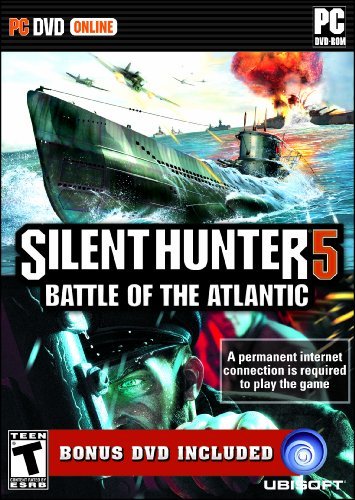
In copyright news, Ubisoft’s new DRM, which was the reason why I wanted to write a blog on PC gaming DRM, has officially released the first game, Silent Hunter 5, that uses the new “constant Internet connection required” DRM system.

Silent Hunter 5 Box Art

"Permanent Internet Connection Required" - It's always not a good thing when you have to put a huge warning sticker on the box of a game

Unfortunately for Ubisoft, their new, expensive, controversial DRM system was cracked in less than 24 hours. Ubisoft issued an immediate denial that their DRM system had been cracked, saying that while it had been cracked to the extent that the game now works without constant online verification, certain sections of the game was still locked. Ubisoft also quickly released a patch to fix several issues, and to no doubt make the hack ineffective, but the patch it self was cracked in even shorter time. And no doubt, the certain sections that haven’t been cracked will be given time. It is interesting reading Ubisoft’s own FAQ on the new DRM system, which I also referred to in my PC gaming DRM blog, when asked what will happen if they cease operation of their DRM authentication servers, which then makes these games unplayable. Instead of saying that they don’t plan on to ever cease operations, which would be a lie anyway, they said that if that happens, they’ll release a patch to make these games playable without the DRM server. Which means if Ubisoft can release a patch that removes the DRM checks, then so can hackers, so Ubisoft’s insistence that their DRM can’t be hacked is, by their own words, not possible. And yet, legitimate consumers are the ones that are most affected by the badly designed DRM, and just how many have used it as a reason, or excuse, to go down the illegal route, we’ll never know.

The controversial ACTA global copyright treaty, being discussed in secret, has had yet more leaks that reveal just what each country at the negotiation table are trying to get out of the treaty. Before we get to the leaks though, I would just like to address the secret nature of the negotiations. Sure, these type of things goes on all the time and nobody really cares, and for the most part, the ACTA negotiations are only slightly more interesting than watching paint dry. But there are some important things being discussed that will affect all Internet users, and it’s a shame to see the whole thing being kept secret, even given the numerous leaks. It appears some of the European countries wanted the secrecy, the US is citing national security, although nothing so far has suggested anything of that sort being discussed (it’s hard to keep national secrets when you’re in discussion with so many other countries). My guess, and it is purely a guess, is that it’s being kept secret because they don’t want a public backlash. And that’s a scary thing, that governments are conspiring to keep ordinary people out of it because people won’t like it.

Anyway, back to the leak. The US negotiators, with the RIAA/MPAA whispering in their ears no doubt, are pushing hard on various issues including making other countries adopt the severely flawed US DMCA. Other issues include ISP monitoring, three-strikes and all the nasty stuff “people” don’t like. But the push for US style DMCA has met with some resistance. New Zealand also questioned why Internet links can be considered copyright abuse, in that if you operate a website that has a link to another website that had pirated stuff on it, then you’re also liable for copyright infringement. On one hand, this is done to attack torrent websites like The Pirate Bay, which don’t actually link to pirated content, only to files that then link to the content. And there are also aggregator websites like isoHunt that then links to The Pirate Bay and other torrent websites. So it’s understandable why the copyright holders, which are the real powers behind the talks, want to make even linking illegal. But the problem is that this also puts search engines like Google into the same category as sites like isoHunt, since it’s quite easy to find torrents on Google (not quite as easy as say on isoHunt, but certainly not impossible). But it’s unlikely that Google will be sued because of this, but isoHunt will/has. And then there’s user submitted links, and whether for example if someone posts a comment for a blog post that contained a link to pirated content, then whether it’s the blog or the comment poster that is liable. The flow of responsibility has to stop somewhere. If site A is hosting illegal contents, then site A should be responsible, and not site B that links to site A. Because if site B is liable, then what about site C that links to site B, and site D that links to site C and so on. I think it just shows that most legislators don’t really understand how the Internet really works, and they are being easily convinced of this and that by powerful lobby groups, who themselves don’t fully understand the Internet and in general, the digital revolution. And so we, the people, have to suffer for it.

Most of the resistance seems to coming from Europe, and in the UK, the House of Lords are offering some resistance to the government’s proposed changes to digital copyright laws, but their alternative solution leaves much to be desired as well. The Lords are largely objecting to a clause which will allow ministers to bypass the parliament and implement new copyright laws as they see fit. Without public consultation, without a vote, straight from Hollywood’s lips to legislation. The government says that this is necessary because of the fast moving nature of the Internet, but no matter how you spin it, it just doesn’t have a place in a democratic government. The Lords’ proposed compromise is to allow the banning of entire websites on allegation of piracy, which is not going down well with consumer and Internet groups. More evidence of legislators not really understanding the full consequences of their actions in relation to the new digital world. The harm they can do to the digital economy is one thing, but it’s also the potential that they’re not seeing and we’re all missing out on. There are many things that would open up so many opportunities, but fear means that instead of trying to embrace change, they’re doing everything they can to avoid it.

Also in the UK, the group that regulates lawyers in the UK are taking action to stop law firms from flaunting copyright law to make a quick buck by sending infringement notices and demanding settlement fees to private individuals, whose IP address had been identified as one that participated in the download of something illegal. I’ve previously reported on the activities of law firms such as Davenport Lyons and recently, ACS:Law, that prey on those who do not want legal action and so pay up promptly, even in cases when they were sure they didn’t download anything illegal. Especially if the claimed download is pornography. Apparently, the letters sent out say that failing to secure one’s own Internet connection still makes one liable (that is, if your Wi-Fi was hacked and somebody used it to download pirated porn, then it’s still your fault), which is not true, and this could get them in big trouble with the regulators. Right now, it’s only two Davenport Lyons partners that’s been investigated, but DL has already withdrawn from these types of activities, and so ACS:Law will be next. DL pulled out rightly it seems, albeit probably too late to avoid issues with the regulator, and any law firm that participates in these type of activities is best described as a law firm for ambulance chasers, in my opinion.

RealDVD

This is probably the last time I will get to re-use this RealDVD screenshot

One of the things that I think is a missed opportunity is with the digitizing of movie collections, for which a legal solution simply does not exist, other than to repurchase your entire movie collection, often in a inferior digital only format. Hollywood’s determination to kill off anything that allows this to occur has been well documented. This week, they’ve managed to kill off RealNetworks’ RealDVD, which promised to allow people to convert their legally purchased DVDs to a fully digital, disc-less, format (with additional DRM to prevent online sharing). RealNetworks settled the case, admitting defeat and paying costs and will refund all purchasers of RealDVD. That’s a real shame. Not so much that RealDVD is dead, because it never really amounted to much, and the additional layers of DRM tied the digital “rips” to RealDVD’s software, which because it takes one relatively open format like DVD/MPEG-2, and turn it into a proprietary format that Real controls, means that it’s practically useless. However, it is the idea that Hollywood studios won’t allow DVDs to be copied in any way, that makes me angry, because there are a lot of legitimate reasons why someone would want to do it. Being digital, movies are easy to store and easy to transport. They’re also easier to catalogue, and when coupled with one of numerous media hub solutions out there, it makes finding and watching movies so much easier. The same reason why people now prefer MP3s to CDs, if you will.  Hollywood’s perceived danger here is that if such a system is not implemented well, it will allow “rent and rip” piracy (renting DVDs, ripping them, and returning the discs), or it will somehow make it easier to pirated movies online (which is hard to achieve, considering how easy it *already* is). These may be real problems, but that’s for Hollywood and their technical people to solve. You can’t deny your customers a much wanted and needed feature just because a minority of them might take advantage of holes in your system to do something they can already do so easily today. Keep on denying people, and people will find a way, regardless of whether it technically breaks the law or not. Hollywood might now turn a blind eye to these kind of “for personal use” ripping, but I think this is even more dangerous than implementing a “managed copy” system, because you’re effectively encouraging people to do something illegal (as stated in the copyright message that pops up before DVDs play, and also due to the US DMCA legislation) by not legally pursuing them (impossible, due to the number of people that are doing it) nor offering a legal alternative. The opportunity of having a fully digital movie library that can be created from your legally purchased discs is enormous, and it is technically much easier to achieve now thanks to development in hardware and storage technologies.

But I still think that we will have a system like this eventually. Which then makes the RealDVD decision even more ridiculous, and anti-competitive if the very people trying to kill RealDVD on copyright abuse grounds produces their own version of RealDVD in the future.

In more legal news, Viacom’s much publicized lawsuit against Google/YouTube reached a milestone this week, as both sides filed their summary judgement petitions. Viacom’s chances in the case is much diminished due to recent developments in recent cases, namely the Universal music versus Veoh case. And with Google now offering lots of opportunities for content owners like Viacom to make money off YouTube videos, even those uploaded without authorization, and the ability to remove videos, there’s not much logic in siding with Viacom on this one. And don’t forget about the free publicity that YouTube gives to new content, which is very much essential to companies like Viacom.

And in the most distasteful claim of the week section, we have the RIAA claiming that file sharers are undermining the Haiti relief effort. I don’t want to even want to go in to how the RIAA came up with this conclusion, but even if they’re right, it’s just really really really (really) bad taste, isn’t it? Using a disaster where so many died to promote their pro copyright agenda is just so wrong, but then again, it’s exactly the sort of thing you expect from the RIAA and MPAA. Techdirt’s analysis showed that hardly anyone was downloading the torrent of the Haiti relief album. And for those that downloaded, who knows if they donated to the Haiti relief effort or not. Maybe they donated a lot of money and then downloaded the album illegally, and maybe some of the people who paid for the album’s only contribution was the actual purchase of the album. And maybe the people who downloaded the album just didn’t have any money to donate, and who is to say that Haitian themselves aren’t downloading the album that’s been produced to help their flight (much of the Internet infrastructure survived the earthquake, for which the design of the Internet helped, as it was originally invented to tackle the problem of communication after nuclear war), and surely it doesn’t make sense to make them pay for it as well?

High Definition

Onto Blu-ray and HD news. The Lord of the Rings is coming to Blu-ray in April, and it is one of the most eagerly awaited titles on the format. But I won’t be buying it and I know a lot of other Blu-ray collectors that won’t be either. And judging by ratings on Amazon.com, 2045 one star votes versus 149 five star ones, most people seems to be thinking of doing the same.

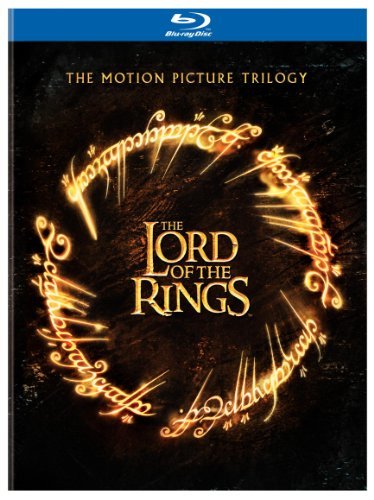
Lord of the Rings Trilogy Theatrical Cut Blu-ray

LOTR finally coming to Blu-ray, but it's not all good news

The reason is that the April version will be the theatrical version of the movies only, not the extended version. Instead of releasing one version that contained all the cuts (or at least release both cuts at the same time), there will instead be another Blu-ray release probably later in the year that houses the extended version along with more extra features. This “double dipping” is a well known way to get people to pay twice (or more) for the same movie, each time promising just a little more stuff that you must see and artificially putting breaks between the release dates of the various versions to get more sales. Well at least this time they didn’t release each movie individually, and then release a trilogy box set with more stuff a few month later. But with so many LOTR fans having both versions of the films on DVD, perhaps this is one time the studios will find it difficult to force a sale, as I’m perfectly happy to watch the theatrical version on upscaled DVD if I have to (and I’ve never watched it again ever since getting the extended cut, which I’ve watched about 4 times already, for each movie). Although with that said, I can see fans not wanting to wait and buying the April version anyway, which is exactly what the studio wants and they can make this happen by not releasing any details of the extended Blu-ray version until they’ve had enough sales from the theatrical version. Don’t fall for their tricks (say the guy that has 6 versions of Terminator 2 on DVD, HD DVD and Blu-ray)!

Netflix coming to the iPhone? If true, then expect the iPad to have it as well. Which means that by my calculation, 87.47% of all media devices sold today will be Netflix enabled, which is awesome news for Netflix and for digital video distribution, which was always thought to be entirely dependent on a large scale deployment of set top boxes.

Gaming

And finally in gaming, there was the infamous PS3 leap year date bug earlier in the week that managed to cripple a huge percentage of PS3s. Apparently, a date logic error in most of the “fat” PS3 hardware meant that the consoles were wondering just what the hell had happened to February 29 2010, and then decided to fail to connect to the PlayStation Network.

This is fine, except many new games require a connection to the PSN even if you don’t play online, due to the need to sync trophy data, and so people were left with a PS3 that could only function as a media hub and a Blu-ray player. This was fine for me because I only use my PS3 as a media hub and Blu-ray player, and I had several good gaming sessions on my Xbox 360 while this whole thing was going down and it seemed like the official PS3 board was going to explode with all the complaining.

In the end, it was fixed relatively quickly. The date bug still exists on the PS3, but Sony somehow managed to fix the problem on their end.

All’s well that ends well? Not quite. And this again highlights a weakness of the increasingly net dependent nature of electronics, not just PS3s, and just how useful certain devices become when the Internet (or the connecting server) goes down. Full offline mode should be a prerequisite for any device I think, as well as lessons on just when leap years occur for their programmers.

And we come to the end of another WNR. Hope you’ve enjoyed this edition, and see you next week.

Weekly News Roundup (21 February 2010)

Sunday, February 21st, 2010

Another relatively quiet week. Which is why the release of the NPD January US video games sales figures was timely, since it allows me to pad this WNR with a few more words than otherwise about the analysis. With stats now available spanning a two year period, it was interesting to compared January of 2008 with that of 2010, and to find that the PS3 only managed a 3% sale increase in that time. The reason Sony are still happy is because 2009 was best forgotten in terms of PS3 sales, and so 2010 seems like the best year ever, and it is, but only by 3%. The economy might have something to do with the small size of the increase, but consider the fact that the Xbox 360 managed a 45% increase with the same comparison, suggesting there’s still some time to go before Sony should start the celebrations, especially with the alarming decline of both the PS2 and the PSP. But with a good lineup of PS3 exclusives, Sony might not have to wait too long to declare themselves the winners (which is different to “being declared the winners”). The Wii continues its steady decline, having received a (what seems temporary) reprieve in December. Anyway, on to the news.

Copyright

In copyright news, The Pirate Bay may still be open, despite lawsuits, seizures and various other tactics, but it’s not stopping anti-piracy agencies from still going after its members. This time, it was the Danish Antipiratgruppen that went after a Danish TPB user, who had done the terrible thing of uploading 4 movie torrents.

The user’s home was searched, equipment seized, and the Antipiratgruppen declared the operation as stopping a “big fish” from committing “massive piracy”. Antipiratgruppen apparently found more material than they had expected, so it seems their fishing expedition had paid off with a catch, although just exactly what they found nobody knows at the moment. Is it beyond agencies like Antipiratgruppen to talk up their seizures when in reality they’ve found very little? No it isn’t. On a similar theme, Nintendo recently went after a man in Australia for leaking the game New Super Mario Bros. Wii a week earlier than the official release date. The man pleaded guilty and was fined $USD 1.3m. The only thing uploaded was a copy of the game DVD, which was still uncracked and so was not usable, but that was enough.

Moving on to the war against ISPs (new strategy in content owners fight again online piracy), NBC Universal Vice President Richard Cotton says that ISPs should filter out illegally uploaded copyrighted content just like how they filter out viruses. The thing is, I’m not even aware that ISPs filter out viruses, or at least not successfully, since many people, if not most, still get sent them via emails or get infected through web pages. Sure, they block attacks and probes, but these are attacks aimed at their own networks – home users still have to install firewalls to protect their own networks, for example. And when email filtering is activated, there is almost always a way to deactivate it or still allow “suspected” emails to go through with a tag added for easier identification, because false positives are still quite common and nobody wants real emails to get blocked. Just like nobody wants real, legal content to get blocked, which is a distinct possibility if ISP level filtering were introduced. The content owners seem to want everyone else to take responsibility for online piracy except themselves, even though they may be the ones most responsible for the increase in popularity of online piracy, thanks to outdated pricing models, lack of online services and excessive DRM.

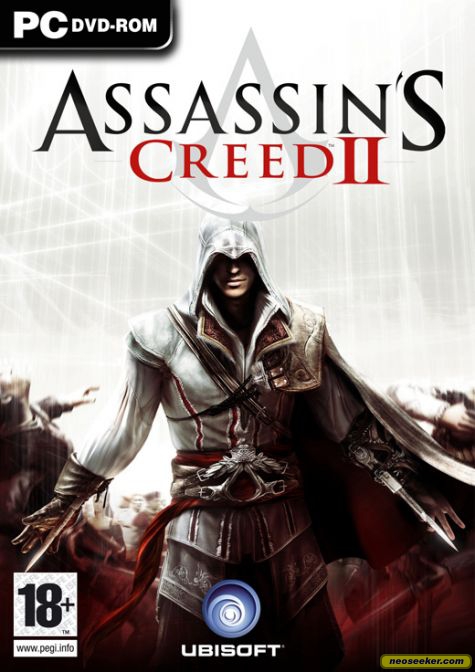
Assassin's Creed II PC

Ubisoft's new DRM, which comes with Assassin's Creed II on the PC, may drive gamers to piracy

Speaking of excessive DRM, Ubisoft’s new approach to DRM, which was mentioned here a few weeks ago, is even worse than first thought. Some reviewers that managed to review Assassin’s Creed II on the PC, one of the first games to feature the new DRM along with Silent Hunter 5 and Settlers VII, were shocked to discover that not only is online authentication required, it is required for virtually every second of gameplay. In other words, it’s not just the type of online authentication you find at Steam where you need to do it whenever you start the game, this new DRM requires that you connect to the Ubisoft servers every single second the game is running (and there’s no offline mode either, so no Internet = no game). And if for one second, you connection to the Ubisoft server dies (or if the Ubisoft server dies), then you are kicked back to the main menu and you lose all unsaved progress, at least for Assassin’s Creed II. Upon hearing the news, I thought that this may be just a temporary issue, one that Ubisoft would address. Address they did, by saying that this is all intentional and if you don’t like it, blame the pirates. Blame them, or join them? Now, I would never advocate pirating a game, because a lot of people have put a lot of work into it and they expect to be paid just like you would, but it seems that the only way to get any sort of decent experience out of these games is to go with the pirated version. Ubisoft has turned a moral and legal decision into one of necessity. Having had a look at Ubisoft’s incredibly long FAQ page about this DRM platform, all the usual questions are covered such as what happens if Ubisoft’s authentication servers are down. The answer they give is that, well, it won’t go down because they’ve got people monitoring it and stuff. Big websites like Google and Microsoft can go down and do go down, so do we really expect Ubisoft, a company that has had a dubious record when it comes to hosting gaming servers, to not fail? And fail they have, judging by the backlash they’ve received, and the series of funny YouTube videos mocking their new DRM system (see Das DRM Part 1, 2 and 3, as well as the obligatory Downfall Hitler parody). And on the question of why there isn’t an offline mode, the answer is simply that if they did, then the constant authentication system wouldn’t work anymore.

What Ubisoft is advocating is the end of PC game ownership. Instead of buying a game and playing it the way you want to, you are now only leasing it from Ubisoft and they tell you when and when you can play the game. Once Ubisoft finds 24/7 monitoring of their servers too expensive, especially for older games, they can simply remove support for such games and you’re left with a useless box of junk. On their FAQ, Ubisoft promises to release a patch to solve this problem if they ever remove support for the game, but all that tells us is that they do in fact plan to stop supporting games in the future, and that gamers will have to be relying on a company to release a patch for an old game in order to keep on playing it. Anyone who has failed at finding a patch of a five year old game that no longer works in Windows 7, and with no response from the publishers other than “sorry, the game’s too old to be supported”, will know what’s in store for potential Ubisoft customers. I’m hoping Ubisoft’s extreme actions will prompt a extreme response from consumers, and hopefully lead to the eventual downfall of PC DRM, much like how EA’s Spore has made EA a bit more friendlier in terms of DRM. In the end, all this does is to punish those that actually purchased the game. The people who pirate may get a version that doesn’t do this at all, and will play happily never worrying about their Net connection dying in between saves. The situation is very similar the one with those un-skippable trailer on DVDs and Blu-ray’s (see this illustration that has been circulating around the net about piracy versus pay), which you had to admit is a lot less annoying that this Ubisoft thing. There was a story last week about whether game publishers are encouraging piracy, and I said I wasn’t sure about that, but in this case, then you have to say that Ubisoft is encouraging piracy like no other company has done before, by making the pirated version the most user friendly and enjoyable version available.

By comparison, console games have a lot less DRM, although their hardware makes it harder to play downloaded games. But that may be about to change, as Sony are testing their own DRM system which will require a complicated system of vouchers and registration. Basically, the game comes with a voucher that needs to be redeemed online if you want to play online. If you purchased a second hand copy of the game, then you’ll have to buy a new voucher for $20. Just like the Ubisoft DRM, this plan seems to have unintended or intended consequence of killing off the second hand games market (Ubisoft’s new DRM games can’t be re-sold).

High Definition

Moving onto HD, Blu-ray has been slow in terms of PC and Laptop adoption, but that may soon change with MSI pricing a Blu-ray, Intel Core i3 laptop for less than $700.

Sony's OLED TV

Sony's OLED TV: Thin, beautiful, but really really (really) expensive

Now, that may still seem expensive compared to a Blu-ray player, but you do get a laptop too, even if the screen is not 1080p (but it does have an HDMI output, to connect to your HDTV). I’ve seen recently some super expensive gaming laptops that still come with DVD drives, and so perhaps this marks the start of a new trend, because there’s no reason why all PCs and laptop aren’t coming with Blu-ray drives (the cost has come down, Blu-ray movies are widely available, and pretty much all modern PC hardware can play Blu-ray movies without breaking a sweat).

Sony has cancelled it’s OLED screen for sale in Japan. I guess the relatively poor Japanese economy meant that hardly anyone was willing to pay $227 per inch of screen, and what would one do with a netbook like screen size anyway. Of course, Sony’s OLED TV is more of a technology test than an actual product, and I expect bigger and cheaper screens to come eventually, as I see OLED as the successor to LCD and Plasma screens.

As for gaming news, there wasn’t much, but I’ve already covered the NPD and Ubisoft DRM thing so I’ll skip this section for this WNR.

See you next week.