Archive for the ‘Copyright’ Category

Weekly News Roundup (27 December 2009), 2009 Year In Review (Sort of)

Sunday, December 27th, 2009

Welcome to the last WNR of 2009. As expected, news was extremely light during the height of the festive season, so this WNR will be a year in review of sorts, although it’s mostly based on memory, and a bad one at that. But first, we’ll go through the news that did manage to turn up this week.

IsoHunt Logo

MPAA wins against IsoHunt, and a trial wasn't even needed

The big one was isoHunt losing its lawsuit, but it wasn’t really much of a surprise. In fact, the judge didn’t even see the need for a full trial, giving Hollywood studios an Christmas present in terms of a summary judgement against isoHunt, based on past cases involving Napster and Grokster. isoHunt itself is happily running in Canada, but it is also now under pressure from the CRIA, the Canadian version of the MPAA. isoHunt’s argument that it was only a search engine did not really work, and evidence uncovered showed that the operators actively promoted pirated content, which is really just common sense when you consider torrent sites and what their main purpose is. Take Mininova for example, since it went legit just under a month ago, traffic to the site has dropped 60 to 70%, according to Alexa. The argument that torrent files are just text files won’t really work in court either, not when courts have been happily citing even just simple web links as being infringing content.

Speaking of pirated content, Torrent Freak has compiled data for the most pirated movies of 2009. Leading the chart is Star Trek, closely followed by Transformers: Revenge of the Fallen. Coincidentally, these two are the top selling Blu-ray titles of 2009. I don’t know if there’s any relations between the two set of numbers, other than the fact that these two movies are really popular, and that popular stuff get purchased, or pirated, a lot! The question of how much money has been lost to piracy is extremely hard to answer. There will always be people who, no matter what, will simply not pay for movies. There are those that downloaded the pirated version, liked it, and got the movie on DVD or Blu-ray. There are also those that went to watch it at the cinema and then downloaded the pirated version. How many people would have forked over cash if the pirated version didn’t exist is unknown. Perhaps the studios can try and focus their anti-piracy efforts on one particular movie, and basically go on a huge offensive, getting torrents removed as they are uploaded. I’m skeptical whether any action, even the most extreme, can prevent piracy, but it’s worth a try, even if it means spending 50 million dollars or something. Then see how the revenue of this movie compares to similar releases. Maybe they can then try to prevent a movie from being show on free to air TV or being rented, and see if it helps with DVD sales, and the music labels can get in on the act and prevent a single from being heard on radio, to see if it helps CD sales.

While the studios haven’t prevented a movie from being rented to increase DVD/Blu-ray sales, they have prevented movies from being rented in specific ways. Redbox, the new common enemy amongst several studios, has felt the brunt of the studio’s actions, which claim the DVD rental vending machine operator is hurting rental and sell through income for their movies and have barred Redbox from doing several things, including using box art in their digital displays. Fortunately for Redbox, the law still allows them to rent movies as long as they buy it from retail channels, and that’s what they’ve been doing with releases from Warner, Universal and Fox, and making up their own cover art at the same time. What I don’t understand is why these studios don’t simply do what the others (Disney, Sony, Paramount …) have done and work out a deal with Redbox that benefits all.

It’s this and new methods of viewing that the studios fear though, because they’re losing control. One in three Australians now use DVRs to watch TV, and that’s seen as hurting TV stations what with ad skipping, although our local version of TiVo has removed the ad skipping feature. If the studios (and TV networks) get their way, TiVo and other DVRs won’t exist, which is not good for the consumer (or the electronic firms that sell DVRs). But ads are important, as they are the main source of revenue for TV stations, so a compromise has to be found. The TV networks as we know it will have to change anyway, what with the emergence of TV on demand. Expect this to be yet another battle front in the digital wars.

Oppo BDP-83

A cheaper sibling to the Oppo BDP-83 will be available soon, but Oppo's are still hard to find outside of the US

And moving on to HD news, Oppo will release a cheaper version of their highly rated, but as yet unavailable world wide, Blu-ray player. It’s unknown what features will be cut in order to reduce the cost, but most likely it will be the DVD-Audio and SACD features, since most people don’t really need support for these formats. Will it also come with HDMI 1.4, which is also set to be released around January? HDMI 1.4 itself seems to be still in flux, as the HDMI consortium wants to add 3D broadcast support to the standard, along with the new two way audio support and built in Ethernet capabilities that are the headline features of the new version. I for one hope that there will be no more HDMI revisions in the future, because it’s ridiculous that all HD devices sold so far will become obsolete next month as a result of this HDMI change. Of course, most of the newly added HDMI features are not “must haves” that will force people to buy new TVs, and backwards compatibility is being maintained, but still.

And that’s the news for the week, so I guess the rest of the WNR will be for my brief and fairly incomplete year in review.

Copyright

Starting with copyright. It’s been a year of lawsuits. And most of them have brought success to the copyright holders. We’ve seen The Pirate Bay lose time and time again, and then sold, although it doesn’t seem to affect the website’s operation.

Mininova was probably the biggest casualty, having removed all of its illegal content last month, and as mentioned before, seeing a 60% traffic drop as a result. isoHunt is the latest casualty, having lost the lawsuit just last week, but the website is at least still operational. Expect more closures next year.

Sarkozy

Nicolas Sarkozy: Most hated figure in 2009, copyright wise

Then there’s the Australian lawsuit against ISP iiNet, dubbed the iiTrial. The case went over many of the issues in the piracy debate, specifically about responsibility of ISPs, and whether they should act as copyright cops. We’ll find out the answers to these questions early next year when the verdict is due. This trend of attacking ISPs isn’t just an down under thing, this has been the new strategy of the copyright holders in 2009. From the French introduction of the, albeit watered down, three-strikes legislation, to the MPAA asking for something similar to every government that’s willing to listen, we could see some big changes in 2010 when it comes to the relationship between the government, your ISP and you.

But that’s not to say that the copyright holders haven’t been attacking individuals. Two high profile trials concluded with unbelievable damages being awarded to record profit making  Hollywood, $1.92 million and $675,000 against a single mother and a student respectively. This was supposed to put the fear into downloaders, but the fact is that pirated downloads have actually increased during the year.

The positives of 2009 for copyright include the death of DRM for music, when iTunes went DRM free in April, which saw other online music stores doing the same before and after this date. DRM is still well and alive for everything else though and happily ruining user experiences and even movie previews. Several free music services popped up in 2009 as well, as an alternative to illegal downloads, but only time will tell if their business model works in the long term, and on a global scale. 2009 also saw the increasing popularity of Digital Copies, bundled with both DVD and Blu-ray packages. These DRM protected, time limited video files have at least provided a free alternative to DVD ripping, although Managed Copy for Blu-ray is set to do much more, if it ever gets implemented. But we can still say that 2009 saw the first Managed Copy Blu-ray being released.

High Definition

Which moves us neatly onto HD news for 2009. It was a very good year for Blu-ray, most noticeable in the last quarter thanks to some very high profile releases. The record breaking release of The Dark Knight during December 2008 was only recently shattered by Star Trek and the holiday sales period, but there is no denying the fact that Blu-ray sales have double or more in the year.

Most of this has been due to price cuts, which sees Blu-ray hardware and movies quickly approaching DVD levels, and at times, below that of new release DVDs. Consumers spent less as a result, although this may largely be due to the poor economic conditions, and the growth in Blu-ray revenue was not enough to cover up the losses on DVD, although the situation is not nearly as bad a year ago. Digital downloads and streaming, as well as rental, saw amazing growth during the year as well. Netflix, who offers both digital and traditional rentals, grew strongly thanks to integration with first the Xbox 360, and then the PS3. This is not to mention the increasing number of Blu-ray players that now come with some sort of online streaming support, and Blu-ray players are fast becoming replacements for set top boxes, which everyone always thought would have been necessary for a large scale rollout of digital services.

Blu-ray Sales Percentage - 4 May 2008 to 29 November 2009 - Click to see larger version

Blu-ray sales grew healthily in 2009

2009 also saw the HD format war loser, Toshiba, come out with their first, albeit modest, Blu-ray player offering, and thus officially end their ill fated HD DVD adventure. And although HD DVD has died, the innovations that the format provided still lives on in Blu-ray, with the mandatory Internet connectivity on HD DVD players now all but mandatory in name on Blu-ray in BD Live, which has allowed the aforementioned online streaming services to be used through Blu-ray players. And the emergence of Managed Copy, which was first made mandatory for HD DVD, is now coming to Blu-ray, albeit with some resistance. And even the good old double sided Combo is coming back through HD DVD backer Universal.

Most studios still prefer the separate disc combo method, and combo now usually means both the DVD and Digital Copy version of the movie. Digital Copy has made headway as well, now available not only on DRM’d WMV files, but also through iTunes on PCs and Macs, and thus, playability on iPods and iPhones. Digital Copy has been so popular, that it’s hard now to find a new hit release without it. And the general idea of Combos have been popular as well, with Warner recently announcing that all their major Blu-ray releases next year will be combos with both the DVD and Digital Copy included on separate discs. Blu-ray’s value for money has increased as a results, as the ever smaller premium you pay for movies over the DVD version is made up by the inclusion of the DVD version on a separate disc. Disney even made combos the first and only package available to buy for a few of their hit titles, and stats have shown that even after the exclusive period, people preferred to buy the better value combos.

Blu-ray on PCs are still somewhat of a disappointment, but GPU assisted decoding is now available in most systems, even some of the netbook offerings though Nvidia Ion. Will we see a mainstream PC game released exclusively on Blu-ray disc in 2010?

3D promises to be the studios’ next target in 2010, hoping to bring HD 3D to the home via the now finalized 3D Blu-ray specs. Only the tough set of requirements, such as a new TV, rule out the guaranteed success of 3D Blu-ray.

Gaming

And finally in gaming, 2009 unfortunately didn’t reach the highs of 2008 in terms of sales. The year started somewhat flat, and then soon saw Wii sales tumble along with most other consoles. Then Sony did what everyone wanted them to do and reduced the price of the PS3, and surprised many with the introduction of a brand new Slim version of the console. Both of these factors revived the fortunes of the PS3, taking it from last place amongst the home based consoles to nearly topping the monthly sales of the Wii. The holiday period, and the biggest release in the history of music, movies or gaming, Call of Duty: Modern Warfare 2, helped the Xbox 360 regain some of the lost momentum after the PS3 Slim/PS3 price cut. Even the Wii had a recovery of sorts during the holiday sales, but is still easily 30+% down compared to last year, although 2008 was crazy in terms of Wii sales.

The PSP Go largely flopped, while the DS, with the updated DSi, now completely dominates the handheld market.

Sony PS3 Slim

The PS3 Slim, and the price cuts, helped the PS3 to stage a brilliant comeback in 2009

In terms of games, Call of Duty: MW 2 was easily the best selling game of 2009, and of all time possibly, at least for the release figures. The PS3 had a couple of hit exclusive titles (Kill Zone 2, inFAMOUS, Uncharted 2) that did well enough, but there still aren’t enough consoles in the US to really make these sell. Game sales are down as well compared to 2008, even though the biggest hits of 2009 were bigger than the hits of 2008. But 2009 was still the best year outside of 2008 in the history of gaming, and things only look to improve as Sony and Microsoft both bring out their motion control systems next year, although in Microsoft’s case, it will be towards the end of 2010. You can vote for your game of the year here.

A more detailed 2009 roundup will be written up as soon as the December figures are released in the middle January.

And that’s pretty much 2009 in review, very brief I know and missing all of the crucial events that I’ve failed to remember. News is likely to be hard to find next week as well, and so if there’s nothing to write about and if I remember more stuff, then perhaps you’ll see part two of the 2009 year in review then.

But until then, I hope you’ve had a great 2009 and everyone here at Digital Digest wishes you a happy and prosperous 2010. HNYIA (Happy New Year In Advance)

Weekly News Roundup (20 December 2009)

Sunday, December 20th, 2009

We’re in the final weeks of 2009, and the first decade of the 21st century, or are we still a year away from that, I don’t know. You know sometimes I wish there was actually a year zero, since it makes all of this much less confusing. This could very well be the last WNR for 2009, it all depends on how much news there is next week, and I suspect there won’t be a lot. Still, I’m sure I will write something next week, even if it is just a yearly in review type of thing. There’s quite a big of news this week, I guess everyone wanted to get their stories in before leaving on holidays or something. And please also vote for the best game of 2009 in this poll.

Copyright

Copyright news is first up. The US Congress has gotten into the Christmas spirit and decided to give $30 million dollars to the MPAA crusade against online piracy. I guess it makes sense that the only industry that managed to make record profits this year is the one to receive this latest “bailout” package.

Much of the money will go towards fighting online piracy, although the MPAA was eager to tout its other, and probably more important, roles in stopping piracy. Counterfeit goods is a large problem and this is the one area where actual money exchanges hands and individuals or groups profit from these illegal activities, as opposed to some teenager downloading a copy of a movie they never intended to buy anyway.

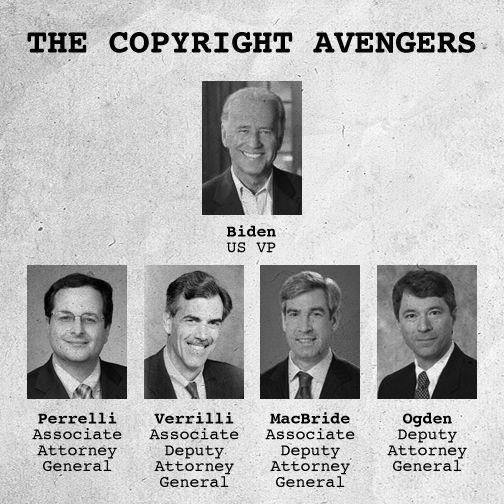
The Copyright Avengers

Biden heads the list of pro-RIAA, MPAA members of the Obama White House

The increased funding comes after Vice President Biden held roundtable talks with all the interested parties in the copyright debate, well at least all of the people on one side of it anyway. Invited were the RIAA, MPAA, movie studios, music labels, publishers, the FBI, Homeland Security and even the Secret Service. Not invited were consumer rights groups, IT companies, the Internet industry, and anyone that might have had a bad word to say about the group that were invited. Biden has a long voting history in the senate in support of the RIAA, so this isn’t really much of a surprise. What is surprising is the same group of invitees coming out to publicly attack the rights of the vision impaired. With the various new layers of DRM and technology to protect content, it’s making things extremely difficult for the vision impaired when it comes to text to speech services and other helpful tools which are locked out by the DRM as well. To address the situation, a change to the copyright law was proposed to build in an exception, but to the surprise of pretty much everyone, it was met with fierce opposition. What the publishers and others didn’t like was the relaxing of copyright law, regardless for whatever reason (and this time, it was for a very good one), because they want to see the opposite and the ever tightening of copyright laws, not the reverse. When it comes to their moral crusade against downloads, there is no such thing as friendly fire, it seems. President Obama did the sensible thing and came out to support the proposed amendments.

Everyone knows my disdain for DRM. But it really only extends when it is used badly to prevent piracy, which usually means that it doesn’t prevent any piracy and only decreases ease of use for consumers. But DRM does have its place, as it is used to restrict access to certain files, while allowing access to it by others. It’s much easier than say using a password to lock a file, which means you’ll have to give the password to those that need to access it, and pretty soon, the password becomes an open secret. Encryption has the same drawbacks. So a proper DRM system with user based access control is then the preferred solution. But the problem is that with managed DRM systems, you’re relying on authentication servers and such to grant and deny access, with deny being the default. But if the authentication system goes down for whatever reason, then you end up with unusable files, which is exactly what happened to companies using Microsoft Office’s Rights Management Services. Apparently someone forgot to renew a certificate, and when it expired, the whole thing failed, locking people out of their own files. I recently read an interesting article that questioned the longevity of digital file storage. Not only are the media used to store the digital files susceptible to failure, over time, you could also find it difficult to find the right hardware to access the media. Take for example, 5.25″ floppy disks and how difficult it may be for many to get files off it and imagine how much more difficult it is in say another 20 year’s time. DRM compounds the problem by adding encryption and authentication to the file. Will the authentication servers be around in 50 years time? And will people remember what the encryption algorithm used was? Of course just before the DRM system fails, the owner of the file should unlock it, but what if they forget, or what if they don’t have rights to do it, like consumers that purchased DRM’d MP3s from just two years ago that now find the files useless.

Another aspect of DRM is its use in anti-competitive behaviour, something that Apple has been questioned about in Europe. This story of a garage door opener having both DRM and a DMCA warning notice, all to prevent the use of third party door openers, is case in point. The same company apparently already lost a lawsuit in relation to the DRM use. I could, as an example, implement a simple system that prevents copy/paste being used for this article so you can’t copy parts of it to post elsewhere, and if you attempt to break this simple encryption system, then I can sue you under the DMCA. But just like DRM, it doesn’t really prevent those serious about copying your work (they could do it the “analog” way and simply retype everything), and it adds inconvenience to readers. And in the long terms, it’s bad for me, the content owner, as others pasting parts of your article around is actually a good thing (as long as they link back to the original article). So this is why I find it so funny that the likes of Rupert Murdoch would come out against Google and news aggregators for daring to link to their content, because I would love to have people link to the stuff I write. The death of the newspaper business has more to do with an outdated model of information delivery, the ever decreasing quality of “journalism” being produced, in my opinion. There is certainly less trust towards what newspapers publish even compared to anonymous blogs, since political bias and monied interests have ruined it as a platform for trusted information.

DRM ruins 3D Avatar preview screening

DRM ruins 3D Avatar preview screening

But that’s a discussion for another time, perhaps. But back to the theme of how DRM ruins lives, in Germany, a 3D preview screening of the hit movie Avatar was ruined by the DRM system now employed by studios and cinemas to prevent piracy. Instead, the excited cinema goers had to settle for a 2D version of the film instead, which I’m told is definitely not the way to watch Avatar. DRM systems are not so complicated, the cinema ones involve authentication servers, certificates, time-sensitive data, encrypted hardware devices and whatever else they would manage to squeeze in – any failure in any of these components means the film won’t play. And even with all these precautions, a screener version of the film has still made its way online, although the fact that a pirated version was available hasn’t really affected the box office figures for a movie that everyone knows would be best seen in the cinema (and preferably in 3D). It’s this reason that I think why Hollywood box office receipts broke all records in 2009, and there’s a new article that provides further analysis of the record breaking figures, and why Hollywood tries to hide their success.

And the lies don’t stop there. The MPAA also claims that everything they do is for the good of the consumer, to give them more choices. This is from the same group that sued Real Networks and Kaleidescape for offering consumer more choices when it comes to how consumers chose to watch their legally purchased DVDs. While nobody denies that piracy is a problem, and it’s a problem that’s on the rise according to recent studies, but I think the differences lie in how to solve this problem, and nobody really thinks Hollywood’s solution is the best one, since it has proven so far to be very ineffective. So perhaps instead of trying to fight change, they should embrace it and come up with new innovations that can protect their profits, as well as give people what they want. It seems that in their bitter crusade, many have lost sight of the latter part of the previous statement, that companies exists not to protect their profit, but to give people what they want and need. Apple managed to it through iTunes, and the only losers were the music industry, which in their single minded approach against online piracy handed the immense opportunity to a computer company instead. The movie industry cannot make the same mistake again.

The party of French President Sarkozy, UMP, and the hardliners in the global anti-piracy fight with their introduction of three-strikes laws, is again at the center of copyright infringement. The first was when they used a song without permission in an online video, the next was when they were caught pirating 500 DVDs of a documentary that promoted Sarkozy. And now, their third strike, is lip dub video that used a song they were expressly prevented from using by the content owners, who did not want to associated the song with politics. But the UMP decided to ignore the wishes of copyright owners and used the song anyway. They’ll no doubt only get a slap on the wrist, and they should consider themselves lucky that they don’t live in a country with harsh copyright laws. Oh.

In a similar incident, video sharing site Vimeo was sued by EMI for promoting the use of lip dubs. EMI says that most lip dubs use full length songs without having obtained license for this public broadcast, and that by promoting the creation of these lip dubs, Vimeo is not only condoning but promoting piracy.

High Definition

In HD news, the specifications for 3D Blu-ray has been finalized, hopefully more finalized than the whole Managed Copy debacle which you can read about in previous issues of the WNR. The specifications includes notes about the PS3, which can be upgraded to support 3D Blu-ray through a firmware update. There is less detail about other Blu-ray players, but I would expect that only the ones with powerful processors will be able to be upgraded through firmware to support 3D.

Samsung 3D TV

The specs are finalized, but a TV upgrade is most likely needed if you want to watch 3D Blu-ray

The other good news is that 3D discs will carry 2D versions of the film, which means that studios won’t have to produce two packages for consumers. The bad news is that you’ll most likely have to get a new TV to enjoy 3D, since there’s only a handful that supports it at the moment. No doubt with the finalization of the specs, more TV manufacturers will come out with 3D TVs, but whether people want to watch 3D at home is another thing, as it’s not exactly the same experience as watching 3D on a big cinema screen.

There’s not much in gaming, but I will mention the 2009 game of year poll again. I suspect Call of Duty: Modern Warfare 2 will win, it is easily the best selling game of the year, and it really is a good game, combining the excitement of previous Call of Duty games, plus a pretty good storyline this time. Add a splash of controversy, and you have a winner.

That’s all we have time for this week, and possibly this year. Have a good week, and a good holiday period. See you next week … or next year.

Weekly News Roundup (13 December 2009)

Sunday, December 13th, 2009

I’ve just finished compiling the November 2009 NPD US video game sales analysis. November is the second busiest month of the year, and competition between the three home based consoles has really hated up in the last couple of month, with the previously poorly performing PS3 challenging not only the Xbox 360 but also the Wii’s sales position, thanks largely to price cuts and the introduction of the PS3 Slim. But as you’ll read in the analysis, November was really only about one game, and that’s the controversial Call of Duty: Modern Warfare 2. I’ve played the controversial level in question, and I wouldn’t exactly call it disturbing. It’s about as disturbing as shooting computer generated characters can get, and you do plenty of that during the rest of the game anyway (even if they’re all supposed to be bad guys, whereas the people you shoot in the airport level are “good guys”). And there is the option to skip the level if one wishes anyway. If one wants disturbing, try playing Fallout 3 as a player with evil karma, and relying on cannibalism to survive from one day to another.

Copyright

Let’s start with copyright news. The second of the high profile RIAA versus civilians trial has just had its verdict finalized. Student Joel Tenenbaum now officially owes the recording industry $675,000 for 30 song downloads. The RIAA will be happy with how the trial went, although the negative publicity is something they probably wanted to avoid.

While feeling confident over the outcome, the RIAA ridiculously asked to censor Joel Tenenbaum’s speech, to prevent him from ever whispering the words “file sharing”, but the judge thought that this was a bit over the top, as there is this little thing called the US constitution that sort of frowns upon speech being blocked and proves that nothing is sacred when it comes to pursuing or protecting profits.

The Canadian Record Industry Association has been sued for copyright infringement

The Canadian Record Industry Association has been sued for copyright infringement

Nothing is indeed sacred, not even obeying the very principles that the recording studios are basing their fight on. Copyright, it seems, is only important if someone else breaks it. When studios have been doing it for nearly 30 years, then it’s no biggie. A class action lawsuit has been launched in Canada to sue the Canadian version of the RIAA for massive copyright infringement, with damages of up to $6 billion. Apparently, Canadian copyright laws allows copyright payment to occur after copyrighted works have been used, as long as they add the work to an updated list, and the studios have been exploiting this with back payment dating back to the 1980’s.  And the list is now 300,000, that’s 300,000 copyright works that the studios have made profits that they have yet to provide payment for, and that’s apparently fine as long as they promise to do so at some unspecified time in the future. Sounds like a good excuse that downloaders of pirated materials can use: “honestly, I was going to pay for it at some unspecified time in the future”.

A couple of weeks ago, a woman was arrested for recording a whole three minutes of the new Twilight movie. And she hadn’t even intended to record the movie for piracy, she simply recorded a small part of it while filming her sister’s birthday party, which took place at the cinema. But regardless, she was charged with a felony and faced three years in prison, I guess one for each minute of the film she recorded or something. New laws were introduced at the lobbying of the MPAA to punish cinema cam recording pirates, and as with most new copyright laws, intent is no longer important as it is much too difficult to prove, and the MPAA wants to put in as many shortcuts as possible when it comes to prosecuting pirates. In this instance, there was obvious no intent in pirating “New Moon”, and yet there was an arrest and charge, and it’s exactly what happens when shortcuts exists.  It was only until last week, and after public pressure and even support for the accused from the director of the new Twilight film, that the charges were finally dropped. The MPAA apparently didn’t want to go through with the trial. I guess no harm done, except for one ruined birthday party, a traumatized woman and apparently the lost recording of the party, as the recording has been confiscated (can’t let those three minutes get leaked out or anything). In unrelated news, US and Canadian cinema box office receipts show 2009 to be the most profitable year ever, finally breaking the $10 billion dollar mark and a whole billion dollar more than 2008. This online piracy thing seems to be really hurting the movie studios.

And yes, one can argue that while cinema income is up (I would guess that has a lot to do with the quality of releases this year, versus the strike affected 2008, plus the popularity of the cinema only 3D experience), disc sale income may be down because online piracy affects it the most. DVD revenue is down compared to last year, that’s for sure, but actual disc volume may not be down much in a recession year, it’s the drop in retail pricing that has affected DVD revenue more than piracy ever will. And with Blu-ray added in, total revenue is not as down that much at all. And that’s before you even take into account digital delivery. Put it this way, the increase in online piracy, and it has increased, has been much more dramatic than any decreases in either cinema or home video sales. And as I’ve just done the video game sales analysis, home console game sales have dropped compared to 2008 as well, but piracy for the Xbox 360, Wii and PS3 have always been quite low, certainly compared to DS and PC gaming. So it’s really questionable what percentage of the DVD revenue decreases can be blamed on piracy.

Speaking of video game piracy, EA’s CEO says that pirates are customers too, and they shouldn’t be ignored or attacked. Speaking about the increasing popularity of Downloadable Content (DLC), EA’s boss thinks that while pirates may be pirating the retail boxed versions, they are still paying for DLCs, mainly because it’s often inconvenient to download these illegally, especially if the games and DLCs are multiplayer oriented. If true, then I think all this proves is that people are willing to pay, just not as much as game publishers have been wanting for the boxed retail version. If full games were priced at the same price point as your typical DLC, would anyone actually bother to pirate them? And if PC piracy rates are as high as some claim, then we could be talking about hundreds of percentage point increases in sales, which would more than make up for the 50 to 80% drop in revenue per game. A bit simplistic perhaps, but the principle is sound I think (ie. cheap stuff sells more).

High Definition

Moving on to HD news. More details have been revealed about the implementation of Managed Copy by Scenic Labs, which produced the first three Blu-ray discs to feature Managed Copy. For fans of MC, it doesn’t look great to be honest, because while we already know that MC supporting hardware is some ways away, the actual implementation is nothing more than a serial number and an XML file at the moment. Ars technica’s headline describing Managed Copy being nothing more than “serial nos., prayer” probably says it best.

And even the instructions on how to obtain the ISAN serial number and the content of the XML file was something that Scenic Labs found hard to obtain, eventually having to contact the AACS-LA directly (they are responsible for the MC specs). At this rate, it could be another year or two before we see the first MC supporting hardware, and it’s very likely that by then, Scenic Lab’s discs might not even work with the future MC implementation. Scenic Labs have done the honorable thing and said that if their discs don’t work, they’ll give away free downloadable versions of their discs if one can prove ownership via a photo of the purchased discs. Not exactly 21st century level authentication, but it’s still much more realistic than relying on MC at this stage. One can only hope one of the electronic firms and studios, most likely Pioneer and Disney (both company’s products were seen in the recent demo of MC), will push ahead even if all the others seem disinterested. Having MC, and being able to make a 1:1 copy of the movie without the need to have the original disc, would be fantastic for home theater enthusiasts who have already built digital media servers full of content that they’ve had to rip illegally as no legal alternative existed. Of course, this means giving more control to consumers, and less to the studios, and this perhaps explains their reluctance in pushing forward with MC.

Toshiba's Blu-ray player is now available, but it's a bit underwhelming

Toshiba's Blu-ray player is now available, but it's a bit underwhelming

Toshiba’s first Blu-ray player has been released and reviewed. While it’s a quite capable Blu-ray player, it seems that’s all it is. There’s no video streaming, and it doesn’t even feature Toshiba’s XDE upscaling technology. It seems Toshiba was content to be conservative with their first Blu-ray player, which I guess is understandable in many ways following their failure with HD DVD.

The other bit of HD related news was that the WHDI specs have been finalized. Think of WHDI as wireless alternative HDMI, of which there are several competing formats. WHDI seems to be one of the better supported at the moment, with Sharp, Sony, LG, Hitachi, Motorola and Samsung all behind the format. Unfortunately, many of these companies also support the WirelessHD standard, of which Toshiba, Panasonic, Philips, NEC and Intel are additional supporters. You would think that these companies could just get together and adopt a single format, for the benefit of all, but you know that was never going to happen. And wireless technology is especially tough to get consensus it seems, what with Wireless N only taking about 50 years to get finalized or something.

Gaming

And in gaming, I guess I should talk a little bit more about the November US video games sales figures, although there’s not much I can add to what I’ve already posted in my analysis. A lot of people were surprised at the Xbox 360 figures, as was I, but I think the real surprise was the bias in Modern Warfare 2 sales on the Xbox 360, which outsold the PS3 version by more than the 2:1 margin that the 360 holds over the PS3 in hardware numbers. Almost one in four Xbox 360 owners in the US purchased a copy of the game, and that’s only the stats from the first 20 days of release.

Call of Duty: Modern Warfare 2 on the Xbox 360 sold more than 4 million copies in the first 20 days

Call of Duty: Modern Warfare 2 on the Xbox 360 sold more than 4 million copies in the first 20 days

The explanation for this, according to Microsoft, is Xbox Live, the multiplayer service. There is some truth in this, and it’s backed up by stats as well, where Xbox Live stats showed that 2 million unique users were online on MW2 launch day, and 5.2 million hours of gameplay was recorded. There is a kind of loyalty that exists with respect to multiplayer games, because if you’ve played the first game on Xbox Live or if your friends are all on it, you’ll have to get on it too, even if your favourite console in the PS3. Microsoft’s focus on improving Xbox Live has obviously paid off, compared to the somewhat lackluster approach Sony has taken with the PSN.

Over in the UK, apparently Xbox 360 sales are on the up as well, at least according to a popular voucher website. We’ll have to take this news with a pinch of salt, since official figures are not available to back this up, but if true, then the lower pricing of the Xbox 360 may be appealing to recession hit Europe and UK. And the introduction of Sky Player on the UK Xbox 360 may also be a factor.

Anyway, I think I’ve rambled on long enough. Have a great week and see you in seven days.

Weekly News Roundup (29 November 2009)

Sunday, November 29th, 2009

A very short WNR this week mainly thanks to what Americans call Thanksgiving. No idea what it means here in Australia, but apparently it’s something to do with pilgrims, turkey eating and insane shoppers going crazy on “Black Friday”. The other reason for the short blog is that I’m down with the cold or flu or whatever is it that is making me feel like crap and sneezing and coughing like a bastard.

Copyright

There’s basically only copyright news that I managed to find this week. Fox Studios loves the French style three-strikes system. They are lobbying the US government hard in order to get a similar system for the US. When Fox agrees with something the French did, you know you’re in a world of trouble.

Reading the pleas of Fox Studios, it reminded me of something I had read earlier in the week in a news article about free music, and whether it was the better way to fight piracy than legal action. The article raises some interesting points, about whether lost profits are really lost profits if the people downloading illegal music have never and will never buy music, even if piracy has been wiped out. It also argues that perhaps the biggest downloaders of illegal music, the music lovers, are also buyers of music. I think I posted something here recently about a study or survey that showed exactly this, that people who download music illegally actually buy more music than people who have never downloaded illegal music. So instead of trying to stop piracy, which personally I believe is impossible, content owners like Fox Studios should be trying to work with the situation and find way to convert illegal downloads into legal downloads. Convert, not coerce. The studios tend to think that people are downloading illegally because it’s available, whereas in many situations, people are downloading illegally because they can’t afford to do so legally (the old “it would take $30,000 to fill an iPod” stat) or they can’t do so easily. And it’s not like the studios were that enthusiastic about the whole online music thing, other than their excitement over the DRM being used. The fact that the company that owns the world’s largest online music store is a computer company and not a studio, shows what a missed opportunity it was for the music industry, while they were fretting over frivolous matters such as DRM. And thanks to the now DRM-free iTunes and other services, legal downloads are becoming easier to find and easier to pay for. But even with these improvements, the question of affordability hasn’t really been addressed.

Spotify - free legal music as a way to combat piracy?

Spotify - free legal music as a way to combat piracy?

The latest services, like Spotify, offer free music in exchange for ads. Pretty much how radio stations work. Spotify also offers an ad-free subscription model, and other companies (again, none backed by studios) have gotten in on the act. Greed will ensure a battle between Spotify and studios over licensing fees at some stage, which could make the free model unworkable. But all Spotify does is try to bring music to more people, by making the price reasonable, and doing so using digital technology which has minimal costs and overheads and zero duplication costs, unlike a physical thing like a CD. If the studios are to be believed, then only 1 out of 10 people may be downloading music legally. Their plan is to wipe out illegal music, but without price reductions and other incentives, do they really think the 9 people will automatically switch to legal purchases even though they probably can’t afford it. Or will it simply drive people away from music, the same people who now have a wide variety of digital entertainment to choose from. It is true that you will never get 10 out of 10 people to buy music, no matter how cheap it is (if they can’t afford it, they can’t afford it), but if you can get an additional 4 people to download out of 10, making it 5 out of 10, by dropping prices to a quarter of what they are today, wouldn’t that be worth it – in this scenario, the studios are set to rake in a 25% increase in profits, and that’s assuming the lower price *won’t* make buyers buy more music, that they will simply still buy the same number of songs and albums by spending a quarter of their original amount (human psychology indicates this is highly unlikely, and what’s more likely is that as songs get cheaper, people will buy more songs and may even spend more than they did originally). Another advantage of a digital library is that there will never be a case where albums are out of print, as cost prohibitive reasons for out of print titles no longer exist when it’s simply a 100 MB file stored on a server somewhere that can be accessed if and when necessary. Just from sales of obscure albums and other out of print items, the studios are set to rake in huge amounts of money, and yet they prefer to throw away their money at politicians to get “three-strikes”.

And governments are not the only people profiting from the studios lack of vision. As reported here before, anti-piracy agencies and the law firms they employ have made a science out of extracting funds from suspected pirates, and now know exactly who to go after and how to maximize profits. One such method I mentioned recently was to accuse people of illegally downloading porn (not to be confused with the much more serious act of downloading illegal porn), an embarrassing act that, even if the downloader is unaware of the act, is too afraid of it being brought up in court and subsequently pay the “fine”, or the settlement fee. In other words, law firms are threatening to make public certain embarrassing facts, even if they may not be true, unless the individual in question pay up to make the thing go away. The most famous UK law firm to be involved in this, ACS:Law, is set to send out 15,000 of these notices soon. The fees in question are usually ten or more times more than the actual cost of the illegally downloaded content in question, and a large chunk of it does not go to the owners of the content at all. One anti-piracy agency has reportedly said that this is much more profitable than actually stopping piracy, and it’s hard to argue against the economics.

The end is here for Mininova

The end is here for Mininova

While I’ve said that stopping piracy is impossible, content owners have at least had some success against torrent sites of late. Last week, The Pirate Bay’s tracker went offline for the last time ever. This week, the entire illegal parts of Mininova was brought down, thus removing one of the best sources of illegal torrents on the Internet. But will piracy stop, or even be slowed down? I doubt it. Just like The Pirate Bay’s lack of a tracker, the most important thing torrent sites offer is the organization and categorization of potential downloads – even the torrent file themselves are not too important, since all that’s now needed is an URL to start a download (magnet links). And this respect, the closing of Mininova is a big victory for content owners. For it to be a lasting victory in the war against downloads, one has to assume that a new Mininova, itself invented to cope with the loss of Suprnova, doesn’t spring up tomorrow, hosted in a country and by people that the RIAA or MPAA will find it hard to reach. If this happens, then the huge victory might turn into a huge defeat if all it resulted in is the creation of a more resilient enemy.

The Australian AFACT vs ISP iiNet court case concluded last week, after closing statements by iiNet. A summary of what went on can be found here. The judge is not expected to hand down a decision until next year though, so we won’t know whether the AFACT’s arguments that ISPs be held responsible for combating piracy will hold up against iiNet’s arguments that it puts an unfair (and possibly illegal) burden on ISPs to act as copyright cops. If I had to guess a verdict, I would have to say that it will be a win for the AFACT. Too many government around the world have already made it clear that the legal and financial burden of anti-piracy lies with ISPs, and not content owners, and it will have to be a pretty brave or knowledgeable judge to not be influenced by the “money is no object” preparation of the case by the AFACT.

Some Black Friday Blu-ray deals are still available, like I Am Legend for $7.99

Some Black Friday Blu-ray deals are still available, like I Am Legend for $7.99

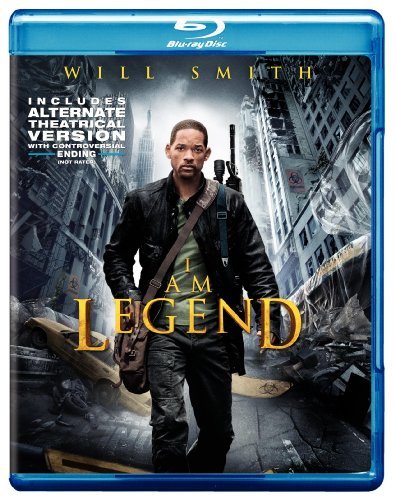
And as mentioned before, there’s not much in terms of HD news or gaming news, other than the fact that I picked up a few bargains in your American Black Friday Blu-ray sales, some of the bargains are still available as I type (see here for links). My impression of this year’s Black Friday sales, from Australia and looking at Amazon, is that it seemed a bit subdued. There were some good bargains, but nothing that screamed “must-have”, although the focus on Blu-ray is much more intense than it was last year. All of this should have an affect on Blu-ray sales, and I can see one of these weeks Blu-ray breaking the 20% market share barrier thanks to one of the hit releases and sales. Does this mean Blu-ray is now mainstream? It’s hard to define just what “mainstream” means, but I think Blu-ray is definitely no longer in the domain of early adopters and home theater enthusiasts, although it is still some way away from the same kind of mainstream popularity that DVDs enjoy.

See you next week.

Weekly News Roundup (22 November 2009)

Sunday, November 22nd, 2009

Just a reminder that our Womble EasyDVD competition is still open for entries. Since the competition was posted, Womble has actually released a new version of their MPEG Video Wizard DVD software, and the first prize of this competition include this latest version, which has basically combined the features of all of Womble’s previous software titles (not including EasyDVD, of course) into the same package (so no more “DVD-less” version of MVW, and MPEG2VCR). Not a huge news week, but there were some follow-ups to previous news stories.

Copyright

First up in copyright news, a recent trend has seen companies take advantage of the one sided copyright laws around the world to make money from “stopping” piracy. It’s actually not so much stopping, as that wouldn’t be good for business, but rather, using legal threats to get people to cough up. I posted about companies like DigiProtect and DigiRights Solutions doing exactly this sort of thing, and refining their business down to a fine art in terms of who to threaten, based on their ability and willingness to pay up, for example.

The funny thing was that most of the information I found in regards to these organisations were from interviews and presentations that people from these companies gave, quite openly. Obviously, there are still large parts of what they do that these companies would still rather keep secret. But secrets have a way to become well known facts thanks to the Internet, and now we have leaked documents showing us the inner workings of such an operation. One thing revealed was that, due to bad publicity, one law firm has already pulled out of this business, but it appears most of their staff went to a new law firm that obviously didn’t mind the bad publicity. Another thing revealed is the strategy to sue people who downloaded pirated porn, as the extra embarrassment and the instinct for most people to want to make the issue go away, whether they downloaded the porno or not, becomes extra incentive for people to pay the required amount. From everything that’s been released, leaked or public confessions, it’s clear that these companies prey on people’s fears of lawsuits, or public embarrassment, in order to maximize profit. But if these companies are acting within the law, then there’s nothing legally wrong with what they’re doing, even if it feels like bullying. It’s the laws themselves that allow for these things to happen, and it will continue to happen as long as these laws are biased towards one side.

And so the bullying goes on. Michael Fricklas, general cousel at Viacom,  has even admitted that suing downloaders is bullying. With the resources available to mega corporations like Viacom, suing individuals is the kind of one sided fight that really isn’t a fight at all. “Terrorism”, is what Mr. Fricklas called it. In the same candid discussion to a bunch of students at Yale, Mr. Fricklas also attacked DRM, at least the older kinds, as “really bad”, preferring fair use as the way forward. It’s all very nice to hear, but this is from the same company that is suing YouTube for people who upload videos that help to promote Viacom’s content, so you’d have to take all of this with a grain of salt. Obviously suing YouTube/Google is a bit more challenging and less like bullying than suing an individual, but YouTube now allows for “fair use” with its profit sharing programs, so why hasn’t Viacom dropped their lawsuit?

Verizon is the latest ISP to bow down to RIAA demands to pass on infringement notices

Verizon is the latest ISP to bow down to RIAA demands to pass on infringement notices

Speaking of lawsuits, the Australian AFACT vs iiNet trial continues, with closing statements by iiNet being made over last week. For those that haven’t been keeping track, the lawsuit centers around movie studios wanting to make ISPs responsible for their customer’s downloads, unless the ISPs act as copyright cops for the studios. The week 5 update thread for the trial is here. iiNet is at least making a stand, unlike ISPs in the US that have already bowed to the demands of the RIAA to pass on infringement notices to customers, the latest major ISP to do so is Verizon. The notices are designed to scare people enough so they stop downloading, but as such, Verizon and co have no plans to pass on customer details to the RIAA, and the RIAA has not indicated that they wish to pursue individual in court, something they’ve already said they would stop doing. So just how much fear these infringement notices will instill is debatable, unless the RIAA is really naive enough to think that some of the downloaders are actual unaware that what they’re doing is illegal, and that these notices serve as a timely reminder.

Oh, and remember that Lily Allen story from a couple of months ago where the singer publicly came out to support the industry’s attempts at copyright clampdown, and was subsequently, how would you kids say it, “pwned” in the process when it was revealed that she distributed pirated songs herself on her website? Anyway, the latest pearl of wisdom from Miss Allen is that she is absolutely fine with people downloading her songs illegally, as long as they burn the songs to CDs and then sell them on. Yes, that’s right, it’s not a typo. You see, if you sell these illegally obtained songs, and thus commit real piracy by profiting from it, you are actually just giving value to these songs, and so that’s alright.

The latest update in The Pirate Bay saga (I still have no idea whether they’ve been sold or not) is that the tracker is now officially dead and won’t be rising again. But thanks to the active pursuit of the RIAA and MPAA, new BitTorrent technology means that trackers are no longer really necessary, which means the decentralization of BitTorrent is approaching completion. When it does, BitTorrenting will be practically unstoppable. And with Magnet links, you don’t even need .torrent files anymore, so really, sites like The Pirate Bay can now only need to provide a link consisting of what appears to be a random set of letters and numbers, and really, can they be sued for that?

High Definition

In HD news, Warner has a new offer that allows you to trade in your old DVDs for Blu-ray movies. You don’t get the Blu-ray movies for free, but they are discounted. It’s a nice idea in theory, but only a small range of less than spectacular Blu-ray movies are available, and the discounts don’t add up to much if you’re already getting them cheaply from Amazon.

Blu-ray + DVD + Digital Copy is becoming a very popular combination

Blu-ray + DVD + Digital Copy is becoming a very popular combination

It appears that the studio’s new weapon to promote Blu-ray is to try and kill of DVDs as soon as possible. The trade in offer is one thing, but Universal’s plans to introduce Blu-ray/DVD combos, just like Disney, will probably do more wean people off DVDs especially if their plan to discontinue the DVD only versions of these movies is true. It’s very likely though that these combos would come at a higher price than their DVD only cousins, and I’m not sure if that actually helps to put people onto Blu-ray or to put them onto piracy. It doesn’t really seem fair to “tax” DVD owners for the sake of promoting Blu-ray.

And following YouTube’s announcement that 1080p video is now available, and it is (hover your mouse over the HD icon and select between 720p and 1080p), there’s more good news on this front. I talked about the performance implications, in that 50% of an Intel C2D E8500 is going to be kept busy decoding the 1080p video, but the good news is that now both Nvidia and ATI will offer GPU acceleration support for Flash video, which should see that 50% fall below 10%. All ATI Radeon HD 4000 series cards and the new 5700 and 5800 (and newer) cards will be supported, as well as most Nvidia cards since the 8000 series. While we’re not talking about Blu-ray quality video, but it really is a significant step towards digital delivery of HD content. Once bandwidth becomes cheaper and connection speeds improve, there doesn’t seem to be any reason why Blu-ray quality video can’t be delivered online.

There’s a bunch of PS3 news, some of it HD related, but I’ll post them in the gaming section …

Gaming

And lastly in gaming, PS3 firmware 3.10 has been released. This firmware adds Facebook support, which also came to the Xbox 360. But what’s a PS3 firmware without a chorus of complains, and this one seems to be particularly nasty from reading posts on the PS3 boards. I haven’t updated my firmware since 2.43, and don’t plan to unless some must have Blu-ray update arrives, or that Sony finally owns up to the problem and come up with some sort of solution that everyone is satisfied with, because I’m not paying $250 to repair it if things goes badly, which I suspect it will.

If the GeForce 3D kit is any indication, 3D Blu-ray will have quite a few hardware requirements

If the GeForce 3D kit is any indication, 3D Blu-ray will have quite a few hardware requirements

One of the “must have Blu-ray updates” might be for the 3D feature, which Sony says that PS3s will be able to support via a “simple” firmware update. Of course, you’ll still need a bunch of other equipment before you can have a 3D home theater experience, so it might be something to look out for if you’re buying a new TV (look for specific support for 3D, or failing that, at least 120 Hz refresh).

Another new to Blu-ray feature is a new Digital Copy feature Sony plans to introduce that copies the movie straight off the Blu-ray disc to your PS3 and then onto your PSP. The previous method required a PC, with a special DVD-ROM and unlock codes. Still, all these are just temporary solutions until Managed Copy arrives for Blu-ray on December 4th. There’s some confusion as to what December 4th means for Managed Copy, but the summary is that after this date, all new Blu-ray releases will have to support Managed Copy. What this means is a bit vague at the moment since the hardware (and software) for MC is not set to arrive until next year, but suffice to say that any movie released after December 4th should allow you to make a managed copy from them eventually. It is mandatory, meaning all discs must support it, and it took a fight to get MC being made as a mandatory requirement, so at least that’s some of the confusion out of the way. The news post for all three of these PS3 stories, none of which has much to do with gaming mind, can be found here.

And that was the week that was. Have a nice one.