Archive for the ‘Copyright’ Category

Weekly News Roundup (17 June 2012)

Sunday, June 17th, 2012

Hello to you on this a rainy, windy and cold Sunday here in Melbourne, Australia. How’s the week been treating you? Not too badly I hope. Another rather quiet news week, but maybe I was just too busy to pay attention. A little bit from column A, a little bit from column B, I suspect. Well, whatever news I did find, they were quite interesting, so let’s get started.

Copyright

The fallout (not to be confused with another, in my opinion quite fantastic, gaming franchise) from the Diablo 3 DRM choice continues this week, as videos emerged showing an item duplication exploit in Diablo 3 – the kind of thing that always-on DRM, at least according to Blizzard, was supposed to stop.

The video, originating from South Korea, showed a gamer doing the very thing that Blizzard was afraid of – duping items. The exploit was so damaging that Blizzard had to shut off South Korean game servers while a fix was rolled out. Thousands of gamers were also banned for using this and other cheating methods. Duplication hacks can be extremely damaging for Blizzard, while profitable for hackers – Diablo 3 features a real money Auction House where users can sell their hard-earned or not so hard-earned virtual in-game items, and as a result, item duping in D3 becomes just as bad as counterfeit money is in the real economy.
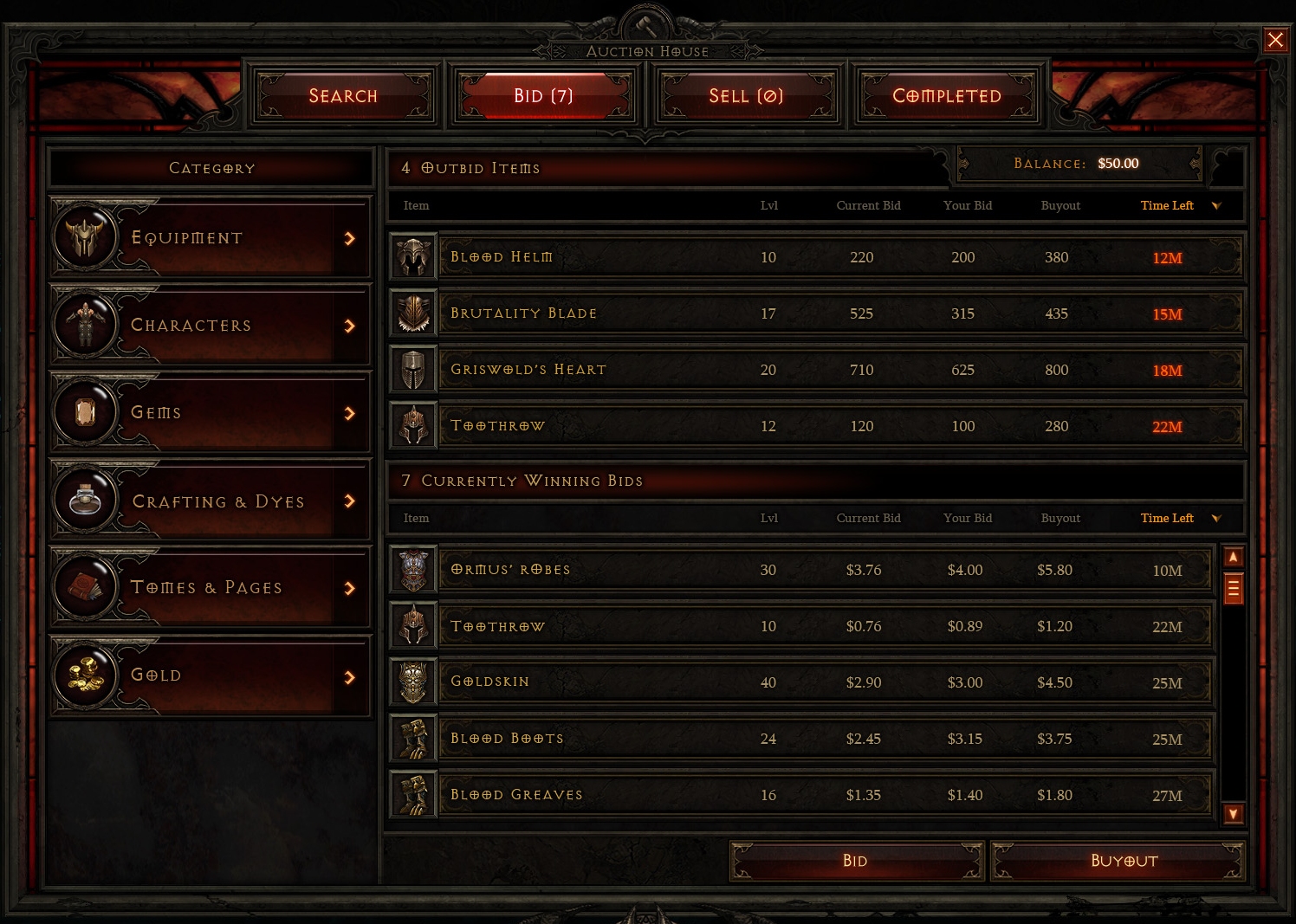
Diablo 3 Auction House

Real money trading of in-game items has made Diablo 3 a tempting target for hackers and scammers

So despite the harsh “always-on” DRM that Blizzard chose to employ for Diablo 3, which the company itself says wasn’t for anti-piracy but for protection against cheaters and hackers, it has not really lived up to expectations. If anything, the inclusion of real money transactions, which necessitates the use of an always-on DRM/access control system, has provided hackers with extra incentive to find exploits and loopholes that they can profit from. For us gamers though, it meant a frustrating (and still frustrating) gaming experience, although some have already started making good money from the Auction House.

And I’m still not convinced that Blizzard couldn’t have created an offline mode for the game. By implementing some kind of local virtual server that the game can connect to, this could provide emulation of an online experience, without the need to actually be online all the time. This may very well be the tact that the piracy community will use to crack the game, so we’ll have to wait and see if they can help out D3 gamers by creating an unofficial offline mode.

But some in the gaming industry are already pointing at Diablo 3’s fantastic sales figures and using that as justification for always-on DRM – at the other end of the spectrum, DRM-free gaming is also booming. And not only that, the “pay what you want” pricing model is also providing to be more than effective too. The latest Humble Indie Bundle (the 5th edition, for those keeping count) has managed to sell within a cat’s whisker of 600,000 bundles, raking in over $5 million in the process. Despite the basic bundle being available for as low as a penny, on average, gamers chose to pay $8.53 for the 4 game (plus 4 bonus games) bundle, proving that, if the price is right, people will pay. More remarkable is the fact that former buyers of the bundle, Steam sale addicts, and indie gaming enthusiasts would mostly already have most of the games on offer (I had 5 of the 8), so even from a shrinking sales pool, this latest bundle has managed to beat all expectations, and has actually earned twice as much as the last bundle.

The Humble Indie Bundle V

The Humble Indie Bundle V has generated more than $5 million in sales, from nearly 600,000 bundles sold

While I’m sure Diablo 3 raked in a lot more money than all the Humble Indie Bundles combined (and then some), then again, none of the games in the Humble bundle took 10 years to materialise either. And all were made with considerably less budget than Blizzard’s latest hit. At the very least, the Humble bundles prove that DRM-free can work, and so can the pay what you want model, even with the availability of both free pirated, and free (well, almost free – a penny) legal ways to get the games.

For those still holding out hope for a way to retrieve their legally uploaded files from Megaupload, especially after last week’s news that the MPAA is not totally against the idea, the news doesn’t look very promising. Responding to a lawsuit filed by an affected Megaupload user, US government prosecutors says that while they were responsible for shutting down Megaupload, they’re no longer responsible for the servers that now holds user files. Copies of the important data have already been made by the government, and as a result, they no longer have “possession” of the original data and can’t grant or deny access to them. It seems the data is now back in the possession of Megaupload’s former web host, Carpathia – data that is costing the company $9,000 a day to host. With the government also against unfreezing Megaupload assets to allow the company to pay Carpathia to keep the data alive (data that could also help Megaupload’s case), the most likely outcome, unless the court intervenes, will see the data completely wiped, and any hope of recovery gone. Before this happens, the government says users can pay Carpathia for access, and then acquire the services of forensic experts (at further cost) to retrieve any data – an unrealistic proposal due to the thousands of dollars this would require. The other “alternative”, the government says, is for users to sue both Carpathia and Megaupload for breach of contract relating to the storage of their files, again, also very unrealistic.

In other words, the government is washing their hands of any responsibility in the matter. They closed down Megaupload and then decide to not give two craps about the resulting collateral damage. But as screwed up as this is, it’s also an important lesson for those that are relying on the “cloud” to store their digital assets. Cloud storage will usually prevent data loss as a result of hardware or software failure, but it won’t stop things like user error (“hmm, that big red button that says “DELETE ALL” looks tempting – I wonder what it does …”), hacked or banned accounts, or as in Megaupload’s case, catastrophic failure. So it’s best to have copies of your files both in online *and* offline locations, or at the very least, at two different cloud providers.

High Definition

Is Blu-ray on the way out? Anthony Wood thinks so. But then again, he’s the CEO of the company that makes Roku, a popular little streaming set-top box, and both Blu-ray, the disc, and Blu-ray players are competitors.

Roku 2 XS

Roku currently provides a level of service that Blu-ray players and Smart TVs cannot provide with their in-built streaming apps, according to Roku’s CEO

So will Blu-ray be obsolete in four year’s time, as Wood predicts? If in four year’s time, most homes can access the Internet at speeds far greater than today’s average, then yes, this could be a possibility. If not, then the most efficient way to deliver the GBs of data needed for each HD movie (and if 4Kx2K become more common, the tens of GBs could grow to hundreds of GBs), might still be found on some kind of physical media, even if isn’t Blu-ray.

Whatever happens though. I for one hopes that ownership, and preferably ownership of something physical, is still reality 4 or 10 years down the track. I’m a huge supporter of cloud based streaming and all that, but I also love being able to hold something in my hands, or display something in my TV room, and I think a lot of movie lovers are like me in this regard.

Gaming

In gaming news, the May NPD results have been released, but once again, only Microsoft took the risk of releasing hardware figures. That’s probably because they won the month again with 40% of the home based console market share, but only 160,000 units sold. That’s a 40% decline compared to the same month last year, and you can see why many in the industry are so worried (and why “some” have stopped releasing detailed hardware figures).

With the next gen consoles from Microsoft and Sony not arriving until 2013 (got a news story on the next Xbox that was too late for publishing for this WNR, so I’ll cover it early next week), and the Wii U only coming at the end of the year, things are unlikely to pick up until then.

I’m still optimistically (but perhaps also foolishly) hoping that someone will leak the hardware data for the Wii or the PS3 in the next few days, and so the NPD monthly feature can resume, but it’s not looking good at the moment. If it doesn’t happen, I’ll get into more details about the May NPD in the next WNR.

Nothing much left to say in this WNR, so let’s call it a day. See you next week.
Weekly News Roundup (10 June 2012)

Monday, June 11th, 2012

Hello to you on this fine (or maybe not so fine) Sunday (may very well be Monday already, depending on how late this WNR gets sent out). A fairly quiet news week again, but like always, we shall persevere. My copy of Diablo III actually did arrive early this week, but I haven’t had much time to play it yet. The one time I did, the server had to go down for maintenance, which meant that my play session was not only cut short, but I also lost unsaved progress. The fact that a server maintenance could stop me playing the single player game doesn’t give me much confidence that, say 5 years from now, people will still be able to play this game without interruption (or even be able to play it at all). If game publishers insist on using “always-on” DRM, the least they could do is to guarantee the number of years that I’ll be able to play the game I purchased – 10 years would be ideal, but I suspect that this would cost quite a lot, and a lot of planning and risk management would be required to allow for this  (eg. obsolete server software/hardware, and how this affects compatibility with the game server software).

Copyright

Once again, we have mainly copyright news. That may sound strange considering E3 and everything, but really, I just couldn’t get that excited over this year’s event, since we already know much about the Wii U, and neither Sony nor Microsoft stepped up to the plate with an official announcement of their next consoles (although it hasn’t stopped the rumours from flying around).

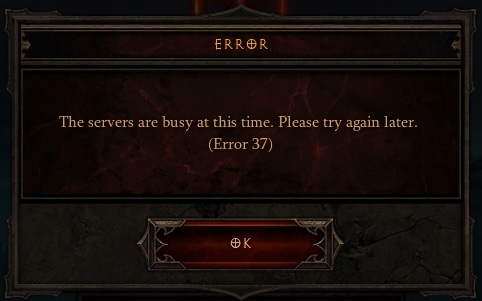
Diablo 3 - Error 37

Diablo 3's dreaded Error 37 has gotten the South Korean branch of Blizzard into trouble with the government

Anyway, copyright stuff. No, wait, back to the game stuff for a sec. Continuing the Diablo 3 theme from the intro, and the outro from last week’s WNR, Blizzard’s South Korean offices were raided by the country’s Fair Trade Commission (FTC) over issues related with Diablo 3’s DRM. Just like gamers in other parts of the world, South Korean gamers were also frustrated by the game’s launch day fiasco, and many went and sought a refund for the game. But the game’s terms and conditions apparently does not allow for refunds, and this is when gamers got the FTC involved. While this actual story is less about the DRM, and more about Blizzard’s refund policy, the issue of whether DRM problems can be counted as a “product fault” will be examined by the investigation.

As I said in the intro, there ought to be some guarantees for games that require server based DRM. An uptime guarantee, say 99% in any given month (which isn’t as impressive as it sounds – 1% of a month is about 7 hours, and that’s still quite a long outage), and a guarantee that the game will be supported for how ever long the game is expected to be played (if the next Diablo sequel is as long coming as this one, then 10 years ought to be just about right). If publishers want to make games into services, rather than products, then it’s reasonable for gamers to expect a certain level of quality of service. I feel though that the $50 gamers pay is no way near enough money to cover long term server support (hence why games like World of Warcraft have monthly fees), so I don’t expect games like Diablo 3 to be playable in 5 year’s time, unless the in-game purchases can keep the servers running. And in the same way, game publishers should understand that this kind of DRM can be very expensive over the long term, and they need to consider whether it’s worth it financially or not.

Last week, the RIAA accused Google of not doing enough on DMCA take-downs, and instead, want the search engine to perma-ban sites like The Pirate Bay, as opposed to having to constantly submit DMCA notices. This week, The Pirate Bay responded by welcoming any blanket bans of torrent indexers, saying that this would actually boost traffic numbers for the world’s most popular indexer. The reasoning is that, as the biggest brand in torrents, TPB would suffer much less from the removal of Google referrals (which they say, at best, only accounts for 10% of their traffic) compared to other torrent sites. Whereas Google often still redirects people to other less well known torrent sites, if Google stopped showing torrent results, this could mean more and more people would simply bypass Google altogether and log straight on to TPB. What’s bad for other indexer (and in a way, Google as well), will ultimately be good for The Pirate Bay, since you have to pretty naive to think that just because Google can’t provide you with torrent results, that people would still stop pirating.

And TPB’s IP address war of attrition continues. With last week’s newly released IP address just added to the banned list, a new IP address has been released – 194.71.107.80 becomes 194.71.107.81 (the old IP address will still continue to work in countries without the censorship). So round 2 begins, and I wonder how many rounds BREIN, the Dutch anti-piracy agency, will last before they start whining again. The TPB has also jumped on the IPv6 bandwagon, meaning those that have migrated over to the new IP address system will have a new way to access TPB, one that’s not blocked (so far) by any filters (as most failed to take into account IPv6). Plus, you can use one of the many IPv6 to IPv4 tunnel services as a pseudo-proxy to bypass the filter too, for example, thepiratebay.se.ipv4.sixxs.org. Just goes to show how pointless these multi-million dollar filtering implementations are, but if they want to play the IP merry go around in the IPv6 domain, then I’m sure TPB will gladly oblige too.

Those caught in the crossfires of the US government’s war on Megaupload, that is those that had used the cloud hosting service legally, may yet get back access to their files, after the MPAA signalled it had no general objections against the idea. However, it did have some specific objections, in that they don’t want anyone involved with Megaupload to be handling any system for (legal) file retrievals, and they also want to ensure only legal content can be downloaded. While probably reasonable requests, how practical meeting them would be is a different question altogether. I can’t see the required time, effort and money being spent to build a system which would allow for this, and the MPAA rightly says that even Megaupload’s user policy doesn’t guarantee continued access to stored files. The lesson here is that while the cloud is a great idea, and it’s made things very convenient, backups stored in multiple locations, ideally offline too, is still as important as ever.

Lane Pryce - Mad Men

Legal options for hit show like Mad Men are very limited here in Australia - and if I was feeling mean, I could post another picture of Lane Pryce that would be a huge spoiler for those who haven't seen the latest episode

And finally, an Australian online survey has found that 1 in 10 have stopped pirating film and TV content, and most say the availability of more legal options was one of the reasons they’ve stopped. There were also some other interesting findings. Only 10% of those surveyed downloaded pirated TV shows and movies on a weekly basis, and out of this group, 72% say they’re doing it because there’s simply no legal alternative available. Being in Australia, this is a fairly accurate reflection of the legal scene, especially for TV based content, and for hit shows like Game of Thrones or Mad Men. Someone here (or there, in the US) is making deals (and profiting greatly from it) that’s ensuring we only get time delayed releases. That may have worked in the past, but in this day and age, even a 24 hour delay might as well be an eternity. Both considering how quickly the same content is available via the illegal channels, as well as the spoiler-ridden and at the same time, ubiquitous, nature of the Internet itself.

Or “there’s no legal option” could simply be an excuse – a convenient one because it’s mostly true, but still believable to use when it isn’t (for example when the content is available on iTunes at extortionate prices, although you could argue about the viability of such an option). I think anti-piracy really has to be about getting rid of these excuses first, by providing legal options (at a price that makes it a viable option), and once you make piracy simply a moral decision and one that’s solely based on the fact that the content is free, then at the very least, the rights holders would have more justification to implement tougher piracy prevention methods (being careful not to create new excuses in the process).

And so we come to the end of another quite short (and late) WNR. Can’t be helped I’m afraid. Well, it can, but that would require too much work (or just work), so no, it can’t be helped. See you next week.

Weekly News Roundup (3 June 2012)

Sunday, June 3rd, 2012

How are you doing on this fine Sunday? Hope you’ve had a good week, and again, apologies for the slight lateness of this WNR.

Back in March, I wrote about an incident involving DMCA notices filed against two URLs hosted on this website. In the last few days, I’ve been contacted by Mr. Getman from Guardlex, and he was kind enough to take time and explain just what had gone wrong. I will post an addendum to the original article in due time with more details, but as I tried to explain in the original article (perhaps not successfully, and also fueled by strong emotions at that time), I don’t really blame Guardlex, certainly not Cyberlink, and not even Google. If anything, my beef is with the bigger issues of how DMCA take-downs can be misused, in my case innocently, but there’s also plenty of evidence to suggest that less scrupulous individuals are certainly taking advantage. It’s an imperfect system, and Cyberlink, Guardlex and Google all have to work within this imperfect system. As a content creator though, I also know that it is sometimes the only weapon available. Once I write the addendum, I will also take a brief look at some possible ways the DMCA take-down system can be improved to avoid this kind of errors.

As for news, it was a pretty light week, and I struggled pretty badly to find items of interest. The US Memorial weekend may have had something to do with it.

Copyright

We really only have copyright news this week, so let’s get started. With copyright groups still celebrating their “victory” against The Pirate Bay, now that many European countries have decided to allow for the censorship of the BitTorrent indexer, The Pirate Bay has signaled it is ready to adopt a new strategy.

The Pirate Bay

The Pirate Bay is willing to use 100s of IP addresses to keep anti-piracy agencies busy trying to force ISPs to block these new addresses

When TPB released a new IP address that redirects to a proxy friendlier version of the website, what they may not have realised was how difficult it would be for copyright groups to have this new IP address added to the censorship list. ISPs, already not too happy at having to implement the filter in the first place, rejected Dutch anti-piracy group BREIN’s attempt to get the new IP address added without the relevant court order, and forced the group to go through the full legal process to have it done. What then became apparent was that every time TPB releases a new IP address, it could take days for the IP to be banned – BREIN would have to seek a court order to do it every time, and in the meantime, there’s the added bonus that the IP address temporarily allows access to the banned website without the need for a proxy. The legal process to add a new IP address to the ban list will take time and money for BREIN, not to mention keeping the court busy at their annoyance, while on the other side, it may only take minutes to apply the new IP address to TPB. And so with nothing to lose, TPB has signaled they’re ready to continue adding IP addresses, even if it means adding hundreds or even more addresses.

This farce may very well play over 100 times, or however many IP addresses The Pirate Bay is able to obtain. Meanwhile, the futile nature of website censorship is on full show, and it might just annoy the courts enough to make them realise how ill thought-out this plan was in the first place. And all the time while BREIN and other groups play the whack-a-mole game, most people are still easily able to access TPB via the steadily growing list of proxy servers that have been set up since the ban.

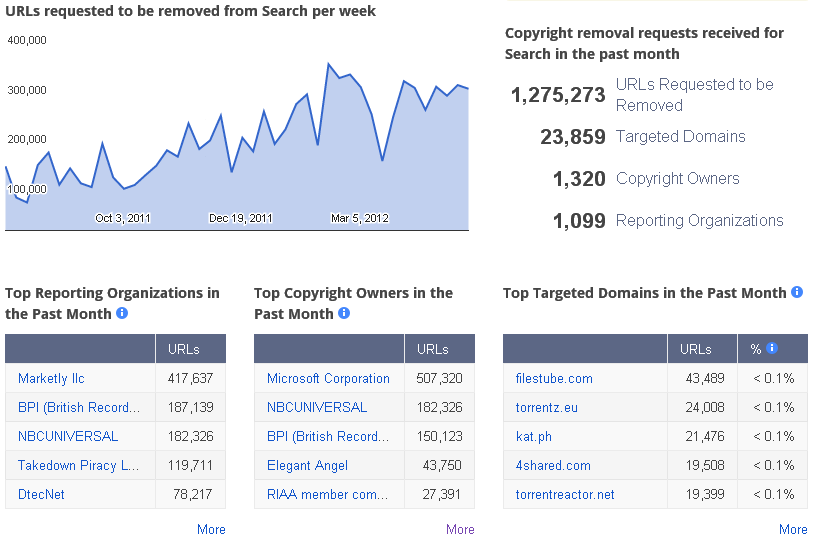
Speaking of whack-a-mole, last week I talked about Google’s version of the game with its DMCA take-downs, but despite pulling down more than 1.3 million links every month, the RIAA still says Google isn’t doing enough. In fact, the recording industry’s copyright lobby says that Google has been restricting the number of notices they’ve been able to send, an allegation that Google denies. Considering the fact that Microsoft did manage to submit almost 10 times as many notices as the RIAA, it suggests that the RIAA’s assertions may not be entirely true.

But what the RIAA really want is to do the absolutely minimum required, and getting Google to do the rest. The RIAA admits that removing one page at a time is often a pointless exercise, as the exact same page might pop up on another link almost instantly. So their solution is for Google to seek and destroy any other links that are the same or similar enough and continue to do so (at Google’s expense, of course), so that the RIAA won’t need to re-send notices. The obvious problem with this approach, other than the fact that the DMCA doesn’t require Google to do it, is that it could be prone to false positives. And as Google are the ones removing the links, they may end up being liable for mistaken removals. The way I look at it, there’s no easy technical solution to the piracy problem – people are way too smart to let filters and automated removal tools to stop them from sharing pirated content. The solution is to make piracy irrelevant, by presenting a much better legal product, at a price that makes piracy more trouble than its worth. And the only ones that can come up with such a solution are the members of the RIAA (and members of other similar groups).

MegaUpload Seized

MegaUpload is hoping the judge agrees with their view that the US government has no jurisdiction over the Hong Kong based company

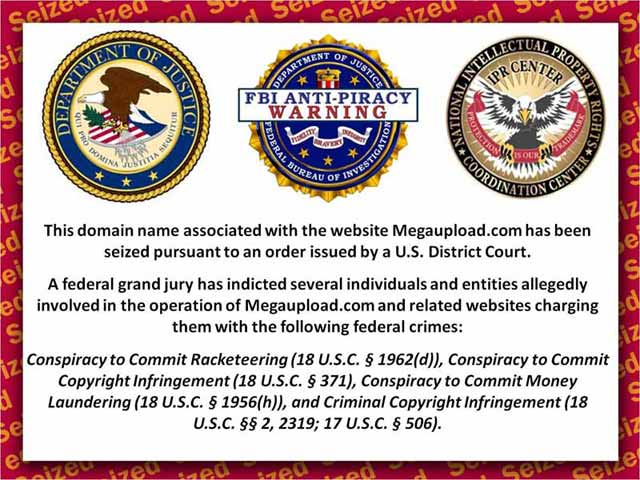
An update on the MegaUpload case. The lawyers for MegaUpload have asked for the entire case to be thrown out of court, due to what they say are jurisdictional issues. With the Hong Kong based file hosting company not even having an office in the US, MegaUpload’s defence teams says the government has no right to pursue the case at all against the company. But MegaUpload did have servers located within the United States, and its domain name is regulated by the same country, so the US government clearly believes that, while MegaUpload is a foreign company, the actual “criminal acts” were performed within the United States. I also doubt the government would go to so much trouble without first eliminating any jurisdictional issues. MegaUpload’s best hope lies in ensuring the government cannot prove that there was criminal intent behind the way they chose to operate the website, and hope the case goes to civil court instead.

Website filters, DMCA notices, lawsuits … none of them may even matter that much soon, as the researchers behind the decentralised BitTorrent client Triber has promised to add anonymous sharing in the next major version of the tool. I had hoped that this would be the next evolution of BitTorrent clients when I first wrote about Tribler back in February, but it was obvious to me that, thanks to mass lawsuits and graduated response that targeted public nature of BitTorrent sharing, anonymity would be the next major update to the protocol. The best thing about the promised Tribler update is that not only may it allow for un-monitored sharing, the same technique of adding a new proxy layer to the communication protocol may also bring in speed and efficiency improvements. So we might then have a totally decentralised, free and open-source BitTorrent client that doesn’t require a BitTorrent indexer (like The Pirate Bay), and can allow users to share files anonymously at faster speeds than ever before. Is this game over for BitTorrent anti-piracy? Probably not, but it seems headed that way.

Nothing much else to add to this WNR really, although a story came a bit too late for this edition involving a raid of Blizzard offices in South Korea, related to the botched DRM implementation that has left many gamers in the country unsatisfied and unable to seek a refund. I’m unsatisfied, mostly with myself, for not pre-ordering the game and now it’s sold out everywhere. My backorder doesn’t even have an ETA at the moment. Hopefully by the time I actually get the game, the server issues would have been resolved. See you next week.

Weekly News Roundup (27 May 2012)

Sunday, May 27th, 2012

Welcome to another WNR. Hope you’ve had a good week. Nothing else I really wanted to add in the intro, except I’ve been going through the backlog of Blu-ray titles I’ve purchased, but haven’t yet watched. Managed to do both Predator (yes, the edition with the bad transfer that has all the “shiny” skin) and Predator 2 in preparation for Predators (bought the three in a boxset), The Shining, Any Given Sunday, Contagion, and a bit of Star Wars Episode IV (going to watch them in the order 4, 5, 1, 2, 3, 6, as to avoid “spoilers”). An eclectic selection of flicks to be fair, but that’s the way I like it.

Better get the WNR out of the way so I’ll have time to randomly choose another movie to watch tonight.

Copyright

Starting with copyright news, the US Supreme Court has rejected university student and world’s second most famous download pirate Joel Tenenbaum a chance for his case to be heard.

US Supreme Court Building

The US Supreme Court is refusing to hear Joel Tenenbaum's case, but the damages rewarded against the Boston University student will most likely decrease anyway (photo credit: Mark Fischer @ Flickr, Creative Commons)

Tenenbaum wanted his day in highest court of the land to contest the awarding of what he, his lawyers, and even the original trial judge called an “unconstitutional” amount of damages. $675,000 for 30 songs, to be exact. It isn’t exactly a defeat though, because chances are that once the case gets back to the lower courts, the damages will still be reduced, but just not on constitutional grounds. Rather than unconstitutional, $22,500 per song may simply be unjustified for this kind of personal piracy (as the statutory figures being used in these cases were derived on the basis that these sorts of cases would normally be about commercial piracy – nobody had guessed that the RIAA would start suing single mothers and students). And you can tell these figures are unjustified because when you apply it to the RIAA’s own piracy estimates, it would most likely create an amount that exceeds all money in existence (remember when the RIAA’s calculations led to the damages in the LimeWire case to exceed $75 trillion? And that was just for one download service).

Since the original case, the RIAA has distanced itself from suing individuals, mostly because of the bad publicity, and also the fact that it deterred nobody from doing what they’ve always been doing. The MPAA is also going through its own “quiet contemplation” period after the ill-planned SOPA debacle, and MPAA boss Chris Dodd has been trying to soften the image of the lobby group ever since (most likely paving the way for another round of SOPA, or something like it, next year). The latest attempt has Dodd distancing the trade group from labelling video pirates as “thieves”, an analogy that doesn’t stack up no matter how you look at it. If anti-piracy is about education, then labelling most of your students as criminals before the first class even starts is probably a bad idea. This news story inspired me to find and post some classic anti-piracy ad campaigns from days gone by as part of our new and semi-regular “Picture of the Week” feature. The one that labels downloaders as supporters of terrorism will go down as symbolic of our post 9/11 world, but most of them assumes that people are only pirating because they don’t know it’s illegal. I don’t think that’s the case really, I think most people who pirate knows it isn’t 100% kosher (even small children know that getting something for free without paying for it is kind of sketchy), but simply don’t care or find some way to justify it (DRM, high prices, crappy content – Hollywood and the records industry have been really good at providing people with excuses not to pay for their stuff).

The rest of the news stories, all three of them, have to do with three ways being used to combat piracy. Following up on last week’s story about a new anti-BitTorrent technology called Pirate Pay, the Polish arm of security researchers CERT this week identified a new disturbing trend of BitTorrent poisoning that appears to be related to the Russian based anti-piracy technology. They theorize that these attacks, which could be illegal under existing cybersecurity laws, might be related to ongoing anti-piracy efforts, mainly because the target of these attacks have been the very Russian films that Pirate Pay is said to already have had success “protecting”. The legal aspect is certainly interesting and needs further examination I think. Two wrongs don’t make a right, so employing hacking and DDoS techniques for piracy protection doesn’t seem justified to me (and let’s not forget, mere allegations of which started the whole “Anonymous vs the world” war of last year). Still, you would expect that these sorts  of technological solution would only force more resilient sharing protocols to be developed in the future, and this arms race will only end up making piracy even harder to stop.

Google DMCA Takedown Stats

So many links taken down, but so many still remain, and more are added every day - is any of it worth the effort?

If you can’t stop the BitTorrent downloads, then another thing to try would be to make finding torrents a bit harder. While those skilled at these kind of things have go-to websites, many others may still rely on good old Google to help them locate what they want. And with Google on a mission to be more transparent, they’ve recently released stats on the DMCA take-down requests they process, and it makes some interesting reading. I’ll leave you to read the whole article, as well as browse the stats, to get the full detail, but the big picture is that Google process a sh*t load of DMCA requests per month, and you may be surprised at who is the most active in this area. I would have expected the movie and TV industries to be spearheading this pointless DMCA crusade, but it’s actually Microsoft, with almost half of the links removed in the last month belonging to the Redmond based firm. But even with over 1.2 million take-downs happening every month, it feels like all of this is just a drop in the ocean compared to what’s actually needed to “wipe out” pirated content links on Google. And with hundreds of thousands, maybe even millions, probably spent every month on filing and processing notices, you can’t really say it has worked very well. I mean, anyone who wants to pirate Microsoft software can still do so easily, and the same with downloading the latest movies, music and games. This whack-a-mole approach clearly isn’t working.

What’s also not working is DRM, the very thing that should have prevented the pirated download from being uploaded in the first place. GOG.com, the purveyors of DRM-free goodies, obvious has a bias when it comes to all things DRM related, but it was very interesting to read about the DRM experience of releasing The Witcher 2 by GOG’s parent company, CD Projekt RED. The Witcher 2 was one of those rare games that was released without DRM, but at the same time, a boxed version that feature SecuROM DRM was also available. So it was interesting to find that the most pirated version was actually the DRM’d version of the game, with the DRM-free and easily shared copy basically left alone. So far from DRM protecting games from piracy, it has somehow managed to encourage piracy.

The theory that the developers  of the game came up with was that because the piracy scene was all about bragging rights, there’s was no challenge to simply re-package a DRM free game and upload it. But the fact of the matter is that even with industry standard DRM in place, the game was pirated, 4.5 million times actually, so you’d have to question what exactly DRM does other than to inconvenience paying customers. And it’s good to hear that CD Projekt RED aren’t worried about the massive number of pirated downloads in any case, because they know it has nothing to do with lost sales. In reality, it has more to do with people demoing the game, and some of those people will buy the game. Eventually.

So that’s three anti-piracy methods: stop the upload, stop the links to the download, and stop the download, and none of them proving effective so far at stopping anything. All the money and effort wasted on anti-piracy stuff would be better used to actually focus on creating quality content, and I bet that will have a greater effect on sales than anything else.

Well, that’s all I got for you this week. More next week!

Weekly News Roundup (20 May 2012)

Sunday, May 20th, 2012

Welcome to this slightly late edition of the WNR. Normally, I would link to the latest edition of the monthly NPD analysis here for your consumption, but as it turns out, neither Nintendo nor Sony decided to release hardware figures for the month. This means that there’s no NPD analysis for this month, an all too frequent occurrence lately. I’ll try to give you what I have in the gaming section.

Another fairly substantial news week, well in my opinion anyway, so let’s get started.

Copyright

In copyright news, let’s start with the MPAA’s response to the recent well publicized filtering of The Pirate Bay, happening as I type across Europe.

Unsurprisingly, the MPAA backed the recent court decisions around Europe to have The Pirate Bay blocked, and also rather unsurprisingly, spun this form of censorship as being ultimately good for the consumer. The reasoning, they say, is that by removing the threat of websites like The Pirate Bay, it gives the creative community more incentive to not only create, but also to “provide consumers with content when they want it”. Apparently, the mere fact that consumers want it is not enough of a reason for the “creative community” to cater to their needs, but you also need the right environment (although the real creative community, the artists and the like, usually have no power to decide how something is released, a decision that’s usually left to men in suits). This might at least be a point you could argue, but only if filtering actually works.

VHS Tape

If the MPAA had their way, this VHS tape would have never existed - photo by Jared C. Benedict, Creative Commons License

It’s also rich hearing it from the MPAA, considering their own history with innovations, to suggest that websites like The Pirate Bay are the only reason why they’ve not yet bothered to fulfil the needs of today’s consumers. Remember that these were the guys that were against the VCR, were for region control that barred consumers from getting content “when they want it”, and possibly still pretty angry at the whole Interweb thing. Apple, Netflix, Amazon have done much more to fulfil the consumer’s needs in recent times, and the interesting thing here is that all of these companies are tech companies, not film or music companies.

If anything, it’s BitTorrent and The Pirate Bay that has forced the industry to be more malleable to the demands of consumers. They can no longer afford to fool around with release windows (which are now far shorter than they were a decade ago), with region control (much less common on Blu-rays than compared to DVDs), with price control (note the ever decreasing price of discs), and they’re now forced to support services like Netflix, even if it means making less money. They’ve had to compete with the likes of The Pirate Bay out of necessity, but maybe they’re hoping censorship can allow them to turn back the clock, although  in my opinion – and if you’ll allow me to use another cliche – the genie may already be out of the bottle.

And does piracy really affect revenue that much? A new research paper suggests that pre-release piracy, the worst kind according to the MPAA and RIAA, may actually help sales. The research paper by North Carolina State University’s Robert Hammond suggests that pre-release piracy may actually help album sales. No theory is given as to why this may be the case, but I suspect it’s because piracy has become just another way to advertise. This follow another study a couple of months ago which found no correlation between pre-release movie piracy and US movie ticket sales. Both studies seems to go against industry sponsored studies, and the common believe that, piracy, especially pre-release piracy, is costing the industry billions. But the industry has never really looked at the reasons why people prefer pirated content, instead, choosing to believe it’s simply a case of freeloaders “stealing” because they’re freeloaders.

People pirate because they might not have the money to pursue the legal alternatives; or they never felt it was worth the money and want to try it out for free; or they might feel piracy is more accessible than the legal alternatives; or they just like to get stuff for free, even if they have the money for it. Two of the above scenarios will not lead to any extra revenue, no matter how many websites you block, while one of them is clearly the fault of the content owner. Only the last scenario, probably the least likely (that people who have loads of money are shunning the likes of  iTunes and Blu-rays in favour of manually loading MP3s onto iPhones, and watching blurry movies on their laptops), derives any benefit from blocking out piracy altogether, which in itself is a fantastically unrealistic proposition (although I suspect Hollywood execs are used to the fantastically unrealistic, considering they produce so much of the same crap for our consumption).

Speaking of unrealistic propositions, Microsoft is providing funding to a Russian company working on a way to block BitTorrent downloads. With no details being available about how it works, and little detail about how it actually works in the real world, there’s not much one can actually say about it. Most of these types of blocks works by seeding fake data into streams, and this is not new. BitTorrent is incredibly adept at filtering out the bad and leaving the good, so while it may temporarily make downloads a pain, it won’t do it forever. At the end of the day, BitTorrent is just another file transfer protocol, so the problem with going after the protocol is that you’ll have a new and even more robust protocols to deal with later down the track. If you really want to solve the problem of piracy, you’ve got to go back and examine the reasons why people choose to pirate in the first place (and take note of the people who don’t have a valid legal alternative, due to regional restrictions or release windows, or unrealistic pricing, and maybe offer them a choice).

Diablo 3 - Error 37

The dreaded Error 37 plagued Diablo III on launch day, as it becomes the highest profile DRM-fail in the history of gaming

A lot of people saw it coming, but as expected, the launch of Diablo III turned into a DRM-tastic disaster for Blizzard this week. One of the most anticipated games of the year (or decade), with one of the most controversial DRM decisions in regards to the single player campaign, and a near simultaneous global launch – a recipe for disaster, unless Blizzard go beyond the call of duty to provide adequate servers for all. Unfortunately, they did not.

Back when Blizzard first announced the controversial DRM, they were keen to stress that it wasn’t piracy related. Rather, it was suppose to be a sort of elaborate anti-cheating system, although that seemed confusing at the time for a game that was always largely a single player experience. But as we now know more about the game, and especially the built-in Auction House system, it’s much more clear why Blizzard went with the “always-on” DRM approach (and they were right, it’s not about piracy, or at least not all about it). In order to ensure the subscription-free Diablo III doesn’t cannibalize Blizzard’s major subscription based property, WoW, and to take the “black market” trade for in-game items in-house, the Auction House system was devised as the solution. But in order for the market place to remain rational, cheating, hacking and other unfair tactics had to be stopped – the always-on DRM is Blizzard’s solution to this. It’s a valid explanation as to why it’s present, and why it may be needed, but having a valid, non anti-piracy related explanation, won’t please diehard fans, who were none too pleased with the Auction House addition in the first place. But Diablo III is the only Diablo game in town, so to speak, so it’s not as if they have a choice if they want their fix of Diablo (disclaimer: I’ve purchased Diablo, even though I should know better).

But for games where it’s easy to make the decision not to bother buying, I’d caution publishers against taking gamers for granted in this way. DRM should either not exist, or it should be invisible, as otherwise, it becomes a liability.

High Definition

Does the world need another physical media based format, even if it is a royalty free, open standard, based one?

Well, whether you think one is needed or not, free software advocate (free as in freedom, not as in beer) Terry Hancock is going to make one. Dubbed “Lib-Ray”, it’s based on a MKV container, using the VP8 video codec, with an HTML5 based menu system, with everything stored on SD media. The name may sound similar, but this is definitely not a Blu-ray challenger (and not intended to be), although it could give independent filmmakers a nice standardized way to distribute a physical copy of their films, without having to pay the likes of Sony, Panasonic and Microsoft for the privilege. It’s not the worst idea in the world, although without real hardware support, the format will have a long and hard struggle for acceptance, even by the indie scene.

Gaming

Very much related to Blu-ray, but also very much a gaming related news item, was a former Microsoft boss’s take on the relative “success” of the Xbox 360, and why it actually happened.

Robbie Bach, the former president of Microsoft’s Entertainment & Devices Division, says that Sony’s ill planned and badly managed transition from the hugely successful PS2 (70% market share) to the expensive, delayed PS3 (30% market share) made it possible for the Xbox brand to triple its market share during the same period. The expense and delay had a lot to do with the inclusion of Blu-ray support for the PS3, although it did help Sony win the HD format wars.

Sony PlayStation 2

The PS2 dominated the video games market with 70% market share, but the transition to the PS3 was problematic for Sony, not just because developers were actively backing a second horse in the race - the Xbox 360

The ease in which developers could develop on the Xbox 360, compared to the PS3, also seems to be a factor (something that even Sony admits), but the same developers also had a vested interest in seeing Sony’s standing knocked down a peg or two – nobody wants to publish in a market with only one big player, and support and investment by publishers like Activision and EA, in Microsoft’s then new console, made it possible for a second major player to emerge, according to Bach. Of course at the time, nobody expected Nintendo to ultimately come up with the most popular console of this generation, but that didn’t really change the strategy for publishers much, as the Wii was never a serious platform revenue wise for them.

As mentioned earlier, lack of NPD hardware stats means our monthly NPD analysis is not going to happen, and so I’ll talk about it in brief here instead.

The Xbox 360 was the most popular home-based console for the month, with 42% market share amongst the home based console, selling 236,000 consoles (down 21% compared to the same month last year). This leaves 326,000 units sold between the other two, and using a similar split as last month for the Wii/PS3, then it’s about 214,500 for the PS3, and 111,500 for the Wii – but the split is probably a bit more even, as the Wii numbers looks too small, and Easter is usually kinder to the cheaper consoles.

Software wise, Prototype 2 dominated, but it looks like it sold less than 236,000 copies on all platforms combined, which is pretty weak for a top selling title. Kinect Star Wars was in second place, decent in terms of ranking, but still weak in terms of actual unit sales probably.

Hopefully, normality resumes for the NPD analysis next month, but we’ll have to wait and see.

And with that, we come to the end of another WNR. Hope you’ve had a good week, hope the next week will be better, and see you again in seven days.