Archive for the ‘Xbox 360, Xbox One’ Category

Weekly News Roundup (16 June 2013)

Sunday, June 16th, 2013

With E3 happening this past week, the news was expectedly all about gaming, and in particular, about the Xbox One’s controversial licensing changes. As a result, this week’s WNR is a bit shorter than normal, since there’s only so many articles and comments I can read on the issue before I want to pull my hair out due to the childish fanboism. And there’s only so much I can say about digital licensing and used game restrictions before it becomes a bit boring.

It can be easy to lose perspective and forget why we’re all into gaming in the first place – to play fun video games. It’s something to remember for us “fans”, and also something that game companies should never forget.

Let’s get started …

CopyrightSeason 3 of Game of Thrones ended this week, and while the final episode was nothing to write home about (unlike the previous one), this did not deter downloaders who managed to set a new BitTorrent piracy record. At one point, more than 170,000 people were sharing episode 10, “Mhysa”, and more than a million downloads were made in the first day alone.

Mhysa

Game of Thrones more popular on BitTorrent than Dany is with slaves

This isn’t really that surprising considering the previous record had been set by the first episode of this season.

What was slightly more surprising was that of all the countries that participated in the download frenzy, Australia managed to beat more populous countries like the US and the UK. The signs had been there, what with Arrested Development fans in Melbourne making it the top city for AD downloads just two weeks ago.

The reason for this unexpected surge from down under? Well, out of all the countries where GoT piracy is rife, I would not be too surprised to find that Australia has the least attractive options for watching the show legally. Piracy is an access problem, repeat ad infinitum.

Gaming

E3 promised to reveal all, and it hasn’t disappointed. Microsoft were first up with the Xbox One, and the only piece of information we weren’t really sure about at this point was the price. At $500, the new Xbox launches at a higher price point than its predecessor, as the inclusion of the Kinect camera has obviously pushed up the price of the console.

It was then Sony’s turn, and they took full advantage of the fact that they had the later reveal. Priced at $100 cheaper than the Xbox One, the also boxy looking PS4 was also officially confirmed to have no used games restrictions (at least no official support for restrictions – the news was broken at E3 to rapturous applause, and also via this rather funny official video). The PS4 definitely has the early advantage now.

PS4 with controller and PS Eye

We now know what the PS4 looks like, and it’s price

The $400 price for the PS4 seems quite reasonable for a next-gen console, and while us Australian have to pay the Australian tax (the tax for no other reason other than being located in Australia), the RRP of $AUD 550 is still fairly reasonable (compared to the $1000+ launch price for the PS3).

With reports suggesting that the PS4 GPU may be 50% faster than the Xbox One’s, Microsoft’s $100 price premium, thanks to the inclusion of Kinect, seems to be a bad gamble. Even at this early stage, it’s clear that the gamer’s console is the PS4, while the Xbox One has failed so far to show why gamers and home entertainment enthusiasts alike should have to pay $100 more, or how compulsory Kinect 2 is going to revolutionize gaming and home entertainment. It’s still early though, and with rumors of deals being made with cable providers to subsidize the Xbox One (thanks to the console’s HDMI input port allowing integration with cable boxes), the best value console may yet turn out to be the one in two shaded black tones … erm, wait … the Microsoft one. Reports also suggest that the $400 price is only for the most basic model of the PS4, and how basic it is may change the value equation again.

You can’t really win a console generation war just based on launch events, but you can probably lose one, and Microsoft’s ill judged foray into digital DRM, coupled with the disastrous handling of the launch, and now a higher price too without showing any tangible advantages, looks set to give the PS4 a huge early advantage.

It wasn’t all fun and games for PlayStation fans though, as the announcement that online gaming will now require a PlayStation Plus subscription, a $50 per year commitment, will sting a bit for the PlayStation fans that have made fun of Xboxers having to pay to play online for all these years.

One thing is for certain though … the Wii U is really really up against it now.

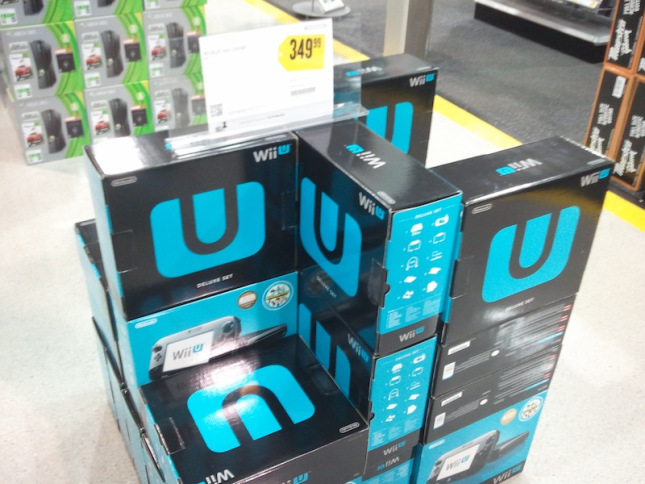
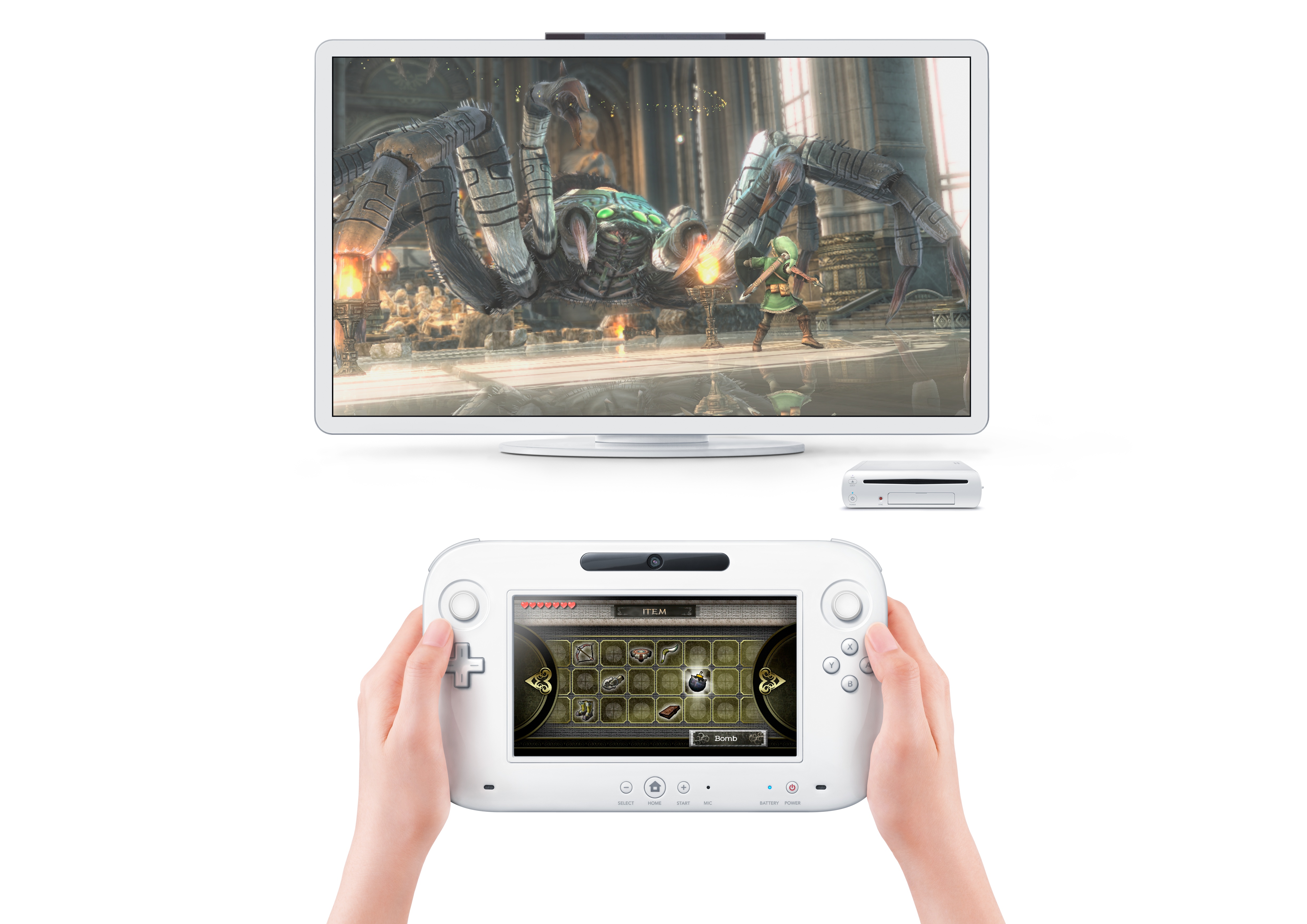
Wii U Boxes

Nintendo says their gamers keep on playing their old games instead of trading them … insert joke about Wii/Wii U not having enough good games to trade for

Trying to keep themselves relevant to the discussions, Nintendo has waded in to the DRM debate as well, by claiming they don’t need to restrict the used-games trade because Nintendo games are so awesome and have such great replayability, that gamers like to keep their old games. Nintendo America President Reggie Fils-Aime also said that disc based gaming isn’t going away in the near future for Nintendo, as they don’t want to cut retailers out of the equation, as retail helps to promote consoles and games. This would be the same retailers pulling Wii U Basic stock off the shelves, one gathers.

Developers have also had their say on the Xbox One’s controversial licensing changes. Anti-DRM developer CD Projekt Red says they don’t see the DRM issue as something that would prevent them from publishing on the Xbox One, while Saints Row 4 developer Volition wants more discussions on the issue. All very diplomatic, “let’s wait and see” answers. Former Epic developer Cliff Bleszinski didn’t hold back though when he enthusiastically endorsed Microsoft’s changes, saying that the “day one $60 model” no longer worked, and that high development costs meant that there’s no longer a place for used games and rentals.

All very well, but in the end, only game sales will determine what platforms developers and publishers devote their attention to, and this depends on getting consoles into people’s homes. An interesting start to the next console wars, I have to say.

From an interesting start, to an uninteresting end. More of the same next week. So until then, have a good one!

Weekly News Roundup (9 June 2013)

Sunday, June 9th, 2013

Well, I’ve had better weeks. The only thing worse than going to bed straight after watching the Red Wedding, is going to bed after watching the Red Wedding with a mild fever. The dreams. The haunting dreams!

The next two days consisted of me trying to keep “stuff” coming out of two distinctly different orifices on my body, and only successfully preventing one of these scenarios. No Game of Thrones dreams the next night, but for the life of me, I could not remember how to actually fall sleep (and was a bit hazy on the reason for sleeping as well). I knew  it involved filling in a form and the procurement of specific coupons, but nothing I tried worked.

I’m all better now, including the ability to not only sleep and sleep excessively. Which is why I probably should get started on this WNR.

CopyrightProcessor manufacturer ARM fired a new salvo in the DRM arms race (sorry), with the company introducing a new video processor that adds built-in hardware DRM.

Leveraging the company’s existing TrustZone technology, which has been used in the past to protect sensitive transactions, ARM’s new Mali-V500 video processor will feature DRM code that shifts all video processing away from potentially vulnerable software and hardware onto the protected processor itself. This means even the operating system will be excluded from handling video decoding code, allowing the played video to be protected even on rooted systems. The least powerful of the range of V500 processors will still be powerful enough to handle the decoding of 1080p video at 60 FPS.

ARM Chipset

ARM gets DRM – video processor will exclude even the OS from video decoding to secure the video

That’s in theory anyway. TrustZone has proven to be less than secure in the recent past.

For me, as long as the DRM, in software or hardware form, does not interfere with what users want to do with the content, and works in a transparent manner, then I don’t really mind it too much. But if TrustZone prevents “untrusted” video players from handling protected video files, or it breaks interoperability, then this is exactly the kind of consumer unfriendly DRM that will end up hurting sales and promoting piracy in the long run. And another factor that I haven’t considered before is the extra processing power needed to decrypt content, which mean extra power requirements. And that goes for all DRM schemes, most of which adds extra processing to protect content that will ultimately get ripped anyway. I wonder how much electricity is wasted every year by DRM that doesn’t even work. Even if you don’t believe in climate change, that extra electricity usage will definitely be costing you financially, not to mention adding more fuel to the impending “global resource war” fire, the main source of global conflict these days.

See, I told you DRM was destroying the world.

——

For those in the U.S. trying to escape the six-strikes regime by moving to a non participating ISP, Warner Bros. is not letting you get away that easy. Reports have emerged that users on these ISPs have started receiving warning notices warning of up to $150,000 in damages (per infringed title) if they do not get a “legal release” for the low low price of $20 (with free shipping for a limited time).

Apparently, Warner is working with a firm called Digital Rights Corp (DRC), which I have talked about on here before (I think) to locate and contact infringers. Unlike other similar schemes, DRC does not actually try to find out the contact details of the suspected pirate, but rather, sends a DMCA notice (along with the legal release offer) to the ISP for them to process. The ISP then matches an IP address to the subscriber’s information, and forwards the entire notice to the subscribers.

Doing it this way avoids having to go through the courts, which have been less than friendly to these type of actions in recent times. But it also means that WB/DRC cannot actually carry through with their legal threat until they do go through the court system.

High Definition

Two short news items in HD this week. Cyberlink has announced that they’re developing a H.265 codec (or more commonly known as HEVC). I’ve discussed HEVC before, and it’s actually quite an exciting upgrade to H.264, promising the same visual quality for half the bandwidth.

I would guess the main potential application for HEVC would be 4K streaming or broadcast. With 4K viewing requiring new hardware, it’s the perfect time to introduce a new codec as well.

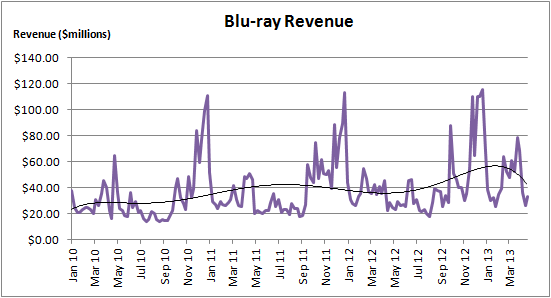
Blu-ray Revenue Growth - January 2010 to April 2013

Blu-ray Revenue Growth – January 2010 to April 2013

Cyberlink estimates their codec will be available to consumers sometime in 2014.

Need a Blu-ray disc that lasts 1,000 years? Enter the M-DISC. The 25GB disc works in any Blu-ray reader, but is able to withstand much more than your typical disc. Even if you don’t need it to last the whole 1,000 years, the extra tough disc means it’s more impervious to harsh environmental conditions that will typically kill normal discs, such as extreme heat, light and humidity. The M-DISC will be available in August from RITEK and Imation resellers.

And finally, don’t forget to read my (slightly late) Blu-ray: The State of Play report, which looks back at the last 12 month of Blu-ray sales data. Spoiler alert: Blu-ray has done pretty well!

Gaming

I guess they couldn’t wait until E3. Neither could anybody else, for that matter. Microsoft has finally revealed details about the changes to game licensing, authentication and even Kinect piracy, for their Xbox One console in a detailed blog post.

I don’t use bullet points a lot in the WNR, but I think for the sake of readability, I shall give it a go. For game licensing, here are the changes:

  • Game licensing moves from disc based to digital based. Your games are stored on the disc you buy, but also in the mythical cloud.
  • This means you can access your game library on any Xbox One console that is connected to the Internet.
  • For your primary console, you or your family members do not need to log in to play games.
  • Up to 10 family members can be attached to your account, and they will all have unlimited access to your entire gaming library, on any Xbox One console (even if the console is not in your home)
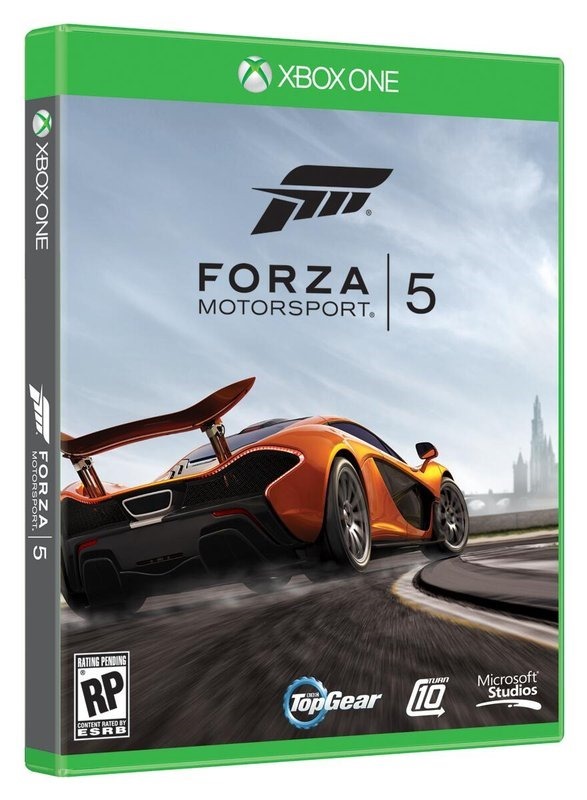
Xbox One Forza 5 Game Box

Trading and reselling used Xbox One games is up to the publisher, but rentals won’t be possible any more

For used games:

  • Games can be traded, sold or even gifted to a friend, but only if the publisher allows for it.
  • Trading and selling can be done at the retailer level, again, up to the publisher
  • Gifting can be done to anyone on your friends list (who has been there for at least 30 days), and also only if the publisher allows for it
  • No support for game rentals

So basically, it’s up the publisher what you can and cannot do with your used games, with Microsoft providing the tools to do so. For their part, Microsoft has stated they will not receive any financial compensation for these kind of activities. You will also be unable to rent Xbox One games in the future.

For authentication:

  • Offline gaming is limited to 24 hours (not sure if this is 24 hours of gaming, or 24 hours since the last authentication – probably the latter) on the primary console. For other consoles that have access to your library, offline gaming is limited to a single hour.
  • The restriction only applies to gaming, not Blu-ray or TV or any other function.

And finally, for Kinect privacy (some of the concerns were a bit tinfoil-hatty, if you ask me):

  • You can control what Kinect can see and hear, which means you can turn off things like auto sign-in.
  • Your conversation is not being recorded and uploaded (were people really concerned about this?)
  • When your Xbox One is off, the only command that Kinect is listening for is “Xbox On” (I have a Samsung smart TV that has the same function, when in standby mode), and you can turn this off too if you want (same with the Samsung TV)

So more information, which is good, but perhaps knowing more doesn’t help the fact that there are some fundamental and painful changes. It’s interesting to see Microsoft already shifting the used game restriction responsibility/blame off to publishers, but they’re the enablers in all of this, so they’re not blameless. It does give publisher what they’ve always wanted, a hand in the used game trade, how they will reward Microsoft for giving them this will determine whether this is a huge mistake for Microsoft, or a huge incentive for publishers to prioritize the Xbox One. Of course, if nobody ends up buying a Xbox One, then it won’t really matter how accommodating the platform is to publishers.

As for online authentication, it’s something that has had to happen with the move to digital. But 24 hours doesn’t seem long enough to me, and the 1 hour offline limit on non-primary consoles is pretty bad. I always have my game consoles connected to the Internet, as they’re pretty useless these days if you aren’t connected, so it doesn’t really affect me personally all that much. And I’d much rather a once a day online authentication, than having to find the disc, insert it and wait for it load every time I want to play. Change the 24 hours to 72, and increase the 1 hour limit on non-primary consoles to 24, and it seems much fairer to me.

Microsoft does state that they will listen to further consumer feedback and adjust these policies, but they would say that, wouldn’t they?

Judging by the reaction, gamers are still not happy (or even madder, if that was possible). It is now up to Microsoft to convince gamers that the Xbox One, despite all these restrictions, will offer a better experience. And they can start trying at E3 next week.

That’s it! All done. See you next week.

Weekly News Roundup (2 June 2013)

Sunday, June 2nd, 2013

Welcome to another edition of the WNR. I was hoping for a less gaming oriented issue this week, but fate decided that the Xbox One DRM fiasco would still continue to make headlines. And not the good kind. Serves Microsoft right for messing with DRM though.

Let’s get started …

CopyrightThe official sounding Commission on the Theft of American Intellectual Property, which is really just another pro-copyright group, has issued a new report with many very controversial findings and recommendations.

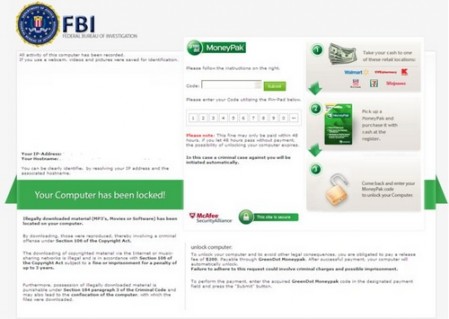
One recommendations calls on software vendors to implement the same type of techniques that Internet scammers have been known to use, including hijacking computers and locking documents. Under this recommendation, Microsoft, for example, would be within their right to lock and make unusable all documents created by the pirated version of Microsoft Word until users “contact law enforcement to get the password needed to unlock the account”.

FBI Locked Scam

The IP Commission’s recommendation could see software vendors copy scamware techniques

I don’t really need to explain why this is such a bad idea, but were this to happen, Internet scammers would simply love it. It would lend their scams much more authority if there were actual legitimate versions of the same scams being run by the world’s largest software companies.

The report also adds in a fair bit of fear-mongering with its anti-China and “American IP above everything else” rhetoric. Even the UN’s World Health Organization gets targeted for putting disease outbreak containment ahead of IP protection (for not checking if the drugs they’re administering to suffering patients, to prevent a deadly global pandemic, has been approved IP wise first), and the report even asks the U.S. government to cut all funding to the WHO until they get their priorities right

Read the full report here if you can stomach it.

Gaming

The battle of the next-gen consoles has turned into a battle of next-gen DRM, as rumors floated around this week that Sony may very well introduce their own version of used-game DRM for the PS4.

Host of the popular “Bonus Round” podcast Geoff Keighley cited sources close to the PS4 development that Sony will introduce their own DRM to control the use of second hand games.

PS4 DualShock 4 Controller

Is the PS4 getting used game DRM as well?

Back in February, just after the PS4 launched, Eurogamer spoke to Sony Worldwide Studios boss Shuhei Yoshida on this very issue. But despite Yoshida coming out with a firm statement that “used games can play on PS4” [sic], when it came to the question of resale, Yoshida was far more hesitant. Despite consulting with a Sony PR rep that was present during the interview, Yoshida was only able to refer back to the statement that used games will not be blocked on the PS4. The thing is, used games aren’t blocked on the Xbox One either. Lost in translation, or carefully chosen words by Yoshida?

Either way, we’ll find out when E3 rolls around next month. Sony will want to keep quiet and let Microsoft brew in their self-created mess until then.

If I had to bet, and based on statements Sony have made so far, the PS4 will not have the same kind of online authentication that the Xbox One will have, although the option would be left open to game publishers. Without using online authentication, Sony would find it hard to restrict the sale of used games, but their silence on the issue is still fairly disturbing.

And PS4 fans are similarly disturbed too, and they’ve taken to Twitter to warn Sony not to mess with the PS4’s DRM, using the hashtags #PS4NoDRM and #PS4USEDGAMES. Reassuringly, a few Sony executives did take to Twitter to make light of the issue and poke fun at Microsoft’s expense. One post said “we are going to have ‘DRM’ on PlayStation Vita”, only to later reveal that DRM stood for the game Death Ray Manta. Another executive thanked fans for being so passionate about the issue, and reassured them that Sony are listening.

Microsoft also acknowledged the anti-DRM sentiment, with Xbox’s Major Nelson, aka Larry Hyrb, also saying that Microsoft is listening (and I presume responding) to the backlash.

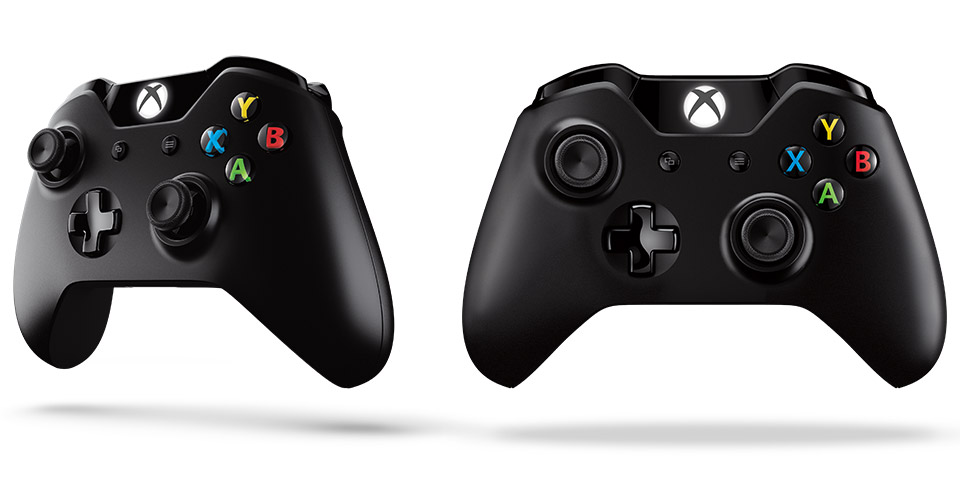
Xbox One Controller

Microsoft goes into damage limitation mode over their DRM fiasco

And I have to say that it is heartwarming to see people react to yet another attempt at eroding our rights as consumers. It may do no good in the end as we end up with no choice, especially if publishers (who are all very much for used-game DRM) have their say, but at least it’s not tacit acceptance. It’s also probably time that copyright and consumer law be changed to better delineate what we as consumers can and cannot do when it comes to digital goods.

With that said, the #PS4NoDRM hashtag is a bit of a misnomer, because what fans are asking for, the status quo, already has DRM deeply embedded. The PS4’s chance of being DRM free is about as good as the console being actually free. At best, we can expect the same DRM that the PS3 uses, which is disc based authentication.

And being forced in 2013 to still rely on disc based authentication is still very frustrating, even if it’s better than what the Xbox One appears to be promising. Microsoft has it right about not using discs for authentication, because it will seem more and more outdated as time goes by, but how it went about implementing this great idea (based on the information we have so far) has been poor, to say the least.

Because if you compare say the hugely popular Steam platform, and what Microsoft is doing, it’s fundamentally not that different. Both sell games on discs, but the disc only carries the data, and the authentication process is done online. Both ties game purchases to one account, but does not limit how many machines you can access the account, and the games, on. Steam is actually much worse since there’s no avenue at all for resale or even refunds.

But the differences, where they exist, are painful. Whereas Steam allows offline play, the Xbox One will force re-authentication every 24 hours. Whereas Steam works on PCs with large and upgradable storage, the Xbox One is limited to 512GB and so far no details on how one can upgrade the capacity. And although there is no resale on Steam, resale of PC games has never been a big thing, unlike for console games. If Microsoft does make a good system for game trading and resale, then that’s a plus compared to Steam, or any digital licensing system including iTunes, in this regard.

But the biggest difference, and why people have embraced Steam while ignoring the very same problems people are complaining about the Xbox One, is the price. Steam games are usually much cheaper!

In my mind, the only way Microsoft can salvage this whole disaster is by announcing that Xbox One games will be cheaper, significantly cheaper, than Xbox 360 (and PS4) games. After all, the extra earnings that comes from regulating second hand game sales ought to provide some benefits to the consumer as well. With the right price, people will be able to see past the restricted nature of digital “ownership”, just like they are able to do so with the likes of iTunes and Steam.

And oh, don’t forget to vote in our poll about which of the next-gen consoles you prefer, based on what you’ve heard so far.

That’s it for the week. See you next week, and have a nice one before then.

Weekly News Roundup (26 May 2013)

Sunday, May 26th, 2013

You’d think that with their swarms of PR people, Nintendo and Microsoft (and previously, Sony) could have managed this week better (and Sony previously with their so called PS4 launch). Maybe it’s just me, but there seems to be an air of desperation surrounding the major players in the gaming industry. Everyone’s in a rush to launch something, anything, or they’ve become overprotective of their assets. Perhaps signs of an industry struggling with the quickly changing landscape?

As you’ve guessed, this edition of the WNR is fairly gaming oriented for obvious (and not so obvious) reasons. Let’s get started …

CopyrightDick f***in’ move. That’s how someone on Twitter described Nintendo’s copyright craziness this week, when the troubled gaming company decided it would be a great PR move to start claiming copyright on any Let’s Play gameplay videos featuring games owned by the company.

Let’s Play (LP) videos are very popular with the gaming crowd, and creators of these videos have so far received the support of gaming companies, or at the very least, no resistance. But Nintendo’s copyright move will now force ads to be displayed on any LP videos featuring footage of Nintendo games, and also gives the company the power to block videos it deems unacceptable.

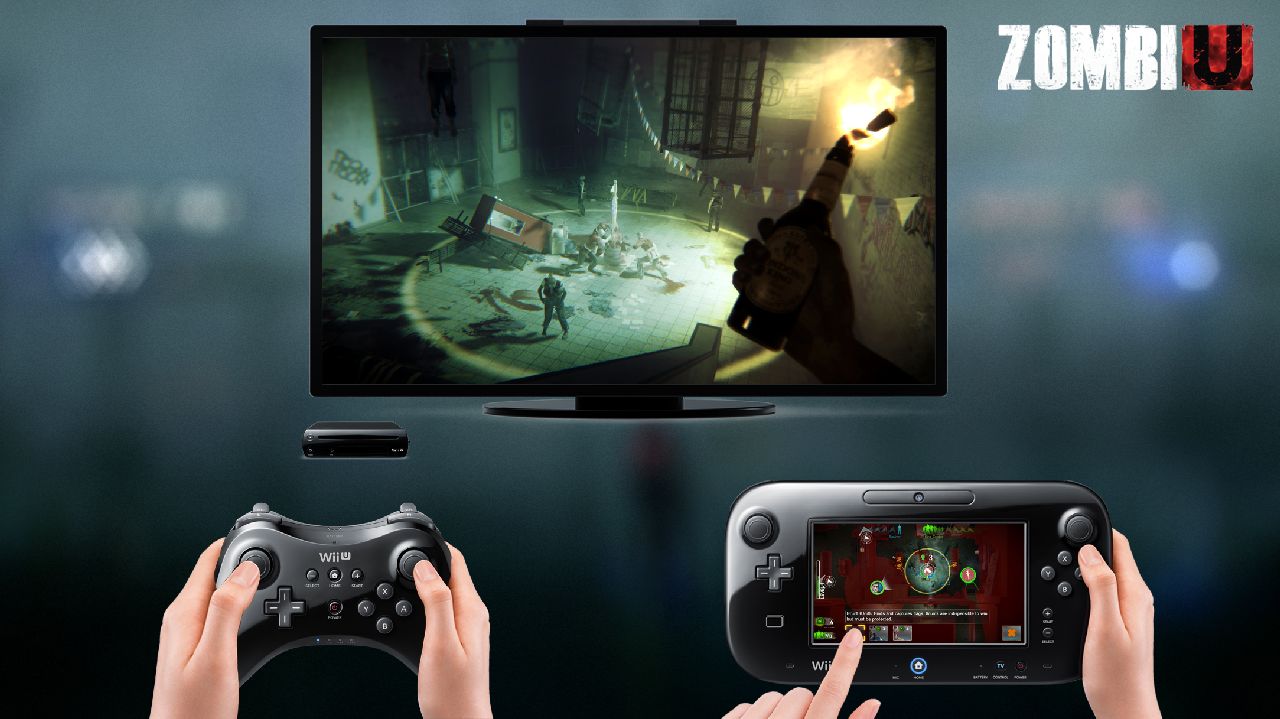
ZombieU on Wii U

Nintendo’s copyright claims on Let’s Play videos seems very self-damaging

It’s unlikely that the Japanese company will do the latter, unless it wants to face the wrath of the Internet, but doing the former also disadvantages LP creators by taking away the small amount of revenue that allows new videos to be continually created. For Nintendo, the revenue earned from these videos will be of little consequence, especially if the Wii U’s losing run continues.

So while Nintendo is justified in submitting a copyright claim, doing so seems to bring no benefits, and a lot of long term pain for a company that is desperate to get the word out on its new console. LP videos are great promotional tools, and Nintendo should be doing everything they can do ensure people continue to create videos for their games, but this move does the opposite of this.

From being oversensitive about copyright to being not sensitive enough. Or at least that’s what the RIAA is accusing Google of, as it wants the search engine giant to do more to stop infringing links showing up in search results, despite 20 million links already being removed so far.

Despite Google’s best efforts in making the DMCA takedown process as streamlined as possible, often at the expense of accuracy and due process, the RIAA says that Google should do more to make the process even simpler. Apparently, for every link removed via a takedown notice, many more will spring up in its place. It’s something that the RIAA has only now realised, although they could have asked me, or any of the other millions of people who knew this was always going happen, before their costly exercise in futility.

If beating a dead horse is not bringing results, there’s only one solution: beat it harder! Which is why the RIAA plans to use the currently ongoing Congressional review of the DMCA to lobby for changes to the DMCA takedown process. Under the RIAA’s fantasy version of the DMCA, they would only need to identify the content that is being infringed (eg. Mirrors by Justin Timberlake), the site that is doing the infringing (eg. downloadmp3sfree4all.com), and then it would be up to Google to patrol and investigate all links on the site and remove links automatically. So instead of submitting a takedown request, getting the link removed, and then for the same site to put up the same link on a different URL, and the whole process repeating itself, the RIAA would make Google do most of the hard work. And taking this a step further, the RIAA may not even have to tell Google which site is doing the infringing, after all, Google knows more about individual websites than the RIAA ever will. Hell, Google probably already knows which songs are being searched for, and who owns the rights to it, so why not just have Google become the RIAA’s copyright police?

Yes, it’s time consuming for rightsholders to identify infringing content and request action, but it’s hard for a very good reason: to prevent abuses of the process and prevent false positives. Only the rightsholder can tell whether something belongs to them or not, and not taking shortcuts prevents stupid and damaging things from happening. If anything, too many shortcuts are already being taken by rightsholders.

And even if you can invent a better, automated takedown system, don’t bet against innovative webmasters finding a way to automate the process of creating new links. It will still be an exercise in futility, just with higher volume of links being involved. At some point, one has to accept that preventing infringing content from appearing on the web, and preventing people from getting to them, is futile. The best and only solution is to do something to make people less interested in wanting to get them, by providing legal alternatives that render piracy pointless.

Gaming

The big gaming news of the week was of course Microsoft’s unveil of the Xbox One console. I won’t bore you with the full details, which you can read here, but it’s probably worth taking a bit of time to talk about the less sexy, and the far more controversial aspects of the console: the “always-on” DRM and digital licenses.

Xbox One

The Xbox One’s simplistic black rectangular box design has some jokingly comparing it to a VCR

Before we get to that, as a summary of the information so far, it appears that Sony’s console will be the more powerful console yet again, on paper. The Xbox One’s slower memory is offset by the inclusion of ESRAM, but the cost of this more complex architecture means that the Xbox One has to make do with a slower GPU. Sony gambled on the availability of cheaper GDDR5 memory, and they won, allowing more bucks to be spent on beefing up the GPU. Whether this will actually translate to better looking games on the PS4 is debatable. It will be up to how easy Sony will make it for developers to take advantage of the PS4’s hardware superiority, and whether developers will bother doing so. But based on the PS3 vs Xbox 360 examples, don’t expect night and day differences, if any (if anything, it’s probably easier to build for the slower system, which automatically ensures it will work fine on the faster system, as opposed to building for the faster system and having to downscale to the slower one – lowest common denominator).

The Xbox One’s HDMI pass-through is also interesting, even if it seems like a bit of an outdated way to do things. Apparently, you’ll be able to plug in your set top box to the Xbox One and it will overlay some kind of interface for it, with the IR blaster and HDMI-CEC working in conjunction to give you the impression that your Xbox One console is controlling your STB. An interesting concept if Kinect can be integrated to allow you to gesture/voice control non Kinect devices. It’s a transparent attempt by Microsoft to make the Xbox One the hub of your home entertainment, but those with receivers, or here in Australia where most TV viewing is done without a set top box, won’t find the function too useful. And for some reason, the whole pass-through thing reminds me of the RF modulator on the NES.

And now back to the less sexy.

First up, always-on DRM isn’t a requirement for the console, well not strictly speaking anyway. You don’t need a constant Internet connection to play offline games, or rather, the decision could be left up to the game publisher. This is because Microsoft will allow developers to tap into the power of their Azure cloud platform, and this could, for example, offload certain parts of the game’s processing to the cloud. This could then force games, even offline ones, to be only playable with an Internet connection, much like how EA/Maxis justified the “always-on” DRM for SimCity.

But the key point is that this will be completely optional, and whether this type of cloud gaming is even possible given the current state of the integration is questionable. Microsoft was keen to point out that even they don’t really have a clear idea how Azure can and will be used by game developers at this time. Let’s put this down to one to worry about in the future.

As for the actual DRM for games, there’s a whole lot of confusion about how it will work, because it will be different to what it is right now. Instead of licenses being attached to discs like currently, licenses will be digital in nature. Let me explain.

While games will come on Blu-ray discs, the disc themselves serve only as a delivery platform for the game content – the actual activation of the game will be done via your Xbox Live account, and game purchases will be tied to your Live account. So discs will no longer be used for authentication purposes, and once you install and activate your game, you can chuck the discs away (you can re-download the game any time from Microsoft). Think Steam games that come on discs, and you’re basically there.

So what happens when you want to take your game to your friend’s house? Right now, you just bring the disc and play. But with the Xbox One, you’ll have to bring the disc (to install the game, unless your friend has a super fast Internet connection that can download it really quickly), and log into your Xbox Live account to play the game (since the game is tied to your Xbox Live account). Again, think Steam and how you would play the game on a new computer – you’ll have to log into your Steam account first. If your friend wants to play the game using his or her account, then they’ll have to re-buy the game.

Offline play without online authentication, just like Steam, should also be possible. But it may be only for a limited time, with a re-connection/re-authentication required every 24 hours or something.

But what about trading and selling your old games? Steam won’t allow you to do it, but Microsoft do plan to implement some kind of system to allow digital games to be sold and traded, a system where they also take a cut of the transaction no doubt.

So Microsoft is definitely taking a different approach to game authentication. Sony has only said that they will not block used games, which is open to interpretation (since technically, the Xbox One doesn’t “block” used games either). From what we know so far, this puts a tick in the win column for the PS4 for those, like me, that hates DRM. But you know game publishers will just love Microsoft’s new system, especially if they get a cut of game sales/trades too. Whether that love translates into more exclusive content and features remains to be seen, but that’s probably Microsoft’s endgame.

Xbox One Forza 5

Gaming doesn’t seem to be Microsoft’s focus with the Xbox One launch, to the dismay of gamers

Looking at the three “next-gen” consoles and the launches, I have to say that all three have been fairly disappointing. My opinion is still that the Wii U is too little, too late (is it really that much better than the Xbox 360 or the PS3? It’s different, but that doesn’t mean better. I’m not even sure you can call it “next-gen”). Sony’s “PS4 launch without a PS4” was a joke really, and Microsoft’s Xbox One launch where they had all the answers except to the questions that people were actually most concerned about, makes both launches look amateur and rushed.

Why couldn’t Sony have shown us what the PS4 looked like at their launch? Why couldn’t Microsoft have waited until they’ve got all their DRM/used game trading/resell ducks lined up in a row before their launch, as opposed to the more and more cryptic answers to these fairly simple question? What couldn’t Nintendo produce a console that isn’t using a GPU based on a 4-year old design?

It’s a good thing though that E3 is only a couple of weeks away, but if Sony can’t reveal what a PS4 looks like by then, or if Microsoft can’t show us how game trading and resale actually works, then it’s just stupid and counterproductive.

But before then, tell us what you think of the three “next-gen” consoles in this poll, based on the information available so far.

An update to a story we covered here a couple of weeks ago. Despite heavy piracy and its unique DRM, the game Game Dev Tycoon has been successful enough for its developers for them to turn professional. Looks like their DRM stunt paid off, and to me, this actually proves that piracy can be leveraged to take advantage of its promotional qualities.

That’s pretty much it for this week’s gaming dominated issue. I will now log onto Netflix and impatiently wait until the (Pacific Time) clock strikes midnight to get my Arrested Development fix. See you next week.

Weekly News Roundup (19 May 2013)

Sunday, May 19th, 2013

Welcome to another edition of the WNR. I think I’m getting a little bit too excited about the new season of Arrested Development, coming exclusively to Netflix this time next week. I’ve got my unauthorised Netflix subscription up and running ready for the final countdown, preparing myself with a pre-launch binge watching of the previous season that I hope won’t turn out to be a huge mistake, and when May 26 rolls around, I’ll be ready to say “annyong” to all 15 glorious episodes of the new season.

Before I can do that, I’ll have to get through this week’s WNR.

CopyrightSo it’s “Hollyweb” here we come. The W3C this week formally approved the use of the Encrypted Media Extensions (EME) to the HTML5 standard, which opens the door for DRM to be officially infected into HTML5 videos. EME won’t actually handle the DRM itself, but it’s a standardized framework that allows third-party DRM support.

The W3C says this is actually good for the open web because since DRM isn’t going away, the alternative would be an increasingly closed off web reliant upon proprietary systems to DRM’d video delivery (so basically what’s happening now). Even without EMEs, someone will find someway to squeeze DRM into HTML5, but the framework won’t be standardized or open or managed by the W3C. Or worse, DRM’d videos like Netflix would simply move off the open web, and be confined to the “walled gardens” of apps.

Hollywood: Stop DRM in HTML5

It’s Hollyweb, here we come, as HTML5 given the DRM go-ahead

Opponents of the move would point out that Flash and Silverlight, the two main proprietary systems used for DRM’d video delivery right now, are dying a slow death and a DRM-free HTML5 video standard would have forced a rethink on the whole DRM thing, for better or worse. But perhaps the W3C does have a point, in that the current climate would never allow DRM-free copyrighted videos to be distributed by Netflix, Hulu and others. If Flash and Silverlight officially dies or no longer works, and if DRM isn’t a viable option in HTML5, then just like the W3C predicts, we will lose the ability to use Netflix and Hulu and others via the web.

As expected, a lot of anger is being directed at the W3C, and the proponents of EME, Netflix, Google, Microsoft among others. But it’s important to remember that given a choice, none of these groups actually want DRM. Only Big Content is obsessed with DRM, and as long as they’re in the powerful position of being gatekeepers for the content we want, we will always have DRM. Let’s not forget who the enemy is.

And the enemy this week has been busy promoting its vision for Hollyweb, and how if you ignore the problems of DRM, unskippable ads, the arbitrary and fleeting nature of what is and isn’t available, and the sometimes high cost of it all, then there’s no way anyone should ever want to pirate. The MPAA this week launched a new website WheretoWatch.org to promote all the legal alternatives to piracy, providing a summary for most of the online based video services available today. It’s a slight change in tactics for the MPAA in their CRusade Against Piracy (CRAP™), designed to counter the argument that legal alternatives aren’t present.

Except that’s not the argument at all. The argument is that the legal alternatives, while definitely present, aren’t nearly good enough.

The problems? Content, for one. Netflix is probably the best, and certainly the most popular of the legal alternatives, but can you really honestly say that it has all the content that a typical web pirate would be looking for? I would actually say it’s the opposite, in that what Netflix has is all the stuff that pirates aren’t looking for. This isn’t a bad thing though, because due to the way BitTorrent transfers work, the “nobody wants to download” stuff are usually the ones that are quite hard to pirate as there just aren’t enough seeders normally. And sure, Hulu Plus has a lot of recent content, but that brings us to the second issue: ads.

WheretoWatch.org

Plenty of options, but none that will satisfy people like piracy will, even if you don’t consider the pricing discrepancy

Now, advertising is needed, that’s not a question. But when you have to sit through four 30-second unskippable commercial breaks for every 20 odd minutes of content, and when the ads are pretty much just the same set, then it gets boring rather quickly. And this is despite having paid a monthly subscription fee for content you could have recorded on TiVo for free.

And that’s only when the service you want allows you to pay for it in a standalone manner. Try and get HBO Go without a cable HBO subscription, and see how far you get.

For the content that you really want, cost then becomes the biggest obstacle. For example, the HD version of Life of Pi on the Australian iTunes costs $29.99, but you could have purchased the limited edition Blu-ray 3D/Blu-ray/DVD/Digital Copy edition last week for less than $27. Where is the sense in this, and is it Apple’s fault, or the fault of 20th Century Fox, the distributor of the film? The regional price gouging is not new, and even government sponsored investigations into this issue seems to have had no effect on this greedy practice.

But the biggest problem with WheretoWatch.org is the fact that it is almost completely useless for someone, like me, who isn’t in the United States. Almost all of the services listed are US only, and only a couple out of the rest are actually available in Australia (and usually with reduced content). The fact that the MPAA went to all this trouble and still managed to forget anyone who isn’t in the US is precisely the reason why piracy rates outside of the US are much much higher. The MPAA being a US based organisation can be used to excuse the US-centric nature of WheretoWatch.org, but this misses the point that the MPAA are also representatives of the owners and gatekeepers of the content that those of us outside of the US want to watch. I’m sure we would all pirate less in Australia is we had HBO, or Hulu, or Netflix, without having to go down the geo-unblocking route.

The problem with legal access will be a key point in a new proposed reform of France’s copyright laws. With HADOPI three-strikes proving to be entirely ineffective in stopping piracy and hugely unpopular, a new report titled Culture-Acte 2 aims to re-balance copyright law to address the shortcomings of HADOPI. While “three-strikes” will be kept under the recommendations, the report also calls for making films and TV shows to be available on on-demand services far quicker than the current 36-month average. There’s also suggestion of a smartphone/tablet tax of 1%, to help fund the reforms.

In my mind, the current piracy problems are almost entirely due a supply and demand issue. Demand is high, but supply is limited and restricted, all of it intentionally in order to squeeze more out of a particular market. This would normally work to keep prices and revenue high, but once piracy becomes an alternative supplier, one that’s super cheap as well, then the artificial supply limitations and restrictions only end up driving more “customers” to piracy. And due to DRM, lack of interoperability and other issues, the legal product is often inferior to the illegal version, compounding the issue further. There’s also a deep lack of understanding into the preferred method of consumption, with the “all-you-can-eat” nature of the web naturally encouraging consumers to want the same with their video consumption needs, but with the option usually unavailable for the content that people actually want, the new release content.

I’m not sure if the government can or should legislate how the demand should be met by supply, but punishing consumers for wanting something better doesn’t seem like the solution to me.

——

A new study has found that the game industry’s own reported piracy figures may be magnitudes higher than the real piracy rate. Shocking! What a total surprise!! [INSERT SARCASM SMILEY].

The new study by professors at the Aalborg University and the Copenhagen Business School found that while piracy rates were still quite high, 12.6 unique downloaders in a 3 month period, it wasn’t nearly as high as the 10 million downloads per month that the industry has been touting.

The discrepancy is easy to understand though. The industry figures are often released by groups, like the ESA, whose main mission is to publicize the severity of the piracy problem. This kind of self-interest promotes biased conclusions, intentionally or otherwise. This new study aims present the most objective figures so far independent of any industry interests.

It was also interesting to note that the top piracy countries were the likes of Romania, Croatia, Greece, Portugal and Hungary – looking at the availability and price of legal alternatives in these countries may yield further clues as to why so many people choose to pirate games in these countries. Hey, maybe all these countries need is their own version of WheretoPlay.org [ANOTHER SARCASM SMILEY]

Gaming

The April NDP report is out, reporting on US video game sales for the month. As has been the trend recently, the report doesn’t make good reading.

The Xbox 360 was the most popular console yet again, but having only sold 130,000 units (45% down compared to a year ago), it was hard for Microsoft to celebrate this fact. Even with only 130,000 units sold, it still represented 42% of current generation home based console sales, meaning the Wii, Wii U and the PS3 added up to maybe less than 180,000 units. No matter how you split this (I’d say 35,000, 45,000 and 100,000 respectively), it doesn’t look good for any involved.

Wii U

The Wii U is dying a slow death. Will new Zelda and Mario games help?

The Wii, PS3 and Xbox 360 figures are forgivable, but the Wii U’s slow decline into obscurity is disheartening. EA, the biggest game publisher in the world, said this week that they did not have a single Wii U game in development, and one EA engineers even called the console “crap” and said that it was less powerful than the Xbox 360. It’s definitely not looking good for Nintendo at the moment.

Anyway, we’ll find out more about the Xbox 720/Durango/Infinity this week. Being the last of the “next-gen” consoles to launch, all eyes are on Microsoft to see if they can up the ante on what’s on offer from Nintendo (shouldn’t be too hard) and Sony (much harder).

On that note, we come to the end of this WNR. Hope you’ve enjoyed reading it. See you next week.