Archive for the ‘Electronics’ Category

Weekly News Roundup (14 February 2010)

Sunday, February 14th, 2010

It’s two occasions in one today, a happy Valentines Day and Happy Chinese New Year to everyone. There’s slight more news this week, so no need to drag a single story out to a full blog, like last week. I also wrote a new guide this week on how to get MKV files to play on your Xbox 360, using the software GOTSent. The PS3 version of the guide, which will be using mkv2vob should be up sometime next week.

Copyright

Let’s get things started with copyright news. We start with the, perhaps slightly optimistic, but potentially good news that the secret copyright treaty, the ACTA, might be in trouble.

Apparently, the various parties negotiating the treaty are failing to agree on various matters, and not all parties are keen on the secrecy part. The RIAA, MPAA and other trade organisations are no doubt busy trying to save the treaty, which could be the best thing since the DMCA in their eyes. They’ve tried to keep in a secret because the public backlash from controversial provisions (that could see people’s iPods being searched at airports for illegal downloads) would be too great. But it’s hard to keep a secret when the Internet exists. And countries typically don’t like a treaty that locks them into something too rigidly, and without rigid obedience to it, there’s really not much point in having this type of treaty.
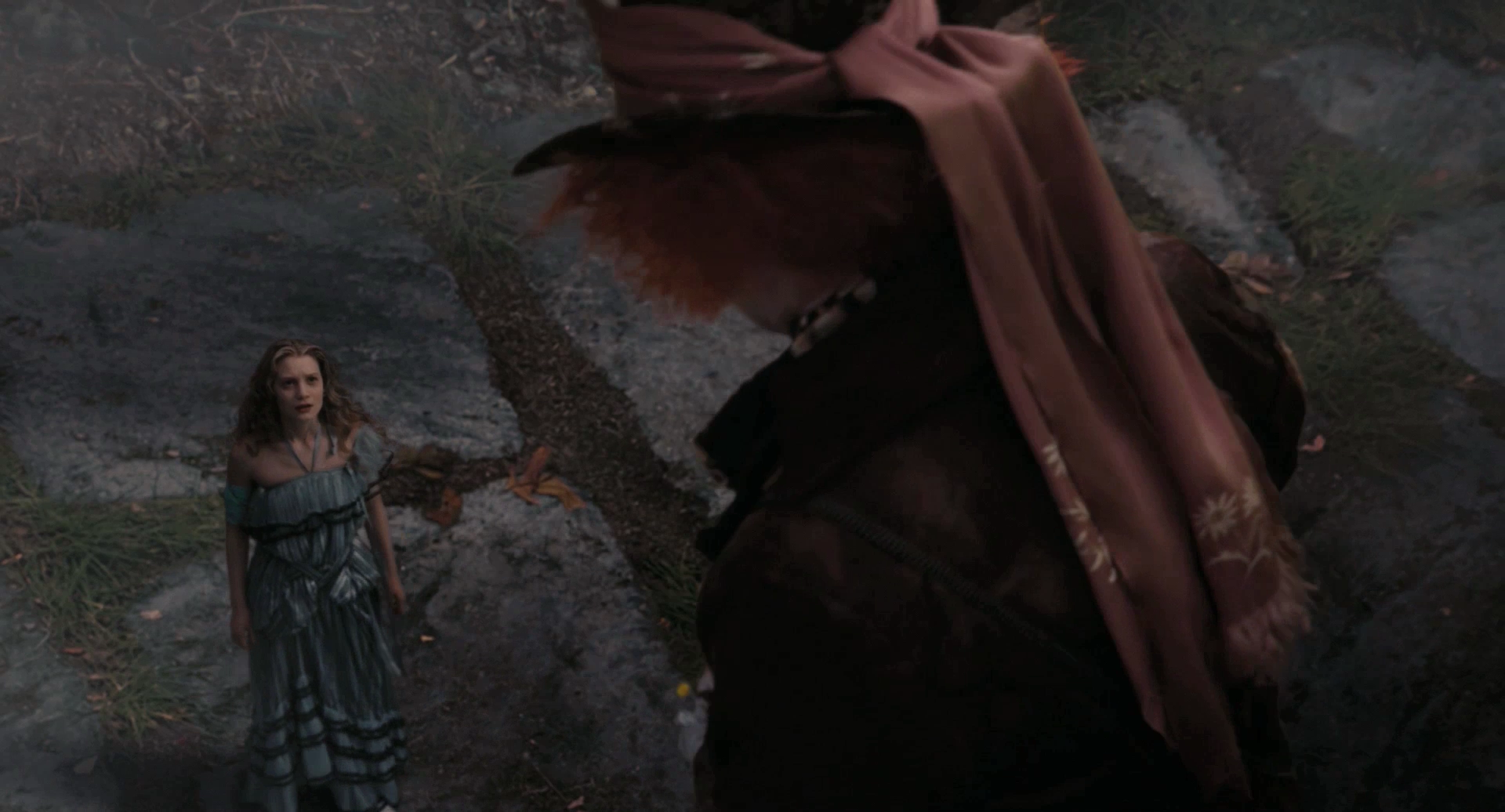
Alice in Wonderland

Alice in Wonderland may not get shown across screens in the UK ...

Tim Burton’s new film Alice in Wonderland (HD trailer) may not be shown across the majority of cinemas in the UK due to a dispute with Disney. Disney’s plans to reduce the theatrical showing window, from 17 weeks to 12 weeks, have angered the cinema owners and they have threatened to boycott the film. Disney tried the same with animated hit Up, and cinema owners responded in the same way, but the studio backed down eventually. Studios like Disney are trying to bring films earlier to DVD and Blu-ray, as they have much more control over these formats in terms of revenue, and studios are also claiming it somehow prevents piracy as well. They do have a point in that most of the business at the cinema goes away after the first 8 weeks, so 12 weeks should be enough. But the problem is that if people know that they don’t have to wait long for the home video version, then they may skip the film at the cinema entirely. Of course, that’s only true of some people, as most feel that going to the cinema and watching the same movie at home are two completely different experiences, much like eating at home or at a restaurant – when money is not an issue, you can’t really substitute one for the other. But it just shows that for all the talk about protecting the industry, film studios only really care about protecting their own profits, and who cares if others in the business suffer as a result.

Staying in the UK, a couple of months ago, the BBC applied for DRM to be added to their high definition TV broadcasts. At that time, the British Office of Communication, Ofcom, denied the request, but it seems that persistence is paying off and the BBC might get its wish (or rather, the US TV networks and movie studios might see their pressuring of the BBC bear fruit). So why is DRM bad for HDTV? It’s bad because it can be used to prevent the recording or time shifting of TV programmes. It can also limit development of open source and free viewing software, since a licensing fee has to be paid to the DRM creators. And this fee also adds to the cost of otherwise free to air television. And it will still fail to prevent some clever person from recording the TV show and uploading it online. So why is the BBC so keen on DRM? Well, the pressure from the US might be intense and I’m sure threats of stopping the supply of programmes to the BBC and moving them onto other more secure broadcast systems such as subscription television will have the BBC, and Ofcom, worried as well.
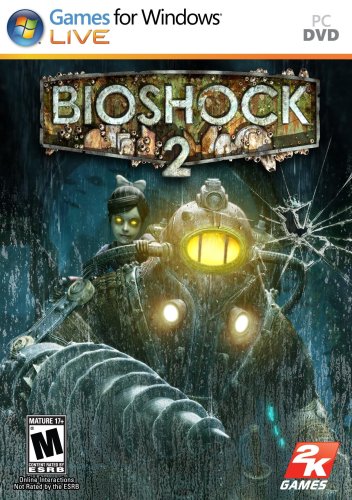
BioShock 2

BioShock 2 on the PC: DRM Galore

Also in the “we love DRM camp” is the publishers of the game Bioshock  2, 2K Games. So much so, they’ve added 3 different layers of DRM to the game to provide redundant copy protection that still failed to protect the game from being copied. Microsoft’s “Games For Windows” system is used for the disc version, and it already provides a few layers of DRM, and that would be more than enough for most publishers as it features online authentication. But add in limited installs, and then Sony’s SecuROM (the system that’s so hard to remove, that it’s starting to look like malware), and you just have to shake your head at how paranoid game publishers have become. A word of advice: stop losing sleep about the “lost” income from piracy, income that you probably wouldn’t have earned anyway had the pirated version not been made available, as there’s a finite amount of money people can spend on games. Instead, worry about losing your customers to piracy due to idiotic DRM schemes, because that’s a real threat. This is all part of the theory that game publishers’ actions may actually be contributing to piracy. I’m not sure about that, but they certainly have failed to prevent it.

One theory is that lower prices do help to combat piracy, not only for games but for movies and music as well. Apple is keen to test out this theory, and they want TV networks to agree to lowering prices of TV shows on iTunes to under $1, which will no doubt also help the iPad at launch. As expected, they are running into resistance from the TV networks, who sees any price cut as an invitation for more in the future. While it may be simplistic to say that something is only worth as much as people are willing to pay for it, but this is truer for digital content then physical goods, which have physical costs attached to producing each individual item. For me, it’s all about finding the right price, that will discourage people to get the content from illegal sources, and at the same time also provide a healthy profit for content owners.

And bad news for video sharing website Veoh. After winning a legal battle against Universal Music, they may be going out of business anyway. The legal battle prevented the sale of the website, and when it was over, it was too late to obtain further funding. Whether this is more due to the increasing competition in the sector, or whether the legal battle too more of a toll than it appears, it’s hard to say.

High Definition

Let move on 3D/HD news. I’ve mentioned Toshiba’s impressive Cell TV before, the one that uses the same processor as the PS3 to enable 8 HDTV channels to be simultaneously displayed on the TV, in Back to the Future II style.

Toshiba's Cell TV

Toshiba's Cell TV can convert 2D into 3D

But with every other manufacturing trumpeting their 3D lineups, Toshiba was oddly quiet, and refused to even provide information as to which 3D format they will be going with. Perhaps they don’t want to get burned again with another format war by choosing a side right now. Or perhaps there’s really no format to go with even if they wanted to. The Blu-ray 3D specs are a start though. In any case, the Toshiba Cell TV has enough power to convert 2D broadcasts into 3D (well, pseudo 3D, anyway), so whichever format Toshiba decides to go with, it should be quite brilliant.

Speaking of format wars, the HTML5 format war is brewing nicely, with the latest version of Opera supporting HTML5, but only the Ogg Theora codec. So on top of the Flash vs HTML5 video delivery war, we also have the Ogg Theora vs H.264 war. Makers of free browsers like Ogg Theora because it’s free, whereas H.264 has licensing costs that have to be paid by somebody. But the industry prefers H.264, since hardware acceleration support is widely available, and it produces better quality streams than Theora at the moment. The likes of Apple and Google can of course absorb the costs, but it’s probably too much for the likes of Mozilla or Opera to do the same. The H.264 licensing people, the MPEG-LA, really needs to do something about this, perhaps eliminate royalty payments for certain browser manufacturers or something.

And on a related note, Hulu is gearing up for HTML5 compatibility (it uses H.264, just like YouTube and Vimeo’s HTML5 efforts), and so this could mean Hulu for the iPad, which would be a big selling point for Apple.

Gaming

And finally in gaming, the January NPD US video game sales figures are out, and I will have the write up of it nearly next week. A sneak preview: The Wii won, the Xbox 360 beat the PS3 thanks to Mass Effect 2. Only the PS3 showed significant growth year on year, but that’s only because it wasn’t exactly selling like the proverbial hotcakes this time last year.

And the 2009 Game of the Year poll has been closed, or rather, moved off the front pages. CoD: Modern Warfare 2 won, beating second place Assassin’s Creed 2, with Uncharted 2 being the best of the platform exclusive titles.

And so that’s another week. It’s now the year of the Tiger, so 恭喜发财, 万事如意 (which roughly translates to “may you get rich, may your wishes come true and death to DRM”).


Weekly News Roundup (31 January 2010)

Sunday, January 31st, 2010

It’s been Apple iPad this, Apple iPad that, this week, it seems. For some reason, I keep on referring it as the iTab, what with it being billed as a tablet, although strictly speaking, it’s not a tablet at all. Later on in this WNR, I shall talk about the iPad’s potential as a video player. There were a couple of other major stories as well, so let’s get started.

Copyright

In Copyright news, the biggest news of the week has to be the new developments in the RIAA vs Jammie Thomas-Rasset case, the one with the infamous $1.92 million damages being awarded to the RIAA. The good news is that the ridiculous $1.92 million has now been reduced. The bad news is that the reduced figure of “only” $54,000 was deemed unacceptable by both sides.

The judge that reduced the damages called the original $1.92 million as unjustifiable for the act of distributing 24 songs. What I thought was important was that the judge acknowledged that the intention was not to distribute, rather, it was to download 24 free songs, valued at less than $24 in today’s prices. The distribution was simply a side-effect of the process. Of course, Thomas-Rasset downloaded (and shared) more than 24 songs, but you have to distinguish her actions from say those that intentionally upload ripped songs to the Internet for the sole purpose of distributing it illegally. I have never understood why the RIAA went to the trouble of making an example of Thomas-Rasset, when there must have been other more suitable candidates, those that are less sympathetic than a struggling single mother, and at least those that had the intention to distribute and perhaps even profit directly from such actions. I guess they wanted to send out a message to downloaders, not uploaders, which perhaps they feel is more responsible for their piracy troubles. But whatever message they wanted to send before, it is not extremely unclear, and a new trial has been requested by the RIAA. Publicity wise, this is a very bad move by the RIAA, as the $54,000 amount was already excessive and the request for a retrial will be seen as more evidence of the music industry’s greed. The ironic thing is that had Ms Rasset simply walked into a store and shoplifted the CDs in question, she would be in much less trouble, and this is when real loss has occurred compared to the act of simply making a copy of something which costs nothing to anyone if the person making the copy never had intentions to pay for anything.

BPI Logo

The BPI believes that everyone else should pay for their anti-piracy campaign, except themselves

But then again, on their anti-piracy moral crusade, good publicity is not all that important for the likes of the RIAA and MPAA and their members. A blog post by the Geoff Taylor, chief executive of UK version of the RIAA, the BPI, further shows the lack of respect for anyone who isn’t firmly on their side of the piracy debate. Mr Taylor talked about the cost of helping the music industry and dismissed the fact that the government, ISPs and mostly non pirating consumers have to pay for it by suggesting that ISPs simply absorb the cost. Well, since this whole charade is to help out the music industry, you must then ask why can’t the music industry absorb the cost themselves, or even absorb the whole cost of piracy which they’ve been doing this whole time and still managed to earn record profits. The music industry see piracy as everyone else’s problem, even though they’re partially responsible for  it by not adapting quickly enough to the digital revolution while holding on hopelessly to their outdated business model. The music and movie industries have been spoiled by the government’s extreme pro copyright views, not just in the UK but all around the world, and they’ve started to believe that its their right to earn a profit, when no other industry gets as much protection. Adapt or die. These industries believe that so much will be lost if they’re left to die, but in reality,  studios and labels hamper the creative process and cultural development, as they rip off artists and shape the “products” with only commercial interests in mind. Everyone, from artists to consumers, would be better off with less powerful studios and labels, not more powerful ones as the recent copyright laws makes them.

Still in the UK, the recent mailing campaigns by law firm ACS:Law which I talked about some time ago, has come under fire yet again, but this time from some powerful voices. ACS:Law monitors torrent networks and obtain details of the connecting users and threaten them with lawsuits if they do not pay damages to settle the claims, with most of the money going to the law firm rather than the copyright holders. They appear to deliberately target those vulnerable to a lawsuit or otherwise more willing to pay up, for example those charged with attempting to download pirated porn. It’s can be seen entirely motivated by money, and I suspect ACS:Law and other firms like them are the last ones to wish for an end to piracy. And the worst part is that many of the people they send the notices to, and probably many of those that pay up, are entirely innocent and merely wanted to make the matter go away as quickly as possible (nobody wants to go to court to defend charges against them downloading porn). The problem with their approach is that IP addresses do not tell you the whole picture. It doesn’t even tell you which computer made the connection, it only tells you which ISP account made the connection. And with wireless security being less than what it is in most homes, access hijacking may account for most of the claims of innocence. And a single connection does not piracy make, because unless someone has downloaded 100% of the data in question, they’re just downloading gibberish while sharing chunks of this gibberish with others. Those that have downloaded a massively corrupted ZIP file will attest to just how useful it actually is. But it seems more than just the tech and consumer publications that have noticed the actions of ACS:Law. The very issue was raised in the British Parliament, in the House of Lords, where the actions of ACS:Law were called “legal blackmail” and the whole thing a “scam” – you can see a videos of the Lords speeches here. Harassment, bullying and intrusion were also used to describe the actions of ACS:Law and other similar agencies (and you might as well extend that to the entire music and movie industry as well, when it comes to their copyright crusade).

Steam logo

Steam is powering ahead with 25 million users and an ever increasing revenue base

Moving onto PC gaming piracy. Ubisoft is to introduce a new anti-piracy system where online authentication will be required each and every time you wish to play one of their games. So if you don’t have an Internet connection, you can’t play their upcoming games. The advantages of such a system for gamers is that they no longer need to insert the DVD once the game has been installed, that unlimited number of PCs can be used to play the game, and that save games can be saved online for widespread access. In other words, it’s basically their own version of Steam. Steam itself has been doing very well lately, now having 25 million members and a yearly growth rate that other gaming companies and retailers can only dream of. I like Steam and I suppose Ubisoft’s system does make anti-piracy less of a chore than the horrible StarForce or SecuROM systems, where you have to jump through several hoops, with your hands behind your back, all the while singing the Canadian national anthem, just to be able to play a game. The online save game function, as long as it’s optional, would also be welcomed especially if it comes with time based backups just in case you overwrite a much needed save game. What I don’t like is the online authentication requirement. I understand that it is needed, but surely not every time? Perhaps a system where you only need to check back in every 3 or 5 game sessions would be better, and that would at least allow you to play in the rare event that your Internet connection goes down (in fact, I often resort to gaming when my connection is down and I have nothing better to do). If they’re paranoid, they can request a DVD check during these allowed offline sessions. An even better approach may be to create value added content that is optional but is online only (and therefore, requires authentication), so for those seeking the complete gaming experience, they need to have a legal version. The carrot approach will always be better than the stick approach, especially when the stick can be easily avoided with a “patch”.

High Definition

Let move on to HD. Well actually, there’s not much in terms of HD, not unless you count the Apple iPad as an HD device, which it really isn’t (and this is why it’s so disappointing). There’s also some 3D news and news about  Flash video, which does come in HD, so let’s start with that.

HTML5 on YouTube

HTML5 is now available on YouTube

HTML5 is the new version of HTML that adds standardized support for Flash type video, but without the need for the Flash Player. Instead, browsers will support the decoding internally, and HTML5 uses H.264 amongst other formats. I’ve reported here before that many browser makers don’t like this, because H.264 is not a free format and it costs money to include support. Which is why YouTube’s and Vimeo’s HTML5 tests only support the Chrome and Safari browsers at the moment. So a war is brewing, between browser manufacturers that support H.264, and those that prefer Ogg Theora, the open source codec. Both parties want their codecs to be made standard in HTML5, but HTML5 is format neutral at the moment. H.264 is better as there’s more industry support and hardware support, but it also requires licensing fees to be paid which will hurt the open source browsers. Then there is Adobe, whose Flash Player is being left out of HTML5 (and the iPad), and they surely won’t take this lying down.

The format issues aside, video served through HTML5 will have several advantages over Flash video. First of all, you will be able to skip to any part of the video without having to wait for the buffers to catch up. And of course, not needing to install a piece of software just to view videos is always a good things, considering that Flash Player still doesn’t support the 64-bit version of IE. My experience with HTML5 has been patchy so far. Vimeo videos worked great, but YouTube ones where pixelated in Chrome (I didn’t test it under Safari). There’s also no full screen mode at the moment. These are all teething issues that will be resolved sooner rather than later, so it’s not fair to judge HTML5 videos based on these limitations at the moment.

The Apple iPad

Apple iPad will do a lot of things, but video functions may be limited

And this is why the Apple iPad doesn’t support Flash either, although it does support HTML 5 and H.264. So is the iPad the device you need to complement your home theater? It’s hard to say, really. The lack of an even 720p resolution screen (which is only 1024×768, which is just short of the 1280×720 required to be classified 720p), no Blu-ray support, and as yet unrevealed specifications in regards to HD H.264 playback makes it far from the perfect media player. There’s also no HDMI, and without an optical drive anyway, there’s no route to Blu-ray playback (which is just about right for an Apple device when it comes to dismissing Blu-ray). There isn’t even an USB connector to connect to an external drive. But the iPad will be able to do many things. I’ve always wanted a device that can browse the net while I watch TV and movies, sometimes because I need to find out a fact or to find out more about a certain topic that’s being shown on TV. And through Apps, you can probably turn the iPad into a giant universal remote control, sort of like an XXL Harmony remote. And through more Apps, turning the iPad into a UPnP server/DLNA compatible device should be possible, and that could be interesting. So should you want the  iPad? Probably. But like with the iPhone, you might want to wait for the next generation device, which will probably remove many of the limitations with the current device, like 720p video support for example.

And as for the 3D news, well in the UK, Sky Sports will broadcast the world’s first live football (soccer) match in glorious 3D, well for all the 7 people that actually have the 3D ready TV and glasses to watch it of course. Some nine pubs are being equipped with 3D equipment for the crucial match between the mighty Arsenal and that team from Manchester that Beckham used to play for. And to further make my allegiances clearer, COME ON YOU GUNNERS!!!

Not much happening in gaming at the moment, although I suppose I should bring the 2009 game of the year poll to a close soon. I think Modern Warfare 2 is the winner, although Assassin’s Creed 2 came close, and there was a good showing for Uncharted 2 in third place.

See you next week.

Weekly News Roundup (24 January 2010)

Sunday, January 24th, 2010

A somewhat fairly quiet week, so I decided to finish off the NPD 2009 analysis, which you can see here. Nothing all too surprising if you’ve been following my monthly NDP analysis, although it was interesting to see that the Wii was still down 5.7% in sales compared to last year despite the most excellent December numbers. Xbox 360 console sales remained pretty much unchanged from last year, which is either a good thing (in that sales haven’t fallen) or a bad things, considering PS3 sales, thanks to the price cut and the Slim, rose 22.3% over the year (although it still didn’t manage to outsell the Xbox 360, which just shows how poorly the PS3 did in 2008).

Copyright

Let’s start with the copyright news. The hypocritical French government is at it again, this time committing yet another act of copyright abuse. This time, it was the anti-piracy agency HADOPI, which is tasked with overseeing the three-strikes system. By using unauthorised fonts in their logo, they are now threatened with a lawsuit from the owner of the copyright holder. By my count, that’s a lot more than 3 strikes for the French government and their anti-piracy brigade – time to ban them from the Internet I suppose, or better, ban them from messing up the Internet.

When they’re not busy suing single mothers and students (more on that later), the RIAA, MPAA and their lackeys are looking for other targets to attack. And this time, it’s the military. Personnel serving overseas will try to stay in touch with what’s going on back at home in any way they can, and this includes trying to get access to the latest entertainment, including the latest music releases and movies. Unfortunately, it’s not always easy to find legal sources for these content, with many online stores refusing to ship items to certain overseas locations (and not to mention the cost). And this is why many resort to illegal downloads, which provides a source of entertainment when legal ones do not exist. The RIAA and MPAA often use patriotism in their arguments, about protecting American jobs and such, so surely it would be another act of patriotism to provide cheap or free content for overseas military personnel. But instead, the RIAA and the MPAA with support from the US Department of Defence is launching a crackdown on illegal downloads. I do wonder just how much money the RIAA and the MPAA has lost to illegal downloads attributed to the military, and is it really that huge of a problem to get the DoD involved, during wartime no less. It’s more to do with the principle of the thing, I mean how bad would it look for the RIAA/MPAA  if the very people risking live and limb everyday to defend their freedoms didn’t even pay for the latest Lady Gaga single, even though they don’t actually have the choice to pay for it due to lack of a legal source. I mean, how dare they!

RIAA Logo

The RIAA has yet to resond to the $1.92m verdict being reduced to $54,000

And I guess if they can squeeze $1.92 million from single mothers, the RIAA probably thinks it can squeeze a couple of million more from the military. They may have to think again if that’s their strategy, because a judge has finally put an end to incredible damages and reduced it by $1,866,000. Jammie Thomas-Rasset will now only have to pay $54,000 in damages, or $2,250 per song (that’s worth about $0.80 today). It’s still a lot, but it will give hope to that other RIAA victim, Joel Tenenbaum, who is seeking to appeal his own verdict and to ask the $675,000 damages to be reduced as well. The judge couldn’t justify a near two million dollar judgement for the simple act of trying to secure some free music, which made it necessary to also share these music files with others. Finally, a judge that seems to understand that the intention of Rasset and Tenenbaum was never to illegal distribute songs, but rather, to get free music. Any file sharing was just a side effect of the process. The difference between this and someone who actually intentionally leaks copyright materials online, or who seeks profit from sharing music, needs to be distinguished when it comes to handing out damages. The RIAA has yet to respond to this “setback”, and they could even seek a new trial, as their attempt to make an example of Jammie Thomas-Rasset by seeking huge damages would be in vain.

The BPI, the UK version of the RIAA, has attacked ISP estimates on the cost of implementing a three-strikes type system for the UK. Even their estimates put the costs at tens of millions of pounds every year, and not a single cent will be contributed by the BPI, whose members have just had a record year in terms of profits. If groups like the BPI believes that a three-strikes system will work to stop piracy and improve their revenue, then you had to wonder why they are not willing to put their money where their mouth is. They will argue that they’re not responsible for online piracy, but are ISPs? And when ISPs pass on the cost to the consumers, most of whom will not be pirates either, and yet they have to pay. Then there’s the cost to the judicial system, which the government has to pay (which might still get passed to your average non pirating citizen via taxes). If the system works, then the music industry will benefit, so why would it be unfair to ask them to contribute to the cost of such a system, which according to their own estimates, will probably be less than their monthly lobbying spending. Of course, one reason why one might not want to put money towards something like this is that if you knew deep down that it simply won’t work. It might scare a few more people into not pirating, and it forces the government to accept online piracy as their responsibility (since they’re the ones now administering the three-strikes system), but through VPNs and encryption, any monitoring efforts by ISPs can be bypassed, and piracy will still go on. But I think the copyright holders know this, but getting the government to accept responsibility for piracy is probably all they need from this, after which it will make it much easier to ask for things like a piracy tax, basically a government guaranteed income. It’s certainly easier than evolving your business model or anything.

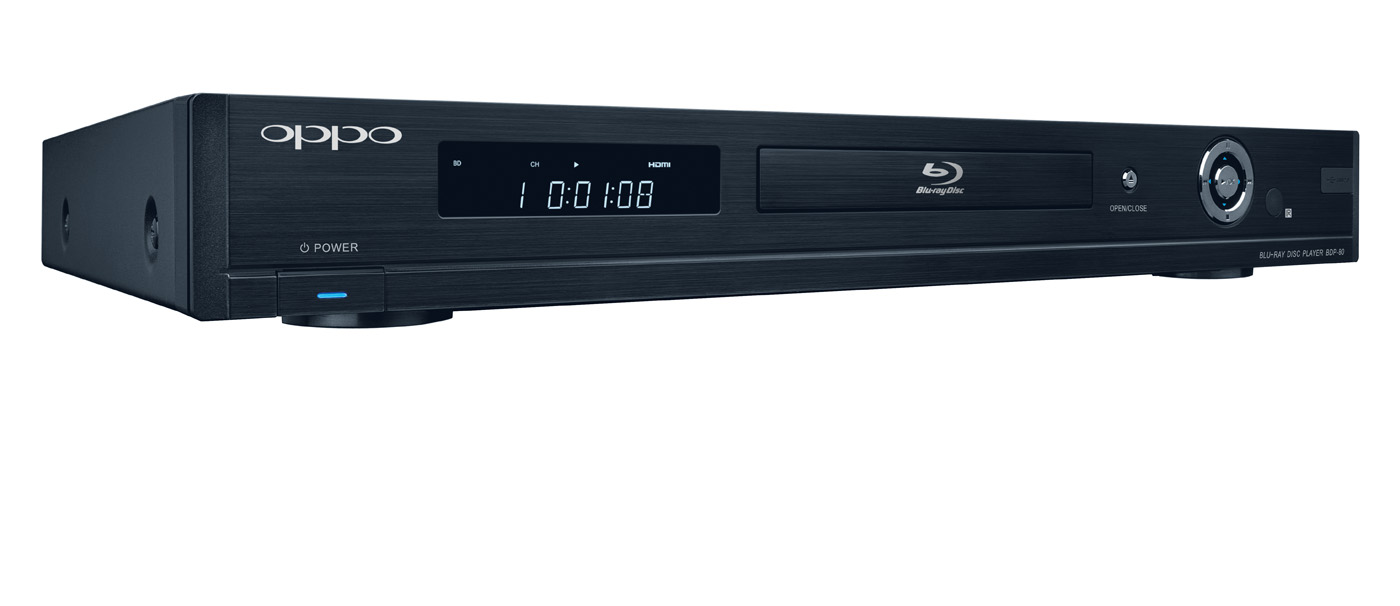
Oppo BDP-80 Blu-ray Player

Back of Oppo BDP-80

The Oppo BDP-80 costs $200 less then the highly rated BDP-83, with some removed features

But changing the business model may be the only way to truly halt piracy, since technical solutions will always have technical workarounds. Radiohead’s guitarist, Ed O’Brien, believes this to be the case, that the music industry needs to stop running “an analogue business model in a digital era”. The digital revolution has been bad for many traditional industries, like the newspaper industry, but I for one thinks that it actually brings more benefit to the music and movie industries. Certainly, DVDs (and now Blu-ray) has been pretty good for the movie industry. But the next step needs to be taken, where VHS to DVD still relies on physical media, the next step would be to move to an entirely digital platform. Physical media means production, transportation and display space and warehousing requirements for retailers. Digital media does not carry any of these overheads. So instead of stocking the top 100 CDs, retailers could easily stock a collection consisting of hundreds of thousands of songs through kiosks. And it’s even easier to do this online, by putting every single song, movie, expired TV show, lost episodes – everything – online and for sale. The obscure then becomes accessible, and anyone wanting to watch an episode of a long cancelled TV show, or a single from a virtually unknown artist from 1965, can do so and copyright holders can benefit, as long as the price it competitively. Instead of trying to sell millions of copies of the same thing to consumers, they can sell millions of different things. That’s the power of digital and the Internet.

High Definition

Let’s move onto HD. Oppo has released details of their sub $300 Blu-ray player, the BDP-80. The cost cutting has been made by removing a video processor, cutting back on analogue outputs and SACD analog output, as well as removing some of the remote control functions like IR In/Out ports and a back-lit remote. Oppo recommends the new player for most people, other than those with the largest screens and want the best possible picture quality courtesy of the on-board ABT2010 video processing chip found on the $500 BDP-83.

Once the player gets released, I’m sure there will be more extensive reviews and video testing to see if the BDP-83 is still work spending extra for.

Gaming

And finally in gaming, the PS3 motion controller has been delayed until just before the Xbox 360’s Project Natal is set to be released. I think Microsoft will be thrilled with the news, since the PS3 motion controller was supposed to have been released in the next few month.

Instead, the controller add-on will be available in Autumn/Fall of 2010, possibly just before the November release date of Project Natal. The Wii-like PS3 motion controller will give a much more accurate than the Wii controller, and coupled with the PS3’s EyeToy, it can give the Wii some competition when it comes to casual games, and the Natal as well in terms of motion controls mixed together with augmented reality.

Despite the recent PS3 successes, Sony is actually suffering quite a bit as price cuts, dropping PS2 sales, and more worryingly, dropping PSP sales have caused a huge $1.3 billion revenue loss from 2008 to 2009. Both Nintendo and Microsoft only experienced negligible losses compared to 2008 ($200 million for both). Most of Sony’s losses stemmed from a $700 million drop in PS2 revenue, which was always going to happen at some point. What Sony had hoped is that PS2 gamers would have moved straight to the PS3, but that apparently hasn’t materialized (not yet, anyway). Brand loyalty apart, there are more options for PS2 gamers to upgrade to compared to PS1 games when they moved en mass to the PS2. The Xbox 360 offers cheaper gaming, while the Wii offers casual gaming that was once served by selected PS2 titles. And in terms of PS2 platform exclusives, many of them are no longer exclusive, and the must have PS3 exclusives are mostly new to the platform (Uncharted, for example). With that said, the new Final Fantasy game is coming soon that may be enough to convince many PS2 owners to upgrade, but once again, it’s no longer a platform exclusive either.

Anyhoo, that’s all I wanted to write this week. Have a nice one.

Weekly News Roundup (17 January 2010)

Sunday, January 17th, 2010

December 2009 was a monster month for the Wii, having otherwise suffered a pretty bad 2009 (relatively speaking, of course). You can read all about this in the December 2009 NPD US video games analysis post. The PS3 has been averaging close to a 90% year-on-year increase in sales based on the last few monthly figures, although it’s still involved in a close fight with the Xbox 360. Don’t know if this says more about the popularity of the Slim/price cut, or about how poorly the PS3 was doing this time last year. Probably a bit of both.

In any case, all of this is pretty trivial compared to what’s happened in Haiti during the last week. This is a good page set up by Google that gathers all the information you will need, whether it’s to read more about the crisis, to donate or try to communicate with people you know in Haiti.

Copyright

Starting with the copyright news, Real Networks has lost an anti-trust counter-suit against the MPAA. As you may know, the MPAA sued Real Networks’ RealDVD product, a software that creates a heavily copy protected copy of a DVD that can be played without the original disc. The MPAA won a successful injunction against the sale of Real DVD, but Real Networks hit back with an anti-trust lawsuit claiming the MPAA studios, through DVD copy protection licensing, is operating a cartel and prevents products like RealDVD from existing legally.

RealDVD

RealDVD is another step closer to permanent death, if it hasn't gotten there already

It was always a shot in the dark, so it was no surprise that it missed the mark. The judge explained that no damages could be found from the MPAA’s actions, and that the only damage was being done by RealDVD. Not what Real Networks wanted, and their CEO stepped down, probably not as a result of the court’s decision, but perhaps also not entirely unrelated. So was the judge right in dismissing the case? First of all, a cartel is defined as “a combination of independent business organizations formed to regulate production, pricing, and marketing of goods by the members”. We know that DVD copy protection is so ineffective, that a junior computer science student probably has the ability to break the code in less time than it takes to make a sandwich. And so from a technical point of view, DVD copy protection is useless. But the studios still persist with it, and charges licensing fees all over the place. For something that they know doesn’t work. So instead of acting as a copying deterrent, it’s basically there only for licensing, and through licensing agreements, to prevent people and companies from doing things to the DVD that the studios don’t agree with. And it was with the licensing agreements that they attempt to kill innovative products like RealDVD and Kaleidescape, products that may affect the production, pricing, and marketing of DVDs, and also the studios’ own products like Digital Copy and Managed Copy. And it wouldn’t be like the first time that DRM is used in an anti-competitive way, and even Apple has gotten into trouble in Europe over this very issue. You get the feeling that governments and courts really do not yet understand the full implications of DRM, and its anti-competitive nature when coupled with something like the DMCA, as otherwise the DMCA would never have been passed or there would be provisions in there to force interoperability and to prevent anti-competitive behaviour.

OiNK

OiNK's founder is found not guilty. Nobody saw that coming, honestly.

But it seems not all courts, and juries, can be intimidated by the copyright holders’ usually well (and expensively) prepared cases. Alan Ellis, the founder of the music sharing service OiNK, has been found not guilty by a UK court, despite the website being shut down in 2007. The “Google” defence was used, in which Ellis’s defence claimed that OiNK operated in the same way as Google, by not actually hosting infringing content, but by simply organising the available information. Of course, this is true of all BitTorrent download websites as well, and the same defence did not work for The Pirate Bay. But for Alan Ellis, this is a major victory, and a permanent one, since there’s apparently no more avenue of appeal for the copyright holders, and so the decision will be final. Whether this sets a precedent that will be referred to in future cases, particularly ones in the UK, only time will tell.

With courts being sometimes unreliable, the RIAA wants the FCC to act and make ISPs copyright cops in the US. ISPs disagree, as do digital rights groups, consumer groups, and some business groups. While these groups have been making the right arguments, I’m still somewhat surprised that more has not been made of the implications of allowing private companies such as ISPs to spy on user’s activities and pass on user information onto other private companies for financial benefit. And even if you take away the privacy arguments, there’s still the issue of whether ISPs have the power or the legal knowledge to determine just exactly what is infringement. I know it is common sense in most cases, but we do have police and courts for reason, and that is to prevent private justice being dished out without regulation to guide the rulings and prevent abuse. If the RIAA is given the power to order ISPs to become copyright cops, do you trust them (or the ISPs, who will be fearing lawsuits from the RIAA if they do not comply) to not abuse this power, which effectively can cut off their most important form of communication, which can lead to serious consequences such as the loss of a job or a business.

High Definition

In HD news, more information is slowly trickling out in regards to 3D TV and Blu-ray. To summarise the whole situation, I would say that an active shutter LCD glasses will be used, which will require a display with 120Hz refresh. Now, most TVs have that but what they don’t have, at the very least, is the ability to actually accept a 120Hz signal (most accepts the 60Hz as outputted by Blu-ray players, and then duplicate frames to get to display it as 120Hz). This, plus signal processing requirements and certain display issues, will mean that you will definitely need a new TV, unless it is one of the very few that is stated to be 3D ready. For similar reasons, you will also need 3D ready Blu-ray players, although as mentioned here before, the PS3 should be fine with a firmware update (and this may be true of a few other players as well).

3D Ready Logo Mock Up

A mock up of what the "3D Ready" logo may look like

I suspect as we get closer to the 3D rollout, terms like “3D Ready” will have more meaning, and perhaps some kind of certification and labeling program will be introduced to avoid consumer confusion. So the question many of you may have, and it’s one that I’ve been asking myself as well, is that should you buy a TV now or wait until the 3D ready sets are out. For those in the US, you won’t have to wait long, and if you like plasma TVs, then the new Panasonic 3D line up will be the one you need. The cost of adding 3D compliance to TV sets is probably not all that high, and so I would expect most new models to be 3D ready by the end of the year or sooner. But the real question is do you want or need 3D? That’s a question only you can answer, but my feeling at the moment is that 3D is a gimmick, but one that I would definitely want to experiment with.  So need? No. Want? Maybe. So with that said, if I find a new TV (and I need one) for a good price and I’m in a hurry to buy, then I’ll probably buy it even if it doesn’t have 3D. But I will at least wait until several 3D models are available and then see what the price situation is like, and if there’s no premium on the 3D models (and I don’t expect there to be), then I’ll get one (and then probably spend less than 1% of the time using the TV in 3D mode). If the TV manufacturers do charge a large premium on the 3D models, then I’ll consider that a rip off and buy one of the outdated 2D models on the  cheap.

Speaking of rip offs, how would you like paying $3,500 for a Blu-ray player that only costs $500 (or less). The $3,500 Lexicon BD-30, marketed as a THX certified Blu-ray player, is apparently nothing more than an $500 Oppo BDP-83 with a new outer shell and minor modifications (like a new splash screen when the player loads). The Oppo is not THX certified, but somehow the Lexicon, with practically identical hardware, gets it, which suggest THX certification is little more than handing over some cash to THX, at least in this case. So if you want a THX certified Blu-ray player, without the actual THX logo on the player itself, then I have to throw yet another recommendation towards the Oppo BDP-83.

If standalones are not your cup of tea, and HTPCs with Blu-ray playback are too bulky and noisy for your needs, then Asus may have just want you need. It was only a matter of time before Nvidia Ion enabled Nettops come bundled with a Blu-ray drive and allow you to play Blu-ray movies in these small, quiet systems, and the Asus Eee Box may be the first of many that can do this. They would make ideal home theater PCs, due to the small space, low heat and noise and the usually stylish design of the systems.

Gaming

And finally in gaming, the NPD analysis sort of covers this week’s news items. The reactions from the companies involved are, as always, positive. Nintendo will be happy no doubt having dominated everything in December, having lost a lot during the rest of 2009. Sony is happy because the PS3 is finally selling in numbers that the successor of the PS2 should be selling at. And Microsoft is happy because they managed to get themselves a good lead over the PS3, and will look forward to holding on before Project Natal arrives, and with all the hype the add-on is getting, there’s a good chance that Microsoft will get a bit of the “Wii-effect” when it comes to selling Natal to non traditional gamers.

The other piece of news is that the PS3 3.15 firmware is now a mandatory install, unlike previous firmware updates that have always been optional. This is bad news for those that have been skipping firmware updates fearing that each update increases the risk of their console suffering the dreaded “no disc reading” problem, or the infamous Yellow Light of Death. While I was a victim of a the “no disc reading” problem after a firmware update, I was recently forced to install 3.15 as well, not because it was mandatory, but because I had to if I wanted to play new Blu-ray movies that required a AACS key update. So far, the PS3 is acting normally, and I had a good chance of that happening since the firmware troubles I suspect affects much less than 5% of all PS3s. Nobody knows just how many PS3s are affected of course, and Sony refuses to even acknowledge there is a problem even after being sued over it, and with most PS3s unaffected, fanboys can easily claim everyone who says their PS3 bricked after a firmware update is a liar or just someone who doesn’t know how to use sofisticated [sic] equipment (until it happens to them, of course). What I really should do now is sell my old PS3 and get a new one, which will be easier to sell now that I’ve managed to get the latest firmware loaded on it. You really do have to admire Microsoft’s eventual response to the RRoD problem, even if you can’t exactly admire the design and engineering of the actual console.

Okay, that’s all I have this week. I will be writing a 2009 year in review type of piece for the NPD video game stats, which should be online this week or the next at the latest.

Weekly News Roundup (10 January 2010)

Sunday, January 10th, 2010

Now that’s more like it. A bit more news finally this week. In fact, there’s a lot of news mainly due to the CES 2010 currently happening in Vegas. Most of the news came out of the show, and most of it was about 3D, which was kind of predictable. While everyone was talking up 3D HD, I had to regress from HDMI back to component due to a broken TV, and then suffer the illogical copy protection system that’s present. Hollywood can be so freaking paranoid at times, and even if their fear is justified, they’re still fighting on the wrong front when it comes to online piracy. How is stopping someone from watching upscaled DVDs through component output going to help stop online piracy? I also took the time to update the MeGUI guides for Windows 7, which works quite well after some initial tweaking needed due to 7’s new built in codecs framework.

Copyright

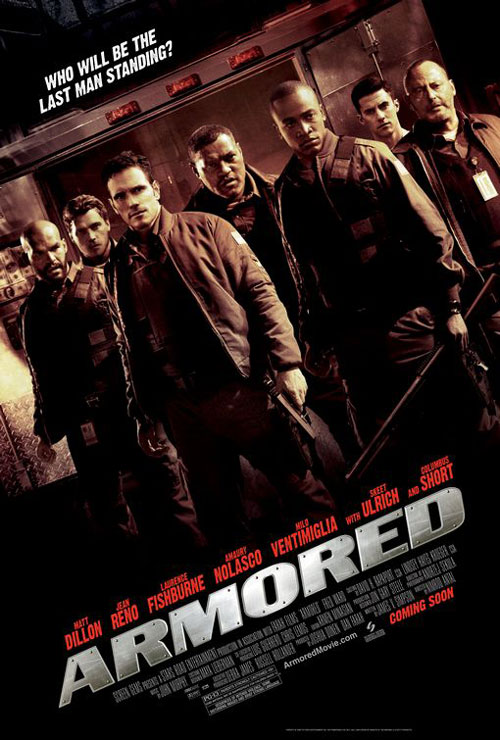
Let’s start with the copyright news. The Pirate of the Week award goes to Sony, who managed to not only leak a “still at the cinemas” movie to the PlayStation store in perfect digital quality, but also managed to make it a free download for those quick enough to grab this very special offer. But at least the file was DRM protected so that it couldn’t have been leaked online, right? Um, not quite, and if you search the regular BitTorrent networks, you’ll find a “PSPRip” version of the film which came from this Sony gift. Or should that really be “SonyRip”?

Armored Movie Poster

Sony like the movie ‘Armored’ so much that it decided to give it away free on the PlayStation Store

I know the MPAA has been talking about wanting to release movies digitally while they’re still showing at the cinemas, something that cinema owners are vehemently against, but what Sony has done here is probably not what the MPAA had intended. Although the MPAA still had time to roll out a new DRM scheme, which basically “pirates” Disney’s Keychest initiative. Basically, it’s a purchase once, view everywhere scheme, and they intend to do this by adding DRM and online authentication to everything. It seems that the lesson the MPAA learned from the RIAA’s failed experiment with DRM was that it failed because interoperability, that is the ability to play the file everywhere, was not ensured. That’s a valid lesson, but online authentication means that if people are away from the Internet, then their entire movie library becomes useless. And I’m sure there will be device manufacturers that do not buy into the MPAA’s DRM licensing scheme, and hence, interoperability will still be an issue. I think the biggest lesson from the RIAA’s DRM fiasco should be that consumers just don’t like DRM, and that in the end, it wasn’t really necessary anyway since DRM free or easily ripped versions of the music (or movie) will still be widely available and ready to be pirated online regardless of how many layers of DRM you put on the music (or movie).

In fact, just this week, the “consumers don’t like DRM” argument was put forward to the courts in relation to the appeal of the Joel Tenenbaum verdict, the student fined $675,000 of downloading 30 songs. The argument is that because DRM limits choice, the only choice then becomes piracy. I’m not sure I agree with this argument, and I certainly don’t think it will hold up in court, because DRM free alternatives were available in the form of CDs, which can then be easily made into digital form legally (not falling foul of the DMCA because CDs are not DRM’d). The other argument that Tenenbaum’s lawyers will use is that the rewarded damages are just too excessive, which is harder to argue against. It wasn’t as shocking at the $1.92m verdict awarded against Jammie Thomas-Rasset for 6 songs less than Tenenbaum, but the RIAA did it to send a message.

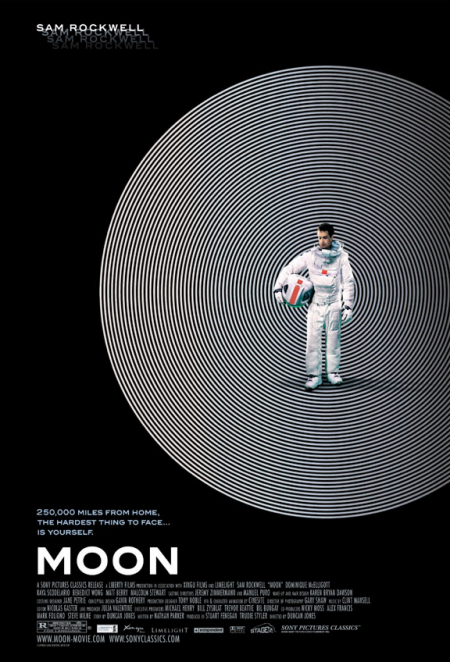
Moon Poster

But Sony didn’t like ‘Moon’ at all and refused to support it for an Oscar in order to fight online piracy

While still stinging from the “SonyRip” incident, I guess the suits at Sony HQ decided to balance this kind gift out with something nasty, which came in the form of not supporting their own film, Moon, for an Oscar for which the film’s star Sam Rockwell actually has a chance of winning. The lack of support comes in the form of not releasing screeners to voters, which need to be watermarked to prevent piracy, but Sony doesn’t want to spend the money. Sony says they need the watermarking because the movie is yet to be released in the US, although even the Blu-ray version has been available in the UK since mid November, so there’s hardly a lack of a good source for the pirated version. Another quick check on the regular BitTorrent networks and a DVD rip of Moon is indeed available. The cost of issuing the watermarked screeners would probably be less than the cost of the PR campaign Sony now has to put out to counter criticism of this move from celebrities such as Iron Man Director Jon Favreau and Coraline writer Neil Gaiman. The next step for Sony would be to block the release of a film entirely from all channels, if it’s really that serious about piracy (although it might still get leaked online). Better to destroy the film just after it comes out of post production, than to suffer from piracy, right?

While not doing something as extreme, and for entirely different reasons, but Warner and a few other studios (surprisingly, not including Sony) put pressure on  DVD rental vending machine operator Redbox by refusing to give the right to distribute their movies through this cheaper and potentially revenue hurting new distribution method. Redbox even had to use made up cover art as the studios wouldn’t give permission to use the original artwork, but even the made up art work has come under legal pressure, although Redbox denies any wrongdoing. Warner then attacked Netflix and forced them to delay the rental of their DVDs, although they did offer as a compromise an extended range of movies that will be made available via Netflix’s digital service. All of this is about fighting new delivery methods that are cheaper and more efficient, to protect the dying business model that studios rely on. DVD rental revenue is actually up (cheap stuff sells more, wh0 would have thunk it?), but while the studios were busy fighting online piracy, they forgot that the Internet could also have been used to deliver new services and acts as a new distribution method for their content, and instead passed up the opportunity to the likes of Netflix and Redbox. Just like how the music industry passed up online music selling over to Apple’s iTunes, which is now making huge amounts of money that the music labels should have been making themselves if they had the vision to embrace the Internet, rather than not seeing anything good having come from the Internet at all (to paraphrase Sony Pictures CEO Michael Lynton).

Well if you can’t stop the piracy at the source, then perhaps you can go to the other end. The French government, now the symbolic head of a global crusade against online piracy, plans to put a piracy tax on Google which will be quite a little earner, as well as doing absolutely nothing to stop piracy just like every other initiative.

High Definition

Onto HD, or more accurately, 3D HD news. Let’s just go quickly through just a small selection of 3D related news items, most to have come out of the CES. ESPN is set to launch a 3D channel for sports programming, including the opening game of the FIFA 2010 World Cup.

Sony, Discovery and IMAX are set to do the same, but we’ll have to wait until 2011 for the new channel. After Toshiba’s first solid, but otherwise uninspiring Blu-ray player, the company’s next three Blu-ray players will be a little bit more feature packed, and yep you guessed it, 3D enabled. Well actually, only one model will be 3D enabled and it won’t be available until later in the year, but the two soon to arrive models will have Netflix, Vudu, CinemaNow and Pandora streaming support, and Wi-Fi connectivity on the more expensive of the two models. On the PC front, PowerDVD maker Cyberlink demonstrated 3D Blu-ray on a PC. The PC should have an easier path to 3D, since most have the processing power required to decode the “twice the information” Blu-ray video stream (one stream for each eye), and everything else can be done in software. Of course, you’ll still need a new monitor and a pair of glasses.

Panasonic 3DTV and 3D Blu-ray Player

Panasonic already has a range of 3D ready devices ready for release soon

Now there has been some confusion in regards to the requirement for 3D, and I’m still not 100% clear on all aspects of it, but basically, you’ll need a new TV or monitor. For the PC monitor, you’ll need one that can display 120 Hz, but most can only do 60Hz. The reason you need 120Hz is because due to the need to provide two separate pictures (one for each eye), a 60Hz monitor effectively only gives 30Hz to each eye, which is not nearly good enough to ensure a headache free experience. On the home theater front, there’s also some confusion as to whether HDMI 1.4 is needed for 3D Blu-ray. The answer is probably no, since the 3D Blu-ray specs say that the PS3 can be upgraded via firmware to support 3D Blu-ray, and PS3s don’t have HDMI 1.4 connectors. The part of the HDMI specs that provides for the higher bandwidth video transfer needed by 3D Blu-ray apparently already exists, but it was up to manufacturers whether they wanted to support it or not, and since there was no demand for it, most do not support it. HDMI 1.4 will mandate support, and so expect most new 3D ready HDTVs to use this version of the connector, although against it’s not strictly required. Panasonic’s 3D Blu-ray players will actually have both a 1.4 connector and a 1.3 connector for connecting to legacy equipment. And just because a HDTV displays at 120Hz (and even if it had HDMI 1.4), it doesn’t mean that it will be 3D ready. Most TVs display 120Hz by taking a the 60Hz input and then frame double, or even frame quadruple to 240Hz. However, 3D ready sets will need to be able to accept and process the true 120Hz signal that 3D Blu-ray players will output, and most can’t do that at the moment. That’s my take on it anyway, but basically, if the TV doesn’t say 3D ready, then it’s not 3D ready, probably. This information and the new logo for 3D Blu-ray can be found in this forum thread.

And it was a refreshing change to see LG announce a new Blu-ray player and it had nothing to do with 3D. Instead, it has a built in 250GB hard drive, not for storing managed copies (not yet anyway), but for storing downloads from VUDU as well as the user’s own content. Speaking of Managed Copy, there was hardly any mention of it at the CES, apart from Cyberlink demonstrating a jukebox system for Blu-ray which will utilize Managed Copy. Disappointing, but not surprising.

Gaming

And in gaming, not much other than more 3D stuff, with the PS3, Microsoft still showing off Project Natal, although it won’t be here until 10 month or so from now, so it’s hard to get excited over it yet. Nothing much for the Wii, except it may support Netflix at some stage.

The CES concludes today, so there will be more digestion of the news over the coming week I suppose, as well as any last minute announcements. I’m getting a bit tired of this 3D thing anyway, because I still can’t see past it as just another short lived gimmick, which 3D will always be until the type where you don’t need glasses becomes mainstream. See you next week.