Archive for the ‘Electronics’ Category

Weekly News Roundup (12 September 2010)

Sunday, September 12th, 2010

I posted the August US video games sales analysis yesterday here. Nothing too surprising, but we’re getting into exciting territory now (if, one can be excited about video game sales stats, that is), what with the Move and Kinect on the way. Many have already expressed their opinion that the Wii is doomed, but rather than looking at it at a glass is half empty perspective, I think the Wii has done extremely well given what it offers. It was never going to last as long as the Xbox 360 or PS3, due to the use of old tech in the console. And the fact that its core audience are casual gamers, and casual by definition means these are not the type of users to buy a lot of games frequently.

Copyright

Let’s start with copyright news. Sometimes there is such a things as saying too much, and an anti-piracy firm based in India may have just admitted to too much in their pursuit of copyright infringing websites.

The managing director of AiPlex, Girish Kumar, has admitted that apart from requesting web hosts to shut down websites that are hosting or providing links to copyrighted material, they have even gone as far as to trying to “attack the site and destroy the data”. This could either mean actual server hacking, although it seems more likely to be describing an attack based on denial of service. Regardless, both acts are illegal in most countries (or at least frowned upon), and so using an illegal technique to pursue anti-piracy goals seems to be a bit over the top. Although if you consider that the likes of the MPAA and RIAA are willing to forgo even the basic tenets of democracy and rights to privacy, then a little hacking or DoS doesn’t sound too bad at all. While DoS isn’t a popular anti-piracy method, but anti-piracy companies have tried various similar techniques to make Torrent downloading a harder task. These includes uploading fake torrents, uploading invalid pieces to increase the number of errors, and massive leech based attacks, denying downloaders from connecting to seeds. As far as I know, these kinds of “attacks” are not illegal, although their effectiveness is highly questionable.

Sharron Angle

Sharron Angle sued by Righthaven for reprinting a newspaper article without permission

An update on the newspaper copyright trolling news last week, it appears that a Nevada Republican Senate candidate, Sharron Angle, has become Righthaven’s latest victim, being sued for up to $150,000 for allegedly copying/pasting a newspaper article. It will be interesting to see what happens, whether the settlement fee is paid up promptly, and whether this has any impact, positive or negative, on the actual election campaign. It was always a matter of time before someone prominent was sued by one of the copyright trolls, and it just made things a little bit more interesting. And if it was downloading one of the porn torrents I mentioned in the last WNR, then expect the fireworks to fly. On a side note, if I was running against Angle, I would use the slogan “Sharron Angle, She’s no Angel”. You see, that’s funny because people often misspell both words, and not a reflection or opinion on her actual character by this blog, since I have no idea who she is.

But one issue that has been raised before is whether an IP address is considered to be private data or not. If it is considered to be private data, then monitoring and storing it could in fact breach privacy laws in many regions. And one country seems to be moving in this direction, as a recent court case in Switzerland has pretty much made copyright trolling illegal. A government agency there actually took an anti-piracy investigation firm to court and won the case that basically confirmed that IP addresses are in fact private. Already, some are saying this ruling is a mistake which may turn Switzerland into a safe haven for copyright infringers. I like to think of IP addresses as akin to phone numbers (those with static IP addresses in particular, but those with dynamic ones, then it’s more like having a different pre-paid number every so often). Just like a phone number, an IP address is required to establish communications, and because of this, it means it has to be given out to other parties. But just because it can be seen publicly, like say in a phone book for phone numbers, doesn’t mean that it isn’t personal, private data. You can’t sell a list of my phone numbers for money without my permission, for example, and I think the same should apply to IP addresses. The fact that these companies are making money collecting other people’s IP address suggest there needs to be more protection on Internet addressing. Certainly, just like it was argued in the Swiss case, IP addresses should not be used so negligently in civil cases – criminal cases would be another matter, of course. Hopefully, other countries will follow suit, but somehow I doubt this will happen …

And this is also why making ISP liable for their subscribers potentially illegal activities is just so wrong. Of course, the powers that be aren’t asking ISPs to be liable for all crimes, just copyright infringement, which seems strange to me. Why would the ISP be more liable if one of their subscribers downloaded the movie Inception, then say if another user used their Internet connection to send spam or commit Internet fraud? Either they’re liable for everything, or they’re not liable for anything that their subscribers do. One of the more controversial points of the ACTA is the request for member nations to implement new laws designed to add liability for ISPs, but it seems that this provision is no more. So instead of forcing every country that is a signatory to the treaty to make their ISPs liable, the requirements will now most likely be much more vague, although many countries are still very keen to adopt similar legislation to France’s Three Strikes, for example. And again, I have to ask, why is copyright infringement so special that it requires special laws to overrule long standing privacy laws and practices, and to force liability onto ISPs, when other more or less serious “crimes” are not getting the same attention? I haven’t heard one argument that explains this, other than the fact that copyright infringement is far too common and so it needs something special. But I would argue that spam, spreading malware, hacking, DoS, fraud, identity fraud, Internet bullying and the myriad of other crimes that can be committed via an Internet connection all deserve more attention than helping the movie and music industry make more money. Spam and spam related fraud, for example, takes billions out of the economy each year, and yet, we see very little action (comparatively) from government agencies and industry bodies in combating this rather serious problem. Is this because the anti-spam lobby isn’t as rich or powerful as the anti-piracy lobby?

Steam logo

Steam offers cheaper games via sales, and the frequency of sales suggest it's a strategy that's working

And all this misplaced attention on anti-piracy all assumes that piracy is actually hurting the economy badly, but you look the record profits that Hollywood studios and music labels are bringing in, and you wonder is this really the case? Is piracy really that bad? Well, for video games at least, an industry experts says that piracy isn’t so bad after all. Scott Steinberg, head of technology and video game consulting firm TechSavvy Global, says that piracy can actually help the video game industry. Or more precisely, the industry can use what makes piracy so popular to their advantage, as opposed to continuing the “arms race” against piracy websites and groups, a race in which the industry is losing badly, or using the legal system (and politically lobbying) to stop piracy. Instead, Steinberg argues that by making games cheaper, or even free, and charging small amounts for add-on content, may just be the way, pointing to free social network games such as Facebook’s FarmVille (which is free to play, but extra items can be purchased to enhance the gaming experience). This isn’t actually a new strategy, or one that hasn’t been tried – it has been deployed in practice and the results are usually quite good. For example, Steam are now offering discount games (or even free ones, like Portal a couple of months ago) much more often than before, and I suspect that’s because it’s making them much more money than charging full price for games. Of course, hit games like Starcraft II will always sell well, and a high price is sometimes justified, even though it will lead to more piracy. But I think a balance can be achieved, where you can minimize piracy by reducing the price, but not so much that it becomes unprofitable – if the balance is right, I think publishers can look forward to short term increases in revenue and bigger long term benefits such as purchasable add-on content, sequels, paid online services. The alternative is to take the short-sighted approach and continue charging $50+ for games, and then complain about why gamers aren’t buying all the numerous good games that come out every year.

High Definition

In 3D/HD news, what if there was a way to get Blu-ray movies to play on the iPad, or even the iPhone?

VLC for the iOS

VLC for the iOS is coming soon, but don't expect full HD clips to play well on the iPad

Sounds too good to be true? Then perhaps it might just be. The upcoming VLC player for iOS promises to support HD MKV files, which for those with the skills, means they can rip their Blu-ray movies and get it to play on the iOS. But play it might, just don’t expect to be at full frames, or anything approaching semi-playable if this video demo is any clue. Without some sort of optimization and acceleration support, it’s just expecting too much of the 1 GHz processor in the iPad, remembering that even a P4 3.2 GHz processor struggles to play Blu-ray movies at more than 15 FPS without help from a GPU that supports AVC/VC-1 video decoding.

So the dream of being able to use your iPad for 1080p HD movies remains just that … a dream. For now.

But that HD MKV file may not play on the iPad, it may very well play on your TV. Many TVs already support the decoding of HD MKV files. Then there are HD streams on the Internet too, and these will be much easier to access thanks to Google TV, which is coming to a TV near you this Christmas. It’s hard to describe exactly what Google TV brings to your TV, but just have a look at the video I posted here, and it will give you a fair idea of what to expect. I’m not sure browsing the web on your TV is going to be great experience, without a keyboard and mouse that is, which is why most Internet TVs have offered only “closed” Internet, just apps that have been custom designed to make using them easier with the TV remote. But with Google TV, perhaps it will be incentive for websites like Facebook and YouTube to offer a version made specially for TV/remote navigation (if they haven’t done so already, in the case of YouTube XL).

Gaming

And finally in gaming, the PS3 has just had a new firmware out, and the changelog lists “additional security features” as pretty much the only change.

So I’m just going to take a wild stab here and say that it had something to do with the PS Jailbreak device. And guess what, the PS Jailbreak device certainly no longer works after installing firmware 3.42.

But for those that avoided the update, then there will apparently be a new updated version of the Backup Manager. It promises support for future firmware updates (I gather this means that someone will go about hacking 3.42 or later to ensure that the exploit is still there, and that online services are still working). The update also promises native MKV playback, a much missed feature of the PS3, and even bringing back PS2 emulation. So it’s clear that the PS Jailbreak device will be more than just about piracy in the future.

And that’s all the news I have for you this week. Have a good one.

Weekly News Roundup (5 September 2010)

Sunday, September 5th, 2010

Good news everyone! Another edition of the WNR is ready, for you to enjoy. Actually, since I write the intro first, the WNR isn’t ready at the exact time I’m writing this. And I’m not sure why I started with a Futurama inspired phrase, except perhaps for the fact that I’ve been watching Futurama lately. I kind of feel cheated having previously purchased the *entire* Futurama series on DVD, only for the show to be revived. Let’s just hope they don’t revive Arrested Development as well, to ruin my *complete* collection. It’s pretty news lite this week, but it won’t mean I will write less crap. You’ve been warned!

Copyright

Let’s start with copyright news, like I always have with the 150+ WNRs I’ve done so far. Copyright trolling is a relatively new term that’s been coined to describe the act of suing for copyright for profit, much like how patent trolls secure patents with no product, in the hope of one day profiting.

The latest trend in copyright trolling is in the dying newspaper business, and I’ve reported on the sue-for-settlement activities conducted by Righthaven for Stephens Media, owner of the Las Vegas Review-Journal amongst other papers. But it looks like another newspaper chain has signed up, with Arkansas based WEHCO Media also joining the trolling activities. These cases usually involve suing blogs and aggregators for posting full versions of articles published by the newspaper chains. Now some will argue that there’s nothing wrong with this, and as someone who has had their articles copy/pasted without permission many times, I kind of agree. But as someone who also runs websites that contain user generated content, it’s hard to ensure your users don’t also break the rules by copying/pasting articles. The DMCA safe harbor provisions should protect website owners in these kind of situations, as long as they have clear, enforceable rules in regards to copyright, but it appears the DMCA is not offering protection to those being sued, unless they go to court to claim safe harbor, as their own expense. And while I agree that it’s important to protect copyright, the attempt at monetization here seems a bit too obvious – it’s almost as if this has become a new source of income for the struggling newspaper industry. This blog isn’t well suited to discuss how to save the newspaper business, but with the iPad and similar devices, there does exist a small window of opportunity for innovation. If newspapers can deliver an unique product for devices like the iPad, based on a paid subscription service, then there is potential there. Not trying to do their work for them, not that I have the ability anyway, but perhaps by making news more interactive, with real feedback (polls, text/video comments, user video updates), by providing more in depth coverage, more multimedia coverage – they’re all directions to look at. It’s certainly a better long term solution than copyright trolling.

The Hurt Locker

The US Copyright Group is scoping for more potential targets in their Hurt Locker lawsuits

And an update on the other infamous copyright troll, the US Copyright Group are moving ahead with their The Hurt Locker cases, with the first users receiving notices via their ISP after the USCG’s subpoena request to ISP Qwest. So for those hoping the USCG would quit after finding more resistance than first expected will be disappointed. What I fear, and I’ve covered this before, is that copyright trolling will be used as an excuse to bring in even harsher copyright laws. After all, three-strikes is better than the one-strike system that copyright trolls are relying on, right? This has already happened over in the UK, after all. And just like overseas, taking the same approach and suing for downloading pirated porn has arrived, and it is expected to bring in an even higher ROI. I mean when accused with downloading a movie called “Shemales From Hell”, even if you knew you didn’t download this file, would you dare to challenge this in court? Of course not, and people will pay up almost every time, and that’s exactly what the law firms are counting on. Is it legal blackmail? Does it sound like a scam? But it is legal, and expect more firms to take up this potential lucrative practice.

Speaking of scams, if I told you I could offer you free unlimited music download from all the major labels for only $25 per month, and since this is a new service, I’m waiving the $25 per month fee for a limited time, and all I need is your credit card number, then would you trust me? I know I wouldn’t trust myself, thanks largely to the Scrooge like pricing strategy of the major labels, ironically. It just sounds to good to be true, and so it probably isn’t true. So beware of sites offering too good to be true offers, because they may be offering illegal services, or worse, offering no services at all.

High Definition

Moving on quickly to HD/3D news, there are a couple of important announcements regarding Blu-ray 3D. But before we get to that, why did the Blu-ray people decide to call this thing “Blu-ray 3D” and not “3D Blu-ray”? Should it be at least “Blu-ray: 3D” or “Blu-ray in 3D”.

Avatar 3D Mockup

Avatar 3D on Blu-ray, but only for Panasonic 3D TV buyers

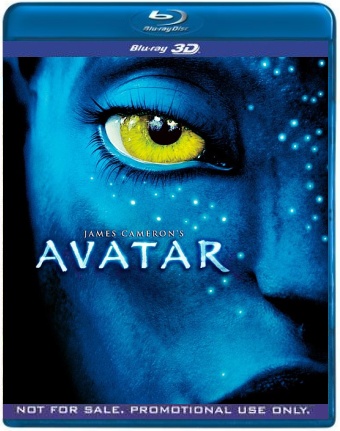
Anyway, the first announcement is that Avatar will be released on “3D Blu-ray” in December. But only to those with Panasonic 3D TVs. It’s a shame such a high profile title is being released as a manufacturer exclusive title, but with the close links between Panasonic and the movie, this was never a big surprise. The details are still not available, so we don’t even know if the title will be free for all buyers of Panasonic 3D TV’s, or only offered to those that buy a TV during the promotional period. Those who can’t wait and don’t have Panasonic equipment, then eBay may be your friend. Otherwise, expect the general release 3D Blu-ray version of Avatar sometime in early 2011, maybe in April, exactly a year after the 2D Blu-ray release. Or sooner.

The second announcement is that the eagerly awaited 3D Blu-ray firmware update for the PS3 won’t be coming this month as promised earlier, but should still be here before the end of next month. This is kind of a big deal for 3D Blu-ray, because it would at least guarantee that there will now be millions of 3D capable Blu-ray players in people’s homes, and that may help people make up their minds when buying their next TV (whether it should be a 2D only or 3D). But it would be a bigger deal if more movies are made available on 3D Blu-ray, because the current selection is pretty thin.

New Apple TV

Cloud storage for music and movies come to the mainstream via the new Apple TV

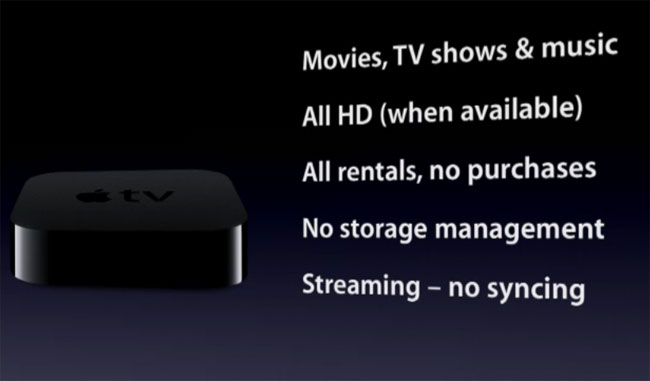
Apple announced new iPods recently, but buried amongst the announcements was a new updated Apple TV. Dubbed Apple’s pet project, the Apple TV has not received the same amount of attention and marketing as their other devices. But the new Apple TV is slightly controversial, as Apple is asking people to change the way they enjoy movies and TV shows this time  – by renting, and not buying. Apple plans to do this via the cloud, which is just a fancy way of saying that everything is online, and nothing gets downloaded. But I have serious doubts about such a service taking off because of a few fundamental issues. One, people still like to buy movies and TV shows, as people do re-watch their favourite movies or TV shows, and most don’t want to pay every time they do it. Two, not everyone has an Internet connection capable of streaming the HD video that Apple is promising, not without some buffering, which then becomes just downloading (so not very “cloudy” at all). And three, Apple’s argument that people don’t want to manage large video and music collections simply doesn’t stack up, to me at least, because people do that all the time. And unless Apple offers the ability to store our own sourced content in the cloud (whether it’s ripped from CDs, or purchased from other stores), then there will still be the need to manage a file collection of some sort. But as long as you only use Apple products and services, you’ll be fine, and that’s what Apple is counting on, I suppose – interoperability can take a back seat.

But the biggest problem I have with this approach is still number one, the fact that you can’t buy movies. Just because content is stored in the cloud, doesn’t mean you can’t buy them. The only difference is that with purchased content, you don’t have to pay every time you access it in the cloud, but by providing such a service, Apple would have to charge more per music/movie file made available for purchase on the cloud, compared to a download purchase. And when faced with the choice, people may still just go for the cheaper download and choose to invest a bit more time managing their own file collection locally (or via a third party cloud hosting service). And that’s not what Apple wants.

So cloud storage is great, but as long as the fundamental problems gets solved first, specifically people’s average Internet connection speeds, DRM/interoperability, and please please allow people to purchase stuff.

Gaming

And finally in gaming, more news on the PS Jailbreak device, which last week say legal action in the Australian courts which led to a ban on the device.

This week though featured news that Sony won’t have liked, in that someone has managed to extract the software from the PS Jailbreak device and have made it open source. Dubbed PSGroove, the open source version won’t allow pirated games to be played to avoid too much legal trouble (although there will still be plenty of trouble, I can guarantee it), but it does allow unsigned code to run on the PS3, in other words, homebrew! The PS Jailbreak exploit is based on tricking the PS3 into thinking that it’s a USB hub of some kind, and an overflow exploit to inject code to make it all work. The nature of this exploit means that it’s easy (but not trivial) to build your own USB device, or even use your existing USB device to do it (like smartphones, for example). But what is trivial perhaps is Sony’s “fix” for this exploit, so this exploit is unlikely to work on firmware beyond version 3.41.

And so we come to the end of another issue of the WNR. Hope you enjoyed this edition as much as I enjoyed writing it.

Except I didn’t enjoy writing it 🙂

See you next week.

Weekly News Roundup (29 August 2010)

Sunday, August 29th, 2010

After my Australian NBN rant last week, there won’t be a pre-WNR rant this week. I really probably should have put that segment as its own blog entry, but then even less people would read it, and a good rant is only as good as the number of people that it reaches. There’s still no firm outcome  in the Australian election, so the fate of the NBN still hangs in the air, but I hope it goes ahead, not just because it means I can finally have an alternative to my 0.8 Mbps 3G connection that dies every 30 minutes due to congestion at peak  times. There’s a bit more to go through in this WNR, so let’s get started.

Copyright

In copyright news, the RIAA is at it again, and it now wants the government to create even tougher copyright laws, claiming the DMCA that the RIAA and other groups hailed at the best thing ever, has failed.

YouTube Logo

YouTube or the RIAA ... I know which one I would choose if only one could exist ...

It has failed, according to the RIAA, because ISPs and websites can now “hide” behind it when their subscribers and users violate copyright. You see, the DMCA’s safe harbor provision protects ISPs, search engines and websites with user generated content as long as they have a copyright infringement policy which they enforce. Of course, the level of enforcement is left up to ISPs and websites, since enforcement can be costly, time consuming, and in the end, something will always get through. But the RIAA is not happy because, well, they’re never happy really. If they can’t stop 100% of all piracy, then they might have to innovate and stuff, and nobody wants to do that! But there is a reason why safe harbor exists, as otherwise Google, YouTube, and your ISP, would not survive the round after round of lawsuits that the RIAA, MPAA and others would love to throw at them, and not fail every time (haha Viacom, sucks to be you). I don’t know about you, but faced with the choice, I’d rather Google, YouTube and the Internet exist, rather than to make the RIAA and MPAA feel safer at night knowing piracy is stopped, even though it probably won’t bring them more money (since people who can’t afford to pay for stuff, still can’t afford to pay for stuff, even if you get rid of piracy completely). This Crusade Against Piracy needs to end.

But another day, and another new, innovative, fool proof, way to end piracy once and for all. The latest involved suing the people advertising on websites that host pirated content. That’s what Disney and Warner Bros. are doing by suing Triton Media which they claim supplied ads to websites hosting or linking to pirated content. But Triton Media may have been running one of the piracy websites in question, so it’s not an all out attack on advertising agencies. Yet.  Cutting the funding source for piracy websites, and thus ensuring there’s less incentive to start one, sounds like a reasonable plan, but reputable ad agencies already have policies which prevent these type of sites from signing up, but the less reputable agencies won’t care about a lawsuit or two if they’re located in places that are hard to sue. Thinking about advertising actually makes me think of adult websites (you see, I normally never think about, let alone visit, adult websites … it’s not worth the money I’m paying for my crappy 3G connection with limited bandwidth!). A lot of adult websites that host free content rely on advertising, and if there was a Crusade Against Porn (heh, it’s CRAP again), then the “Won’t Someone Think of the Children Council” or whoever is running the crusade will be going after the advertising agencies providing ads to these types of websites for sure. And I’m sure they’ll be calling on government to monitor people’s Internets so they’re not downloading pron, and asking for tougher laws against ISPs, search engines and websites that allow the spread of pron to go unchallenged. And most of us would then recognise how stupid and futile that moral crusade would be. Just like this one.

But this is about money, so the crusade has even more fervent support. But if it really is just about money, then surely record profits should at least comfort those in power that, maybe just maybe, there’s light at the end of the piracy tunnel. But it seems the only thing they’re seeing may be the imaginary piles of cash that piracy is taking away, although those piles of cash will now and forever remain imaginary, despite what happens to piracy. And then greed will ensure that they will probably ruin whatever they did right (like innovate) to earn the record profits they have. It may be starting with cinemas, which have recorded amazing profits in the last few years, but ever increasing ticket prices are now damping people’s enthusiasm for 3D and big screens, it seems. So innovate, more customers and profit, greed comes in, ruins everything. That’s about right. They want to have their cake, eat it, then have another cake, prevent other people from eating free cake, and then make people pay them for eating cake.

Jailbreak iPhone

Apple will do everything, including disabling your iPhone remotely, to stop you jailbreak it

And then there are cases when it’s not even about piracy. Take Apple’s recent patent application which could see them disable iPhones remotely if they’ve been detected as having been jailbroken. This is despite, or may be in retaliation to, the recent DMCA changes that allows for legal  iPhone jailbreaking. Apple can put up only a very feeble attempt to portray this as a piracy problem, as iPhone app piracy is possible on jailbroken iPhones, but that’s definitely not their main concern. Their main concern, as always, is to ensure everything you do on the iPhone has something to do with Apple Corp, and if you even try to use it without Apple’s involvement, then be prepared to at least lose your product warranty (which may or may not be legal, depending on your statutory rights as a consumer), and at worse, have all your data deleted and your phone disabled. And by making sure everything has to do with Apple, it ensure their current and future profits. And that’s all it’s really about, money. There is a (good) argument that Apple puts out which says that a controlled eco-system means a better product, and that’s true. And if many of the apps that only run on jailbroken devices were made available by Apple, then hardly anybody would bother to jailbreak their phones. But for various reasons, some directly related to Apple’s bottom line, others relating to deals they’ve made with phone carriers and such (which also affects their bottom line), Apple can’t let you use your legally purchased product in the way you want to. I have a simple solution to this – don’t sell us stuff that we can’t do whatever we please with. Instead of selling us iPhones, rent us the hardware, for peanuts or even for free, and then you can get to control how we can use the device. Otherwise, if you do intend to make hundreds of dollars on the iPhones, iPads, or even PS3s, then the hundreds of dollars we’ve paid should be enough financial compensation for daring to play  with (or “hack”) our devices and to want to do more with them. The versatility of most devices these days means there’s even more incentive to do more “hacking” than ever.

High Definition

And as a perfect way to segue from discussions about DRM to HD/Blu-ray/3D, the news about Samsung’s latest firmware update will do.

Samsung BD-P4600

The Samsung BD-P4600 is just one of the Blu-ray players affected by Samsung's firmware SNAFU

Samsung’s new firmware, believed to be DRM related, screwed up their BD-P*600 series of Blu-ray players that none of them, once updated, can now play Warner and Universal studios produced Blu-ray movies. Some users managed to downgrade the firmware, but those that couldn’t are now stuck waiting for Samsung to produce a fix, which won’t be coming until sometime in September. So it’s not okay to hack our own devices to make it do more, but it’s apparently okay now for manufacturers to hack *our* devices to make it do less (Sony … cough … Other OS … cough).

Okay, so this is not like the PS3 Other OS thing, because this was an accident, not a deliberate attempt to disable functions. But once again, it goes to the heart of the argument that frequent firmware updates are bad thing, and since the Blu-ray DRM sort of depends on this, this makes DRM a bad thing. Samsung stuffed up here, and they should pay the price. Something like a bunch of free Blu-ray movies for those affected might be nice, as long as these movies aren’t from Universal or Warner, of course.

But firmware updates are good when it helps to keep your hardware recent. The PS3 is a good example of these types of good firmware updates for the Blu-ray playback function at least, as successive ones have allowed the PS3 to keep pace with Blu-ray player development. Profile 1.1, 2.0, 3D … the PS3 has survived all of these, unlike other standalone players. But if the update is related to the optical laser, then the PS3 won’t be able to keep up, and this is happening now with BDXL, the new higher capacity Blu-ray format. Sony’s new standalone Blu-ray recorders, as well as those from Sharp, will now support BDXL, and it’s expected that standalone players will probably support them soon. But the PS3 won’t, and so could the PS3 be made obsolete as a Blu-ray player? I don’t think so, mainly because I don’t think movie studios will publish movies on BDXL. It is very much a recording format, and not even one that’s likely to be mainstream. There’s just no need for 100/128 GB discs, not when it’s much cheaper and easier to just provide multi-disc sets. But if BDXL do take off as a home recording format, then the PS3 will miss out.

The Blu-ray format overall though it still looking healthy, although as I talked about last week, the rapid growth seen last year is slowing down (but the major releases aren’t out yet for the year, and we’ll see how well Blu-ray does when Inception is out). Fox Australia thinks that 3D will help to ensure growth remains healthy. While it’s possible to deliver 3D via DVDs, there’s no standard like there is with Blu-ray (not to mention the lower quality), so this is one area in which Blu-ray is going to do very well compared to DVDs. Whether it will help it overtake DVDs as the most popular home video format, I really do doubt this. My experience with 3D is that it’s pretty much still a gimmick – good to have, some will love it, but I would prefer a good film (even in SD) over a bad one with great 3D effects, any time.

And some further development in the slow brewing, so quite boring war, between H.264 and WebM. The MPEG LA, the people responsible for H.264 licensing, has promised free H.264 streaming forever. So websites like YouTube can keep on using H.264 to stream their videos without worrying about a hefty licensing fee (although for Google/YouTube, they’ll be able to pay the fee with the change they find in Larry and Sergey’s sofa). But this latest development isn’t convincing Mozilla, because their problem with H.264 isn’t because it isn’t free (and licensing fee they would pay would be quite insignificant), but because it’s a closed, proprietary format. Unlike WebM. So unless H.264 can go open source, or at least some “web streaming” version of it to go open source, it looks like Firefox and Opera will be dealing with WebM instead, and webmasters will have to produce videos that work with both codecs, which is kind of annoying.

Gaming

And in gaming, and speaking of Other OS (he said three paragraphs later), now that the PS3 has been hacked, there’s been calls for Sony to bring back Other OS. I mean if disabling Other OS was to prevent the PS3 being hacked for piracy, and now that it’s been well hacked, why not bring it back?

PS Jailbreak

Sony is suing retailers who sell the PS Jailbreak kit in Australia ...

But Sony have acted quickly to stop the PS3 jailbreak device, suing three retailers in Australia who are selling the device in the federal court. And the next round of firmware update will surely attempt to do something to stop such devices from working, which will probably have produce some collateral damage, and cause something to stop working.

And that’s all the news I bothered to find this week. You know, it’s not me skipping news item after news item just because I was busy watching movies or playing games or something. I do actually have to look at the news item, see if it’s some press release or one form of advertising or another (“PS3 is most excellent, says Sony’s PR department”, etc…), or that it’s not an old news disguised as “new” news (a lot of that happening now, with websites spamming Google News and whatnot … there’s apparently this new format called HD DVD, according to a “new” news article I read this week), and then decide which makes it, and which gets skipped. It’s not as easy as it sounds!

Watching movies and playing games are much easier.

See you next week.

Weekly News Roundup (15 August 2010)

Sunday, August 15th, 2010

Looks like I’ll be managing to bring you this week’s WNR on time. Again, it wasn’t a week bursting with news items, but the NPD folks were kind enough to release their July US video game sales reports, and I was able to get the analysis done yesterday. The Xbox 360’s big win in July has people talking, mostly those who think that the result won’t last. I agree, because just like when the PS3 Slim was released, the sales boost is all very temporary. But as I said at the beginning of the year, 2010 is about Microsoft trying to make sure the PS3 doesn’t run away with things until Kinect comes out, and thanks to Sony’s mistake of not providing enough stock to the market, and thanks to the “surprise” release of the Xbox 360 “Slim”, Microsoft has managed to do this. Now, all eyes on are Kinect and whether it will give Microsoft the boost to overtake the Wii as the most popular console, at least in the US, for this generation. I think it may be possible, but mainly because the Wii isn’t looking too healthy – it’s an ageing console in terms of hardware, with mostly sub-par games (especially if one looks at third party titles), and both Sony and Microsoft will soon be able to do what the Wii can do. The only thing in the Wii’s corner is Nintendo’s ability to make great games, and it’s these great games and accessories (Super Mario Bros, Mario Kart, Wii Sports Resort, Wii Fit …) that are keeping the Wii alive. For now. Anyway, on to the news.

Copyright

Let’s start with the copyright news for the week. We’ll start with Viacom’s appeal of the US District Court decision in June to throw out their copyright case against YouTube.

Let’s be honest here, this news isn’t any sort of surprise at all. It wasn’t as if Viacom would just give up, and it’s very likely this case will end up before the US Supreme Court before we have a final decision. Viacom still argues that YouTube, knowing that piracy was happening on their website, didn’t do nearly enough to stop it and profited from it as well. YouTube argues that the US District Court’s decision was correct, that the DMCA affords them some level of protection for user generated content, as long as they had an active policy in place. Whether that policy is good enough for the likes of Viacom, and whether the policy was effective at stopping piracy, that’s an entirely different matter. It’s very much like the AFACT vs iiNet appeal I mentioned last week here, in that the copyright holders are demanding an Internet service provider (YouTube providing a video upload service, iiNet being the more traditional service provider) to do more to fight piracy, when the service provider feels they’ve already done all they can. Viacom feels they’re the victims, and and party to profit most from these activities is in fact YouTube, not the uploader (who doesn’t get paid) nor the downloader (who, if we’re honest, has many other better places to get their piracy fix). This argument has some merit, but there is only so much YouTube can do, and in the end, it has to be the copyright holder’s responsibility to point out which pieces of content violates their copyright, as only the copyright holders can say for definite if this is the case, unless we want an automated system with a high degree of false positives, which isn’t good for anyone. And Google/YouTube rightly points out that Viacom and other copyright holders sometimes are more than happy to let a piece of content that violates their copyright stay on the network, since the hype and attention it generates outweighs what potential loss that could stem from the copyright infringement.

Viacom Logo

Copyright holders like Viacom must understand that certain acts of copyright infringement is actually good for them

And just because someone steals your copyrighted content, it doesn’t always mean you lose money. Someone using a copyrighted song in their home video that’s uploaded to YouTube would have otherwise used another song, perhaps a royalty free one, if they were prohibited from using the song, where’s the actual gain or loss for the copyright holder in this situation? Perhaps if there was a system in place where home users could pay a nominal amount, say $10, to use a song in their uploaded video, then the copyright holders could argue that there was an actual loss. But what if the video, with the illegal audio, became a hit and the song, as a result, becomes a hit too. Shouldn’t it work both ways too, that the copyright holder then have to pay the video uploader for their efforts in promoting the song? Or at the very least, allow the video to stay online, regardless of the copyright infringement. And this is why copyright holders should be the one responsible for signalling which content is okay, which isn’t – it’s more work for them, but it’s actually beneficial for them as well. YouTube’s only obligation is perhaps to make this process a bit easier, perhaps automatically help identify a list of potentially infringing videos, but they, like iiNet, should not be held responsible for determining whether an infringement has occurred or not. I know I like my analogies, but it’s like asking the bus driver to be responsible for something stolen on his or her bus, and not only responsible for the loss, but responsible for identifying the stolen object, the rightful owners, and to place guilt on the offender. I know Google are powerful, but legal authority is not something I would want them to have, no matter how easy it makes things for the copyright holders.

FBI Anti-Piracy Warning

Is the FBI prioritizing copyright infringement over missing persons and crimes like identities fraud?

But with the hysteria over Internet piracy, I wouldn’t bet against the government giving Google, and other corporations, just exactly this kind of authority. All’s fair in love and war right? Love for ridiculous copyright legislation in the war against online piracy. The huge lobbying efforts of Hollywood and music labels are paying big dividends, and it seems the political will has translated to actual action, when the FBI is concerned. Citing recent reports which point to cases like missing persons and identity fraud are no longer “priorities” for the FBI, and the recent noises made about special task forces dedicated to fighting the serious crime of movie and music piracy, website techdirt can only surmise that the FBI takes copyright infringement far more seriously than those other crimes. Those that have watched the excellent HBO show, The Wire, will have noted how it identified the quickly shifting focus of the FBI when 9/11 hit, and the War on Drugs was no longer a top priority. Now, I’m not saying that the FBI now takes terrorism less seriously than people downloading a cam copy of Inception (great movie, btw), but it’s certainly possible that things like identity fraud, hacking, and other online crimes are taking a back seat to the Crusade Against Piracy (CRAP, for short). With Vice President Biden pushing for his friends at the RIAA and MPAA, the lobbyist busy in DC, scary stories being told to governments all over the world about the impending collapse of the world as we know it if people download too much, it isn’t too big a leap to come to the conclusion that there must be political pressure on the FBI to take action. And I recently reported on the diabolical plans by the French when it comes to fighting online piracy, basically making computer wire taps legal without seeking a court order (and I did mention the comparison with the reaction to terrorism, and how even during the height of the scare, nothing like this was being proposed seriously), and so nothing is too outrageous any more, now when this thing has morphed into a moral crusade.

Village Cinema Gold Class

Premium cinema experiences, bigger screens, 3D and just better movies, all help to fight piracy more effectively

And all of this when box office receipts from around the world are showing record profits for the film industry. Even here in Australia, where there’s relatively little current government action to curb piracy (current, but of course the Great Internet Filter  of Australia proposed by the current government will see things turn nasty in the future, perhaps even more so than the proposed French model), and the courts haven’t given the film industry all they’ve wanted (referring back to the iiNet case), and by all accounts, Internet piracy is up – despite all of this, box office receipts for 2009 have just managed to break all records, and 2010 looks to be even better. So much so that even the traditional “piracy is ruining everything” brigade has to come out and admit that innovation at the cinema seems to be winning against piracy. Whether it’s bigger screens, budget Tuesdays, or 3D, or even just better, bigger films, a pirated video is not a substitute for the cinema experience. Are there people who would rather watch a poorly camcorded recording of a movie on their computer instead of going to a cinema to watch the same film on the big screen with friends? I actually don’t think these are the same set of people. I can understand why people with a quality home cinema set up may forgo going to the movies, price and comfort the key considerations, but people who are happy watching a slanted, cut off, inaudible version of the movie with someone’s head blocking half of the action, to me, just aren’t the kind of people who would pay $15 to watch a movie at the cinema. But I guess it also depends on the movies themselves. ‘The Dark Knight’, ‘Avatar’, ‘Inception’ – most people would gladly pay for the full experience (IMAX, 3D … and even popcorn). For movies like ‘Why Did I Get Married Too’, ‘The Tooth Fairy’ and ‘Furry Vengeance’, well, perhaps piracy is hurting these movies. And maybe that’s just it, that studios are concerned that the Internet makes filtering out bad movies too easily (both at the cinema, and when if gets released on home video), and so making good movies is all the more important these days. Maybe that’s why they hate piracy so much – it means they may actually have to produce better stuff!

High Definition

In 3D/HD news, for those in Australia that’s still wondering if we really need fast broadband (or just broadband) or not, here’s another application that’s will put further pressure on your bandwidth (or rather, throughput, but also bandwidth too).

Samsung will soon start to stream 3D content to their Internet equipped TVs and Blu-ray players. It will start with trailers, but move onto full movies, and games. 3D videos streams will be around 1.5 times larger in bitrate than their non 3D equivalents, and if we’re talking about Blu-ray 3D, then the peak bitrate is up at a high 60 Mbps. Let’s just for a moment imagine that Blu-ray quality 3D is to be streamed, IPTV style, then the 100 Mbps being offered by Australia’s National Broadband Network is just about enough. The only thing stopping someone from providing Blu-ray (or Blu-ray 3D) on demand right now is the lack of broadband speed, and bandwidth quota, and Australia has a great opportunity to catch up to the other countries that are already offering Gbps connections. We’ll find out this time next week whether the NBN will survive, when national elections will pitch one party that wants fibre to homes (but with the annoying Great Internet Filter of Australia), and another who think 12 Mbps, peak, is already good enough for most (but barely good enough to even stream proper 720p content, let alone 1080p or 3D). Generally speaking, if HD IPTV is to take off, ADSL2+ just won’t cut it, and considering there’s a huge percentage of Australian homes that can’t even get access to ADSL, let alone ADSL2+, money needs to be spent on infrastructure so Australia won’t get left out of the IPTV revolution.

It's official: Star Wars is coming to Blu-ray in 2011

It's official: Star Wars is coming to Blu-ray in 2011

Samsung also introduced a new portable Blu-ray 3D player. It doesn’t actually play 3D on the portable screen, you’ll still need a compatible 3D TV, so it’s not as innovative as it sounds. With the 3DS coming out, I think we’ll soon see portable Blu-ray players with autostereoscopic screens (that’s 3D screens without the need for glasses).

And good news for Star Wars fans, all six Star Wars movies will be available on Blu-ray sometime in 2011, George Lucas made the announcement at Star Wars Celebrations V. Of course, “real” fans will only want the first three, or is that the last three, movies. You know, the ones that didn’t suck. But real fanatics won’t care and will watch all 6 movies in one go while wearing their Jedi robes and swinging their hand built lightsabers. My only wish is that Lucasfilms include the original theatrical versions on the Blu-ray discs too, and pray that George doesn’t tamper with the films too much for yet another release (not much hope of this happening though, not with Star Wars 3D also in the works).

Gaming

And finally in gaming, the NPD analysis means there’s not much I want to talk about here, except some more Blu-ray news, but this time, it’s got to do with the Wii.

Rumours surrounding the Wii 2 is hotting up, with the latest rumour suggesting that the console’s new 1080p resolution will be coupled with a Blu-ray drive too. But knowing Nintendo, it will probably be the only Blu-ray equipped machine that doesn’t actually play Blu-ray movies, because if the rumours are to be believed, Blu-ray discs are being used for Wii games to help curb piracy. It is true that Blu-ray discs are harder and more expensive to copy, but if the Xbox 720, Wii 2, and PS3/PS4 all use Blu-ray discs, expect burner prices to drop (they’re already not that high), media prices to drop, and piracy to increase. I think Nintendo do need a new console though, since the Wii is looking pretty outdated compared to what the PS3 and Xbox 360 will be offering via Move and Kinect.

And that’s all the news for this week. I won’t promise “more next week”, because chances are, there will be less. Have a good one.

Weekly News Roundup (8 August 2010, or thereabouts)

Monday, August 9th, 2010

Sorry for the late posting of this WNR. I was feeling a bit ill yesterday and couldn’t really get any work done. Still not 100% today, but as they say, the roundup must go on (I think I’ve used this “joke” before). Luckily, this week is very news lite, so it won’t take too long to get through this WNR.

Copyright

Starting with copyright news, Australian ISP iiNet is back in court to fight the AFACT’s appeal of a Federal court verdict early in the year that basically let iiNet off the hook when it came to its users’ copyright infringement.

AFACT vs iiNet

AFACT vs iiNet, Part II, started last week

While iiNet also has a few points of appeal in the case, it is mainly the AFACT that is severely unhappy with the verdict handed down earlier by Justice Cowdroy. The AFACT, for those that don’t know, is basically Australia’s version of the MPAA, representing the interests of movie studios. iiNet is Australia’s third largest ISP, and has increased in size since the court’s decision in February due to its acquisition and proposed acquisition of several competitors. The AFACT still believes that iiNet is liable for copyright infringement because it did not do all it can to prevent unauthorised downloads on their network, but iiNet argues it’s not really for them to decide what is authorised and what is unauthorised, without there being a court order to back up either claim. Since the notices that the AFACT sent to iiNet, which iiNet failed to pass on to subscribers, did not come with a court order, iiNet believe they were in the right to not take action. Regardless of the verdict in this appeal, it is likely the case will move to the highest court in the country before a final verdict on this issue can be made.

There was further development in the RIAA’s lawsuit against file sharing website LimeWire, with the RIAA’s request for LimeWire’s assets to be frozen denied. The judge did not feel LimeWire was engaged in any activities to hide their assets, and so found no need to freeze them. This may only be a temporary reprieve for LimeWire, as experts agree that the judge is likely to rule in favour of the RIAA, and order LimeWire to be shut down, in the near future.

EFF Logo

The EFF is providing resources and links for people being sued by the US Copyright Group

For those unlucky individuals fighting lawsuits of their own, against claims made by the US Copyright Group, the Electronic Frontier Foundation has now launched a new website section with resources on how to fight the charges. The new section, titled “USCG v. The People”, contains links to attorneys that can help represent defendants, as well as FAQs on the lawsuit and how to fight it. The EFF believes that current copyright laws, mostly written to target commercial offenders, not home users, is pretty lopsided when it is used against people who normally don’t have the means to defend themselves. The $1,500 to $2,500 being asked by the USCG is just enough to make retaining a lawyer too expensive, and so many people are paying up without seeking legal advice, even though some firmly believe they are innocent. Readers of this roundup will know my opinions as to the bias in current copyright laws, so it is not surprising at all that enterprising firms like the USCG will take advantage. The real question is whether paying $2,500 is justified when pirating a movie that doesn’t even cost $25, and while there are legal costs involved, there’s no way to prove any real damages has even occurred. Statutory damages works fine for commercial piracy cases, but when it comes to home users, it seems a little excessive. This is why we had the outrageous six and seven figure damages being awarded against individuals in the two infamous RIAA cases, one against a single mother, the other against a student, because statutory damages are too inexact to approximate real damages. A settlement fee of say $250 would serve the same purpose, and would seem a more normal amount for a “fine”, which is essentially what the USCG is asking for. Of course, a settlement fee of $250 will dull the USCG’s, and other firms’, enthusiasm for such mass lawsuits, but perhaps these mass lawsuits just shouldn’t exist.

Hadopi Logo

Hadopi wants to put spyware in people's computers to monitor their Internet usage and software usage

But then again, compared to what the French are planning, these mass lawsuits may seem quite fair. Hadopi, the French agency set up to handle their three-strikes law, has proposed some changes which will make the law more effective. You’ll have to read my linked post to find out the full madness of what is being proposed, but the basic jist of it is to imagine the worst invasion of privacy and destruction of civil liberties that can be undertaken by a so called democratic government, and then apply that to stopping music and movie downloads, and that’s pretty much Hadopi’s plans. Hadopi plans not only to ‘tap’ your Internet connection, but also your *personal* computer, with spyware like software, just to make sure you’re not even thinking about piracy. It’s so outrageous, that you would think the plan is made up, but it is real. And the funny thing is that even during the height of the fear in regards to terrorism, it didn’t produce this sort of nonsense in terms of Internet surveillance. But I guess music labels and movie studios, with their vast *increasing* incomes, can produce moral outrage and cash (via lobbyist) in equal amounts, and their “argument” can be quite persuasive. This all sounds like something that comes out of countries like North Korea, not France, except North Korea will be doing this to preserve state authority, while the French are just doing it to protect the revenue stream of one particular industry (and at the expense of many other). In terms of the world’s problems, or France’s, Internet piracy should not even rank in the top 100.

There’s actually some more copyright related news stories, but they also fit into the other regular sections, so I’ll cover them there to make this WNR seems more varied than in actual fact.

High Definition

In 3D/HD news, Kaleidescape, which got into trouble with the MPAA for daring to offer some innovation in the field of home theatre usage, is tempting fate again, but this time using a safer method to let people access their movie library without having to get up and change the disc in the player every single time.

Kaleidescape M500 player

... and just to make sure all the images in this WNR aren't all logos again, here's a pictures of the Kaleidescape M500 player

Kaleidescape’s old system relied to “ripping” the DVD to their media server hardware, which was why the MPAA and the people responsible for DVD copyright protection, were not pleased. Kaleidescape argued that their system was closed, that once the disc was ripped, there was no way it could be shared with anyone else, but the DVD CCA/MPAA didn’t agree, saying that their system could lead to a rent, rip and return process. The funny thing was that people who could afford Kaleidescape’s system were unlikely to the be the sort that pirate DVDs. The solution to this potential legal problem that Kaleidescape came up with for Blu-ray was to make sure people had the original disc in the tray before being allowed to access the digital version on their server, which sort of defeats the whole purpose of having a digital version (other than faster loading times). Kaleidescape aims to solves this problem by offering a Blu-ray disc vault system, a basically old idea of having a disc carousel system, so that users no longer have to insert the right disc, while still be able to access their movie collection that is stored digitally on the Kaleidescape server. Of course, if people made copies of Blu-ray and DVD movies to into the disc vault, then I think it would still all work, so one only needs to add a “burn” step to the usual rent, rip and return process, if one wishes to make the MPAA angry. But will the MPAA take offence at this new Kaleidescape system? Probably not, since many Blu-ray players can play copied Blu-ray movies and all can play copied DVD movies, so if the MPAA were to sue Kaleidescape, they would have to sue every manufacturer, including some that are the parent company of its members. And as for Kaleidescape’s system, I guess a disc vault makes sense since you do have to store the disc somewhere, if not in the covers that adorn endless rows of bookshelves. It’s a neat solution to people’s ever growing Blu-ray libraries.

Speaking of Blu-ray’s popularity, the recent Blu-ray sales result that I posted in the Blu-ray sales analysis thread seems to indicate otherwise, or at least point to some rather conflicting results. On one hand, the week ending 25th July saw, for the first time ever, a weekly result that was worse than the same week a year ago, in terms of Blu-ray market share. The simple explanation, however, was that it was comparing a fairly average/poor week in 2010 with the best week up to that point for Blu-ray, in 2009. But look deeper and you’ll find that the week’s top ranking Blu-ray movie managed to sell more copies than the DVD version. This isn’t rare, especially when Blu-ray versions are being sold at lower prices than DVD versions due to sales and whatnot, but this was the first time that this had happened for a new release movie, I think (well certainly true for a new release movie that was also top of the sales rank, because a movie that sold only 50 copies on Blu-ray compared to 40 copies on DVD, doesn’t really suggest much). It was just a shame that it had to happen with a movie called The Losers. Or perhaps it’s signalling that the DVD format is soon to become the loser, although I doubt that.

Gaming

And finally in gaming, but still somewhat related to copyright, is that the PS3 is possibly using a new anti-piracy feature.

New is probably not the right word to use, since apparently, this feature has been around since a couple of firmware updates ago (but a couple of firmware updates, in Sony terms, is not that long). The new system scans the audio of the movie, compares it with a online database of movie audio files, and if it matches, it either means you’ve ripped your own DVDs or downloaded a copy, and it will prevent playback (or prevent audio). So far, it seems to be limited to selected movies, possibly those that are copied from when the movie was showing at the cinema, but the same technique could be easily adopted to prevent playback of your own ripped DVDs. Converting the audio files, which contain inaudible watermarks, doesn’t appear to defeat this copy protection measure. Regardless of what’s true or not, the fact is that movie studios don’t like people ripping their own DVDs even for personal use. It has nothing to do with piracy, it’s just that you’re using your own legally purchased product in a way they don’t like, and if they could stop you, using anti-piracy as an excuse, then they will do just that. Somehow the idea of having movies without some sort of DRM scares the studios silly.

And for the 3.41 firmware problems reported by users, that has been fixed by Sony, through an updated version of 3.41. Somebody failed (again) to properly test the firmware before releasing it, it looks like. It’s interesting to note that the version number remains the same, so no 3.42 or 3.41a. If Sony were really keen to own up to their mistake, they would have released a new version number, with the changelog indicating the SNAFU they made. And this again shows why one shouldn’t become Sony’s beta testers so willingly whenever a new firmware update comes out. Let those who need it urgently install it and test it for you, and wait a week or so before attempting it yourself. It’s just a shame that some of the PS3’s online services require absolutely the latest firmware, which shouldn’t really be the case since most of these services don’t require the new elements of the new firmware. There should at least be some kind of grace period or non mandatory updates, where online services continue to function with older firmware for a certain period, or that only certain updates are mandatory when it comes to certain online features (so if a firmware update only corrects a couple of typos, then not installing it shouldn’t prevent me from playing games online). This is the sensible trade-off if Sony insists on releasing so many firmware updates without apparent proper testing, as was the case with the last one.

And that’s all I’ve got this week, in terms of news, and in terms of energy, since I’m pretty tired from being slightly ill. So tired that I can’t think of something funny or witty to say at the end of this WNR. Not that I usually write anything funny or witty in the outro anyway. See you next week.