Archive for the ‘Computing’ Category

ATI Radeon HD 3870 versus NVIDIA 8800 GTS 512 MB

Saturday, December 29th, 2007

Not too long to go until 2008. For some reason, I keep on thinking it’s already 2008. Whenever a new year is reached, I usually feel quite strange writing out the new year in dates, but for some reason, I just don’t feel that way with 2008. Strange.

I’ve previously blogged about the GeForce 8800 GT, calling it the card that everyone has been waiting for (a bit of an exaggeration, I know). In the last month, both ATI and NVIDIA have released new/updated cards that I think is worth blogging about, because these cards now give serious competition to he 8800 GT.
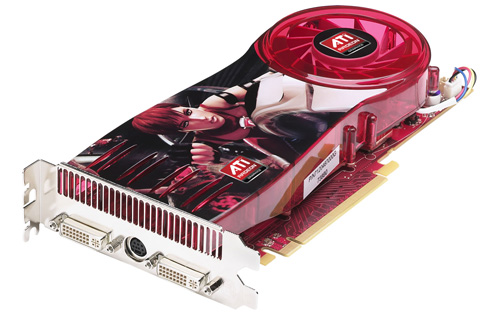
ATI Radeon HD 3870First from ATI is the Radeon HD 3870 (3850 also available). I remember a time when ATI meant the fastest GPU that you can buy. But recently, NVIDIA has managed to keep ATI at arm’s length when it comes to performance, with the Radeon HD 2xxx series being rather disappointing. The 3870 aims to correct this. Unfortunately, it doesn’t really come close, and the low recommended price of the unit suggests even ATI knows this. 3D performance wise, you will be better off with any of the 8800 series – the performance of the 3870 is certainly better than that of the 2xxx series, but that’s not really saying much. But in video performance, especially HD acceleration, the 3870 is probably the best card available on the market, as it features ATI’s AVIVO HD and UVD acceleration. Both H.264, and possibly more importantly, VC-1, receive full hardware accleration, which will be much appreciated when people start to watch Blu-ray or HD DVD movies on your computer. You certainly can’t beat the price, so it would be a good card to built a home theatre PC around, a system that will give you excellent HD playback, as well as fairly decent gaming (which past HTPCs were mostly incapable of). The card comes with HDMI output, so ATI’s thinking behind the card is also HTPC oriented. You can read a full review of the 3870 and 3850 here.
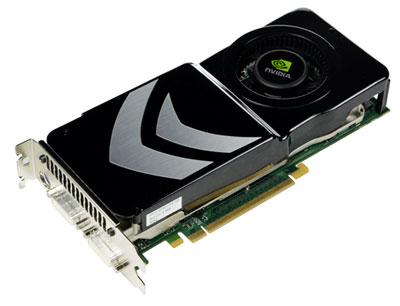
NVIDIA 8800 GTS 512 MBThe other new GPU is actually just a refresh of an existing range, the 8800 GTS. The original 8800 GTS came in 320 and 640 MB varieties. Some will remember that I recommended this GPU for the first “If I were to buy a computer today” feature back in September. It now uses a version of the G92 chip first introduced in the 8800 GT, and scales back the RAM from 640 MB to 512 MB. The new chip uses the 65 nm process, as compared to the 90 nm process in previous chips, so clock speed can now be ramped up to levels exceeding the GTX version and closer to the Ultra. In other words, it’s just a more efficient chip and the reason why the 8800 GT performs so well. The reduced process means more power efficiency and a cooler chip, which allowed the 8800 GT to be a single height card (but the 8800 GTS is a double height card like the Radeon HD 3870). But what does this all mean? Well, it simply means the 8800 GTS 512 MB is a kick-ass card 3D wise that will often outperform the more expensive 8800 GTX. In video/HD wise, it gives you the same acceleration as the 8800 GT, which in itself was a big improvement over the acceleration offered by all the other 8800 GPUs. Pricing wise, it should be closer to the 320 MB version of the GTS, rather than the 640 MB version – it’s about $100 more than the 3870, and about $50 more than the GT. You can read a full review of the 8800 GTS 512 MB here.

So how does the new 8800 GTS compare to the Radeon HD 3870? NVIDIA’s PureVideo HD does not support full VC-1 hardware accleration (it only supports partial acceleration), so the video performance is not as good as the 3870. So instead of close to zero percent CPU utilization, you might be seeing something like 10 to 15% on say mid-range Intel CPU. For those with slower CPUs, the 3870 might be a good choice to prevent CPU spikes that cause break-ups in playback. Otherwise, the 8800 GT/GTS will offer more than enough acceleration power to give you smooth playback.

But if gaming is a concern, than both the 8800 GT and GTS 512 MB are simply better choices. The latest games, like Crysis or Call of Duty 4, all require massive amounts of power and the 3870 is just not able to give you that. You feel that the 3870, had it been released about a year ago, would have been the card to have, but it really feels like too little too late from ATI at this time. For about $50 or $100 more, you can get the GT or GTS which will provide 15 to 25% better performance – the GT is even more suitable for a HTPC environment since it is a single height card and even a passive cooling version is available. The inferior HD acceleration found on the NVIDIA range is something I hope NVIDIA will address soon, but it’s not a huge deal considering the low price of mid to high range CPUs these days.

As for whether you should get the GT or GTS, it really depends on how much you are willing to pay for the extra 3D performance. For $50 more, it’s probably not a huge risk to go with the GTS.
If I were to buy a new computer today (December 2007)

Wednesday, December 12th, 2007

Welcome to the second ever “If I were to buy a new computer today” feature. Back in September, I first wrote about what I would be looking for in a computer if I were buying one today, and today’s blog will see what has changed in the last few month. To get a better idea of the kind of system I’m looking for, please refer to the original blog entry, but to sum up, it would be a system for playing the latest 3D games as well as a system ready for Blu-ray and HD DVD playback, but one that is reasonable in price and without the need for overclocking.

So let’s not waste any time. Here are the specs of the computer, including comparisons with my original specs back in September (as compared to September: upgraded parts in blue, lower prices in green, higher prices in red):

Type: September Part: December Part: September Price ($AUD): December Price ($AUD):
CPU: Intel Core2Duo 6750 Intel Core2Duo 6750 $244 $227
Motherboard: Gigabyte GA-P35-DS3P (Rev 2.0) Gigabyte GA-P35C-DS3R (Rev 2.0) $179 $165
RAM: Corsair 2 GB PC-6400 C4 Corsair 2 GB PC-8500 C5D $179 $244
HDD: 2 x Seagate 320GB 7200RPM 16MB SATA2 2 x Seagate 400GB 7200RPM 16MB SATA2 $238 $238
Video Card: NVIDIA GeForce 8800 GTS 640 MB (WinFast) NVIDIA GeForce 8800 GT 512 MB (XFX) $509 $389
Sound Card: In-Built In-Built N/A N/A
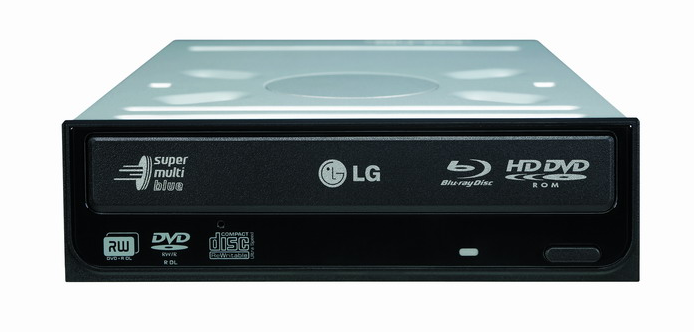
Optical Drive: Pioneer DVR-212D SATA DVD Writer LG GGC-H20L
(Blu-ray/HD DVD Reader, DVD writer)
$55 $460
Monitor: (Chimei 22″ 221D) (Chimei 22″ 221D) $329 $309
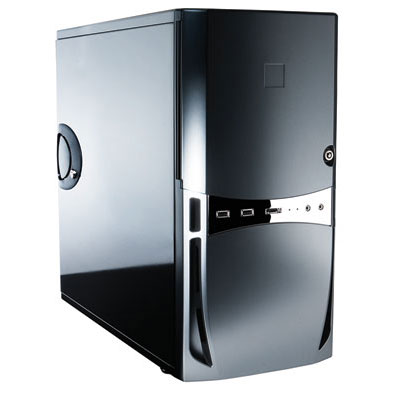
Case: (Antenc Sonata III) (Antenc Sonata III) $189 $179
Total Price ($AUD): $1,922 $2,211

As you can see, there are in fact lots of changes, and an increase in price too. But just under $300 more, we’re getting a vastly superior system, and one that can play both Blu-ray and HD DVDs, so I think it’s worth the slight increase in cost. Let’s go over each specification.

CPU:We’re sticking with the Intel Core2Duo 6750, as it still represents the best price/performance Intel processor. There’s a price drop too, so that’s a bonus. If you like AMD processors, then you might also look at the AMD X2 6000+ for just over $200. Those that are patient can wait for the Intel Penryn range of processors (non Extreme Editions) to come out early next year. It will the the “tick” in Intel’s “tick-tock” release schedule, which means the new 45 nm CPU will use existing architecture. For real improvement, you should wait for the “tock” release later in 2008, where a new architecture will be introduced to better take advantage of the new fabrication process.

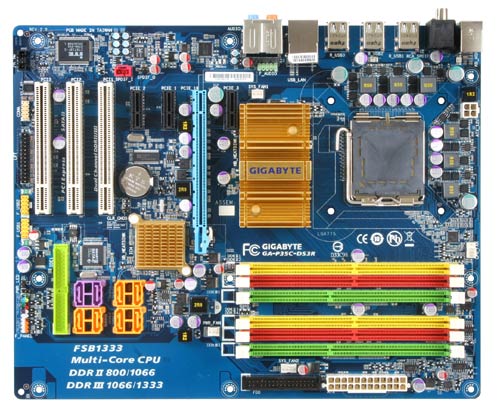
Gigabyte GA-P35C-DS3RMotherboard: I like Gigabyte motherboards, although the sheer number of models that are available for a single chipset is a big confusing at times. Gigabyte was recently chosen as the best overall motherboard manufacturer in an Australian PC magazine survey (PC Authority). The model I chose is one that supports both DDR2 and DDR3 memory, allowing for a smoother upgrade path when DDR3 memory pricing becomes a bit more reasonable. Despite getting a newer motherboard, the price has actually decreased. Note that the previous chosen motherboard had ATI crossfire support, which the new one does not, but since we’re going with an NVIDIA card anyway, it doesn’t really matter.

RAM: An upgrade from PC-6400 to PC-8500. You could save money here by getting cheap DDR2 memory and upgrade to DD3 until prices are more reasonable. Price has increased as a result of the upgrade.

HDD: A slight upgrade for the same price, from 320 GB to 400 GB. The same PC Authority survey I mentioned above also gave Seagate the best overall award, so it’s an easy choice for me.

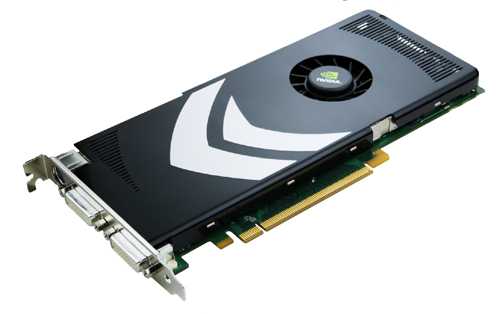
XFX GeForce 8800GTVideo Card: After all my blah blah-ing about the GeForce 8800 GT being “the card everyone’s been waiting for”, I had to choose it for this month’s selection. I chose the XFX version of the card since it’s the cheapest I could find – the Asus come highly recommended (via the PC Authority survey), while there are also “souped up” versions from XFX for a slightly higher price. We’ve done well here by upgrading to a better card, while saving money at the same time.

Sound Card: Still going with a on-board solution. Until HDMI audio output gets sorted out, it’s probably not worth getting a new sound-card for your PC. HDMI audio output would allow the pass-thru or decoding or several of the new HD audio formats, which is not possible through SPDIF/optical due to insufficient bandwidth.

LG GGC-H20L Blu-ray/HD DVD Reader, DVD Writer DriveOptical Drive: This is where the big cost increase has come from. Instead of settling for a run of the mill DVD writer drive, I’ve gone out and replaced it with a state-of-the-art Blu-ray and HD DVD dual format reader drive, which also can write to the usual DVD formats. With this drive, you can make your PC format neutral and playback both Blu-ray and HD DVD movies. The huge cost increase, especially for those that want HD movie playback right now, is therefore understandable.

Monitor:I’ve stated with the Chimei 22″, since it has dropped in price too. Others might want to consider a HDMI capable monitor (the Chimei has a HDMI capable model), but it’s not needed for Blu-ray/HD DVD playback as long as the DVI port is HDCP compatible (which it is) – the 8800 GT doesn’t even have HDMI output anyway. The main use for HDMI would be to connect external devices to the monitor (eg. the PS3), but 22″ is probably on the small side if you plan on using the monitor for watching Blu-ray/HD DVD.

Antec Sonata III CaseCase:I’m sticking with the Antec Sonata III case, because it’s good value as it comes with a high quality 500W power supply (designed for quietness), and the overall build quality of the case (and Antec cases, in general) is quite good. Building a quiet system is essential if you plan on using the machine as your Blu-ray/HD DVD player. Of course, a quiet PC depends much on the type of cooling you have for your CPU and GPU.

So there you have it. A brand new HD gaming and movie PC for just over $AUD 2,200 (that’s $1,930 for you US folk). Not the cheapest system, but one that will pretty much do everything for you and some. Certainly cheaper than buying a same spec’d system from Dell or HP. The next edition of this feature might see the new Intel Penryn being added to the specs if the price is right, but who knows.

Weekly News Roundup (9 December 2007)

Sunday, December 9th, 2007

Welcome to another weekly news roundup. I’ve been thinking about changing the name of this weekly feature, as “Weekly News Roundup” lacks a certain something. Perhaps “Digital Digest’s DVDGuy’s Digital Digest”, or “DVDGuy’s Dazzling Digital Diary”. Umm … I think I will stick with “Weekly News Roundup” for now.

Now for something completely different. Starting with copyright news, Steve Biddle from New Zealand wrote in his blog about trying to do something very simply in Vista that Vista’s DRM system would not allow. All he wanted to do was to simultaneously output 5.1 audio through SPDIF and stereo audio output to his TV, but Vista won’t let him and would only allow SPDIF output at the same time if it carries a 2.0 channel signal. How does having this restriction prevent piracy, I’ll never know. Meanwhile, the troubled Bush administration has launched a new war on terror front, this time a war on copyright infringement. All those terrorists sitting in their caves downloading the latest episodes of Heroes must be quaking in their boots (if they do indeed wear boots). Seriously, does the White House have nothing better to do? They should just get back to what they do best, and that’s to make up intelligence to support yet another war in the Middle East. The MPAA is joining in the fight and says it’s in the best interest of ISPs to filter out “inappropriate” content. Last week (or the week before, I can’t remember), I also reported a story about the MPAA asking Universities to install software toolkits to monitor student’s Internet usages, in a bid to stop campus piracy. It has now been revealed that the “toolkit” may have violated copyright terms since it uses many pieces of open source software, and has modified them without providing the modified source code. The ISP hosting the toolkit has been sent a DMCA notice (haha). Perhaps this ISP should have filtered out the obviously “inappropriate” content. In other words, while the MPAA is forcing people to respect their interpretation of the copyright laws, they themselves might have been breaking the same laws to achieve their aim. Oh the irony.

In HD news, LG has finally launched their dual format drive here in Australia. Their recommended retail price is more than double the store pricing of the same drive in the US, but some have found luck in getting the drive at a more reasonable $AUD 450. It’s still a bit too expensive to mark it as a must-have item for your next computer, but it’s a 50% price drop away from becoming just that. I will probably write another “If I were to buy a new computer today” blog entry this week, like the one I did back in September, and I must just include this drive in my recommended specs. Staying in Australia, retailers are saying the HD DVD people are not doing all they can for the Australian market. There is no point in denying this claim, because HD DVD has had a late and fairly quiet start, while Blu-ray has been going all guns blazing in the promotional stakes. Both sides are still doing poorly on pricing and releases though. The HD DVD side has been relying mostly on the Xbox 360 HD DVD add-on drive here in Australia, which was the only HD DVD player until about 3 months ago. But we still end up paying more and getting less for the add-on drive, as compared to the US in any case, where the pricing of the drive has dropped to less than $130 (although the price has gone back to $180 on Amazon.com at least), and includes 6 movies (we only get 1 free movie in the box). So much for the high Australian dollar. Another problem that people have been having here in Australia is trouble accessing the web content on titles such as Transformers. People with the US version of the movie (thank goodness for region-free HD DVDs) have not had the same problem, and according to the HD DVD group, the web features are very popular indeed. If you really had to compare Blu-ray to HD DVD, then on paper, HD DVD wins in everything but studio support. Early HD DVD release have better picture and sound quality than Blu-ray (most used VC-1, while older Blu-ray movies used the less efficient MPEG-2), most HD DVD releases are 30 GB compared to 25 GB for Blu-ray (BD-50 discs are still a small minority of releases, and HD-51 is coming soon), all HD DVD players and movies support advanced interactive features that not even the newest and most expensive Blu-ray player support and HD DVD hardware is cheaper too. But it doesn’t stop the myth that Blu-ray is superior to HD DVD, a myth that has been propogated by people such as Transformers director Michael Bay. Transformers on HD DVD is probably the best selling movie on either HD format so far, and of course it might sell more if it was a Blu-ray release too, but then I’m sure all his older movies would sell more if they were on HD DVD too. His claim that Microsoft deliberately supports HD DVD to get HD to fail, is tinfoil hat madness. Microsoft has lots of things invested in the success of HD (their VC-1 codec, used by the majority of Blu-ray and HD DVD releases, for one), and their digital distribution plans (of which is doing quite well in the US through Xbox Marketplace) is a completely separate issue. Sony also has digital downloads coming soon for the PS3, so do they wish HD to fail too? As for his claim that Blu-ray is superior …

There’s a lot of HD news this week, so let’s start a new paragraph. Analysts have predicted that there will be parity between the two competing HD formats for the foreseeable future. I can’t see either format just fading away unless the studios all become exclusive for one side, so protect yourself by becoming format neutral. There are always rumours floating around the Warner Brothers, the only studio to be format neutral, is going to go format exclusive and supports Blu-ray only. You can read about what I think of this rumour in the link, but suffice to say, I don’t think it will happen (if anything, it might go the other way). HD DVD is certainly the weaker of the two sides when it comes to sales figures (although beware that the often quoted Nielsen HD sales figures do not include Wal-Mart, which came into the HD game quite late, but is now having an influence on things by being HD DVD exclusive, the Sony PS3 apart), but I can’t help but feel that it has a more mature strategy, rather than the “let’s sell as many PS3s as possible at a loss so we have lots of Blu-ray players in people’s homes, even if they don’t know what Blu-ray is” approach. There is a nice article that summarises the state of HD DVD, and its well worth a read. Speaking of the PS3, more and more rumours suggest that it will become Blu-ray profile 1.1 or 2.0 sometime soon. Unless there is some technical problem that prevents 1.1 or 2.0 certification (eg. if the cell processor can’t handle simultaneous multi-track video and audio decoding), then it’s a “when” not “if” in my opinion (that’s why I purchased a PS3 as my Blu-ray player). Still, it might take a while since there are hardly any 1.1, let alone 2.0, movies on sale. And we’re still waiting for DivX support, which was announced weeks before, but in that time, the Xbox 360 went ahead and added support for it already. YouTube HD coming soon via H.264? Not so far fetched with the power H.264 can offer.

On that note, it’s on to gaming. Is it me or is the line between gaming and HD getting blurrier by the minute? Of course, here on Digital Digest we primarily cover the video aspect of gaming, so we’ve already intentionally blurred the lines. The holiday sales period is an important period to see which console will dominate in the year ahead. Analysts predict that the Xbox 360 and Wii will be side by side, followed by the PS3 by some distance (although not as distant as it used to be). Meanwhile, Nintendo has pulled ads for the Wii because demand is so high. Putting on Michael Bay’s tinfoil hat for a minute – does anybody else think that Nintendo might be deliberately not producing enough Wii’s to keep the demand up? It’s had a whole year to get the production up (Wii was last Christmas’ most wanted gift too), and it doesn’t seemed to have helped (if anything, this year’s stock is even less sufficient). And if you look at the low number of games being released in the same period, which would have crippled any other console, you do wonder why demand is still so high. Of course, that’s just conspiracy talk – the most likely explanation is that Wii is attracting non-gamers, and that’s a huge group of people who suddenly want a Wii for Christmas. Or that some people are hoarding stock to sell at a premium on eBay or something.

So that’s it for another week. While you are all busy going from store to store to try and find a Wii, I will be here as usual gathering the news and writing page fulls of nonsense ready for next week’s Dazzling Digital Diary. See you then.

Weekly News Roundup (4 November 2007)

Sunday, November 4th, 2007

So another Sunday, and another news roundup. There really ought to be some rule to forbid working on a Sunday, but then it would just mean more work on Mondays. There really ought to be some rule to forbid working on a Monday …

In copyright news, in a Slysoft newsletter, a claim was made that BD+ copy protection, the additional layer of copy protection that Blu-ray owners enjoy, will be defeated soon. Everybody probably still remembers the statement that Richard Doherty, (ex?) analyst at Envisioneering Group made in regards to BD+:

BD+, unlike AACS, which suffered a partial hack last year, won’t likely be breached for 10 years

Not exactly 10 years, but 0.5 years is not bad. Surprisingly, this was the only bit of important copyright related news for the week … the RIAA/MPAA must be on holidays. Although with so many OiNK replacement sites popping up, there will have a lot of work to do when they come back.

In HD news, Fox is set to release the very first BD 1.1 disc for the sci-fi movie Sunshine. This is the first Blu-ray disc to feature picture-in-picture technology, which has been present on HD DVD almost from day one. To access the feature, people will need to have a BD 1.1 player, of which there is only one on the market (in standalone form anyway), the newly released Panasonic DMP-BD30. PS3 owners should expect a firmware update to get themselves up to at least 1.1 standard (although the PS3 is good enough for 2.0 in any case). Will the disc play properly on 1.0 players? We will find out soon enough. The news this week has all been about HD DVD’s price drops. Several special Black Friday sales have ensured that not only did HD DVD standalones break the $200 barrier, it broke the $100 barrier too. $98 for a standalone HD DVD player from Toshiba (the superceded HD-A2) that has built in DVD upscaling and comes with 5 free HD DVD movies – that’s really just too good to be true. It sure beats spending $500+ here in Australia to buy a similar player that only comes with 3 movies. K-Mart has saw the trend, and will now offer the HD-A2 as their only HD DVD or Blu-ray standalone for sale this Christmas. They will still sell the PS3 (as well as the Xbox 360 HD DVD add-on) so talk of them going exclusive is not factual. The HD-A2 is not a bad player. It lacks 1080p output, but as this DigiWiki entry explains, it’s not a problem at all for people with 1080p displays while playing back film content. To continue with the HD DVD news, Toshiba has showed off their new HD DVD recorder, now supporting HD Rec, a format that uses H.264 to record to standard DVD discs, allowing 2 hours of HD content to be stored. Remember that Toshiba’s initial idea for HD was to use existing DVD/red laser technology and combine that with a new more efficient codec (H.264 of VC-1). It’s just as well then that Ritek will soon launch HD DVD recordable discs. Asus is also launching their quietest HD DVD-ROM drive yet, designed for home theatre PCs.

On that note, let’s move to gaming. Sort of. I’m very impressed with Nvidia’s new 8800 GT card as I noted in an earlier blog post. It combines the 3D performance of the 8800 GTS, with the HD acceleration of the 8600 GTS, and then makes the whole thing even more efficient as to even allow a passive cooled version for building an ultra quiet home theatre PC. Nvidia will be releasing a new GTS card too based on similar changes, so that might even more more attractive. And while ATI’s Radeon HD 2xxx series has been somewhat of a disappointment, you should never rule them out because you are only as good as your last GPU.

Now moving onto gaming properly, there was rumours that IPTV was coming to the Xbox 360 in the Fall update, but Microsoft has quashed the rumours by saying that it’s not in the Fall update, but will be here soon enough anyway. Another week and another developer, this time Midway Chicago’s studio head Mike Bilder, saying the PS3 is a pain in the ass to work with. But he does offer a solution – develop for the PS3 first to work around the problems, and then port over to the other systems. Specifically, he says:

Just, to be honest, the hardware differences in memory and processor on the PS3 vs. traditional PC and 360, it makes it a challenge, and it’s representative. Everybody’s having a challenge in the industry right now.

[And about using the PS3 as the lead development platform]

The difficulty you run into there, at least in the last generation, was that the Xbox was considerably more powerful than the PS2, and you found that people didn’t always take advantage of the hardware. Whereas with the PS3 and the 360, it’s certainly more of a level playing field, so I don’t think it’s necessarily a negative to put the PS3 first [as the lead development platform]. But it does help mitigate some of that risk in framerate, memory, technology, just the hardware differences.

That’s definitely a solution to a problem, find out what you can and cannot do on the PS3 first, and once the code is done, you can be sure that it will probably work on the other consoles too because they are a bit more flexible to work with than the PS3.  The quality will be the same too, according to Bilder, because there’s not much difference between the two main consoles (and the Xbox 360 development is flexible enough to allow ports to it to run quite well). Of course, smaller developers who don’t have the resources of Midway might simply skip the PS3 to work on platforms that have the biggest install base and with less development problems.

So that’s it then for a week that has been dominated by HD DVD news, with relatively very little news in other areas. If I didn’t know better, I would say that the HD DVD promotion machine has finally started rolling, and just in time for the holidays too. Blu-ray will come back next week with more news to counter, no doubt. See you then.

GeForce 8800 GT – The card everyone’s been waiting for?

Wednesday, October 31st, 2007

When I posted about my recommended computer specs back in September, I chose the 640 MB version of the GeForce 8800 GTS, but it was far from my first choice. I said at the time that:

… but what I want is a card that combines the HD acceleration (PureVideo HD or AVIVO HD) of the 8600 GTS (or HD 2400 XT) with the 3D performance of the 8800 GTS. Again, waiting 6 months will probably make this possible.

Well, I didn’t have to wait 6 months (although 6 months from the day that the 8800 series was first announced is more accurate), Nvidia has just announced the introduction of the 512 MB 8800 GT.

Nvidia 8800 GTSo what’s new in the 8800 GT? The 8800 GT has a new GPU, the G92. It is essentially a die shrink of the existing G80 GPU as found in the other 8800 series cards. The G80 required an external display chip to support the dual-link DVI outputs, but now the display chip is integrated into the GPU which significantly reduces manufacturing costs. The new GPU also supports PCIe 2.0, which doubles the available bandwidth. There are also lots of little changes associated with 3D performance, things like 112 SPs (compared to the GTX’s 128 SPs, and the GTS’s 96), core clock increase to 600 MHz (a 25 MHz increase on the GTX, but 12 less than the Ultra), shader clock at 1500 MHz (sames as the Ultra, and higher than the GTX), a 900 MHz memory clock (sames as the GTX, lower than the Ultra), 512 MB of RAM and a memory interface of only 256 bits (compared to the 384-bit of the Ultra/GTX, and 320-bit of the GTS). But forget all these specs, the important thing is that the GT plays the latest games and do it very well, basically on the same level as a 640 MB 8800 GTS, the card that I recommended only a month ago.

I have deliberately left out the best bit, and one bit that the 8800 GTS/GTX/Ultra was missing, which led me to be cautious in my previous recommendations. Where this feature is concerned, even the 8600 GTS was more preferable than the 8800. So what is it? Well, since this is a website/blog mainly about digital video, the feature I’m talking about is HD video acceleration, in particularly VC-1 and H.264 acceleration needed for HD DVD and Blu-ray playback. While the 8800 Ultra/GTX/GTS was super powerful for 3D gaming, it did not contribute much to video acceleration at all, and instead, sat idle while the CPU struggles to keep a steady framerate. With the 8500/8600 and now 8800 GT, the VP2 engine is used to provide full H.264 video decoding. Note that VP2 on the 8500/8600 only offers full H.264 acceleration – MPEG-2 acceleration (not really needed) and VC-1 acceleration is limited to only inverse transform, motion compensation and in-loop deblocking – I’m not sure if the situation has changed with the VP2 engine on the 8800 GT (unlikely), but H.264 is the most processor intensive codec of all three and the one that is most in need of acceleration. Full VC-1 acceleration would have been great, as most HD DVD movies and now even Blu-ray ones use VC-1, but I guess we will have to wait for the VP3 engine for that.

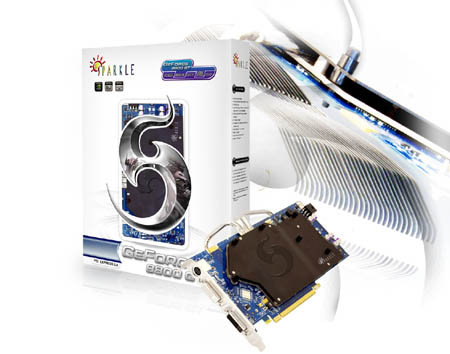
PARKLE GeForce 8800 GT Cool-pipe 3 Graphics CardSo my wish sort of came true. I wanted a graphics card with the 3D power of the 8800 GTS, and the HD video acceleration features of the 8600 GTS, and this is exactly what I’ve got in the 8800 GT. There’s even a passive cooled version of the 8800 GT, perfect for a HTPC setup that can even handle the latest games (a sort of “build-your-own” Xbox 360/PS3). The price is right too, positioned as an even cheaper replacement for the 320 MB 8800 GTS. It will be interesting to see what ATI can come up with to compete with the 8800 GT. And Nvidia themselves will launch a new GTS in November, so it might be worth it to wait and see a bit longer. And if you want to be a perfectionist, you might wish for HDMI output as well. But for the present, the 8800 GT is the GPU that I recommend for gaming and video enthusiasts.

For a roundup of Nvidia’s range of GPUs, please refer to this forum thread. You can read a full review of the 8800 GT here.